
Segmind Review 2027: Can Its Media APIs Scale?
Segmind review for AI media builders: assess model access, repeatable requests, job reliability, and cost for a production API stack.
A media feature looks manageable with one image endpoint and ten internal users. Then video arrives. Requests run for minutes, schemas stop matching, and a successful HTTP response still produces an asset nobody approves. This Segmind review is for teams deciding whether one gateway can support both media types without turning every model change into repair work.
I’m Dora. I paused at the model count. Breadth says little about repeatability. I reviewed Segmind’s catalog, API, billing, storage, monitoring, security, and release documents on October 2, 2026. No API key, request logs, or original outputs were supplied. This is a documentation assessment plus one reproducible test, not a measured performance ranking.
My short answer: Segmind has credible components for experimentation and moderate traffic. The live catalog, asynchronous jobs, cost fields, and exports are useful. Snapshot pinning, regional routing, and private LoRA onboarding remain less explicit.
Which Media Tasks Can Segmind Serve?
Map Image and Video Needs to Current Endpoints
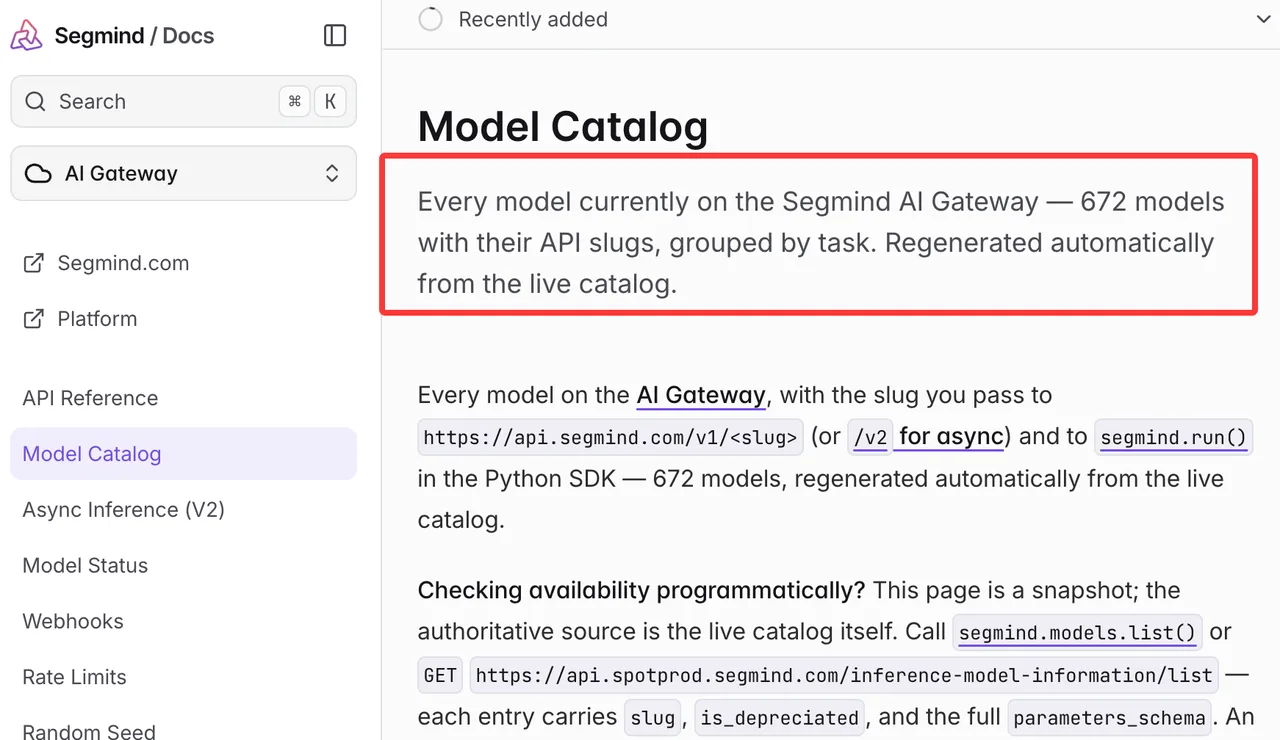
Segmind presents image, video, audio, language, and utility endpoints behind one gateway. The model catalog groups slugs by input and output type and publishes their parameter schemas. Current Segmind image models cover generation, editing, inpainting, extraction, and upscaling. Segmind video models cover generation, editing, extension, lip sync, and background removal.
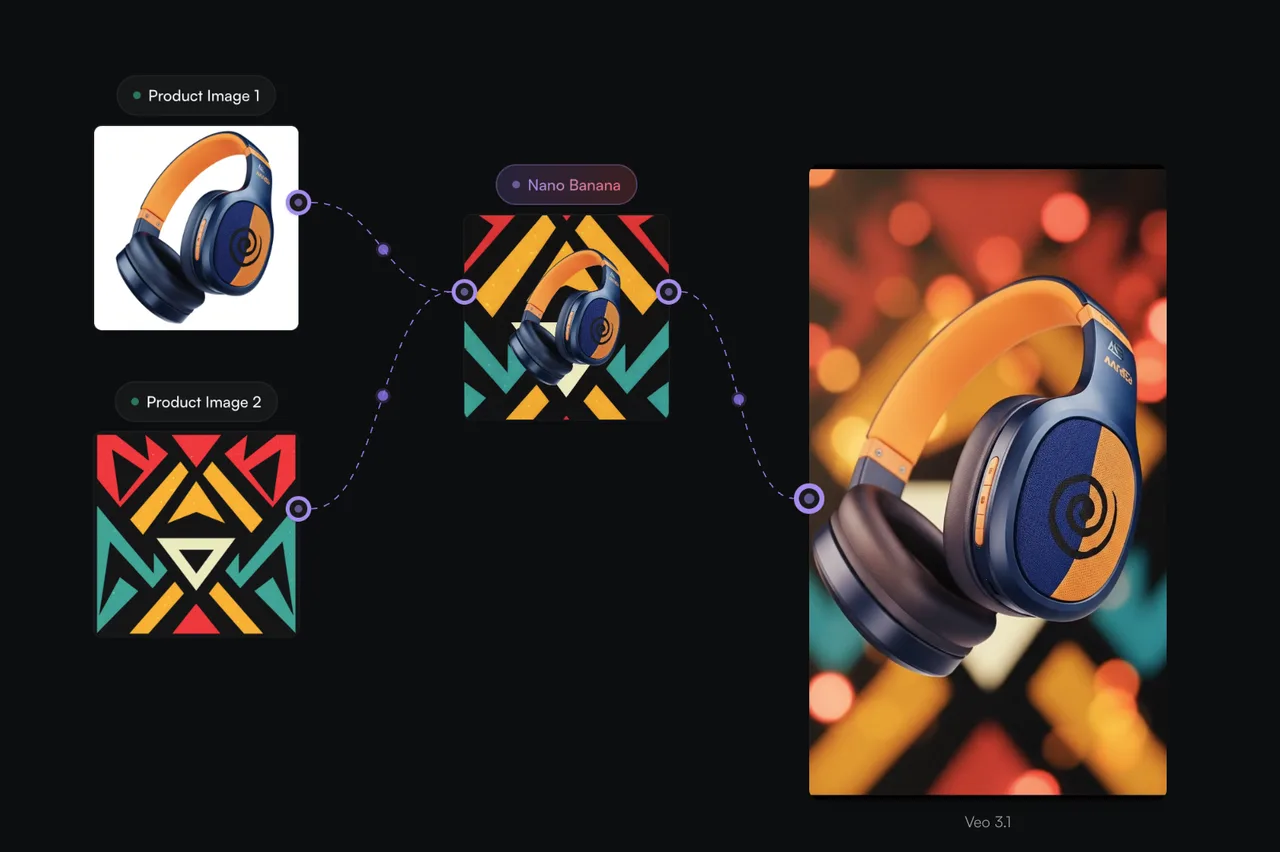
Use one owned product photograph for the sample task: generate a square campaign still, then animate the approved still into a five-second clip. Clear the source, logo, and prompt for use. Keep the checks narrow:
| Stage | Fixed input | Acceptance check |
|---|---|---|
| Image | Owned product photo and locked prompt | Product shape, logo, color, 1:1 framing |
| Video | Approved image and fixed motion brief | Identity, motion, five-second duration, no new text |
| Delivery | Returned files and request metadata | Opens correctly, expected codec/size, traceable request ID |
Select one image model and one video model from the live catalog. Record the exact slugs; a family name is too loose for a rerun.
Keep Model Coverage Separate From Output Quality
Catalog presence proves access. It does not prove prompt adherence, reference handling, or acceptable output. Models expose different duration, resolution, seed, and reference controls. One gateway reduces authentication work but does not create one creative contract.
Use binary checks. The image must pass geometry, brand color, logo, and composition. The video adds identity stability, motion, and playback. A striking but unusable result stays rejected.
The catalog is dynamic. The live catalog can be used to check availability and exposes a deprecation field, while release notes show legacy slugs being redirected after upstream retirements. Treat it as runtime discovery, not a permanent procurement appendix.
Can a Builder Repeat the Same Generation Workflow?
Version Requests, Inputs, and Output Checks
Every run needs a small manifest beside the asset:
{
  "model_slug": "record-the-live-slug",
  "requested_at": "2026-10-02T00:00:00Z",
  "input_sha256": "hash-of-owned-source",
  "parameters": {},
  "request_id": "returned-by-segmind",
  "review_status": "accepted-or-rejected"
}
Store the request body, input hash, response metrics, output hash, and human decision. The Segmind API reference separates direct v1 calls from longer v2 jobs. Model bodies still differ, so schema validation belongs at the adapter boundary.
Keep that manifest outside Segmind. The product database needs to connect a customer action to its payload, route, returned file, and review outcome. Otherwise, an output may be visible yet impossible to explain during an incident.
A slug identifies a route, but public documentation does not promise a permanent weight snapshot. Seeds help only where supported. For audit work, preserve the output and obtain a written version commitment or dedicated deployment agreement.
Handle Async Jobs and Failed Outputs
For video, retain the request ID at submission. Track QUEUED, PROCESSING, COMPLETED, and FAILED. A client timeout does not prove failure; poll before submitting a duplicate. Download accepted outputs because result records and hosted files expire differently.
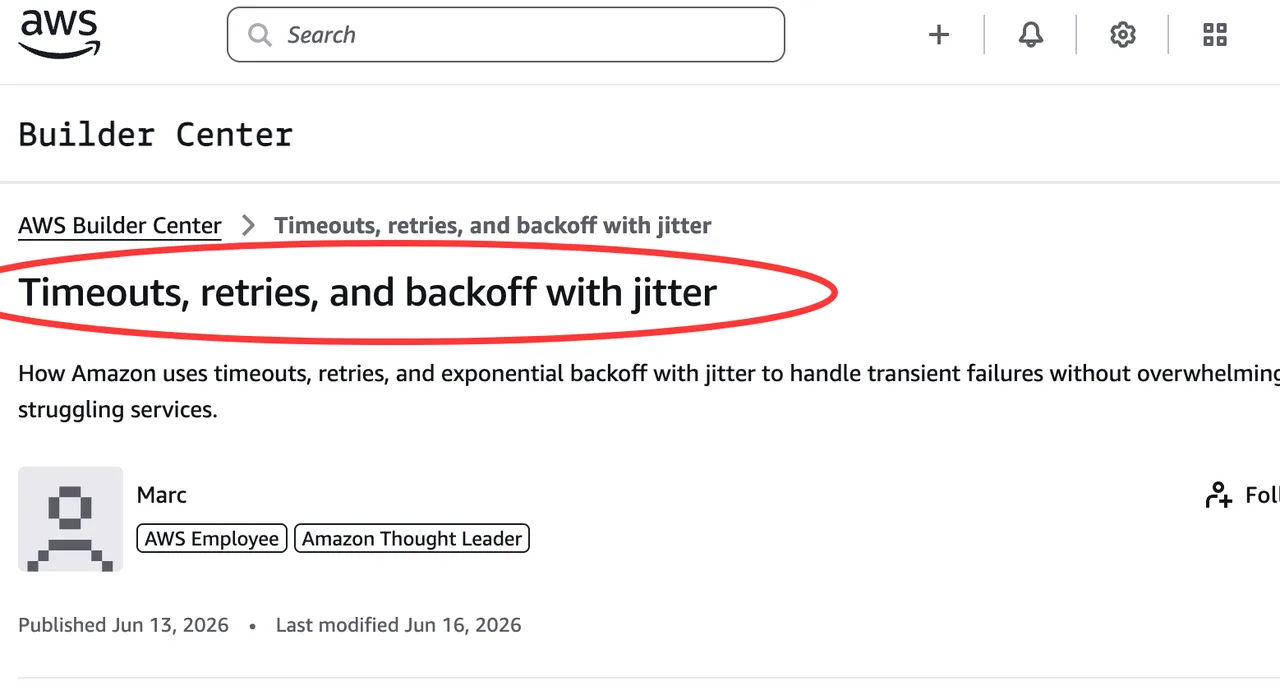
Retry by error class. A 403 is a permission problem; a 429 needs backoff; a v2 422 marks failed inference. Invalid parameters need correction. AWS’s note on timeouts, retries, and jitter explains why retries need bounds and randomization.
Resolve one documentation issue before load testing: Segmind’s rate-limit page and plan material publish different RPM figures. Use the console limit or signed order form for capacity planning.
Run three canary passes: sequential requests, a small concurrent batch, then the intended burst within the confirmed limit. Stop when failure rate or p95 crosses its threshold. Record cold starts separately. Averages hide them.
What Is the Cost per Usable Asset?
Track Retries, Latency, and Human Acceptance
Segmind pricing uses GPU time or a per-generation charge. The billing documentation says synchronous calls expose x-cost, while asynchronous results expose metrics.cost. Failed requests are not charged. Creatively rejected results can still be successful, billable calls.
For ten image attempts followed by four video attempts, calculate:
usable asset cost = billed successful requests + review labor + downstream repair / approved deliveries
Track submitted, completed, policy-blocked, accepted, and delivered counts. Add queue time, total time, retries, slug, and rejection reason. If four clips complete and one passes review, divide by one. The other three remain production cost.
| Ledger field | Why it matters |
|---|---|
| Request ID and slug | Connects the asset to a route |
| Queue and total time | Separates waiting from generation |
| Billed cost | Captures the actual Segmind charge |
| Error family | Prevents blind retries |
| Human verdict | Defines whether the output had value |
| Repair minutes | Adds the cost after generation |
Calculate completion and creative acceptance separately. High completion with low acceptance points toward model or brief fit. Repeated 429 or timeout failures point toward capacity or client behavior.
Segmind’s monitoring tools expose request history, per-model cost, API-key attribution, latency percentiles, failures, and CSV exports. They support an acceptance ledger, not an independent SLA report.
Compare Hosted API Work With Self-Managed Inference
Hosted Segmind inference removes GPU provisioning and converts compute into usage cost. Cold starts, shared capacity, upstream changes, and model-specific schemas remain. Tail latency matters more than a model card’s average.
Dedicated endpoints reserve capacity and bill baseline GPUs while idle. With self-managed inference, the team also owns deployment, autoscaling, model files, security updates, telemetry, and recovery. Unit cost can fall at sustained utilization only after engineering and idle GPU expense are counted.
Compare routes over the same monthly workload. Include concurrency, utilization, staff hours, failures, storage, and container updates. An idle dedicated GPU can cost more than serverless despite a lower per-second rate.
The break-even calculation is workload-specific:
monthly inference cost = compute or API charges + storage + operations labor + failed-capacity overhead
Serverless fits uncertain demand and broad trials. Reserved capacity becomes relevant when one model dominates traffic and queue variance costs more than idle hardware.
Where Does Segmind Fit in a Media Product?
Rapid Model Trials
This is Segmind’s clearest fit. One account can discover models, inspect schemas, send media jobs, and compare request-level spend. PixelFlow adds multi-step experiments and versioned published graphs. One fewer integration per trial. Adds up fast.
The trial still needs a product adapter. Normalize prompt, source asset, duration, and aspect ratio, then translate them into each schema. Keep model-specific controls available. Product teams still own evaluation.
Limits for Stable, Auditable Production Pipelines
Place a control layer between Segmind and customer traffic. Allowlist slugs, validate schemas, cap retries, store artifacts, record acceptance, and support rollback. Model-scoped keys and spending caps do not replace it.
The unresolved items are contractual: immutable versions, regional processing for the exact route, reusable-asset retention, and support objectives. Enterprise arrangements may answer them; public documentation does not.
This is where my data ends. Segmind exposes useful cost and model-level monitoring. Scale still needs a canary at the intended concurrency and acceptance bar.
FAQ
Can a Segmind integration pin an exact model version?
No platform-wide snapshot parameter is documented. A slug selects a route, and legacy slugs can be redirected. PixelFlow versions freeze a workflow graph, not necessarily every provider weight. Audit workloads need stored outputs and a written commitment.
Does Segmind offer region-specific inference endpoints?
The serverless API reference I reviewed does not show a per-request region selector. Segmind’s MCSA allows supported workspace and data-plane regions, while the control plane may remain elsewhere. Regional inference therefore needs confirmation for the exact deployment and data path.
When are customer input images removed from Segmind storage?
Two paths differ. Segmind’s inference logging policy says ordinary inference media is transient; prompts and settings are logged, and outputs remain seven days. Reusable Segmind Storage assets have no published automatic deletion window or self-service deletion endpoint.
Can teams upload a private LoRA for one account only?
There is no current self-service console path. The custom model documentation directs private-hosting requests to support. Confirm isolation, deletion, access, training status, and ownership before supplying weights or data.
Can Segmind usage be exported by model for billing reconciliation?
Yes. Cost Analytics exports spend by model, source, API key, and team member. Generation history exports status, parameters, prompts, cost, and output URLs. Keep an internal ledger because hosted URLs expire and exports omit human acceptance.
Conclusion
This Segmind review finds a useful platform for broad image and video access without integrating every provider first. Async states, cost metrics, and exports provide enough evidence for a serious canary.
The production decision remains conditional. Segmind fits rapid trials and workloads protected by a controlled adapter. Immutable snapshots, a named inference region, or self-service private LoRA deployment need written confirmation. Run the owned-product test, count approved deliveries, and keep a fallback route. The next model update will test the architecture sooner than the demo does.
Previous posts:
Related Articles
/filters:quality(82)/media/images/1790934318687045151_6DhqzIS1.webp)
Best AI Video APIs for High-Volume Workflows in 2027
/filters:quality(82)/media/images/1790879706333726948_TmjHVhrF.webp)
Introducing AI Cinema Studio on WaveSpeedAI: Direct Cinematic AI Video Shots
/filters:quality(82)/media/images/1790934887466368319_r2GQZ8hr.webp)
LTX Studio Review 2027: Does the Video Workflow Hold Up?
/filters:quality(82)/media/images/1790935248497016685_6cZjDPeF.webp)
Best Shotstack Alternatives in 2027 for Video APIs
/filters:quality(82)/media/images/1790935438012010745_IjwFOnwG.webp)
Best Sync Labs Alternatives in 2027 for Lip Sync
/filters:quality(82)/media/images/1790903936921698253_6vhqAJT2.webp)