
GPT-6 Astra Pro Review: Who Needs the Pro Tier?
Review GPT-6 Astra Pro for one demanding professional workload and decide when its added access is useful over standard Astra.
The word “Pro” was the first thing I had to untangle. OpenAI describes GPT-6 Pro as powered by GPT-6 Astra, while the API catalog exposes gpt-6-astra, not a separate gpt-6-astra-pro ID. I paused here. A subscription tier, a model option, and an API model ID are different procurement decisions.
This GPT-6 Astra Pro review asks whether the higher-access route saves enough expert supervision and rework to justify it for demanding professional AI tasks.
Quick Verdict for Professional Work
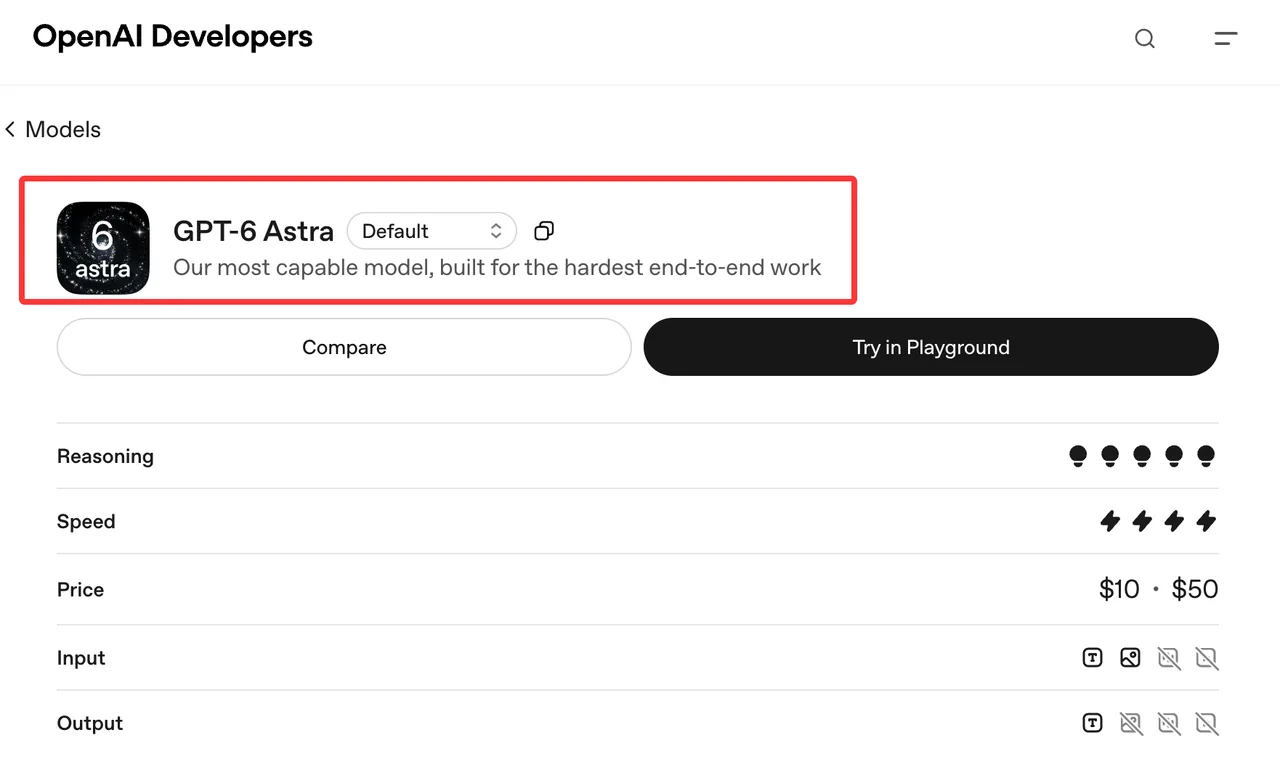
Astra Pro is defensible when a few difficult assignments consume expensive operator time and a stronger first completion avoids another review cycle. OpenAI positions the underlying GPT-6 Astra model for complex reasoning, coding, research, computer use, and document creation. That positioning does not prove that Pro wins on an internal workload.
Workloads that may justify Astra Pro
Good candidates combine long context, several tools, conflicting evidence, and a costly acceptance decision. Examples include a cited diligence memo, release-diff review, or cross-service incident analysis. The value is fewer expert interventions, not a more polished paragraph.
Keep human approval for financial, legal, medical, security, and release decisions. Pro access does not transfer accountability.
Tasks that should stay on standard Astra
Use standard Astra for bounded drafting, extraction, routine code changes, structured comparison, and cheap retries. If acceptance is captured by a schema, test suite, or short checklist, extra reasoning may add waiting time without changing the result.
Test One Demanding Workflow
I would test one launch-readiness review: turn a specification, risk register, support sample, and release diff into a go/no-go memo with evidence, unresolved risks, owners, and next actions. This is an evaluation recipe, not a claim that I ran Astra Pro.
Define output quality and time limits
Freeze the sources, prompt, permissions, and output template. Run paired standard and Pro sessions, then grade them without revealing the route.
| Measure | Acceptance threshold |
|---|---|
| Requirement coverage | At least 95% |
| Unsupported claims | Zero |
| Traceability | Every material claim cites a source |
| Decision usefulness | Each risk has an owner and action |
| Completion | Within 45 minutes |
| Human rework | No more than 15 minutes |
Use three to five paired runs. One lucky completion is not a routing policy.
Record interventions, completion, and rework
Log clarification requests, permission prompts, tool errors, abandoned paths, completion time, reviewer minutes, and edits needed for acceptance. Separate model time from operator time. Keep rejected outputs so failure patterns remain visible.
A run counts as complete only after reviewer acceptance. A polished memo with one invented release fact fails.
Evaluate the Pro Decision
Access, latency, and usage allowance
The current plan and usage guide treats message allowances as estimates, not fixed limits. Consumption varies with context, reasoning, tools, execution location, and shared plan use. Pro 5x and Pro 20x provide different estimated capacity; API-key use is billed separately.
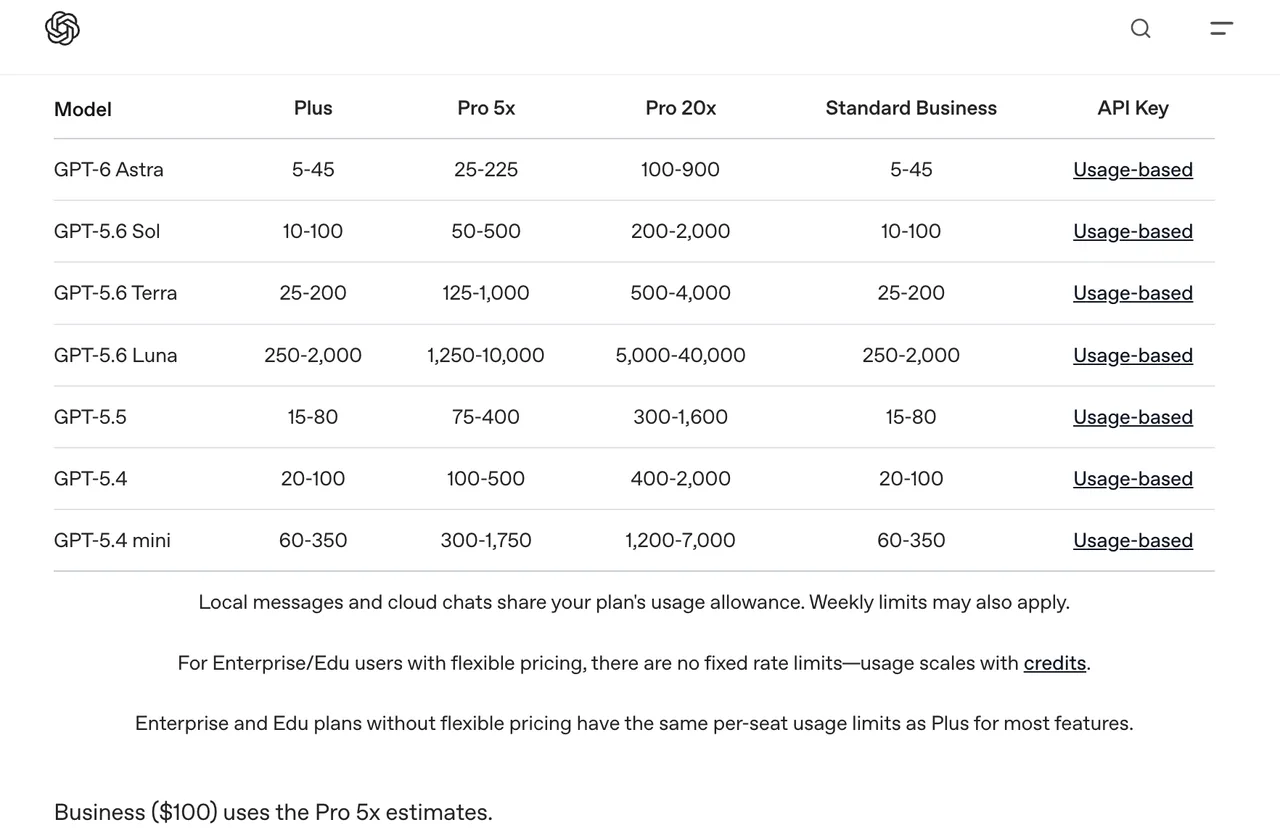
Difficult Pro runs may take longer, and OpenAI gives no universal workflow latency promise. Record median and worst-case time, plus runs blocked by allowance or availability.
Outcome quality per unit of operator time
Compare accepted outcomes, not eloquence:
net value = operator minutes saved × loaded hourly cost − incremental access cost
Then weigh error severity. Saved minutes do not offset an untraceable compliance claim. Promote a workload only when repeated runs show higher acceptance or lower rework, confirmed by a second reviewer.
Limits and Trade-Offs
Pro access is not a universal performance guarantee
OpenAI does not promise that Pro beats standard Astra on every task. More reasoning can still follow a weak brief, trust a poor source, or fail a tool call. Internal evaluation remains decisive. This is where my data ends: I found product documentation, not independent production evidence for this exact tier decision.
Product availability can vary by plan and workspace
The workspace model availability guide says admins can configure access, while seat, role, billing, client, and rollout eligibility still apply. Enterprise Astra access was off by default at launch. Enabling it in ChatGPT does not grant API access, and region support is a separate check. No WaveSpeed Astra Pro availability is assumed.
FAQ
Can workspace admins disable Astra Pro?
Yes. Eligible managed-workspace admins can withhold or disable Astra access for users or groups. A starting default is not permission, and Chat, Work, Codex, and API access do not automatically match. Personal subscriptions follow different controls.
Does Astra Pro support zero data retention?
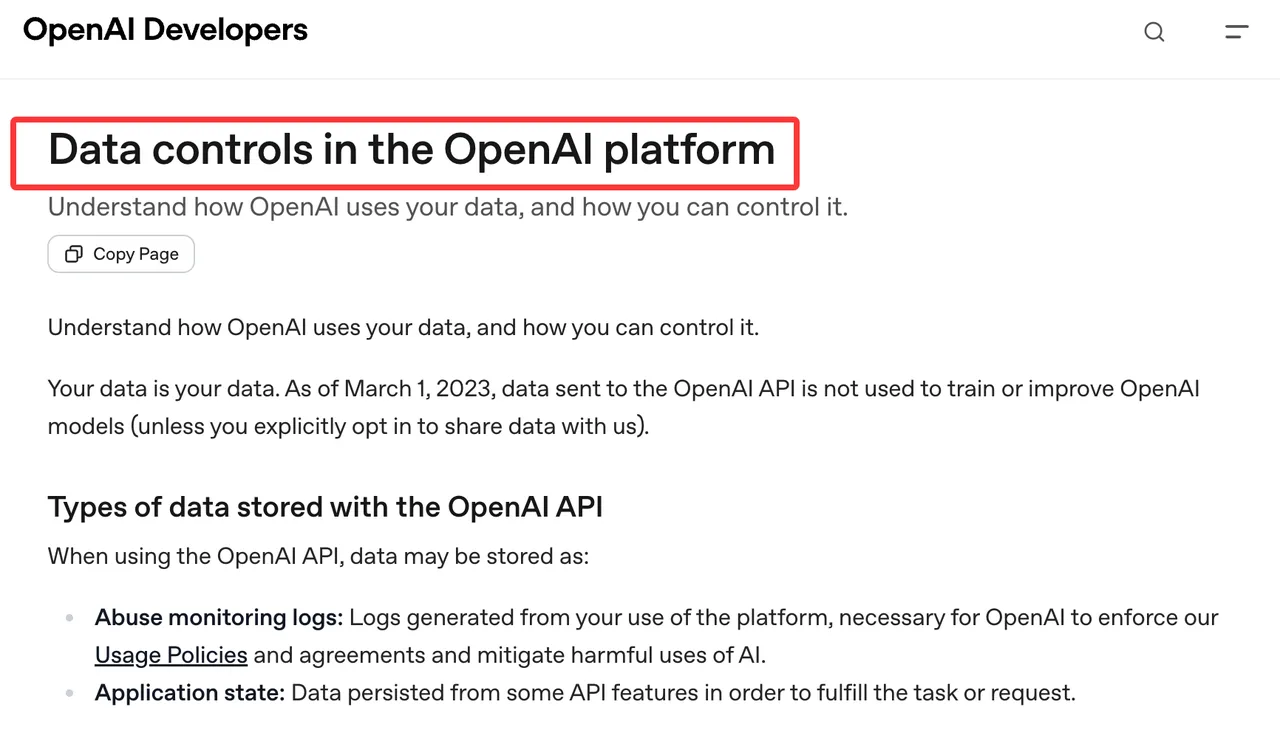 No separate Astra Pro API model ID is documented. For
 gpt-6-astra, approved eligible customers can use Zero Data Retention on supported endpoints under OpenAI’s API data controls. Buying ChatGPT Pro does not make conversations ZDR. Stored-conversation endpoints and some tools have separate rules; regional processing depends on project and endpoint.
Does OpenAI publish a separate system card for Astra Pro?
I found Astra-level safety documentation but no separate public system card for a distinct Astra Pro model as of September 8, 2026. The API catalog likewise lists gpt-6-astra, not a Pro-specific ID. Request written clarification if a deployment claims different safeguards or monitoring.
Are Pro conversations portable to standard Astra?
OpenAI does not document a guaranteed, lossless conversion from a Pro conversation to standard Astra. A workspace may permit another model to continue a chat, but availability and behavior can change. Retain the source pack, prompt, citations, and decision record, then run a clean standard-Astra verification.
Do Astra Pro outputs include provenance metadata?
Not as a blanket model guarantee. OpenAI’s content provenance documentation covers supported signals in images and audio, including C2PA and SynthID checks; it does not promise cryptographic provenance for Astra text. Preserve response IDs, timestamps, citations, tool traces, and reviewer records in the application audit layer.
Conclusion
The answer from this GPT-6 Astra Pro review is conditional. Upgrade a narrow set of high-value jobs only when paired runs show fewer interventions, higher acceptance, or materially lower expert rework. Keep standard Astra where tasks are bounded and retries are cheap. Treat Astra Pro access as a governed routing choice, not a universal quality badge.
Previous posts:
/filters:quality(82)/media/images/660b4b48-6351-40cd-ba00-51322b7455f4.webp)
/filters:quality(82)/media/images/273bf240-30e3-4e6c-8ae4-e3346b487bc7.webp)
/filters:quality(82)/media/images/bb7ec772-f694-45f4-9a9a-c0e5fd2e7d60.webp)
/filters:quality(82)/media/images/444431ee-1387-4a40-81ad-866e095a7c75.webp)
/filters:quality(82)/media/images/81212eb5-4b43-4cc4-92f4-38a0c439d258.webp)
/filters:quality(82)/media/images/5f15570a-6a68-432e-a6f1-1dcbf799ba81.webp)