
Fable 5.1 vs 5: What Changed for API Builders?
Fable 5.1 vs 5 for API builders, focused on cache economics, long-running reliability, and migration risk rather than launch hype.
I’m Dora. I started this comparison in the billing sheet, because that is where API migration stops being launch news. One route was already running Fable 5. The team wanted the Claude Fable upgrade. The useful question was smaller: does Fable 5.1 vs 5 change cache cost, long-running behavior, or fallback enough to justify production movement this week?
I checked Anthropic’s current Fable 5.1 model docs, pricing, migration notes, fallback material, Artificial Analysis, and the WaveSpeed catalog. This Fable model comparison is a decision note, not private benchmarking.
Quick Verdict for Existing Fable 5 Users
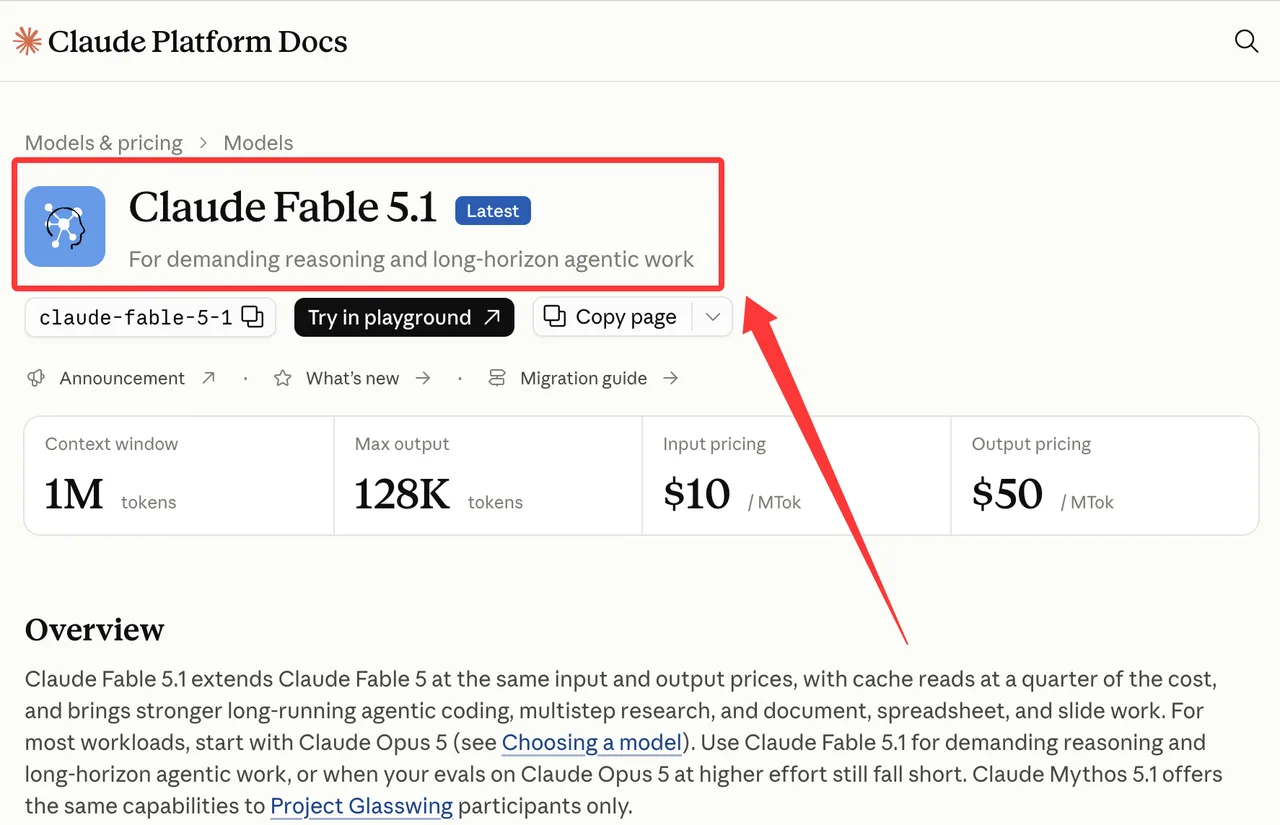
Migrate only if the workload reuses large context, runs multi-step agent sessions, and can absorb API changes. The cache price is real. It is not the whole decision.
Fable 5.1 keeps the same base rates as Fable 5: **$10 per million input tokens and $50 per million output tokens**. The visible price change is cache reads: $1 per million cached tokens on Fable 5, $0.25 on Fable 5.1.
The less clean part is behavior. Fable 5.1 improves long-running task support, but it changes tool forcing, thinking-block preservation, and history editing rules. If your runtime rewrites old messages, forces tools, or hides fallback, replacing the model ID is not enough.
Three Changes That Affect API Decisions
Cache Economics
The Claude pricing table shows the cache pricing change. Base input, output, five-minute cache writes, and one-hour cache writes stay aligned. Cache reads fall to a quarter of the Fable 5 rate.
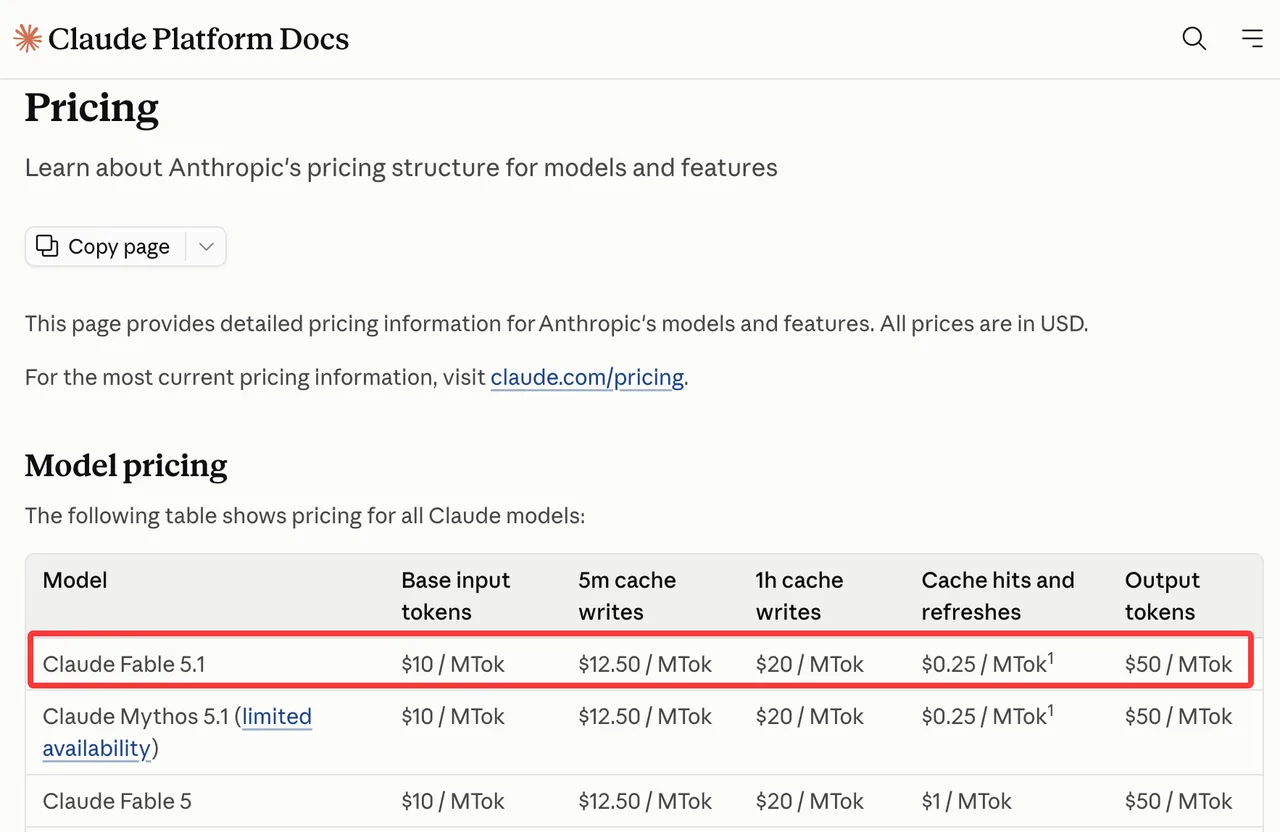
That helps when an agent rereads the same prefix: repository context, policy text, tool schemas, documents, or accumulated state. If your route is mostly short turns with little cache reuse, the savings shrink fast. I would not sell this as a generic 75% cost cut. It is a 75% cache-read cut.
For production math, split one completed task into uncached input, cache writes, cache reads, output, retries, and fallback traffic. If cache reads were not large before, the new price will not fix the route.
Long-Running Task Behavior
Anthropic positions Fable 5.1 for long-horizon agentic work, coding, multi-step research, and document-heavy tasks. The Fable 5.1 migration guide is where the practical friction shows up.
Forced tool choice is the first check. Fable 5 accepted tool_choice values such as any and named tool. Fable 5.1 returns a 400 error for those. The replacement pattern is auto, strict tools where available, and clearer instructions.
The second check is history. Fable 5.1 can read earlier thinking blocks, including from Fable 5. Older models cannot read Fable 5.1 thinking blocks. Editing earlier turns can invalidate later thinking blocks. Found the pattern on the third try: cache savings and thinking preservation both reward append-only history.
Safeguards and Fallback
Fable 5.1 keeps the broad safety-classifier categories used by Fable 5. The decision point is not whether safeguards exist. They do. The question is whether the application records what happened when they fire.
For API builders, fallback behavior has to be visible. A request can return a refusal with stop_details.category, or route through configured fallback logic. Sensitive-domain traffic, especially cyber and biology, should not be counted as Fable-only unless logs prove it.
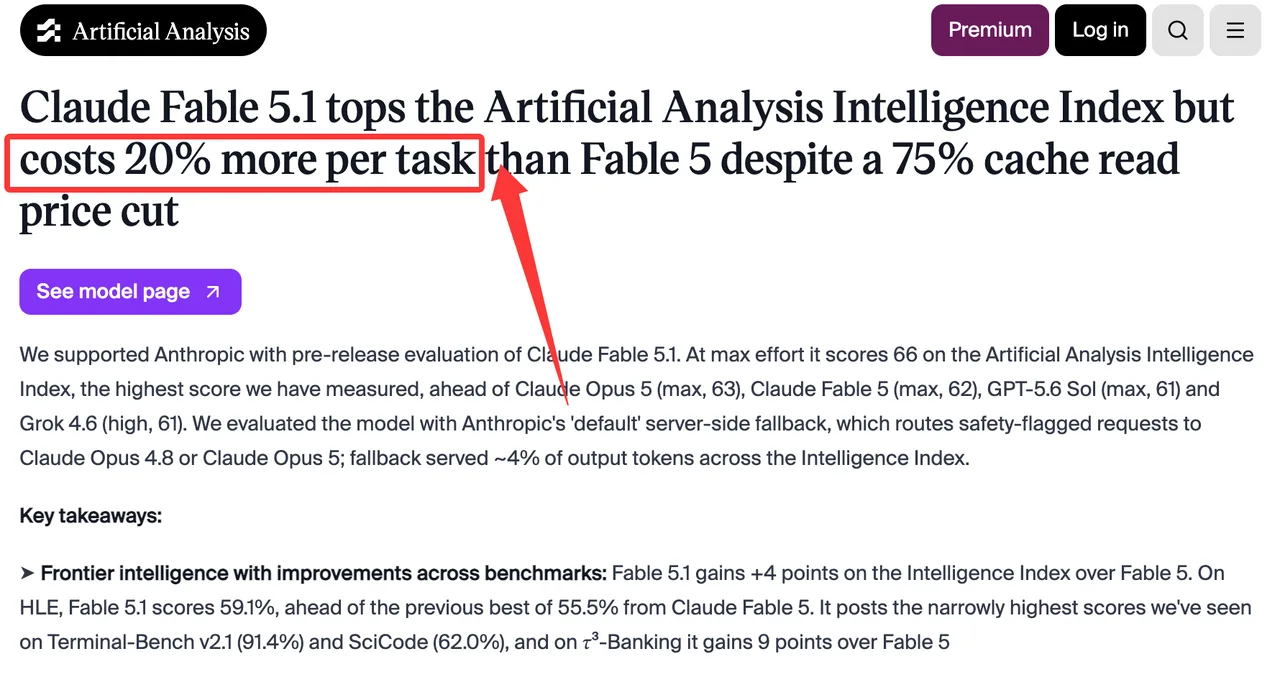
Launch benchmarks need the same caution. Artificial Analysis found Fable 5.1 leading its Intelligence Index at max effort, but also reported 20% higher cost per task than Fable 5 in that setup because output tokens increased. Useful signal. Not a migration verdict.
When Fable 5 Still Fits
Fable 5 still fits when the current route is stable, cache reads are not a major cost driver, and the application depends on behavior Fable 5.1 changes.
I would keep it for workflows with forced tool-call assumptions, brittle transcript rewriting, or evals that already pass at acceptable cost. Anthropic’s current docs still list Fable 5 as active, so this is not an emergency migration.
Migration Test for One Production Workflow
Pick one real workload already running on Fable 5. It should include files, tools, retries, and enough repeated context for cache to matter.
Run the same task on both routes. Compare cost per accepted result, cache-read share, output-token volume, fallback/refusal rate, and transcript-integrity errors. If Fable 5.1 saves on cache but spends more on output, the answer is not obvious. If it finishes more tasks without human repair, the higher token spend may still be acceptable.
My acceptance rule is boring: switch only if the new route beats Fable 5 on completed-task cost or completed-task quality, without raising fallback ambiguity.
FAQ

Do both Fable versions use the same data-retention controls?
Current Anthropic migration material says Fable 5.1 requires 30-day data retention and is not available under zero data retention unless Anthropic expressly authorizes it. It says this matches Fable 5 and Mythos 5.
Are both Fable versions covered by the same service commitments?
Not exactly. Both are active models, but Fable 5.1 is not supported on Priority Tier, while Fable 5 is documented as supporting it. Contract and marketplace terms still control.
Can both Fable versions process data in the same regions?
Fable 5.1 supports US-only inference on Anthropic-operated routes with a 1.1x multiplier. Fable 5 is also listed across Claude API, AWS, Google Cloud, and Microsoft Foundry routes. Partner platforms can differ.
Does Anthropic publish separate retirement dates for each Fable version?
Yes. The current table lists Fable 5 as active with retirement not sooner than June 9, 2027. Fable 5.1 is active with retirement not sooner than September 1, 2027.
Which cloud platforms expose both versions simultaneously?
Anthropic lists Fable 5.1 on Claude API, Amazon Bedrock, Claude Platform on AWS, Google Cloud, and Microsoft Foundry. Fable 5 is also documented across those routes. Account, region, and marketplace rollout can vary.
Conclusion
Fable 5.1 vs 5 is not a simple newer-is-better migration. The cache-read cut is concrete. The long-running behavior looks more useful for serious agent routes. The safeguards and fallback layer still need logging, not faith.
My conditional answer: move production traffic when repeated context is expensive, append-only history is already clean, and your eval shows better completed-task economics. Keep Fable 5 when the route is stable and cache pricing is not the real bottleneck. That’s it.
Previous posts:
/filters:quality(82)/media/images/5f15570a-6a68-432e-a6f1-1dcbf799ba81.webp)
/filters:quality(82)/media/images/b73c2438-6bdd-4b80-a229-8d71d8f819cf.webp)
/filters:quality(82)/media/images/427fd9f2-347d-4f86-a2d5-aee110cda01d.webp)
/filters:quality(82)/media/images/1773962750383987480_n3hqzHRZ.webp)
/filters:quality(82)/media/images/43fa0e7f-a0db-48d7-9bab-921d1225db30.webp)
/filters:quality(82)/media/images/5799ff56-3a73-40ca-a666-e4965d878496.webp)