
Fable 5.1 System Card: Safeguards and Limits
Fable 5.1 system card findings explained for builders who need to understand safeguards, evaluation scope, and production limits.
A model safety review starts in a routing table, a vendor-risk ticket, and a product owner asking whether the premium model can ship this week. The Fable 5.1 system card is useful there, but only as admission evidence, not launch permission. I checked the September 1, 2026 system card PDF linked from Anthropic’s Fable page.
My read: Fable 5.1 belongs in a controlled premium route only when safeguards, fallbacks, and audit logs are part of the launch plan.
What the Fable 5.1 System Card Covers
The card covers Claude Fable 5.1 and Claude Mythos 5.1. Anthropic says they are the same underlying model. Fable 5.1 is the general-access configuration with extra safety controls; Mythos 5.1 is more permissive for vetted access programs. A Mythos result with safeguards off is not the same artifact as Fable behavior in production.
The card reports pre-deployment evaluations across Responsible Scaling Policy areas: cyber, safeguards and harmlessness, agentic safety, alignment, model welfare, and capabilities. It is broad, but still Anthropic-authored evidence. I paused here because this is where launch decks often become too smooth. Use the card to define model risk limits, not to erase them.
Capabilities and Safeguards That Affect Builders
Cybersecurity and Biology Boundaries
The key builder fact is that Fable safeguards intentionally change behavior in high-risk dual-use domains. Anthropic says many cybersecurity and biology queries are routed away from Fable 5.1 when flagged. The card also makes clear that some cyber capability results are for Mythos 5.1 with safeguards off, because Fable’s cyber classifiers triggered across tested cyber capability evaluations.
That makes the evidence operational. If your agent writes code, reviews security findings, reads research PDFs, or touches biomedical workflows, your approval checklist needs a domain policy, a reviewer threshold, and logs showing whether a request was answered, refused, or rerouted. Good enough for a prototype is not good enough for governed launch.
Fallback Behavior in Sensitive Domains
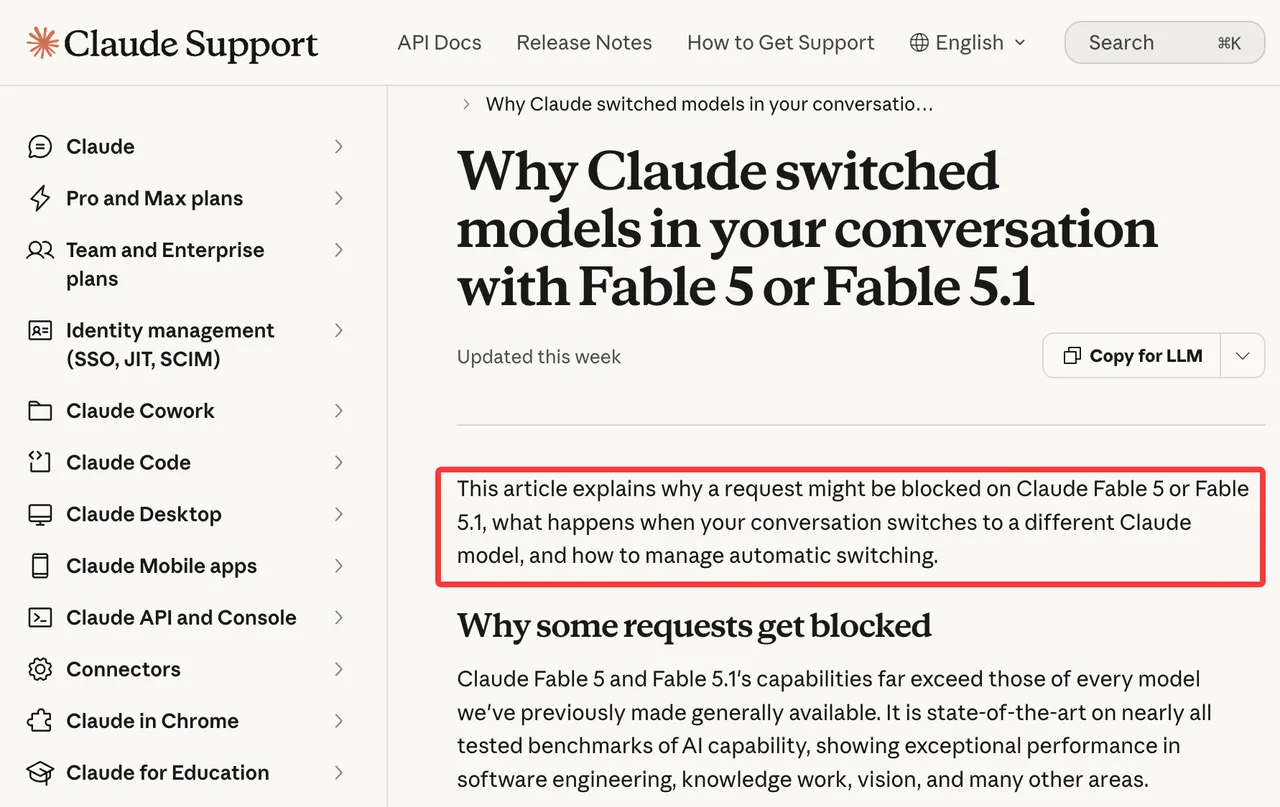
Anthropic’s fallback help article says flagged Fable 5 or Fable 5.1 conversations may switch models. In most Claude applications, cyber requests route to Opus 4.8 and biology requests route to Opus 5. API customers must configure this through the Fallback API.
For API teams, fallback behavior is not a footnote. It changes which model served the answer, what the user experiences, how cost is attributed, and what an evaluation measured. If WaveSpeed or another independent model access layer is in the path, it should preserve provider-returned model and fallback metadata. It should not be described as the provider of Anthropic’s safety mechanism.
How to Read the Evaluation Evidence
Test Scope, Harnesses, and Comparability
The strongest reading of the Claude safety evaluations is narrow: compare results inside the stated setup, with the named model configuration and safeguards state. Anthropic’s Fable page says Fable 5.1 was evaluated with production safeguards enabled; when safeguards intervened, some tasks scored zero or were completed by fallback models. It also notes OSWorld 2.0 task-release changes that make earlier public scores not directly comparable.
A benchmark may be measuring raw model capability, safeguarded behavior, fallback-inclusive behavior, or some mix. Your scorecard should label those buckets before procurement quotes one number out of context.
Results That Need More Context
The card includes prompt-injection evidence from Gray Swan’s Shade testing. In that stated Q1+Q2 2026 setup, with extended thinking, no prompt-injection-specific protections, and fallbacks included, Fable 5.1 showed 0.1% attack success at k=1 and 1.0% at k=15. That is a useful signal, not a universal application-security rate.
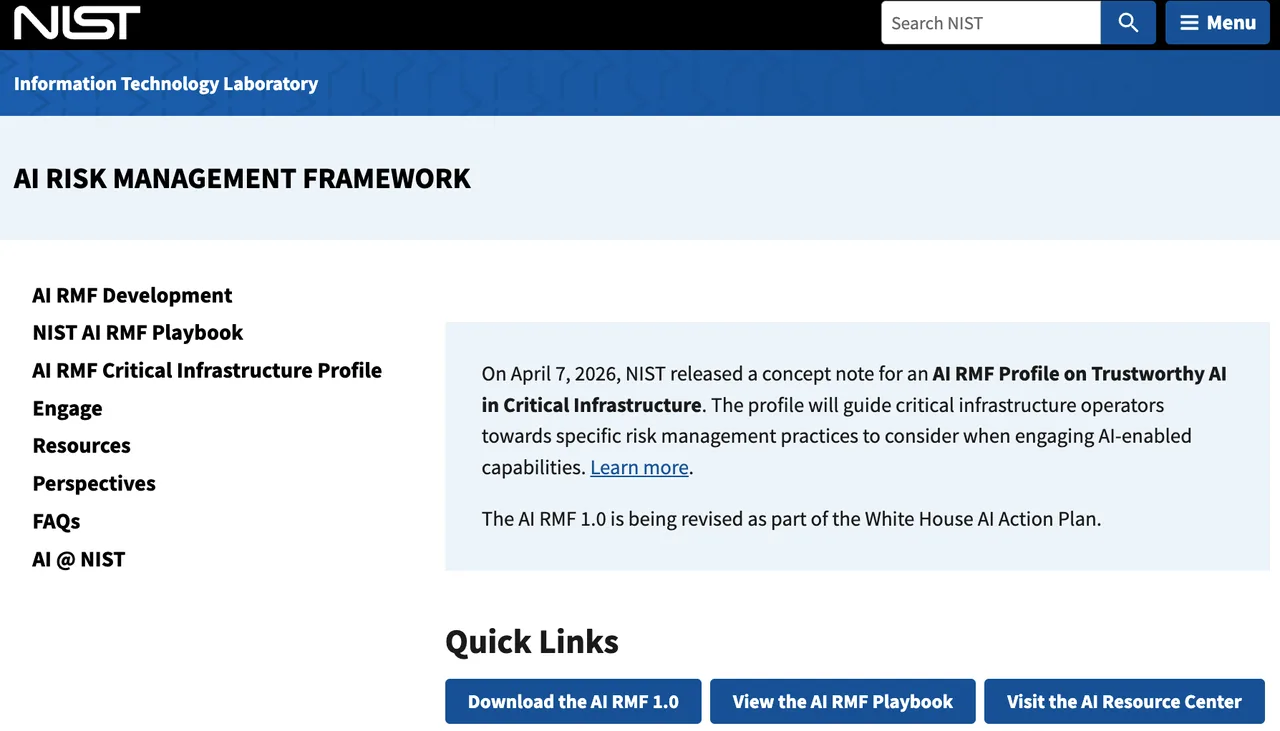
The card also names 10a Labs work against cyber prompts and discusses an external-testing sandbox incident. Treat that as partial transparency, not independent certification. A neutral control plane should pair vendor evidence with its own task set and governance language, such as the NIST AI Risk Management Framework, which separates governance, mapping, measurement, and management.
Production Implications for API Teams
My production recommendation is conditional. Fable 5.1 can fit long-running coding, analysis, and knowledge-work agents when the product can tolerate refusals and reroutes in sensitive domains. It is a weaker fit when the core promise requires consistent expert answers in cyber, biology, chemistry, or other areas where safeguards may redirect the task.
Before switching traffic, require five controls: requested model, served model, fallback status, latency, and cost attribution in logs; a staging eval set with sensitive-domain prompts; human review for flagged domains; rollback routes; and procurement wording that identifies Anthropic self-evaluation as vendor evidence. The practical question is not “Is it safe?” It is “Can we explain, reproduce, and stop every sensitive route?”
FAQ
Is the system card revised when safeguards change?
The checked card is dated September 1, 2026. I did not find a public promise that every safeguard change creates a same-day card revision. Treat the date as the version marker and recheck Anthropic pages before approval.
Does Anthropic name its external red-team partners?
Yes, in part. The card names Gray Swan and 10a Labs in specific testing sections, while also referring to external testers generally. Do not treat those examples as a complete roster.
Is the Fable 5.1 system card available in accessible formats?
The artifact I verified is a 212-page tagged PDF. I did not verify a separate HTML, EPUB, or plain-text edition. Teams with strict accessibility rules should request an accessible source from Anthropic.
What license governs reuse of system-card tables and charts?
I did not find a separate reuse license in the PDF text. Treat tables and charts as Anthropic material: link to the original, quote only what is needed, and ask permission before reproducing figures.
How can researchers report a new safety issue?
Anthropic’s public vulnerability reporting page points researchers to channels for security vulnerabilities and universal jailbreaks. Keep reports specific enough to validate, but avoid public operational detail before coordination.
Conclusion
The card is strongest as a governance input. It shows where Anthropic sees risk, where Fable safeguards intervene, and where fallback can change the actual served model. My verdict is favorable for controlled premium routing, cautious for sensitive domains, and strict on auditability. Admit the model only where you can see the route, explain the route, and stop the route.
Previous posts:
/filters:quality(82)/media/images/b73c2438-6bdd-4b80-a229-8d71d8f819cf.webp)
/filters:quality(82)/media/images/427fd9f2-347d-4f86-a2d5-aee110cda01d.webp)
/filters:quality(82)/media/images/1773962750383987480_n3hqzHRZ.webp)
/filters:quality(82)/media/images/43fa0e7f-a0db-48d7-9bab-921d1225db30.webp)
/filters:quality(82)/media/images/5799ff56-3a73-40ca-a666-e4965d878496.webp)
/filters:quality(82)/media/images/7a8850fc-caf6-482f-ac4d-5ddbe64ec47c.webp)