
Fable 5.1 Pricing for Agent Workloads
Fable 5.1 pricing explained through one agent workload, including cache economics, output usage, and the checks teams need before routing traffic.
I keep a small pricing scratchpad for agent routes. It is ugly. It is also where the real decision happens. Fable 5.1 pricing looks simple on the surface: input, output, cache. Then an agent runs for 40 minutes, rereads the same repo context six times, writes a long final report, and hits one safety fallback. The neat price table stops being enough.
I’m Dora. This note is for API teams estimating one agent workload. Not a generic Claude API pricing table. Not a ROI story. I did not run a private benchmark here. I read the current public sources and built one auditable bill.
Current Fable 5.1 Rates and Cache Changes
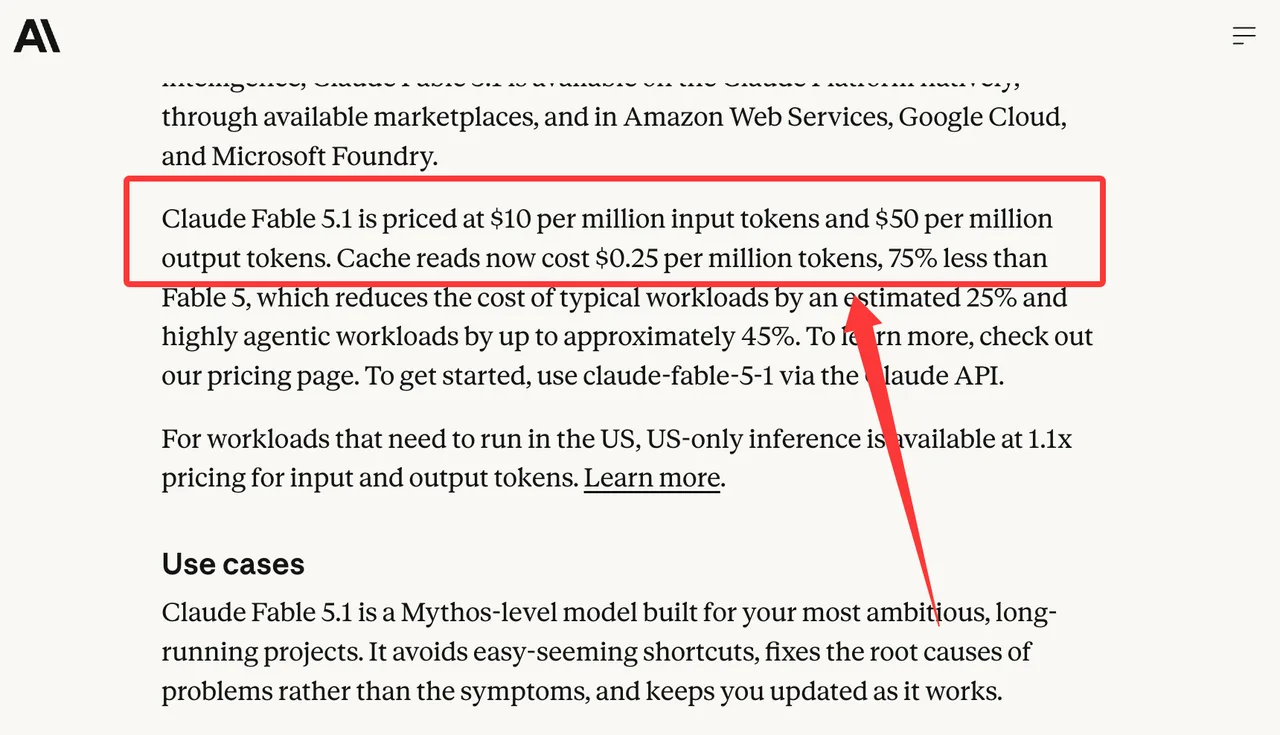
Anthropic’s Fable page lists Fable 5.1 at $10 per million input tokens and $50 per million output tokens. The same page says cache reads now cost $0.25 per million tokens, and frames that as the main cost change for agentic work.
The more useful table is in the Claude pricing docs. It breaks Fable 5.1 into five billable pieces:
| Item | Published rate |
|---|---|
| Base input | $10 / MTok |
| 5-minute cache write | $12.50 / MTok |
| 1-hour cache write | $20 / MTok |
| Cache hit / refresh | $0.25 / MTok |
| Output | $50 / MTok |
That is the whole pricing surface I need for this article. The official “typical savings” claim is not my ROI number. It only says that repeated cache reads can matter. Hypothesis confirmed, but only for workloads that actually reuse context.
Cost Model for One Agent Workflow
Here is the scratchpad version.
Assume one code-review agent job. It loads a large repo summary, keeps working across seven turns, reuses the same context, writes findings, and has one small fallback near the end.
| Component | Token assumption | Rate | Cost |
|---|---|---|---|
| 1-hour cache write | 80,000 | $20 / MTok | $1.60 |
| Six cache reads | 480,000 | $0.25 / MTok | $0.12 |
| Fresh uncached input | 30,000 | $10 / MTok | $0.30 |
| Fable output | 24,000 | $50 / MTok | $1.20 |
| One Opus 5 fallback attempt | 6,000 in + 1,500 out | $5 / $25 MTok | $0.07 |
Estimated task cost: $3.29.
I rounded the fallback line. Exact arithmetic gives $0.0675 for that fallback attempt. Close enough for budgeting. Not close enough for finance reconciliation.
Reused Context and Cache Reads
Cache read pricing is the reason this workload changes shape.
Without caching, rereading the same 80,000-token context seven times would cost $5.60 in Fable input alone. With a 1-hour cache write and six reads, that shared prefix costs $1.72. The cache write hurts at the start. The reads pay it back.
This is where agent cost per task differs from chat cost per message. A short prompt does not care much about cache. A repo agent does. One fewer full-context resend. Sounds small. Adds up fast.
Output Tokens and Effort Levels
The output line is not a rounding error. In the example, 24,000 output tokens cost $1.20. That is almost as much as the initial cache write.
Effort levels do not appear as a separate price line in the public table. They change cost through behavior: more reasoning, more tool work, more output, or more turns. I would not budget from the effort label alone. I would budget from actual token traces.
A model routing budget should track output separately. Teams often obsess over input context and miss the report, patch, explanation, and retry text. That is where the bill quietly grows.
Fallback Traffic and Cost Attribution
Fallback has to be costed as its own event.
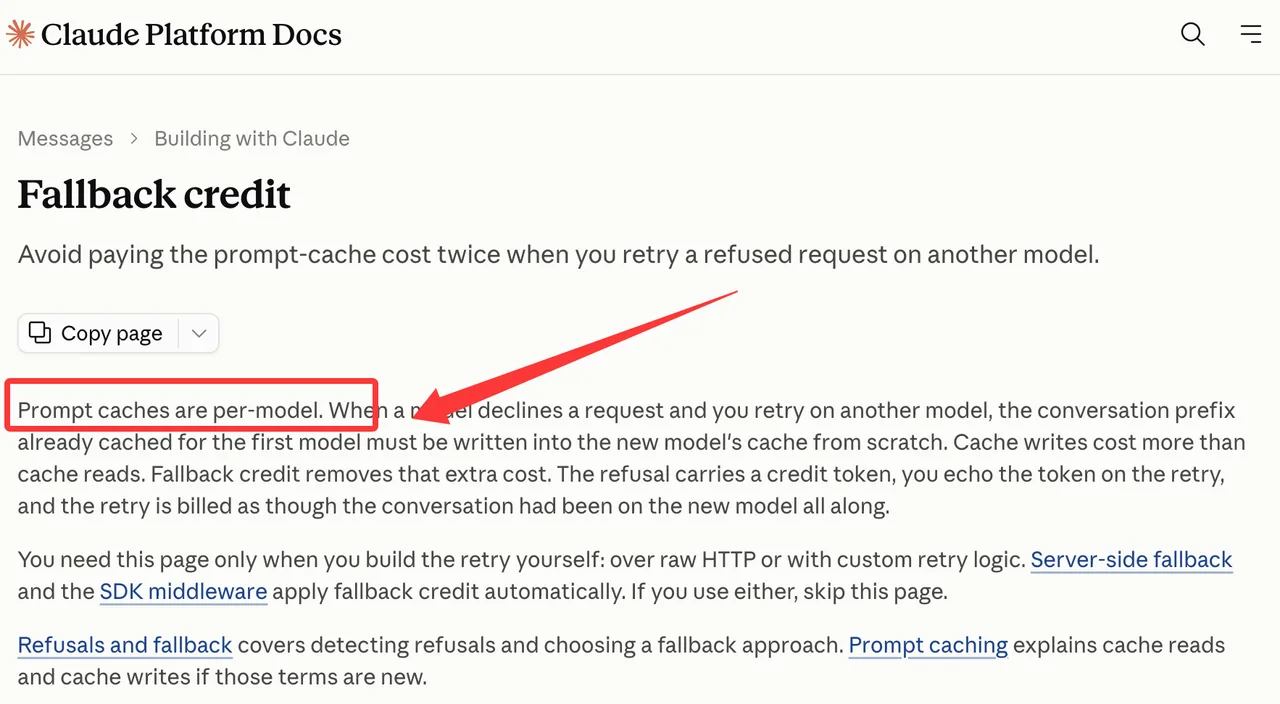
Anthropic’s fallback credit docs explain the cache problem: prompt caches are per model, so retrying a refused request on another model can otherwise force a fresh cache write. Fallback credit exists to avoid paying that prompt-cache cost twice when the retry qualifies.
In the example, I attributed the answer cost to Opus 5 because that is the model serving the fallback attempt. I would log the refused Fable turn, the fallback model, the token counts, and whether fallback credit applied. Flattening it into “Fable cost” makes the report easier to read and less true.
When Sticker Price Misleads
The sticker price says Fable 5.1 is expensive. That statement is true and not enough.
A single uncached Fable request can cost more than a cheaper Claude route. A long agent job with heavy context reuse may narrow the gap because cache reads are cheap. A verbose agent can widen the gap again because output is expensive. A safety fallback can move part of the cost to another model. A regional or marketplace route can change the final bill.
I paused here because this is where pricing articles usually get too clean. Real agent workloads are lumpy. They have retries, long tails, tool payloads, context edits, and review artifacts. The only stable unit is accepted work.
Budget Checks Before Switching Traffic
Before moving traffic, I would run one measured workload through the route and record:
- uncached input tokens
- cache creation tokens
- cache read tokens
- output tokens
- fallback attempts
- final serving model
- cost by workspace or API key
- reviewer acceptance
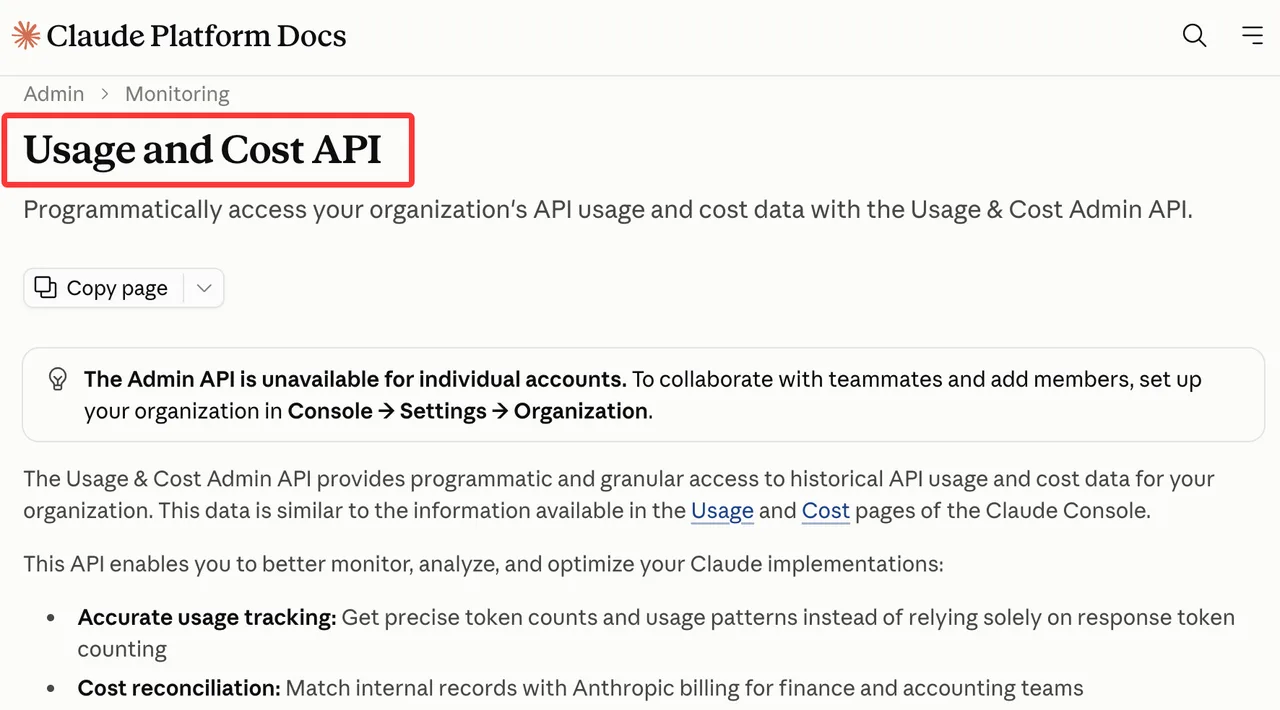
For finance, use Anthropic’s Usage and Cost API rather than response token estimates alone. Response usage is useful for debugging. Billing reconciliation needs the reporting surface.
FAQ
What invoice fields identify Fable 5.1 usage?
For first-party Claude reporting, look for model-level usage, workspace IDs, API key grouping, cached input, cache creation, uncached input, and output tokens. Marketplace invoices may collapse usage into provider billing units, so keep your own request-level logs.
Do cloud marketplaces add provider-specific Fable fees?
They can. First-party Anthropic rates are not always the final marketplace bill. Regional routing, marketplace billing units, private offers, currency, and taxes can change what finance sees.
Are cache-write charges refunded after a failed Fable 5.1 request?
Not as a blanket rule. Cache writes are charged when content is stored. Fallback credit is the specific mechanism for eligible safety-refusal retries where another model must reuse the cached prefix.
Can organizations cap spend by workspace or API key?
They can track spend by workspace and API key. Hard caps depend on plan, admin settings, and gateway design. For production agents, I would enforce budget limits in the routing layer too.
Are taxes included in published Fable 5.1 rates?
No. Public model rates are listed before taxes and marketplace handling. Treat tax as a billing-layer item, not a model-rate item.
Conclusion
My read on Fable 5.1 pricing is plain: the input/output sticker price is only the start. For agent workloads, the real bill comes from cache reuse, output length, fallback behavior, and routing controls. I would switch traffic only after one measured workload proves the agent cost per task is acceptable. Not cheaper in theory. Acceptable in the bill.
Previous posts:
/filters:quality(82)/media/images/b73c2438-6bdd-4b80-a229-8d71d8f819cf.webp)
/filters:quality(82)/media/images/427fd9f2-347d-4f86-a2d5-aee110cda01d.webp)
/filters:quality(82)/media/images/1773962750383987480_n3hqzHRZ.webp)
/filters:quality(82)/media/images/43fa0e7f-a0db-48d7-9bab-921d1225db30.webp)
/filters:quality(82)/media/images/5799ff56-3a73-40ca-a666-e4965d878496.webp)
/filters:quality(82)/media/images/7a8850fc-caf6-482f-ac4d-5ddbe64ec47c.webp)