
HUMAIN M3 Review for Arabic Multimodal Apps
HUMAIN M3 review for teams assessing a limited-preview Arabic multimodal model, focused on fit, access constraints, and production risk.
Arabic multimodal products fail in expensive corners: dialect shift, visual grounding, and tool-call drift. This HUMAIN M3 review asks one question only: is the limited preview worth a controlled PoC for an API team building Arabic-first text, image, and video experiences?
It’s John. I have not run a preview account; this is an official-evidence review as of September 3, 2026, not a hands-on benchmark.
Quick Verdict for Arabic Multimodal Products
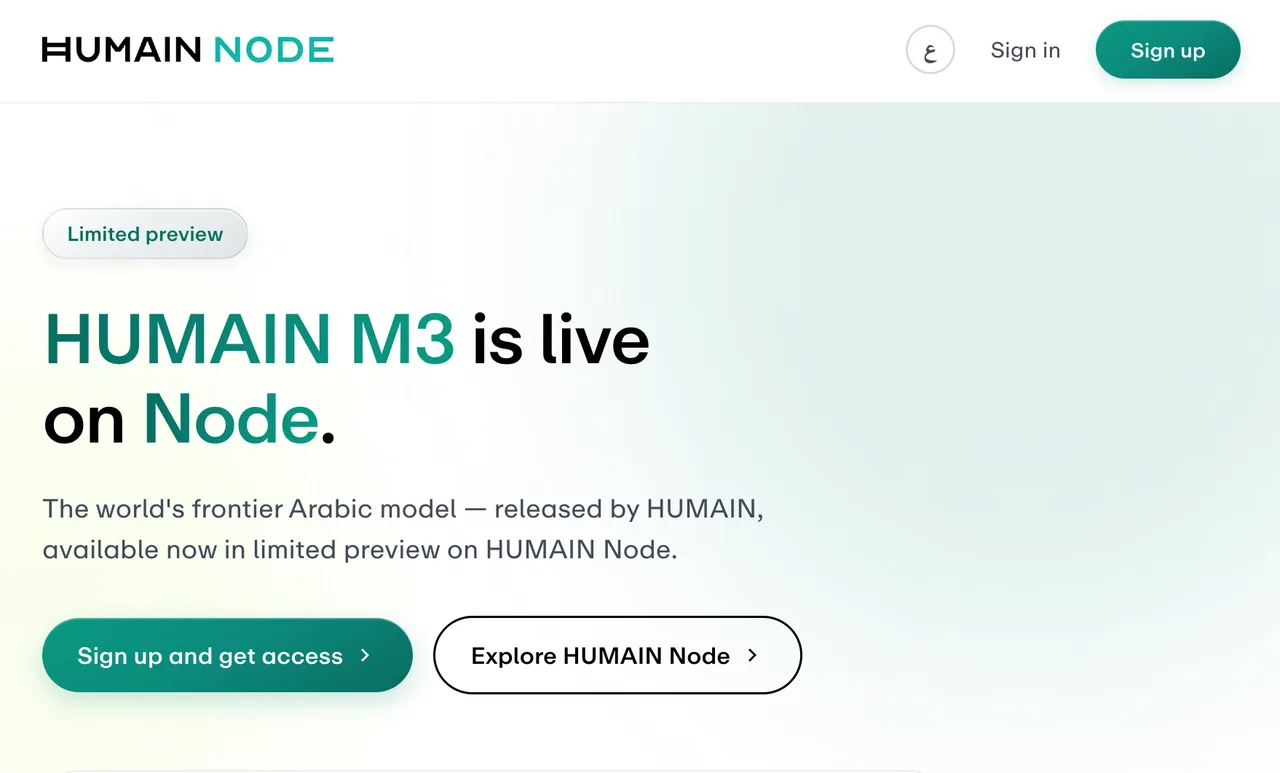
HUMAIN M3 is worth a PoC if your team needs an Arabic AI model checked across language quality, multimodal understanding, and early agent behavior. It is not ready for a live customer feature.
HUMAIN Node says M3 is live in limited preview, available through Playground and an OpenAI-compatible API using humain-m3. The same page frames its benchmark numbers as HUMAIN’s evaluation of the previewed checkpoint. Useful signal. Not independent reliability evidence.
Do not switch models yet. Look at the workflow first.
What HUMAIN M3 Offers in Limited Preview
Arabic Capability Scope
The strongest reason to test M3 is Arabic coverage. HUMAIN reports an 89.37% average across seven Arabic benchmarks and says the model leads five of seven against named frontier references. The suite spans understanding, knowledge, exams, proficiency, truthfulness, and RAG.
Treat those scores as vendor-reported model evaluation. For a product team, the harder question is whether M3 handles your user mix: Modern Standard Arabic, Saudi dialect, regional phrasing, code-switching, transliteration, and domain terms.
Text, Image, and Video Inputs
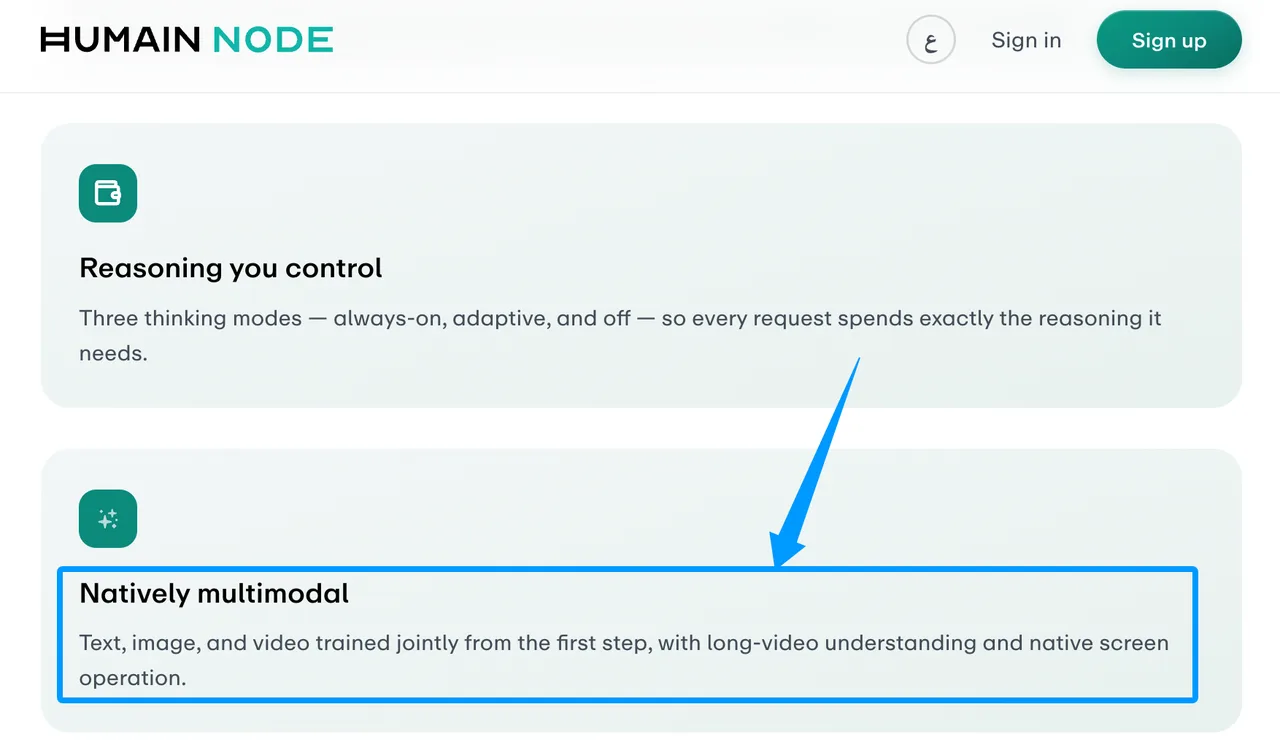
HUMAIN describes M3 as natively multimodal, with text, image, and video trained jointly, plus long-video understanding and native screen operation. That makes it relevant for a multimodal Arabic API that needs to inspect screenshots, explain media, or answer visual questions in Arabic.
Limited preview access uses guarded Playground and, where enabled, scoped API access. Research preview may expose more of the checkpoint, but it carries extra acceptance, consent, and confidentiality constraints.
Tool Use and Long-Horizon Tasks
HUMAIN claims M3 is designed for tool use, computer use, and long-horizon agent workflows in Arabic and English. I would test that only inside a sandbox. A good single output does not mean the production workflow is ready.
Use one harmless task: read Arabic instructions, inspect an image or short video if enabled, call a controlled tool, and produce an auditable Arabic response. Log every failed step.
Production Blockers to Resolve
Preview Terms and Data Handling
The Limited Preview Terms are the hard stop. They say the preview is experimental, incomplete, not production-grade, may change or stop without notice, and is for evaluation, testing, and non-production prototyping. They also say every prompt and response is recorded.
The Privacy Notice says prompts, files if enabled, responses, feedback, technical logs, token counts, safety signals, account data, and approximate location may be collected. Raw user-linked inputs and outputs are ordinarily retained for 12 months, then deleted or de-identified unless a longer period is required.
So no customer data, regulated content, or confidential product screenshots. Use synthetic Arabic samples until legal and security review says otherwise. This is general information, not legal advice.
Reliability, Latency, and Support Evidence
The model terms allow HUMAIN to change model behavior, weights, safeguards, tools, context limits, output format, and availability. Results may vary across versions, sessions, languages, users, and identical prompts.
That blocks production adoption. Measure latency, refusal behavior, malformed outputs, hallucinated citations, dialect drift, image/video misunderstanding, and retry behavior. If API limits, region, support path, or SLA are not disclosed for your account, mark them unresolved.
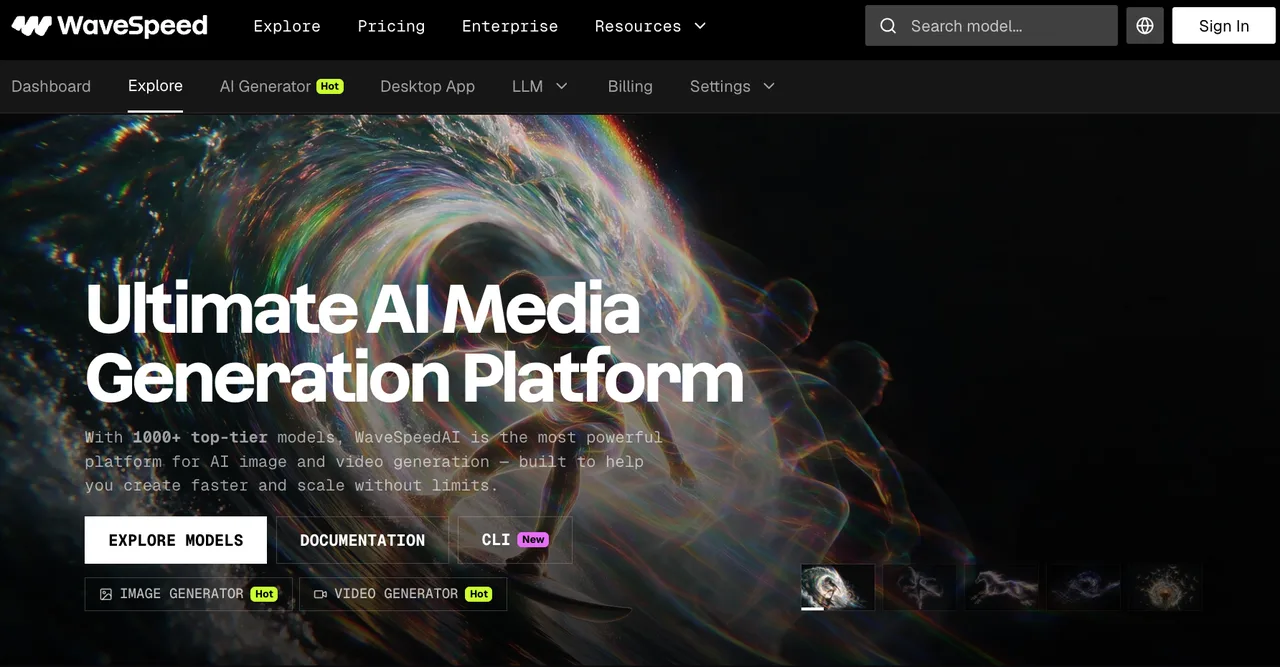
I did not find HUMAIN M3 listed in the current public WaveSpeedAI model catalog. If it appears later, use the exact published model ID and schema. Do not infer availability from launch coverage.
Build a Go-or-No-Go Evaluation
Keep the PoC narrow. Submit synthetic Arabic text plus one approved visual input, if image or video input is enabled. Ask for a structured Arabic answer with a short justification and a tool action plan. Run the same task across MSA, Saudi dialect, another target dialect, and mixed Arabic-English input.
The go signal is boring: stable API access, clear limits, acceptable dialect behavior, predictable guardrail latency, exportable logs, and a documented data path. The no-go signal is also boring: unclear retention exceptions, no usage export, unstable output shape, or a preview mode your intended users cannot touch.
FAQ
Which countries can request HUMAIN M3 preview access?
The terms say eligible adults may use the preview worldwide where HUMAIN makes it available and where access is lawful. HUMAIN may still block access by country, person, organization, network, or use case. I did not find a fixed public country list.
Can preview users export HUMAIN M3 usage records?
HUMAIN Node mentions usage and cost views, and the privacy terms describe timestamps, token counts, request identifiers, and logs. I did not find a public bulk-export promise for preview users. Treat export as account-specific.
Are Arabic dialect results published separately?
No separate dialect table was published on the public page I checked. HUMAIN mentions Saudi dialect testing and Arabic alignment, but the visible benchmark table is organized by benchmark name.
Which accessibility features are available in HUMAIN Node?
I did not find a public accessibility statement or WCAG claim for HUMAIN Node. Test keyboard navigation, Arabic screen-reader behavior, contrast, focus order, and media input controls during PoC.
Does HUMAIN offer a process for reporting M3 safety issues?
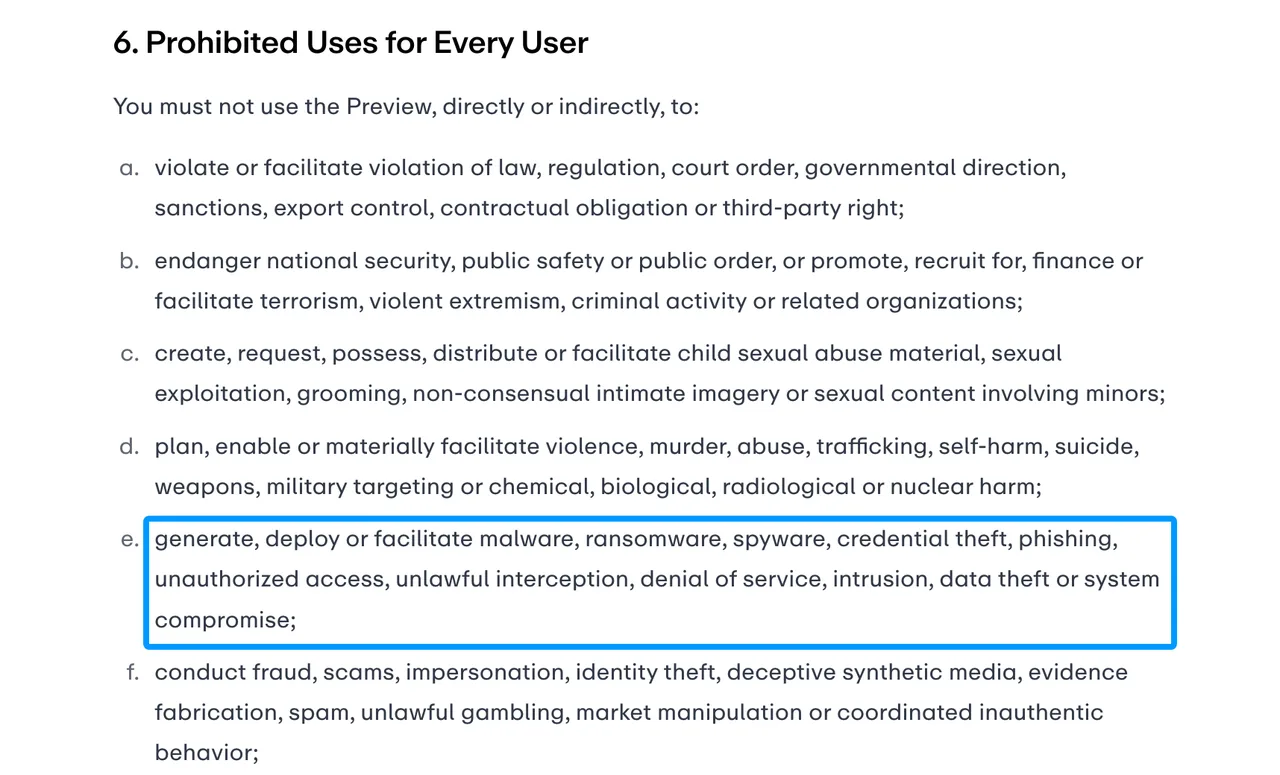
Yes, but public wording points users to the preview interface, Privacy Notice, or support/legal channels rather than a standalone security portal. The Acceptable Use Policy tells users to promptly report harmful or unlawful outputs, safeguard failures, vulnerabilities, privacy concerns, unauthorized access, and imminent harm through the relevant interface channel.
Conclusion
The HUMAIN M3 review verdict is cautious: enter PoC if Arabic multimodal quality matters, but keep it synthetic, logged, and non-production. Demos show the ceiling. Production shows the floor. Find the floor before any customer workflow depends on it.
Previous posts:
/filters:quality(82)/media/images/b73c2438-6bdd-4b80-a229-8d71d8f819cf.webp)
/filters:quality(82)/media/images/427fd9f2-347d-4f86-a2d5-aee110cda01d.webp)
/filters:quality(82)/media/images/1773962750383987480_n3hqzHRZ.webp)
/filters:quality(82)/media/images/43fa0e7f-a0db-48d7-9bab-921d1225db30.webp)
/filters:quality(82)/media/images/5799ff56-3a73-40ca-a666-e4965d878496.webp)
/filters:quality(82)/media/images/7a8850fc-caf6-482f-ac4d-5ddbe64ec47c.webp)