
Qwen3.5-9B Review for Local Multimodal AI
Qwen3.5-9B review for local teams evaluating multimodal inputs, reasoning, tool use, context, deployment options, and evidence-backed limits.
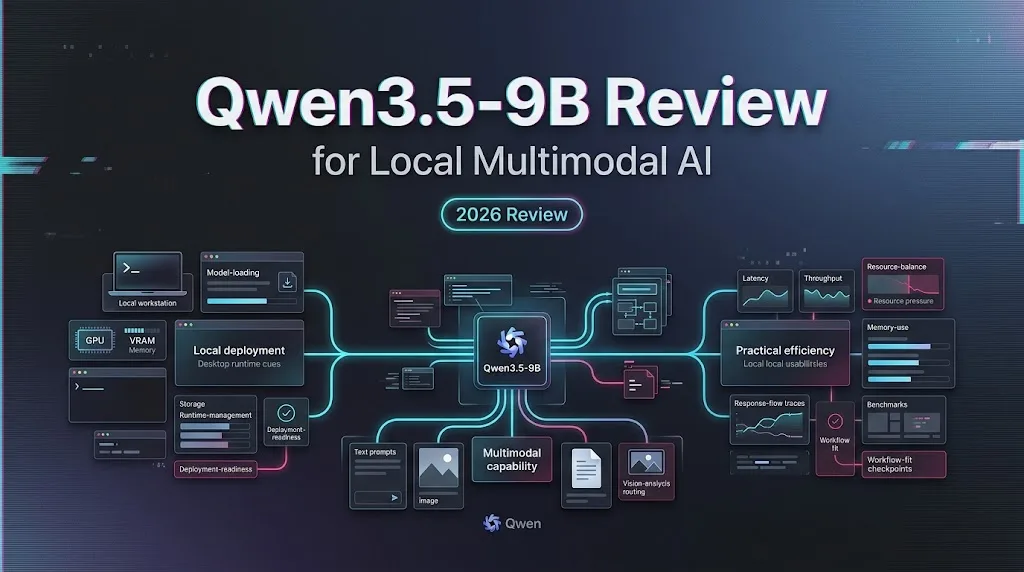
Dora here. I paused at the model name first. A 9B local multimodal model sounds small enough to run close to the product team, but large enough to punish lazy deployment guesses. This Qwen3.5-9B review is for developers and AI product teams checking whether one local model can cover text, image, video understanding, reasoning, and tool-use tests.
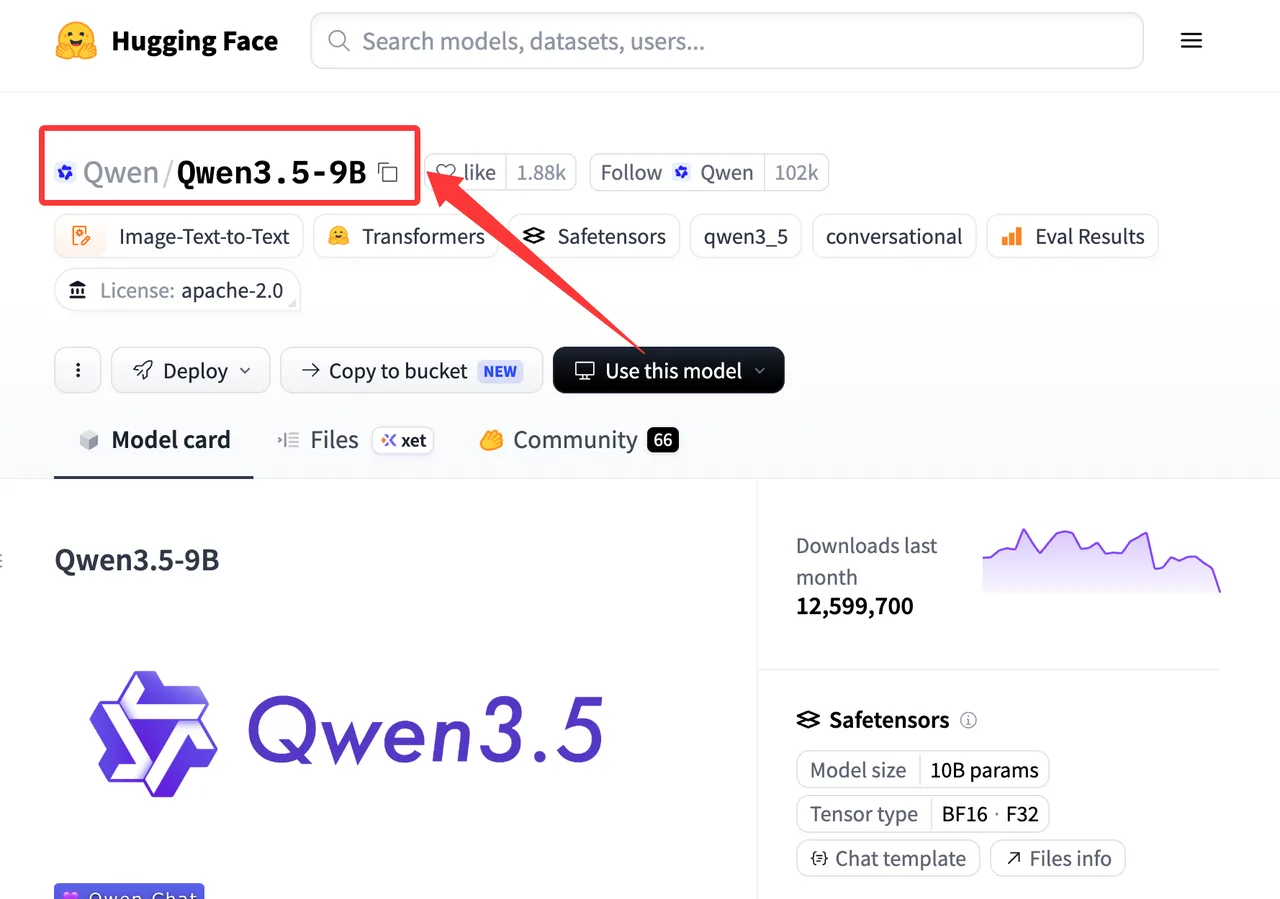
As of August 31, 2026, the official Qwen3.5-9B model card lists the checkpoint as image-text-to-text, Apache-2.0 licensed, and released with Hugging Face Transformers-format files. I did not run private benchmarks for this page. This is a source-checked workload review.
What Qwen3.5-9B Combines in One Local Model
Text, Image, Video, Reasoning, and Tool Use
Qwen3.5 9B is not just a small local LLM with a vision wrapper. The model card describes a causal language model with a vision encoder, and its examples cover image input, video input, thinking mode, non-thinking mode, OpenAI-compatible serving, and tool calling.
That makes it useful for local multimodal model evaluation. A team can test screenshots, receipts, charts, short clips, coding tasks, and structured tool calls against one checkpoint. Fewer moving parts. Still plenty of ways to fail.
The broader Qwen3.5 release note is titled “Qwen3.5: Towards Native Multimodal Agents”. I would keep that as context, not proof that the 9B model is best for every agent workload.
Dense 9B Architecture and Long-Context Trade-Offs
The official overview lists 9B language-model parameters, 32 layers, hidden size 4096, and a hybrid layout using Gated DeltaNet plus full attention. The configuration file shows a native max position setting of 262,144 tokens.
Long context helps with document packets, multi-image review, and video-frame summaries. It also increases memory pressure and slows debugging. The model card describes extension up to 1,010,000 tokens through YaRN-style scaling, but also notes that static scaling can affect shorter inputs.
So that’s where the bottleneck was. Long context is a capability, not a free setting.
Review the Model Against Real Workloads
Visual Understanding and Document Tasks
For a Qwen vision model, start with boring files: invoices, UI screenshots, product labels, charts, slides, and short training videos. Pretty samples are poor acceptance tests.
| Workload | Passing Signal | Failure Evidence |
|---|---|---|
| Receipt OCR | Correct totals, dates, fields | Missed rows, wrong currency |
| UI screenshot | Finds controls and state | Confuses disabled and active |
| Chart review | Captures labels and trend | Invents hidden values |
| Short video QA | Answers from visible frames | Adds events not shown |
| Long document packet | Keeps references stable | Loses earlier constraints |
Benchmarks can guide the first pass. They cannot replace product-like files. If the model will read customer PDFs, test PDF-like scans. If it will inspect UI recordings, test actual UI recordings.
Coding, Agent, and Instruction-Following Tests
The agent lane needs separate testing. A model can read images well and still mishandle tools.
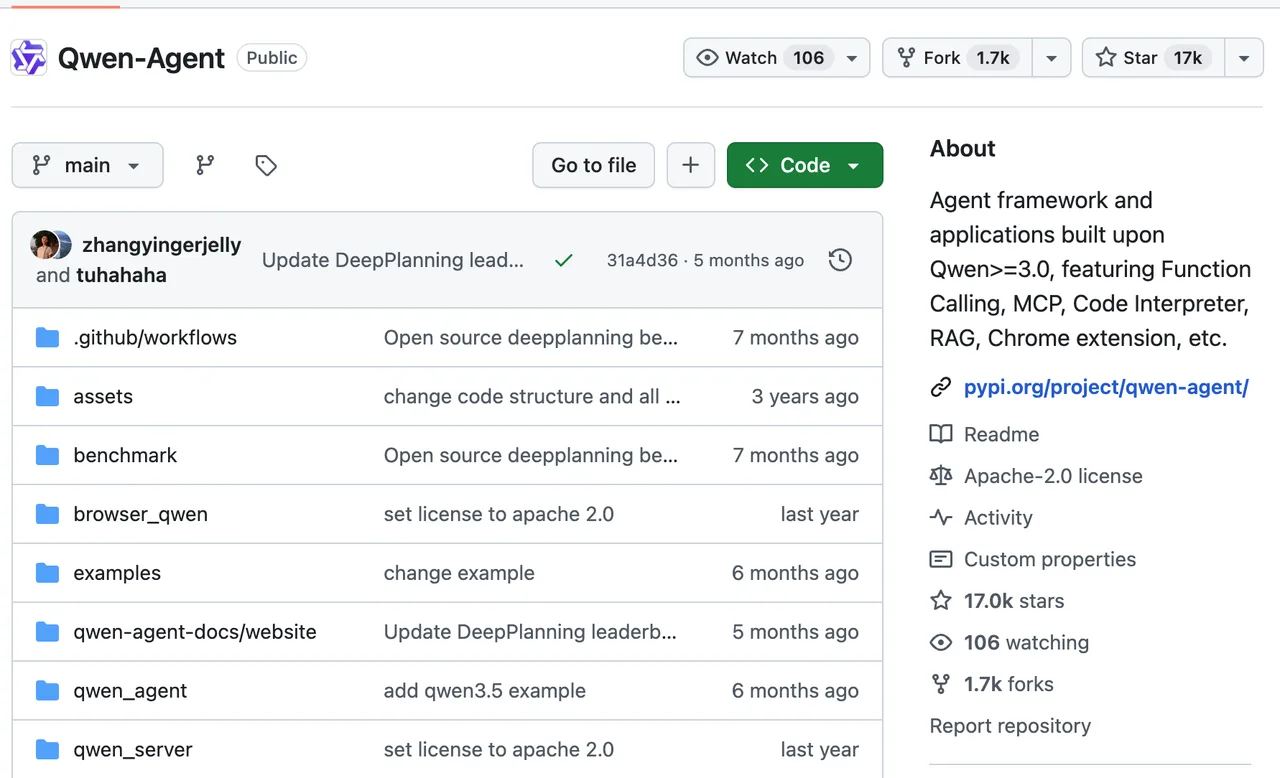
Use small tests first: summarize a local file, modify a toy repo with a failing test, then call two tools in order while returning valid JSON. The model card points to Qwen-Agent for agent applications and shows MCP-style tool configuration.
Record the serving command, parser settings, sampling values, chat template behavior, and failed outputs. Qwen3.5 thinks by default. Multi-turn history should preserve final answers cleanly, without accidentally carrying reasoning text into later turns.
Found the pattern on the third try: agent reliability is often state management before it is intelligence.
Choose a Practical Deployment Path
Transformers for Inspection and Dedicated Serving Engines
Use Transformers first for inspection. It is the simplest way to verify tokenizer files, processor behavior, chat template, input format, and basic generation.
For serving, the model card names vLLM, SGLang, and KTransformers. The vLLM recipe describes Qwen3.5-9B as a dense multimodal 9B model that can fit on a single 24 GB GPU, with vLLM 0.17.0+ and MTP speculative decoding listed.
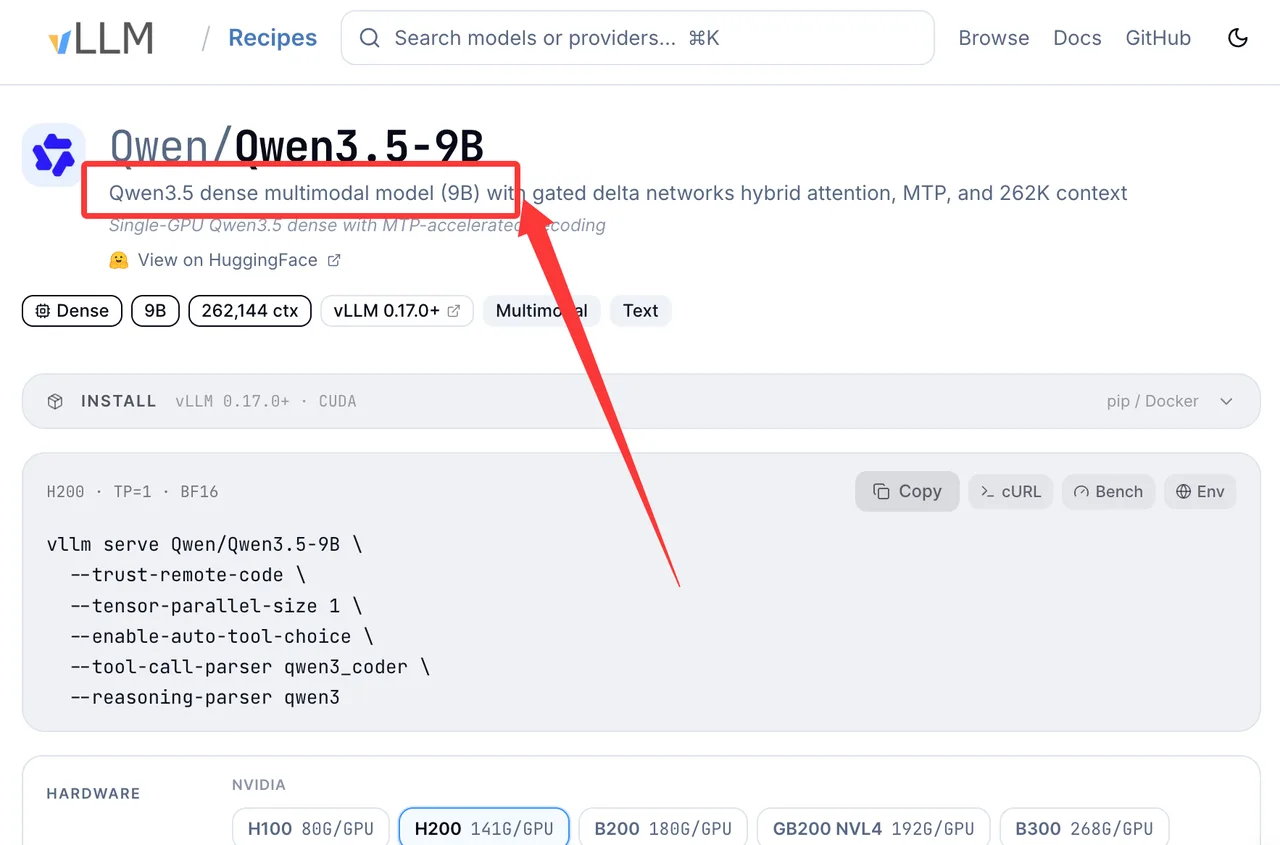
That does not make every 24 GB setup pleasant. Driver versions, framework builds, context length, video settings, and concurrency all matter.
A practical first run:
- Pin the checkpoint revision.
- Load official tokenizer and processor files.
- Start with text and image tasks.
- Add video after memory is measured.
- Add tool calling after JSON outputs pass.
- Save failures, not just averages.
When a Larger or Hosted Model Remains Necessary
Qwen3.5-9B fits local inspection, document-heavy testing, visual QA, and small agent prototypes. It is a good candidate when data locality, cost control, offline work, and iteration speed matter.
A larger or hosted model still makes sense for heavy concurrency, strict latency targets, very long videos, complex coding agents, production support, or stronger reasoning margins. Passing a local test does not make the model a final production choice.
Works for inspection. Production needs its own evidence.
FAQ
Does the model license require attribution in redistributed applications?
The model card lists Apache-2.0. In general terms, redistributed covered files need license and notice preservation. That does not automatically mean every product UI needs a visible attribution banner. Check the repository license, notices, dependencies, and distribution path. Not legal advice.
Which tokenizer revisions remain compatible with published checkpoints?
Use tokenizer and processor files from the exact checkpoint revision: tokenizer.json, tokenizer_config.json, vocab.json, merges.txt, chat_template.jinja, and the preprocessor configs. Do not assume earlier Qwen releases remain compatible.
Can adapters trained on earlier Qwen releases be reused?
Do not assume it. Architecture, vocabulary, chat template, vision preprocessing, and reasoning behavior can change. Treat adapter reuse as an experiment and run regression tests before keeping it.
Does the official model card document watermark-detection behavior?
I did not find watermark-detection behavior documented in the official Qwen3.5-9B model card as of August 31, 2026. No product claim belongs there unless a newer official source adds it.
Which official export formats retain multimodal preprocessing metadata?
The official release centers on Hugging Face Transformers-format artifacts and Safetensors weights, with processor and video preprocessor files included. Community GGUF or MLX exports need separate validation. The question is whether conversion preserves multimodal preprocessing, not just text generation.
Conclusion
My read: this Qwen3.5-9B review supports a careful pilot, not a blanket replacement plan. Pin the checkpoint, preserve processor files, lock serving settings, and test the files the product will actually see. Run it yourself. That’ll tell you more than anything I can say.
Previous posts:
/filters:quality(82)/media/images/b73c2438-6bdd-4b80-a229-8d71d8f819cf.webp)
/filters:quality(82)/media/images/427fd9f2-347d-4f86-a2d5-aee110cda01d.webp)
/filters:quality(82)/media/images/1773962750383987480_n3hqzHRZ.webp)
/filters:quality(82)/media/images/43fa0e7f-a0db-48d7-9bab-921d1225db30.webp)
/filters:quality(82)/media/images/5799ff56-3a73-40ca-a666-e4965d878496.webp)
/filters:quality(82)/media/images/7a8850fc-caf6-482f-ac4d-5ddbe64ec47c.webp)