
Gemini 4 Review: Official Status Tracker
Gemini 4 review tracker separating Google's official model catalog from rumors and listing the evidence builders should verify after any announcement.
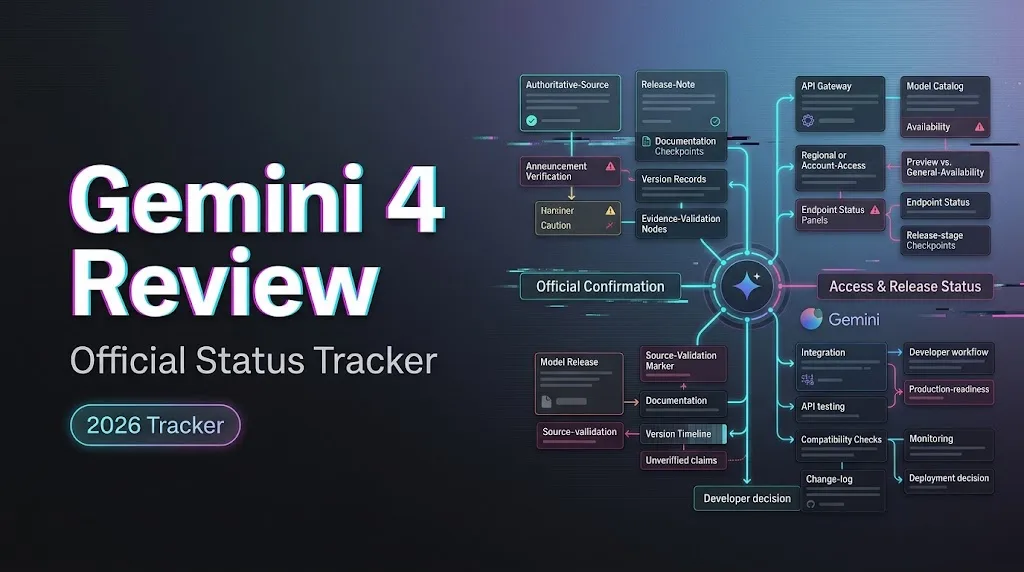
As of August 31, 2026, Google’s official model catalog does not list Gemini 4. That is the starting point for this Gemini 4 review. This page is a status tracker, not a performance review. There is no public Gemini 4 model card, API identifier, pricing row, benchmark page, or release note to evaluate.
For now, Gemini 4 is an officially acknowledged model under development, but it is not yet publicly released or listed in the Gemini API model catalog.
Gemini 4 Is Not an Officially Listed Model Yet
What Google’s Current Model Catalog Shows
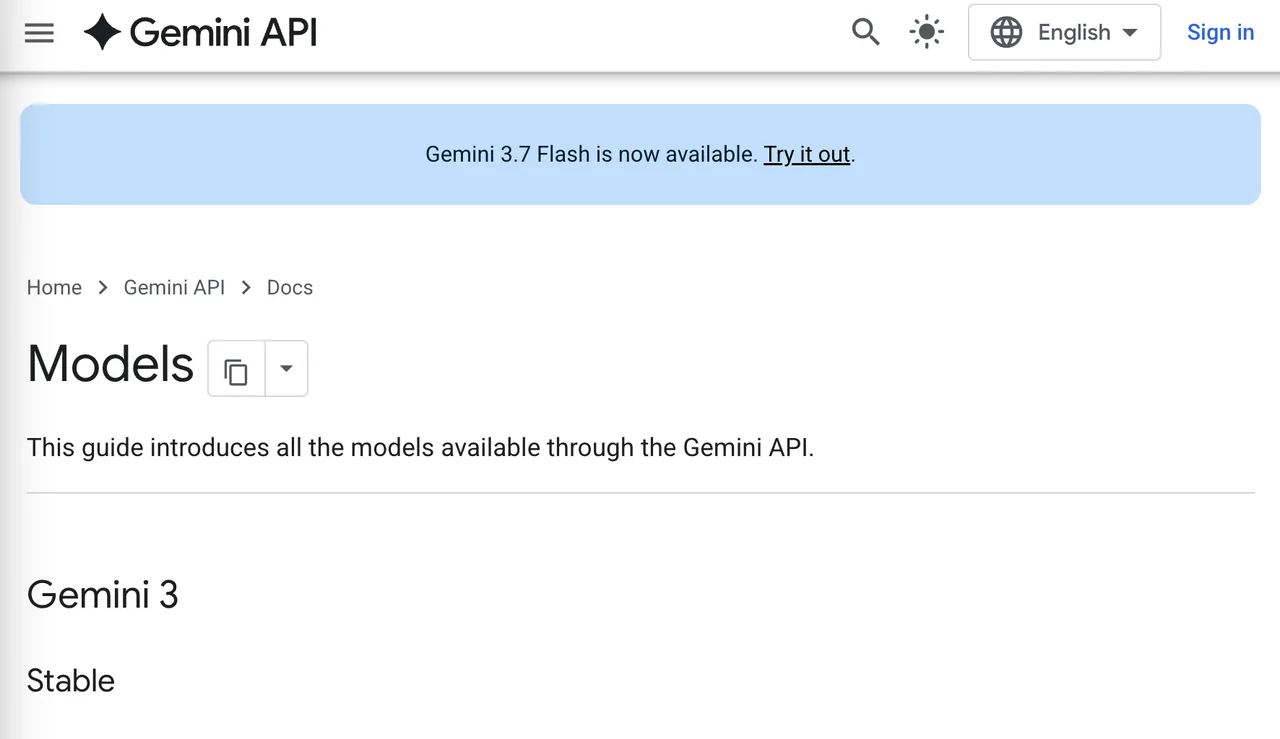
Google’s Gemini API model catalog is the first place to check because it lists the models available through the Gemini API. Checked on August 31, 2026, the catalog includes current Gemini API models in the Gemini 3.x and Gemini 2.5 families, including stable, preview, experimental, and “latest” aliases.
It does not list Gemini 4.
That matters. A model name appearing in search results, community posts, benchmark guesses, or private screenshots is not the same as a public model entry. For builders, the absence of a listed model ID means there is nothing to pin, price, test, or migrate toward yet.
Claims That Remain Unconfirmed
| Claim type | Current public status |
|---|---|
| Gemini 4 release date | Not confirmed |
| Gemini 4 API model ID | Not listed |
| Gemini 4 pricing | Not published |
| Gemini 4 benchmark scores | Not published by Google |
| Gemini 4 context length | Not confirmed |
| Gemini 4 regional access | Not confirmed |
| Migration from older Gemini models | Not documented |
I would not treat any of these as planning inputs. They are watch items.
What Would Count as a Confirmed Gemini 4 Release
Model Card, API Identifier, Pricing, and Regional Access
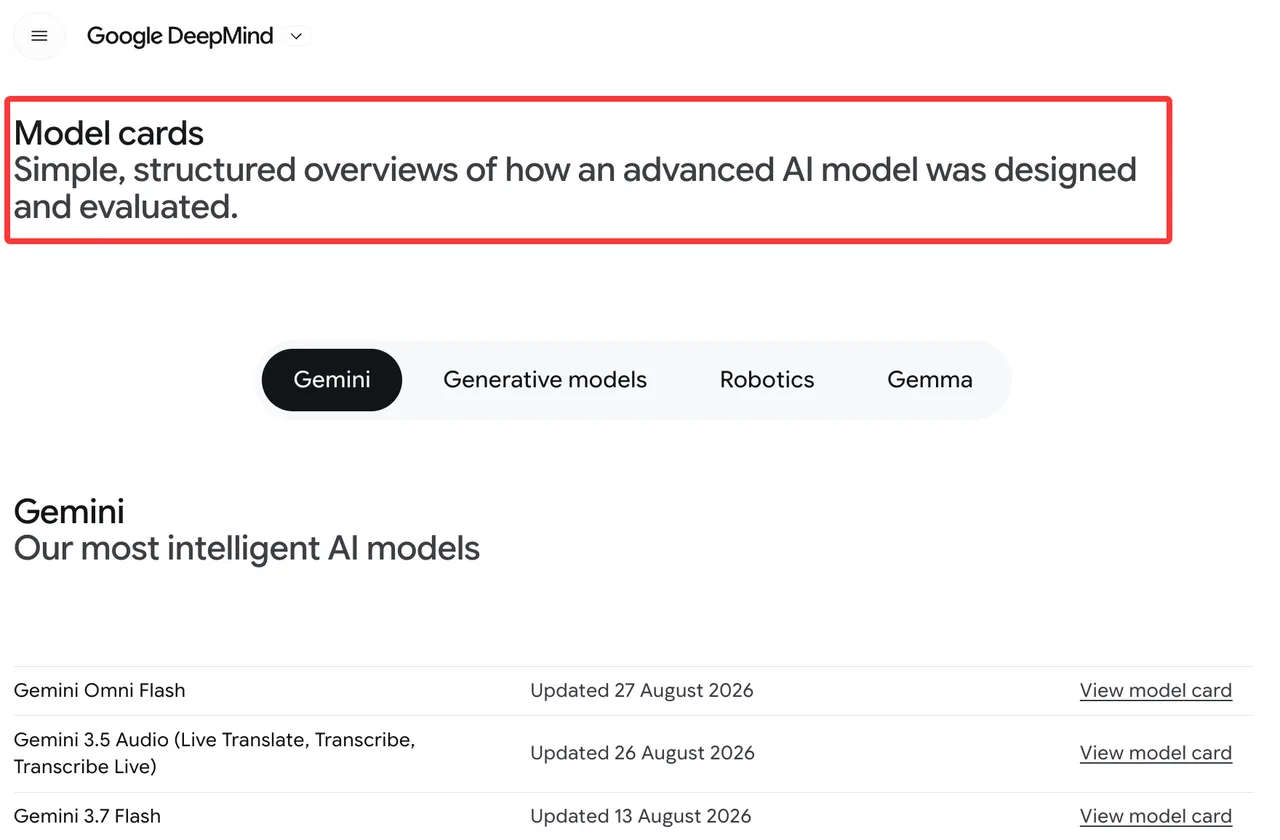
A confirmed Gemini 4 release would need public, checkable artifacts. The cleanest signal would be a Gemini 4 entry in Google DeepMind’s model cards, with safety notes, capability boundaries, and version context.
For developer use, the next required signal is an API name returned by Google’s models endpoint. A version-pinned model ID is what lets teams pin requests, run reproducible evaluations, and separate “latest model” marketing language from production behavior.
Pricing also matters. Without an official pricing row, teams cannot reliably estimate Gemini 4’s actual usage cost, retry cost, or budget impact from official pricing. Regional availability matters too, especially for enterprise, regulated, or latency-sensitive deployments. A launch that appears in one product surface does not automatically mean global API access.
Stable, Preview, and Experimental Status
Gemini model status labels are not cosmetic. A stable model, a preview model, an experimental model, and a moving “latest” alias carry different operational risk.
For production planning, the release label should be recorded beside the model ID. If Gemini 4 appears first as preview or experimental, evaluation can begin, but migration planning should stay separate. Found the pattern on the third try: teams get into trouble when they treat a named release as a stable contract.
What Builders Should Do Before an Announcement
Keep Current Production Model IDs Pinned
The practical move is boring and useful: keep current production model IDs pinned. Do not swap to a “latest” alias because Gemini 4 rumors are moving around.
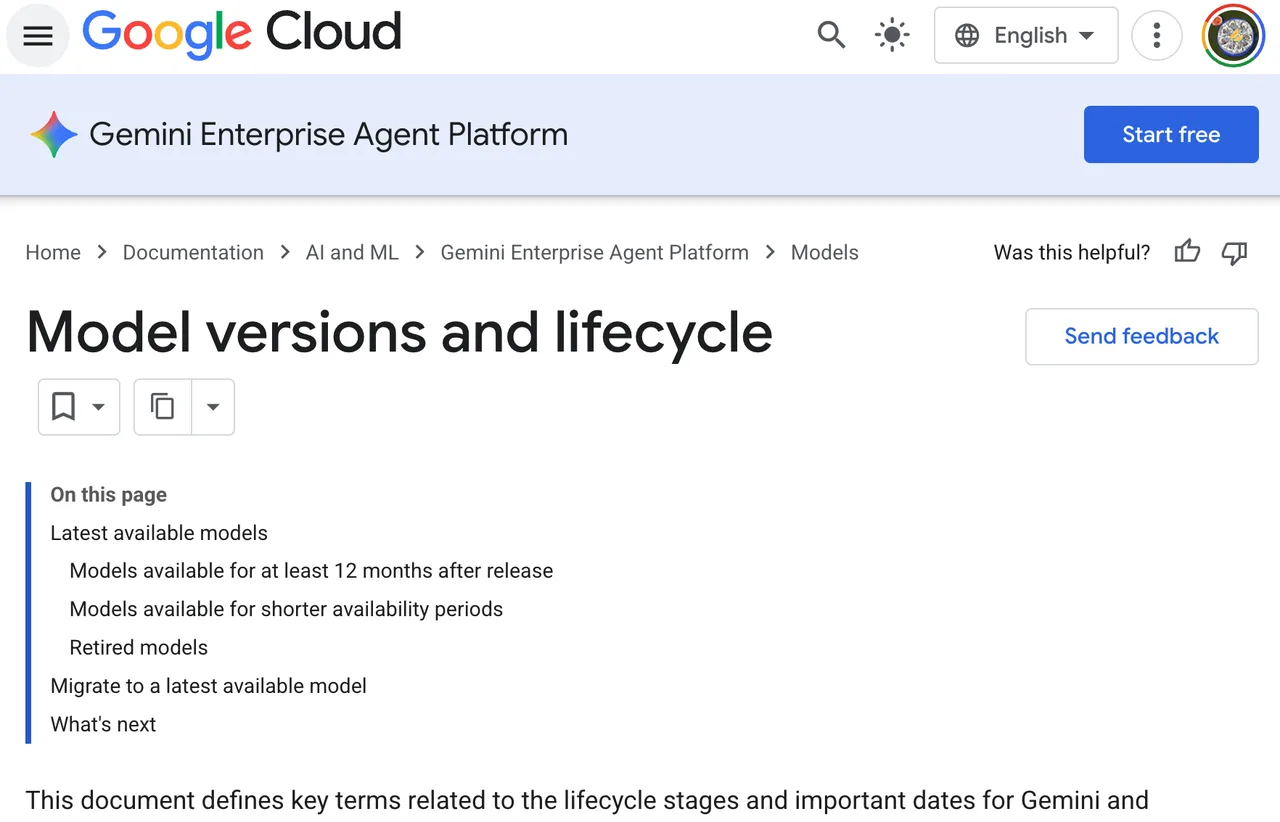
Use the Google Cloud model lifecycle page to track release dates, retirement dates, and replacement pressure for existing Gemini deployments. That gives the team real deadlines instead of rumor-driven urgency.
A small tracking table is enough:
| Field | Record |
|---|---|
| Current model ID | Exact ID used in production |
| API surface | Gemini API, Vertex AI, Workspace, or another route |
| Release status | Stable, preview, experimental, latest |
| Known retirement date | If published |
| Evaluation owner | Person or team |
| Migration trigger | Official model ID plus pricing plus test pass |
Prepare an Update Checklist Without Planning a Migration
Builders can prepare the checklist now without pretending there is a Gemini 4 release. Monitor the Gemini API release notes, Google DeepMind model pages, Google Cloud release notes, pricing pages, and official Workspace updates.
The checklist should ask:
- Is Gemini 4 named by Google?
- Is there an API model ID?
- Is there a model card or safety documentation?
- Is pricing published?
- Are regions and access routes documented?
- Is the status stable, preview, experimental, or limited access?
- Do existing prompts, tools, files, tuning assets, and eval suites still work?
- Has the team run its own regression tests?
Until those boxes are filled, there is no migration. There is only monitoring.
FAQ
Would Google publish safety documentation before general API access?
Maybe, but timing cannot be assumed. Existing public Gemini models often have safety documentation or model cards, but Gemini 4 has no public listing yet. Treat safety documentation as a confirmation signal, not proof of general API availability.
Can Workspace availability differ from developer API availability?
Yes. Workspace Gemini features, Gemini app access, Gemini API models, and Vertex AI models are different surfaces. Availability can vary by product, account type, admin settings, region, and rollout stage. A Workspace feature would not automatically confirm Gemini 4 API access.
How might enterprise preview agreements limit public disclosure?
Enterprise previews may involve private terms, limited access, and disclosure restrictions. If a customer has preview access under contract, that still would not create public confirmation for other builders. Public planning needs public documentation.
Would existing Gemini tuning assets transfer automatically after launch?
No automatic transfer should be assumed. Prompts, eval sets, labeled examples, and test cases may remain useful. Tuned artifacts, adapters, or model-specific settings need fresh documentation before anyone treats them as portable.
Which official channels announce regional preview waitlists first?
Watch Google AI developer docs, Gemini API release notes, Google Cloud release notes, Google DeepMind announcements, and official Google Cloud or AI blog posts. Regional waitlists need an official page, form, or release note. Social posts are not enough.
Conclusion
This Gemini 4 review has a short conclusion: Gemini 4 is not officially listed as of August 31, 2026. Google has confirmed that Gemini 4 pre-training is underway, but there is no public release status, API model ID, pricing, or model card yet.
Keep current Gemini API models pinned, prepare the tracking checklist, and wait for model ID, model card, pricing, access route, and status label. Good enough. That’s the most honest assessment I can give.
Previous posts:
/filters:quality(82)/media/images/b73c2438-6bdd-4b80-a229-8d71d8f819cf.webp)
/filters:quality(82)/media/images/427fd9f2-347d-4f86-a2d5-aee110cda01d.webp)
/filters:quality(82)/media/images/1773962750383987480_n3hqzHRZ.webp)
/filters:quality(82)/media/images/43fa0e7f-a0db-48d7-9bab-921d1225db30.webp)
/filters:quality(82)/media/images/5799ff56-3a73-40ca-a666-e4965d878496.webp)
/filters:quality(82)/media/images/7a8850fc-caf6-482f-ac4d-5ddbe64ec47c.webp)