Qwen3.8 API Preview: Evaluate Access Before You Build
Evaluate Qwen3.8 API preview access, Token Plan limits, and evidence before deciding whether to test now or wait for a supported production path.
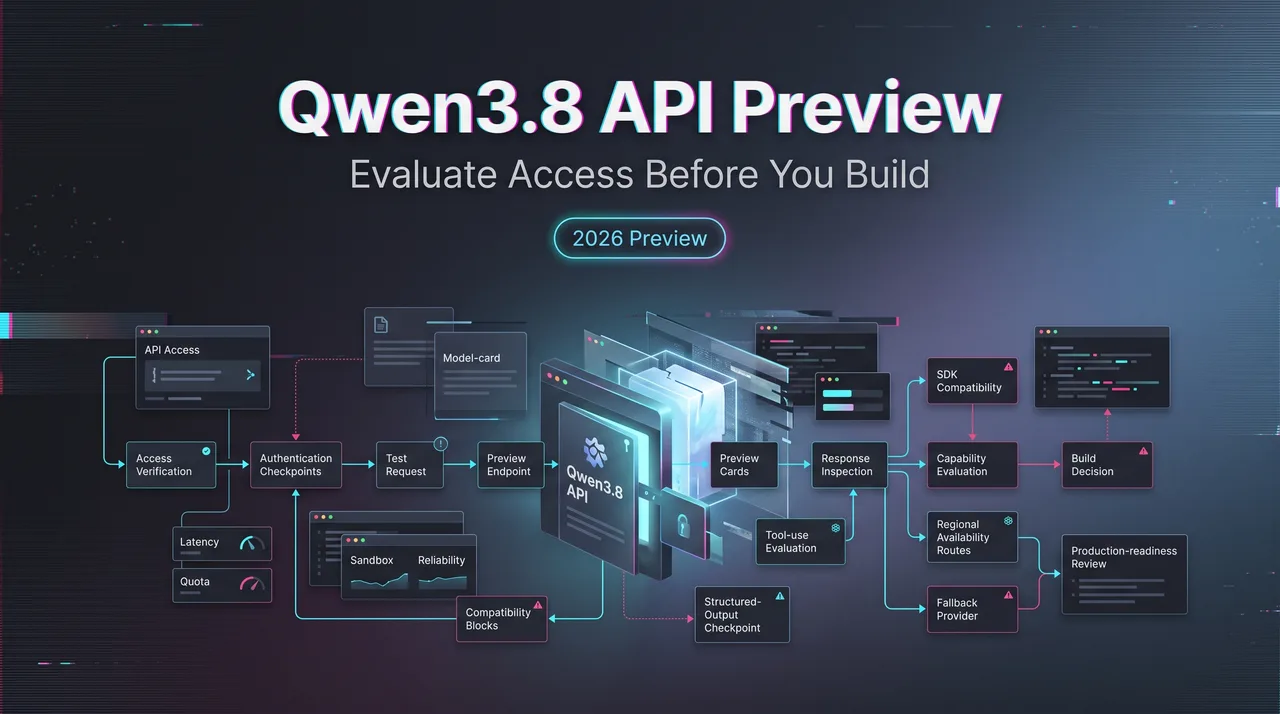
Dora here. I paused here because “preview API” is where teams accidentally turn a test key into architecture. As of August 6, 2026, Qwen3.8 API access means verifying qwen3.8-max-preview as a preview model, confirming how it is exposed through QwenCloud or Alibaba Cloud Model Studio, and deciding whether the access path is suitable for evaluation only.
The short version: do not treat Token Plan access as a production backend green light. It is useful for interactive coding and agent-tool evaluation. It is not the same thing as a standard pay-as-you-go production API listing.
This note is for developers, AI product teams, and platform engineers who need a build/wait decision, not another launch summary.
Verify What Qwen3.8 API Means in Preview
Confirm the exact model ID, plan edition, region, and current endpoint
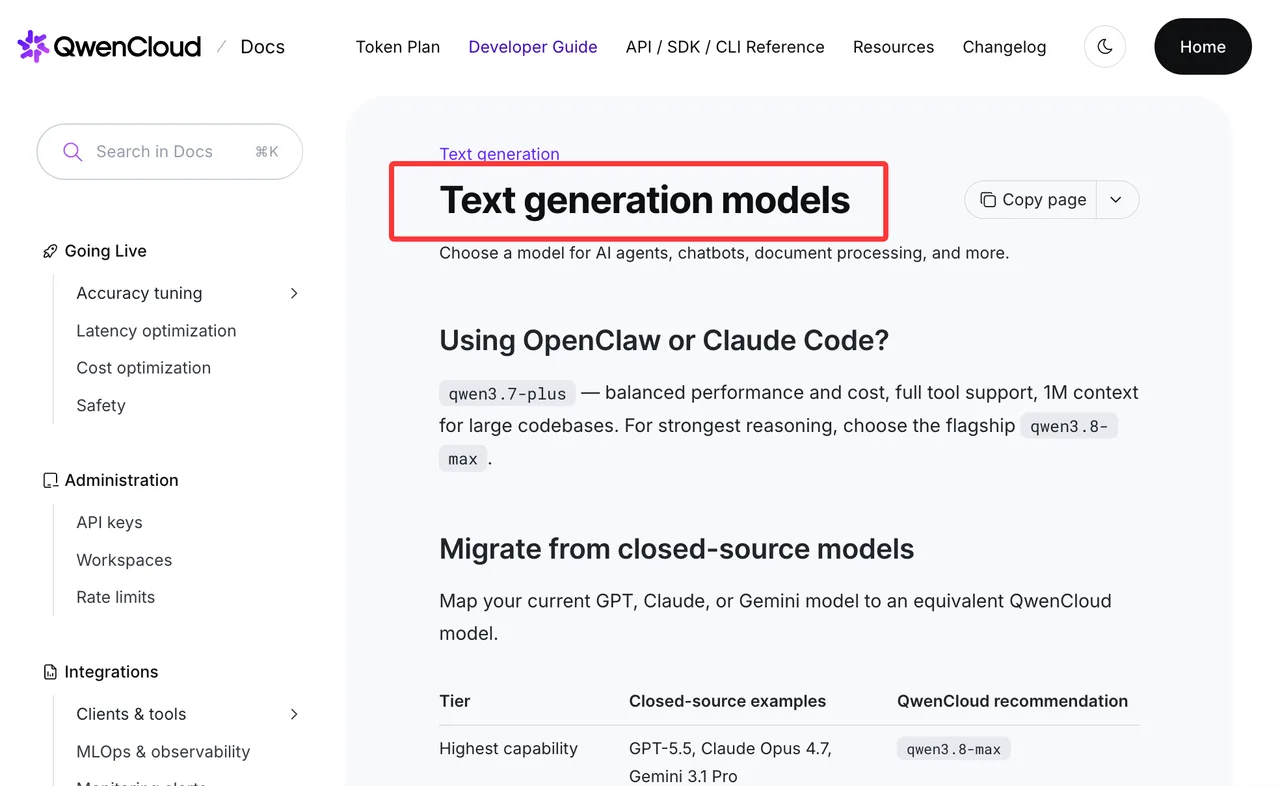
Start with the exact model ID: qwen3.8-max-preview.
The QwenCloud text generation model list currently marks qwen3.8-max-preview as “Token Plan only,” with 1M context, thinking, function calling, and built-in tools listed in the recommended model table. That is the first boundary.
Do not shorten the ID to “Qwen3.8.” Do not rename it to “Qwen3.8 Max API.” Do not assume it maps to another public model ID in Model Studio.
For each evaluation, record:
- model ID
- plan edition
- region
- endpoint
- key type
- console source
- verification date
- request protocol
- observed limits
If one of those fields is missing, the evaluation is not reproducible.
Separate Qwen Code preset support from general application API availability
Qwen Code support and general application API support are different questions.
A Qwen Code preset can make qwen3.8-max-preview convenient inside an interactive coding tool. That does not prove the same key, endpoint, quota, or usage terms are valid for a SaaS backend, batch job, or customer-facing agent.
The Token Plan overview describes preview availability, Personal and Team editions, credit-based usage, and the preview caveat that the model may be taken offline or replaced after preview according to the current Token Plan overview. That language belongs in the risk section, not buried in a footnote.
Found the pattern on the third try: access is not the same as product readiness.
Choose a Supported Developer Access Path
Use Token Plan only through allowed interactive coding and agent tools
Token Plan is useful for evaluation when the team stays inside the supported workflow.
That means interactive coding tools, agent tools, and approved Qwen Code or Qoder-style setups where the plan is explicitly supported. It is a good place to test repository reasoning, thinking behavior, function calling, and tool behavior.
It is not a shortcut for backend automation.
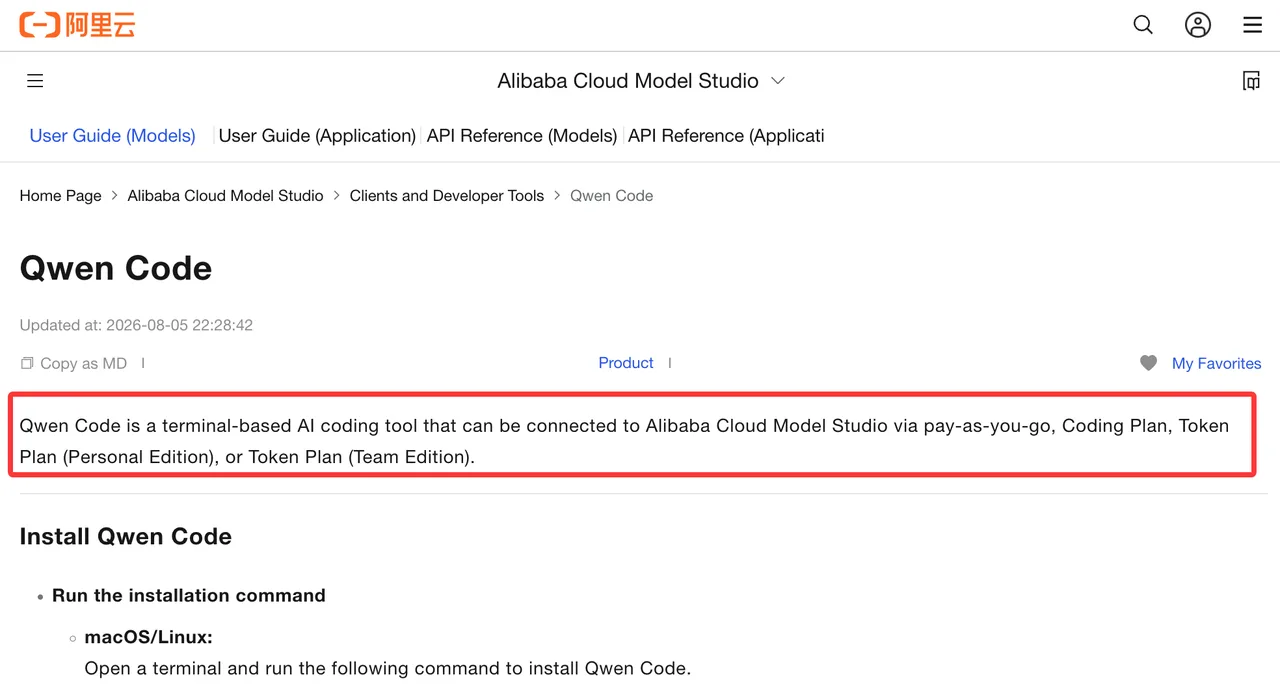
If the team wants to evaluate the model through Qwen Code, Alibaba Cloud’s Qwen Code guide documents Token Plan configuration, including the dedicated API key, model provider entry, and Token Plan endpoint. Use that page as the setup source. Do not copy a config from a community screenshot.
Require a pay-as-you-go listing before building a production backend
A production backend needs a production access path.
That means a standard pay-as-you-go model listing, official endpoint, published quota behavior, billing terms, rate limits, support route, and migration policy. If the only current path is Token Plan preview access, the build decision should be “evaluate,” not “ship.”
This is not being cautious for its own sake. Preview models can change name, behavior, quota, routing, or availability. A backend needs boring contracts. Preview access is not boring yet.
Configure a Reproducible Preview Evaluation
Load the model ID, endpoint, and key from the current official console
Every evaluation should start from the console on the publication date.
Do not reuse last week’s endpoint. Do not assume the same base URL works across regions. Do not assume a Team key behaves like a Personal key.
The request file should include:
model:qwen3.8-max-preview- endpoint from the current official console
- environment variable name for the key
- plan edition
- region
- request date
- client version
- tool settings
- whether thinking is enabled
- whether vision input is included
Qwen Code’s model provider docs are useful here because they separate auth methods, provider definitions, environment keys, base URLs, and model uniqueness. That keeps the test from becoming “it worked on one machine.”
Freeze the request shape, tool settings, and vision inputs
Use one fixed request shape. For coding evaluation, keep the task small:
Read this repository structure, identify the main entry point, and propose a safe test plan. Do not edit files.
Then run the same prompt with thinking on, tools on, and vision off. If vision input is part of your product, run a second fixed prompt with one known image. Do not mix text-only and multimodal results in one score.
I would freeze:
- system message
- user prompt
- tool list
- thinking setting
- temperature or default sampling
- max output
- input files
- image or video input
- timeout
- retry rule
A preview result without a frozen request is just an anecdote.
Test the Application Contract
Validate the response schema, thinking and tool behavior, and errors
For preview evaluation, output quality is only one part.
The application contract matters more. Check whether the model returns the expected schema, whether thinking fields appear where the client expects them, whether tool calls are valid, and whether errors are stable enough to classify.
Test at least these cases:
| Test | What to record |
|---|---|
| Normal text response | Schema, usage, finish reason |
| Thinking enabled | Thinking field behavior and token evidence |
| Function calling | Tool name, arguments, call ID stability |
| Built-in tools | Invocation evidence and billing visibility |
| Invalid input | Error code, message, retry decision |
| Long context | Truncation, latency, context replay cost |
I paused here because “tool support” in a table is not the same as tool support in your client.
Record the region, model ID, date, version, and observed limits
The evaluation packet should be archived.
Keep the raw request, raw response, client version, endpoint, region, model ID, key type, plan edition, and observed limits. Also keep failed runs. Failed runs explain more than polished demos.
The packet should answer one question: could another engineer reproduce this result next week?
If not, the evidence is too thin for a build decision.
Decide Whether to Build, Wait, or Add a Fallback
Define preview acceptance gates
A preview model can enter a prototype only after it passes gates.
My minimum gates:
- current official docs still list
qwen3.8-max-preview - endpoint and region are verified
- the key type is allowed for the intended evaluation
- schema is stable across repeated runs
- tool calls work in the actual client
- errors can be classified
- cost evidence is understandable
- no customer production path depends on the preview model
That last one matters.
Plan for model renaming, removal, or production replacement
Preview models move.
The Token Plan wording already allows for the model to be replaced or taken offline after preview. That should shape the architecture. The app should have a fallback model, a config switch, and a migration note ready before any pilot expands.
A sensible fallback record includes:
- current preview model
- approved replacement model
- owner
- rollback trigger
- customer impact
- support wording
- retest checklist
This conclusion has an expiration date - models update fast.
Limits and Risk Controls
Make no GA, SLA, stability, price, or quota promises
Do not say the model is GA unless official docs say GA. Do not publish SLA claims for preview traffic. Do not turn limited-time credit promotions into permanent pricing assumptions. Do not copy quota numbers into product pages unless the console and official docs match on the publication date.
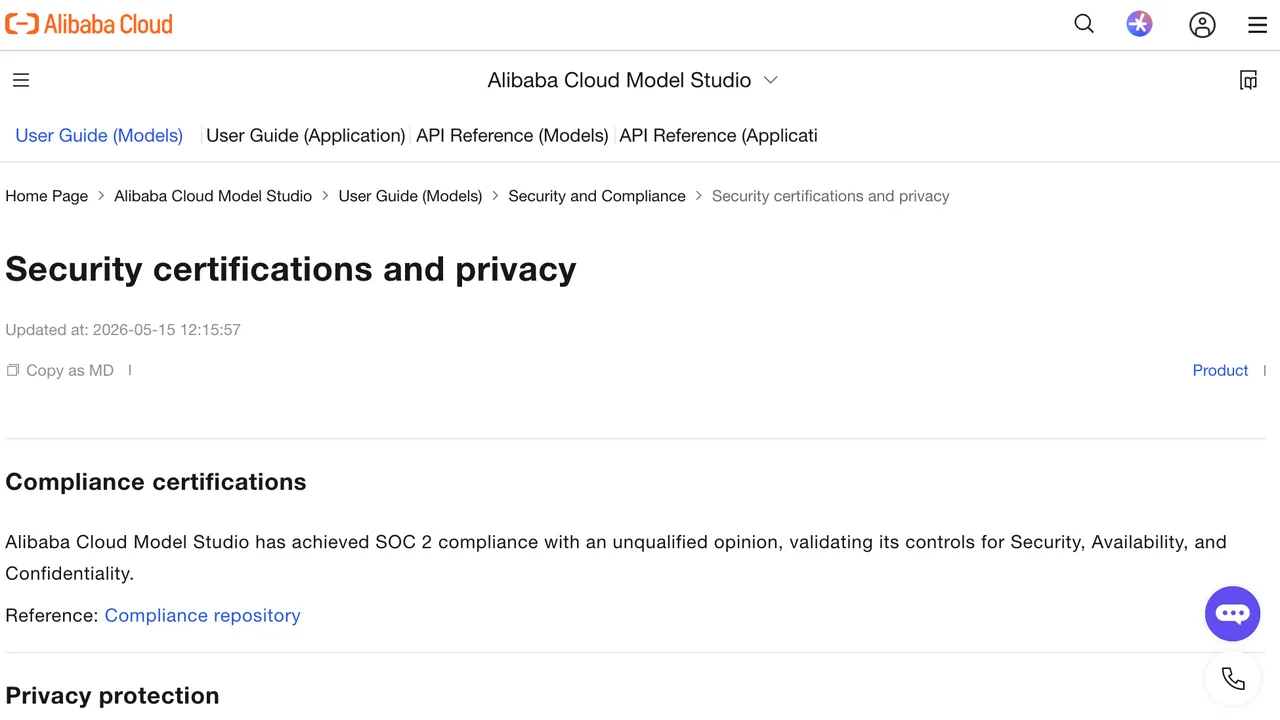
Alibaba Cloud Model Studio’s privacy notice can support data-handling review, but it does not replace your own legal, security, and procurement checks.
Do not use Token Plan for backend automation
This is the practical red line.
Token Plan can support preview evaluation inside allowed coding and agent tools. A backend service needs a production API path. If the model is not listed for standard pay-as-you-go production API use at publication time, do not write a backend tutorial around it.
Good enough. That is the most honest assessment I can give.
FAQ
Can one Token Plan key be shared across a development team?
Do not assume that. Use the plan edition and account-management rules shown in the current official console. Team use should go through the Team Edition or an approved company account structure, with named owners and access controls.
QwenCloud text generation model list currentlWho owns long-term retention of preview evaluation evidence?
The platform team should own the archive. Product can own the decision memo. Security or compliance should own sensitive-data review. The archive should include raw request samples, response samples, limits, model ID, endpoint, region, and verification date.
Does preview traffic create cross-border data transfer obligations?
Possibly. This is a risk-identification answer, not legal advice. Teams must review Alibaba Cloud’s current region, privacy, data transfer, and applicable legal terms on the publication date, then ask legal to decide whether the evaluation data can be sent.
May preview evaluation results appear in product marketing?
Only after approval. Preview results should not be used as customer-facing claims unless product, legal, and the platform owner agree on wording, date, test scope, and limitations. Do not imply GA stability from preview testing.
Who should approve migration from preview to a production model?
The platform owner should approve the technical migration. Product should approve customer impact. Security should approve data and access changes. Finance should approve pricing assumptions. Support should approve the incident and fallback wording.
Conclusion
The Qwen3.8 API decision is not “can I call the model?” The decision is whether qwen3.8-max-preview has a supported access path for the thing you are building.
As of August 6, 2026, treat it as preview evaluation unless official pay-as-you-go production API availability is verified for your region, endpoint, model ID, quota, and billing path. Build the test packet first. Ship later, if the contract becomes boring enough.
Previous posts: