
Seedream 5.5 vs Seedream 5.0 Pro: Should Teams Switch?
Seedream 5.5 vs Seedream 5.0 Pro for image teams: compare documented edit changes, run a same-asset pilot, and decide when an API switch is justified.
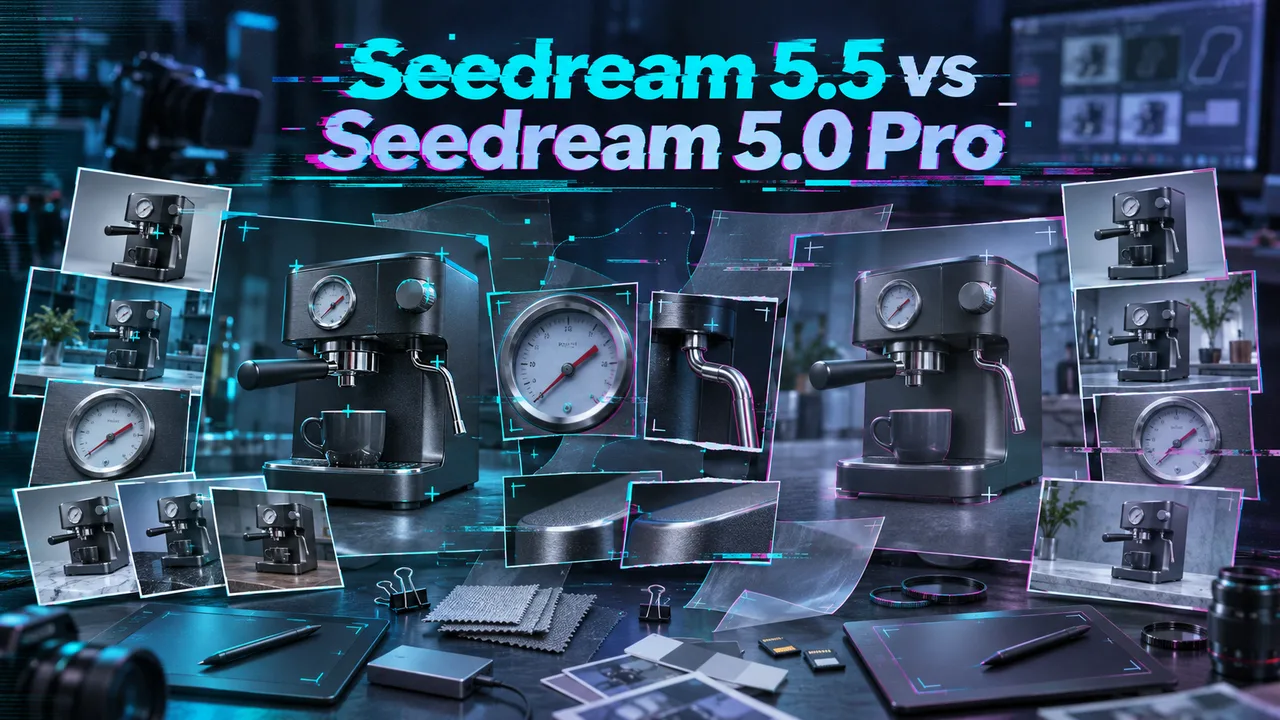
A model change looks small in a config file. It looks larger when the second edit alters a product label that the first edit got right.
This Seedream 5.5 vs Seedream 5.0 comparison is for teams already running a 5.0 Pro image-editing chain. I’m Dora. I checked the published model and API information. I have no same-asset test outputs from either route, so the decision below is a pilot plan with pass and rollback conditions, not a measured winner.
What Changed Between 5.0 Pro and 5.5?
ByteDance introduced Seedream 5.0 Pro around precise regional editing, dense information layouts, and multilingual text. In its 5.5 announcement, the emphasis shifts to preserving untouched areas through successive edits, improving realism and small text, and producing native RGBA assets.
ByteDance demonstrates 100 chained edits on one portrait and reports higher quality and usability scores than 5.0 Pro across six production scenarios. Those are vendor results. The public report does not provide a complete prompt set or sample counts from which to predict success on a particular product image.
For an existing pipeline, the practical change is narrower: can 5.5 preserve the details your current chain is approved to preserve, at an acceptable cost?
Which Image Edits Need a Same-Asset Test?
Test the edits that can invalidate a deliverable while leaving most of it attractive. Use the same authorized source files and written approval criteria for both routes. Run each version as its own chain, feeding its previous output into the next step.
Repeated Product-Image Revisions
Start with one approved product photograph. In three rounds, change a background prop, adjust the lighting, then replace a nearby object. Give both versions the same instructions about what must remain fixed: package shape, logo, camera angle, and product color.
Save every intermediate image. Compare each round with the original as well as the previous round. A small change to the cap on round two may become the new “normal” on round three if reviewers see only the final file. The 100-edit demonstration gives a reason to run this test; it does not supply its result.
Small Text and Transparent Assets
Use an image with real packaging copy, including a small line that cannot be paraphrased. Count exact characters, spacing, and numbers after each edit. ByteDance reports lower text-corruption rates for 5.5 in its own evaluation, but those rates are not a guarantee for your label.
Treat transparency as a separate capability gate. The current 5.5 edit route exposes a transparent-background setting with PNG output. The 5.0 Pro edit route does not list an equivalent setting. Check the 5.5 PNG over light and dark backgrounds for halos, missing edges, and damaged shadows; compare the full workflow cost against your present cutout step.
What Does One Comparable Pilot Cost?
For a 1K, one-reference edit, the 5.0 Pro route lists $0.045 per job. Its page currently displays a 10% offer, or $0.0405 for that input. The 5.5 route lists $0.02 for the 1K output plus $0.008 per input image: $0.028 with one reference.
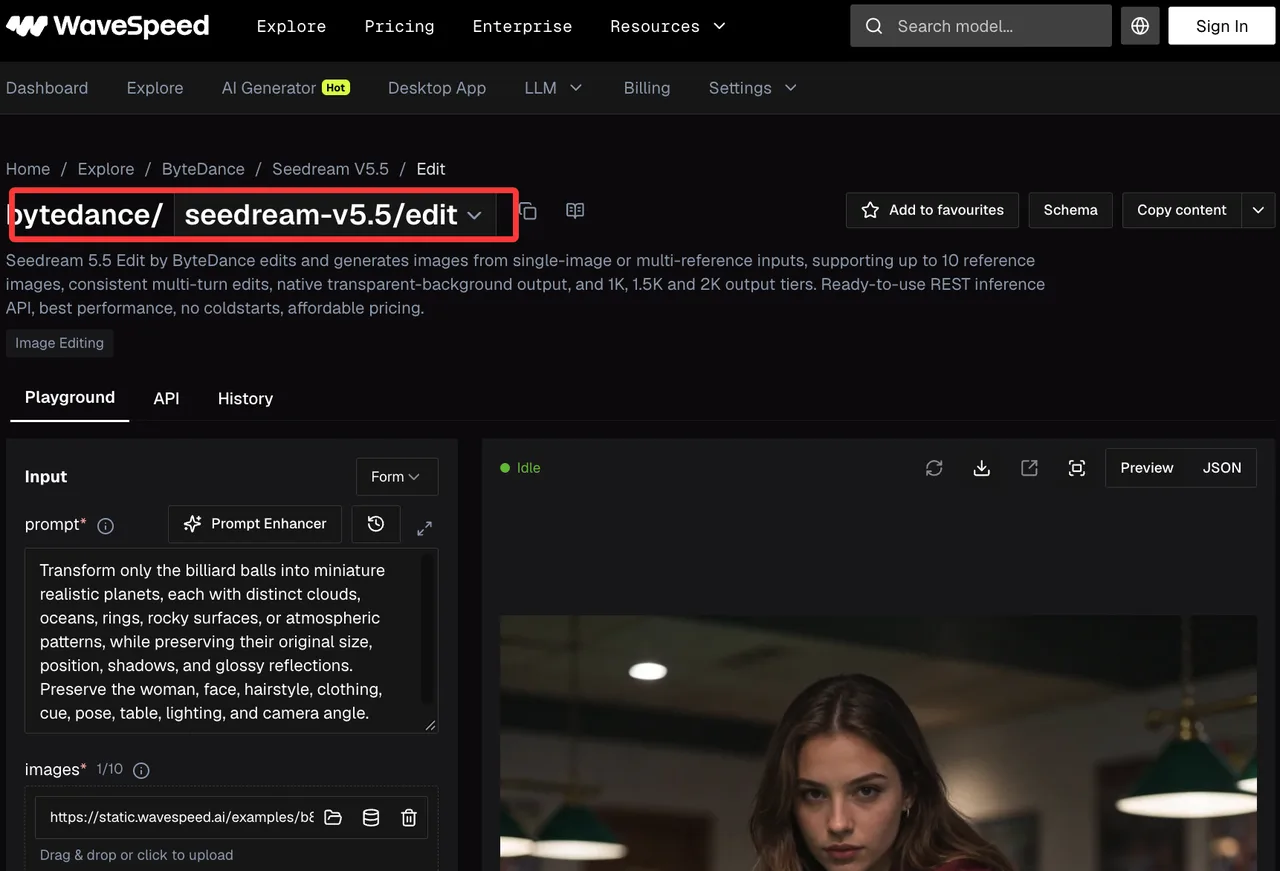
Three successful submissions in the proposed chain would therefore total $0.135 at the 5.0 Pro list price, $0.1215 at its displayed offer, or $0.084 on 5.5. These are attempt costs, not costs per approved final asset. Additional references change the bill differently on the two routes. Record the actual charge for every job and divide total pilot spend by approved assets.
A timeout needs care. The platform’s retry guidance says a submission may have created and billed a task even when the client missed its ID; check recent jobs before submitting again. Archive every intermediate output and its settings promptly so the chain remains reviewable.
When Should Teams Keep 5.0 Pro or Switch?
Keep 5.0 Pro when the existing chain meets its approval target and the pilot shows no meaningful improvement in accepted assets or editor time. Keep it as the rollback route while 5.5 is being assessed. The newer model’s lower listed attempt price does not settle the decision if it changes approved packaging details.
Switch this one chain when 5.5 passes the prewritten checks for repeated edits and exact text, and its total cost per approved asset is acceptable. If native RGBA removes a separate cutout step without creating edge cleanup, count that saved work too. Route the same asset class through the pilot before changing the production default; this is a Seedream API migration, not a rename.
FAQ
Does 5.5 accept the same prompt optimization field as 5.0 Pro?

No matching field appears in the current 5.5 edit parameter list. The 5.0 Pro route lists prompt_optimization_mode, with standard and fast options. Remove that field from a 5.5 request rather than assuming it transfers.
Do both WaveSpeed edit routes use the same reference-image input field?
Yes. Both list images, an array of reference-image URLs or Base64 strings, with up to ten images. Keep the order and source files recorded during the pilot.
Do the two edit routes share the same default aspect ratio?
Their descriptions differ. With the field blank, 5.5 says it keeps the first input image’s aspect ratio; 5.0 Pro says it follows the closest supported ratio. Set an explicit ratio when crop consistency matters.
Do both routes return the same default image format?
That is not established. The 5.5 listing specifies PNG as the default; the 5.0 Pro listing offers JPEG and PNG without clearly stating a default. Set output_format explicitly in both requests.
Has WaveSpeed announced a retirement date for the 5.0 Pro endpoint?
No retirement date appeared in the checked route information, and the endpoint remained listed on November 10, 2026. Keep monitoring its status; absence of an announced date is not a service-duration guarantee.
Conclusion
The case for switching rests on the team’s own chain: unchanged product details, correct text, usable transparent edges, and cost per approved asset. Until 5.5 passes those checks on the same source material, 5.0 Pro remains a valid production choice.
Previous posts:
Related Articles

Seedream 5.5 Review: Image Quality and Editing Limits

Seedance 3.0 Rumors: Native Audio-Video Sync, Multi-Shot Storytelling, and What to Expect
GPT Image 2.6: What Is Confirmed, What Is Rumor, and What to Build On Today
Pika H3 Flex Explained: What It Is and How to Try the H3 Family via API
Seedream 5.5: What to Expect, and How to Get Ready