CodeWhale Providers: Model Routes Explained
CodeWhale providers explained across hosted APIs, compatible gateways, and local inference for coding-agent teams.
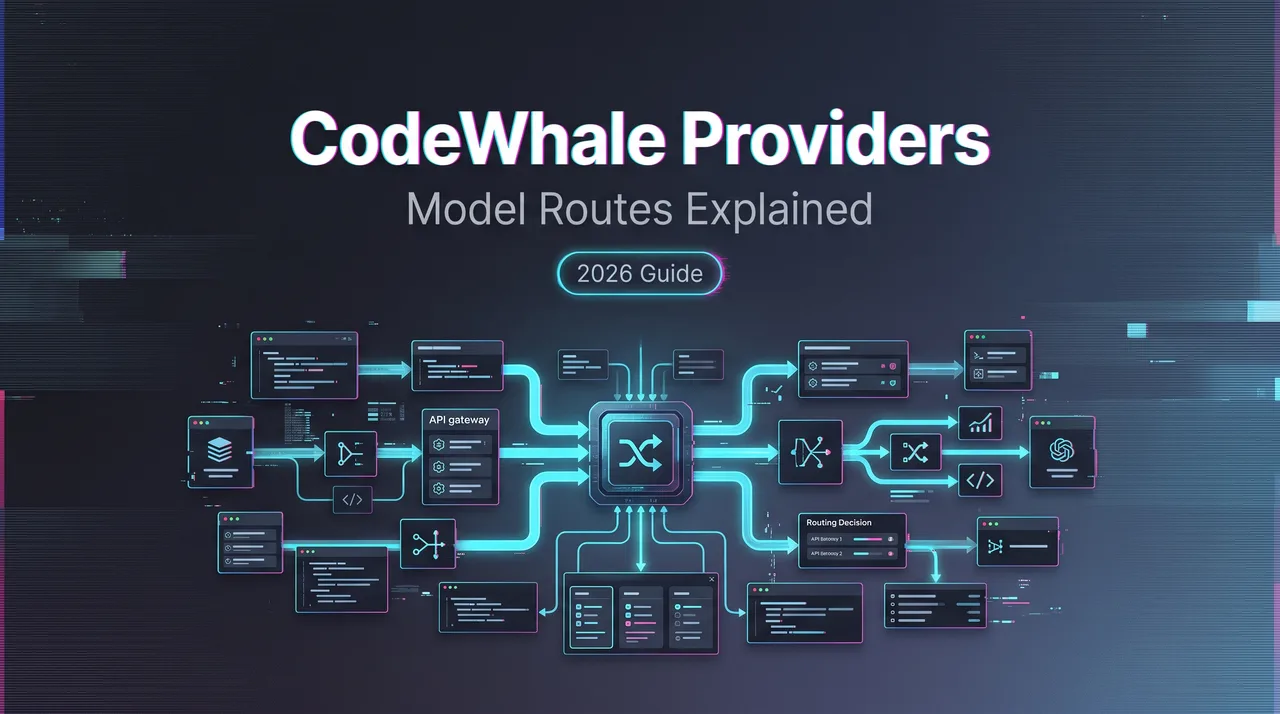
Hey, guys. I’m Dora. I paused here because CodeWhale looks simple from the outside. The official CodeWhale site still introduces it as a terminal-native coding agent for DeepSeek V4. That is true, but incomplete. For teams evaluating CodeWhale providers, the real question is not “does it use DeepSeek?” It is “which model route owns this coding session, and what changes when that route changes?”
This note is for coding-agent teams that already care about approvals, MCP**, context windows, cost, and rollback**. Not the demo. The runtime.
What CodeWhale Providers Are
Terminal coding agent, model provider, and runtime boundary
CodeWhale has three layers that are easy to blur.
The terminal agent is the harness. It reads files, searches the workspace, calls tools, applies patches, runs shell commands, and keeps approval gates visible. The CodeWhale docs describe Plan, Agent, and YOLO modes, plus tools, sandbox behavior, MCP, skills, and provider switching.
The model provider is the route that answers the turn. It may be DeepSeek, OpenRouter, Anthropic, OpenAI, a gateway, or a local runtime. The provider decides the request protocol, auth path, model ID, context metadata, reasoning support, cache telemetry, and failure shape.
The runtime boundary is where the agent is allowed to act. A model can propose a shell command. CodeWhale still decides whether that command needs approval, whether the workspace is sandboxed, and whether a local repo config can tighten rules.
That separation matters. A stronger model does not automatically mean a safer agent. A cheaper route does not automatically mean lower total cost. A local model does not automatically mean private, if MCP tools still reach external systems.
Why provider freedom changes context, cost, and tool behavior
Provider freedom changes more than model quality.
Context window changes how much repo history can stay active before compaction. Reasoning mode changes latency and token spend. Cache telemetry changes whether the team can explain a sudden cost drop or spike. Tool compatibility changes whether the agent can actually call structured tools or only write tool-like JSON in prose.
This is where CodeWhale models should be evaluated as routes, not names. A model ID is only meaningful inside the selected provider. deepseek/... under OpenRouter is not the same route as direct DeepSeek. Same words. Different billing, headers, metadata, and support path.
Three Provider Routes
Hosted provider APIs, OpenAI-compatible gateways, and local inference
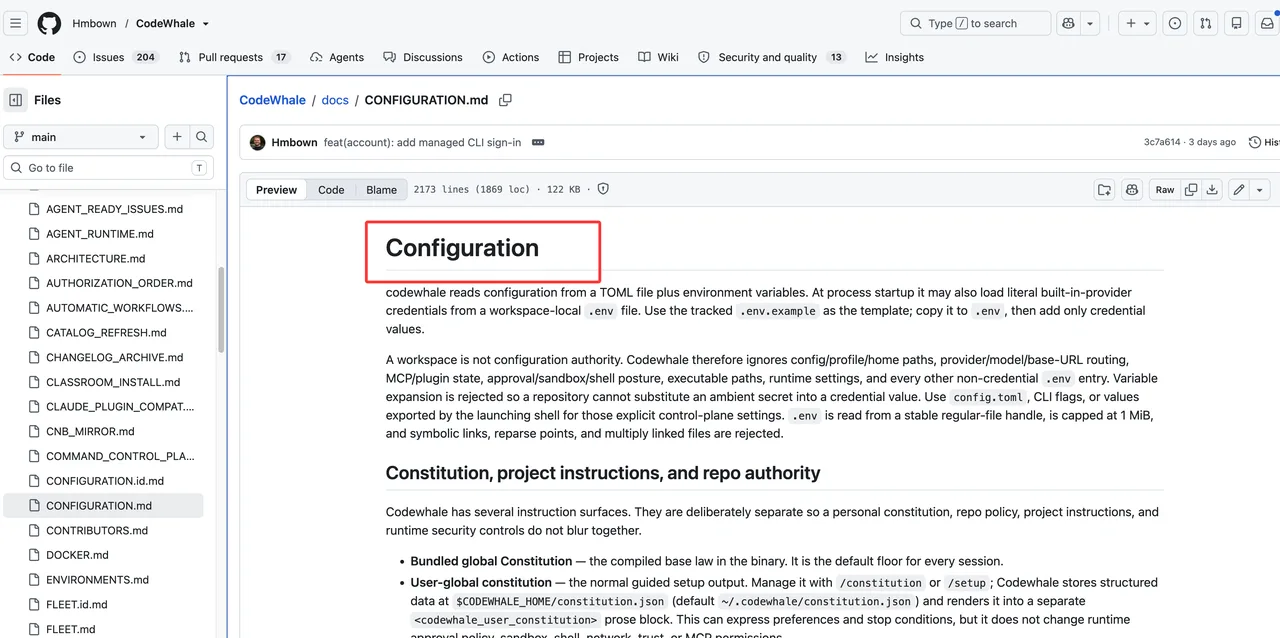
The current CodeWhale provider registry is the cleanest source for shipped provider behavior. It lists first-class provider IDs, wire protocols, auth variables, default endpoints, static model registry entries, and capability metadata.
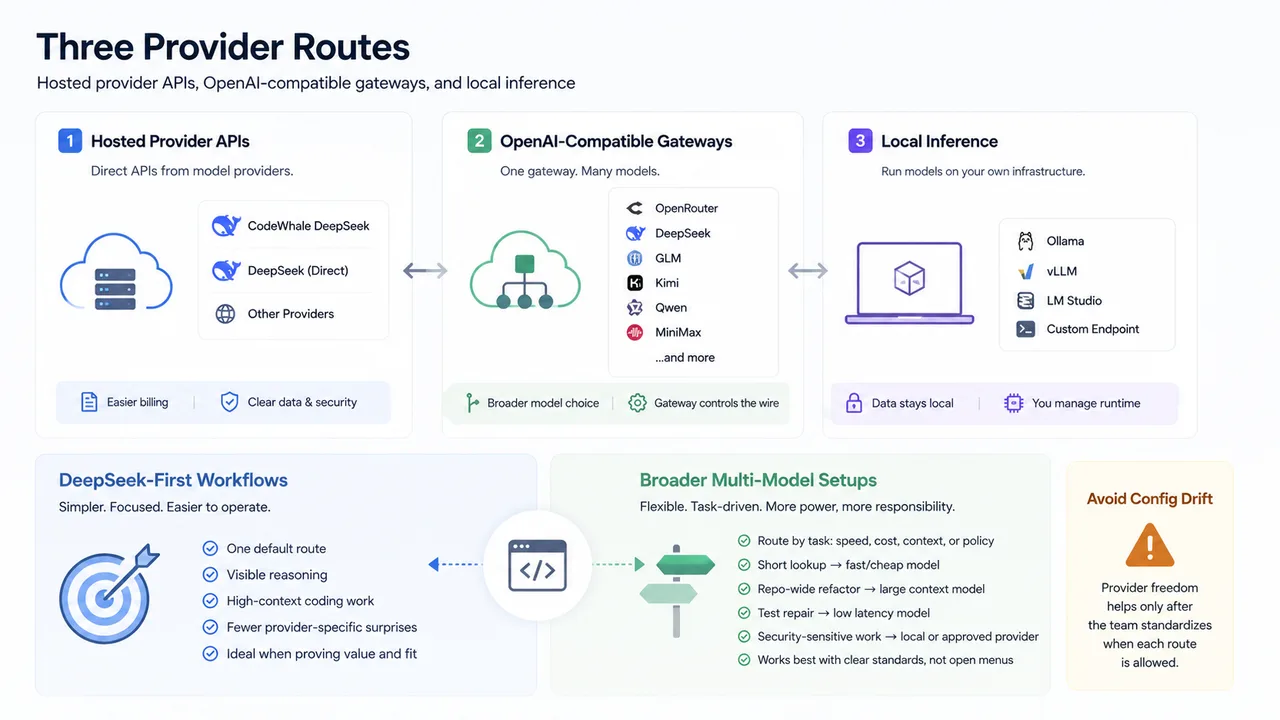
I would group the routes like this:
| Route type | Typical CodeWhale providers | What changes |
|---|---|---|
| Hosted provider APIs | deepseek, anthropic, openai, zai, moonshot, minimax, xai | Native billing, native model IDs, provider-owned limits, clearer support path |
| OpenAI-compatible gateways | openrouter, novita, fireworks, siliconflow, together, custom openai route | Broader model access, gateway-specific cache and routing behavior, more adapter checks |
| Local inference | ollama, vllm, sglang | Local endpoint control, weaker public support guarantees, model-specific tool-call risk |
That table is the shortest version. The longer version is messier.
Hosted routes are usually easier to explain to finance and security. The provider name, endpoint, and invoice source line up. CodeWhale DeepSeek is the default path in the public positioning, and direct DeepSeek also gets the clearest fit with visible reasoning and DeepSeek V4 assumptions.
Gateway routes are useful when the team wants broader choice. OpenRouter is the obvious example. The route can expose DeepSeek, GLM, Kimi, Qwen, MiniMax, and other model IDs through one gateway. That does not make those models “direct” routes. The gateway owns the wire behavior.
Local inference is attractive when teams want control over runtime and data location. But a CodeWhale local model route is not a free pass. Localhost may remove API-key handling, but the selected model still has to handle coding-agent behavior well enough: long context, tool calls, patch reasoning, and error recovery.
DeepSeek-first workflows versus broader multi-model setups
DeepSeek-first is the simpler operational story.
Use it when the team wants one default route, visible reasoning, high-context coding work, and fewer provider-specific surprises. It fits teams that are still proving whether CodeWhale belongs in the workflow at all.
Broader multi-model setups fit a different problem. They are for teams that already know the coding-agent harness is useful and now need route choice by task type.
A short lookup can run on a faster or cheaper model. A repo-wide refactor may need a larger context window. A test repair loop may need low latency more than perfect reasoning. A security-sensitive repo may require a local endpoint or a provider with an approved data policy.
The mistake is turning multi-model access into a menu everyone can freely edit. That becomes config drift. Found the pattern on the third try: provider freedom helps only after the team standardizes when each route is allowed.
What Changes When You Use /model or Provider Config
Context window, reasoning mode, pricing, cache behavior, and tool compatibility
Changing /model, CODEWHALE_MODEL, or provider config is not cosmetic. The configuration reference shows the practical controls: provider ID, base URL, model, context window override, auth source, profiles, and auto routing.
- The first change is context. Some routes publish large context metadata. Some have conservative fallbacks. Some custom endpoints need
context_windowset manually because CodeWhale cannot safely infer the real limit. - The second change is reasoning. Direct DeepSeek, Anthropic, Z.ai, MiniMax, Kimi, and some gateway models expose reasoning in different shapes. CodeWhale Claude routing through the
anthropicprovider uses the Anthropic Messages protocol, whiledeepseek-anthropicis still a DeepSeek route speaking a Messages-compatible API. Those are not interchangeable labels. - The third change is cost visibility. Some providers expose token usage and cache fields. Some gateways omit them. Some local endpoints have no useful cost signal. When cost telemetry is missing, treat cost as unknown rather than borrowing another provider’s math.
- The fourth change is tool compatibility. CodeWhale can send schemas, but the route has to preserve tool calls correctly. If the model emits a prose imitation of a tool call, the harness cannot safely convert that into trusted action.
Approval gates, MCP, skills, and sandbox expectations
Provider switching should not weaken approval policy. Plan mode stays read-only. Agent mode can perform multi-step work with approvals. YOLO auto-approves and lifts more constraints. That is a runtime choice, not a model choice.
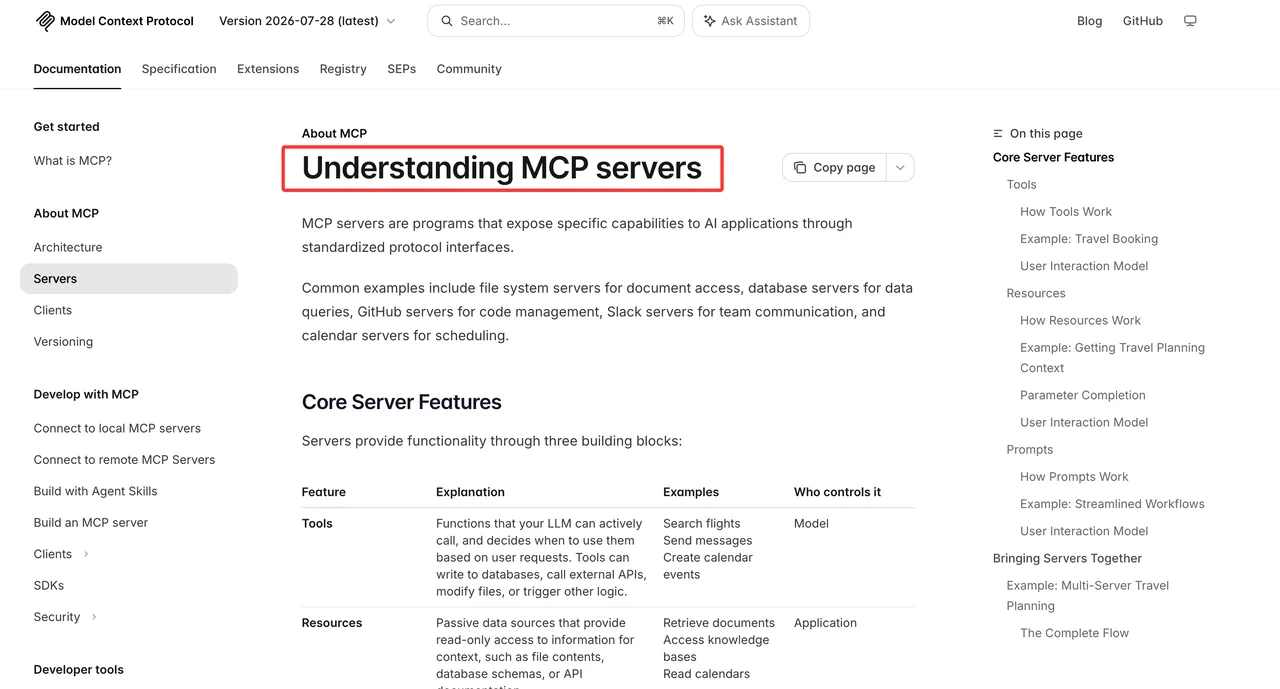
MCP adds another boundary. CodeWhale can load MCP servers and expose tools to the agent. The official MCP server concepts separate tools, resources, and prompts, and make user control part of the interaction model. Good. Keep that mental model.
A provider config should say which MCP servers are allowed in shared environments. A local model connected to a broad filesystem MCP server is not a low-risk setup. It may be local inference, but the tool surface can still be too wide.
Skills need the same treatment. A skill can change how the agent works on docs, PDFs, deploys, or tests. Provider change records should include enabled skills and MCP servers, not just model IDs.
Production Readiness Checks
Provider docs, model IDs, endpoint format, rate limits, and rollback plan
Before a shared rollout, I would check six things.
The provider ID must be canonical. Use deepseek, openrouter, anthropic, openai, ollama, vllm, or another shipped/custom provider name that CodeWhale can resolve. Do not let model prefixes pretend to be provider switches.
The endpoint must match the provider. An OpenAI-compatible provider should use the right base URL, path shape, and model ID. If a gateway rejects /v1/chat/completions, document the path_suffix. If a local endpoint uses HTTP outside loopback, mark that as an explicit risk.
The auth source must be known. Environment variable, keyring, config file, or external read-only consent. No project-local file should be allowed to redirect credentials or base URLs.
The model capability record must be dated. Context window, max output, thinking support, cache telemetry, tool calls, and FIM support can change. This conclusion has an expiration date - models update fast.
The rollout should include a fallback route. If OpenRouter behavior changes, move back to direct DeepSeek or a pre-approved hosted route. If a local model fails tool calls, fall back before developers start editing patches by hand.
The team needs a rollback owner. Not a vague “platform team.” A named owner, a config diff, and a short incident note.
FAQ
Who approves CodeWhale provider configs for shared environments?
The platform owner should approve the route. The repo owner should approve project-level restrictions. Security should approve external tool surfaces, credential handling, and local inference exceptions.
For shared use, I would not let individual developers add new CodeWhale providers without review. A provider config changes where source context goes, how tools behave, and how failures are explained.
What records should be kept when a provider changes behavior?
Keep the provider ID, model ID, base URL, request protocol, context setting, reasoning mode, MCP servers, enabled skills, approval policy, sandbox mode, and test task results.
Also keep the date. If an OpenRouter model changes cache fields, or an Anthropic route changes response shape, the team needs evidence from the week it happened. Not folklore from someone’s terminal scrollback.
How should teams handle unsupported local model configurations?
Treat them as experimental until they pass the same agent tests as hosted routes. A CodeWhale local model should prove file reading, search, patch generation, tool calls, command approval behavior, and recovery from failed tests.
If it cannot pass those checks, keep it out of shared environments. Local is a deployment location. It is not a quality guarantee.
Conclusion
The useful way to read CodeWhale providers is route-first. Provider, model, endpoint, protocol, context, tools, and approvals are one decision surface.
DeepSeek-first is the clean starting point. Gateways widen model choice. Local inference gives more runtime control, with more support burden. None of the three wins by default.
Run the route against your real coding tasks. Keep the config record. Keep the rollback path close. That is the part that survives week two.
Previous posts:
Related Articles

Best AI Video Platforms for Production Teams in 2027

Best Sora 2 Alternatives for Video Teams in 2027

Lanta AI Review 2027: Best Uses, Pricing, and Limits
Sora 2 Review 2027: API Quality, Cost, and Limits

Build a GPT-6 Astra 3D Workflow With Blender Assets