CC Switch Model Routing for Coding Agents
CC Switch model routing helps teams assign Kimi, Claude, GPT, or local models by task risk, cost, context, and reliability.
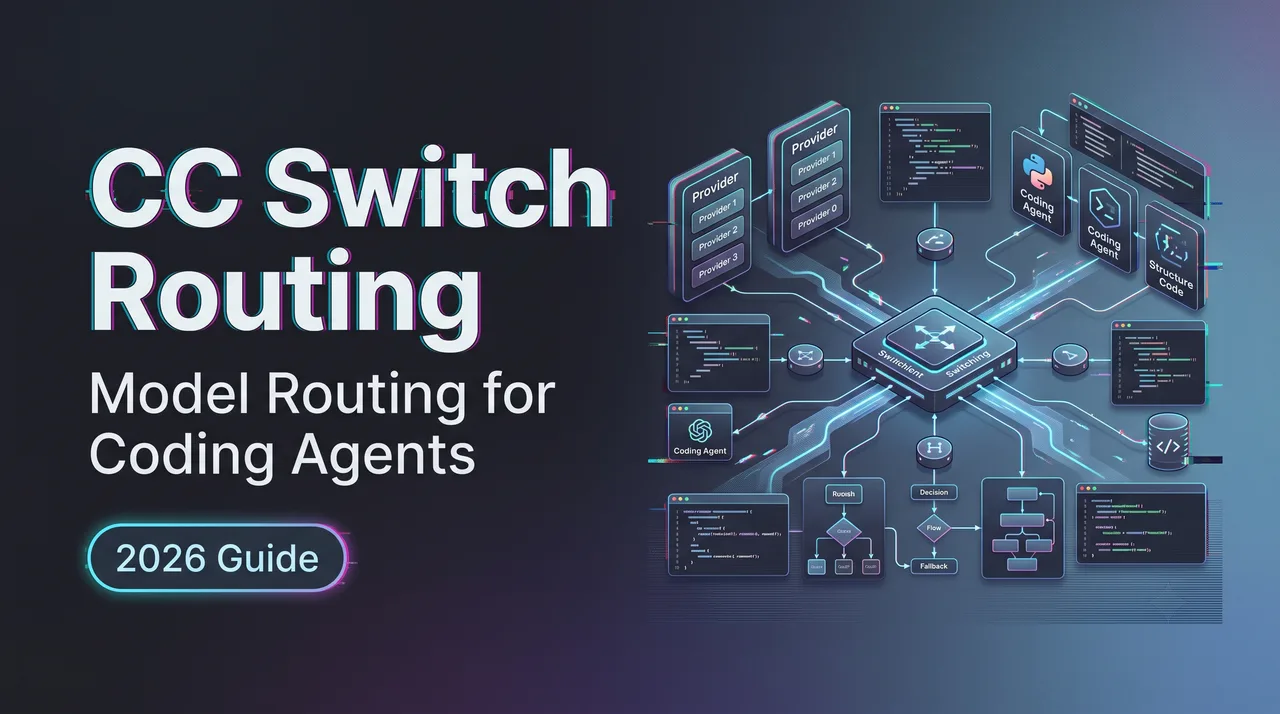
I started seeing the same failure pattern in coding-agent work: someone switched the model, the run improved, then nobody could explain why. The next run used a different provider. Different latency, different tool behavior, different failure mode. The diff looked fine until review. So CC Switch model routing became less about convenience and more about policy.
This is for teams using CC Switch as a provider/router layer for coding agents. Not as a prettier model dropdown. A dropdown is a preference. Routing is an operating rule.
The short version: route by task stage, risk level, provider health, and measured output quality. Do not route by whoever shouted “Claude vs Kimi vs GPT” most recently in Slack. That is not infrastructure. That is weather.
Move Beyond Manual Model Switching
A manual switch solves the immediate annoyance. A routing policy solves repeatability.
CC Switch’s own local proxy service documents the useful primitives: local request forwarding, usage logs, provider control, format conversion, app takeover, and routed request records. Those primitives are enough to build a serious multi-model coding agent workflow.
They are not the policy by themselves.
Routing by task stage instead of personal preference
Coding-agent work has stages. Repository search is not the same as editing a payment migration. UI review is not the same as final security review.
I’d split routes by stage first:
- Repository search: cheaper or local model, unless the repo is too large or the query requires architectural inference.
- Simple edits: fast model with good instruction following.
- Complex planning: stronger reasoning model.
- UI review: model with reliable visual and frontend judgment, if screenshots are part of the workflow.
- Final review: strongest approved model, plus tests and human review for risky repos.
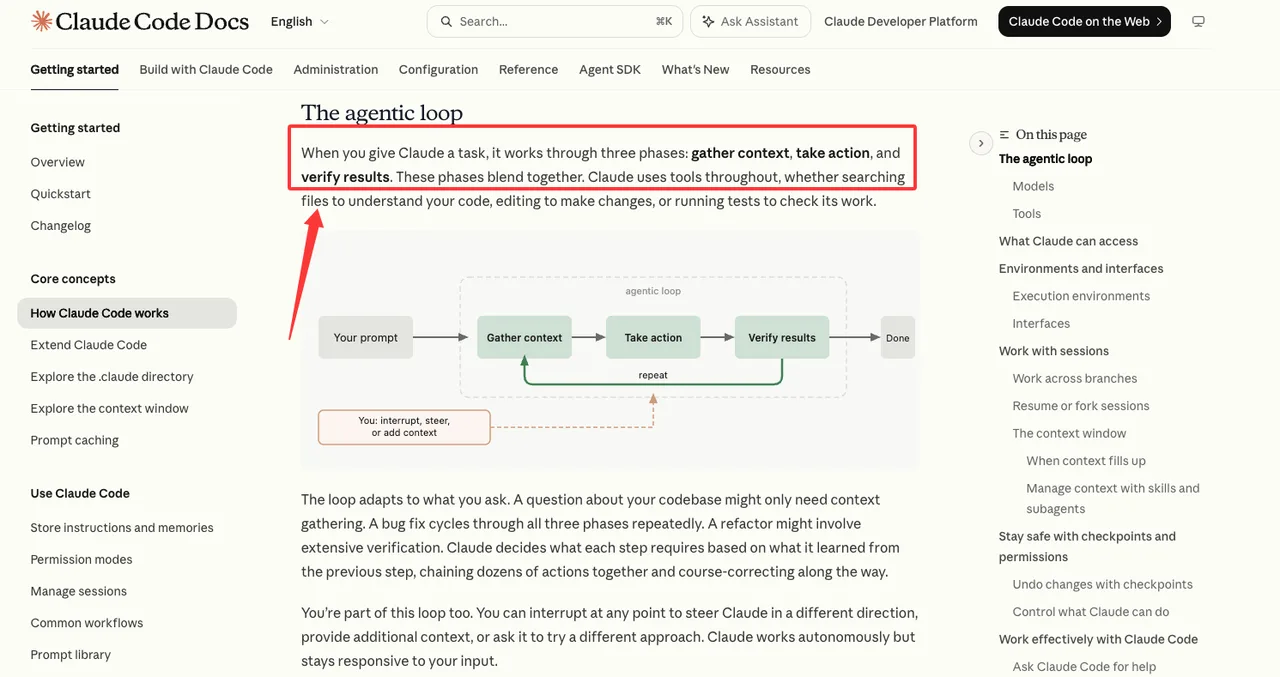
Claude Code’s agentic loop is a useful mental model here: gather context, act, verify, repeat. Routing should follow that loop. The first context-gathering step does not need the same model as the final risk check.
Speed isn’t the goal. Not breaking flow is.
Why provider switching is not the same as routing policy
A coding model switcher changes where the next request goes. A routing policy explains why that request went there. Provider switching says: “*Use this provider now.*”
Routing policy says: “Use provider A for low-risk search, provider B for multi-file edits, provider C for review, local fallback for non-sensitive summarization, and stop when tool output is malformed twice.”
That difference matters after a regression. If the only record is “we switched to Kimi because Claude was slow,” nobody can debug the decision. If the record says “route changed because provider A exceeded latency threshold and fallback policy sent planning tasks to provider B,” the team has something to inspect.
Map Models to Coding-Agent Work
I do not like model debates when they happen at brand level. They sound clean and produce bad routes.
Claude, Kimi, GPT, and local models each need to be mapped to specific work. The mapping should be verified against official docs and internal evals, not community screenshots.
Repository search, simple edits, complex planning, UI review, and final review
Use a route map like this.
| Coding-agent stage | Primary route | Why | Stop condition |
|---|---|---|---|
| Repository search | Low-cost cloud or local model | High volume, low mutation risk | Missing key files twice |
| Simple edits | Fast approved coding model | Small scoped changes | Patch touches unexpected files |
| Complex planning | Strong reasoning model | Cross-file dependency risk | Plan lacks test path |
| UI review | Model with visual/frontend strength | Screenshots need layout judgment | Cannot cite visible evidence |
| Final review | Strongest approved review route | Regression risk is highest | Unresolved failing tests |
For Claude, I would verify model behavior through Anthropic’s coding-agent docs and the team’s own acceptance data. The official docs say Sonnet handles most coding tasks well and Opus is stronger for complex architectural decisions. That does not mean “always Opus.” It means the route has a reason.
For Kimi, the official Kimi model selection page currently describes kimi-k3 for long-horizon coding and end-to-end knowledge work, with up to a 1M-token context window. It describes kimi-k2.6 as suitable for conversation, code generation, visual understanding, and agent tasks, with up to 256k context. Good. Now test those claims against your repos.
For GPT, OpenAI’s model guidance currently frames GPT-5.6 Sol for frontier capability, Terra for a balance of intelligence and cost, and Luna for efficient high-volume workloads. That is enough to create route candidates. It is not enough to skip evals.
Found the pattern on the third try: official capability tells you what to test. It does not approve production routing.
Local models for low-risk tasks and stronger models for high-risk changes
A local coding model belongs in the route map. Not everywhere.
Local routes are useful for low-risk, high-volume tasks: file summaries, dependency scans, changelog drafting, naming suggestions, dead-code search, and first-pass issue clustering. They are less attractive for migrations, auth changes, payments, data deletion, and security-sensitive code.
Ollama’s OpenAI compatibility shows why local models can fit a router: they can expose OpenAI-style endpoints for chat completions, streaming, tools, embeddings, and some Responses API use. The detail that matters is compatibility is not identical capability. Tool behavior, context handling, and stateful flows still need route-specific testing.
My rule is plain: local first where failure is cheap. Stronger model first where failure creates repair work.
Good enough. That’s the most honest assessment I can give.
Design Fallback and Failover Rules
Provider failover is not “try another model when annoyed.” It is an incident rule.
A fallback rule should say what failed, what gets retried, what gets rerouted, and what must stop. If it does not say when to stop, it is not a rule. It is a loop with invoices attached.
Provider outage, context failure, malformed tool output, and slow responses
Use different fallback behavior for different failures.
| Failure type | Retry? | Switch model? | Human escalation? |
|---|---|---|---|
| Provider outage | Yes, once or twice | Yes, to approved backup | If all backups fail |
| Rate limit | Usually no | Yes, to capacity route | If task is release-blocking |
| Context failure | No blind retry | Maybe, with smaller context plan | If repo understanding is wrong |
| Malformed tool output | Retry once with stricter schema | Yes after repeat failure | If output drives file edits |
| Slow response | Retry only after timeout | Yes for low-risk stages | If high-risk task is mid-edit |
| Test failure after patch | No automatic provider hop | Maybe for repair route | If same failure repeats |
The risky one is context failure. If the agent searched the wrong package or summarized the wrong module, switching providers may make the second answer more confident and still wrong. I paused here. A model switch does not repair bad context.
Malformed tool output is different. If the model returns invalid JSON or calls a tool with the wrong shape, a retry with a stricter schema can be reasonable. After the second malformed output, route away or stop.
Slow responses need stage awareness. For search, switch quickly. For a half-completed migration, capture state before rerouting. Otherwise the backup model inherits a messy transcript and starts guessing.
When to retry, switch model, or escalate to a human
Retry when the failure is transient and the task state is still clean.
Switch model when the provider is unhealthy, the route is approved for that task class, and the target model can handle the same tool contract.
Escalate to a human when the agent changed high-risk files, misunderstood repo ownership, failed the same test twice, or produced a patch that cannot be explained from gathered evidence.
Do not let fallback rewrite safety policy. A backup model must inherit the same file permissions, command restrictions, approval gates, and repository rules as the primary route.
The distance between provider freedom and provider chaos is short.
Track Routing Quality
Routing quality is not vibes. It is measured after the diff.
Track accepted diffs. If a route produces many patches that humans reject, it is not a good route, even if it feels fast.
Track test pass rate. Separate “tests passed on first run” from “tests passed after agent repair.” The second number matters because repair time is still cost.
Track repair time. A cheaper model that needs three repair loops may be more expensive than a stronger model that gets the patch right once.
Track cost and latency together. A low-cost route that blocks engineers for minutes is not cheap. A fast route that causes regressions is also not cheap. Teams keep learning this one manually. It gets old.
Track context failures. Save whether the model searched the correct files, cited the right symbols, understood package boundaries, and respected repo instructions.
Track fallback frequency. If provider failover triggers constantly, either the provider is unstable or the thresholds are wrong. Both are route problems.
For CC Switch model routing, the dashboard is only the starting point. The final quality signal still lives in code review, CI, incident reports, and rollback records.
FAQ

Who approves routing rules for high-risk repositories?
The repo owner approves them. Security or platform engineering should approve shared policy for regulated, customer-data, infra, auth, billing, and deployment repositories.
For a high-risk repo, the route file should name the allowed models, fallback order, forbidden fallback targets, required tests, human approval gates, and rollback evidence. No silent experimental route. Not here.
What evidence should be saved after a model route causes regressions?
Save the provider, model ID, route reason, prompt or task summary, tool-call log, files read, files edited, diff, test output, fallback events, reviewer comments, and repair commits.
If the regression touched production, save the incident timeline too. The useful question is not “which model failed?” It is “which route allowed this failure to pass?”
How should teams communicate temporary provider fallback rules?
Use short operational language.
Say which provider is degraded, which routes are affected, which backup is active, what quality limits apply, and when the rule expires. Put it where engineers already check release status.
Do not say “we switched from Claude to Kimi” or “we moved to GPT for now” without task scope. That creates the wrong behavior. Engineers will copy the fallback into unrelated work.
Conclusion
CC Switch model routing is not about avoiding manual config edits. That is useful, but small.
The real value is turning model choice into an auditable engineering decision: this task stage, this risk level, this provider state, this fallback rule, this evidence trail.
Use local models where mistakes are cheap. Use stronger models where repair work is expensive. Let failover handle outages, not judgment. Keep humans in the loop for repositories where a bad diff can turn into an incident.
That’s it.
Previous posts:
Related Articles

DeepSeek V4.1 Flash API: Access and Migration

GPT-6 Astra Pro Pricing and Real Workload Cost

GPT Image 2.5 vs Nano Banana 2: Quality, Speed, and Cost

GPT Image 2.5 vs Nano Banana Pro for Precision Editing

Is K2 Horizon Open Source? Audit the Release