Test Codex Provider Before Real Projects
Test Codex provider compatibility with real repository tasks, streaming, file edits, tool calls, recovery, and error handling.
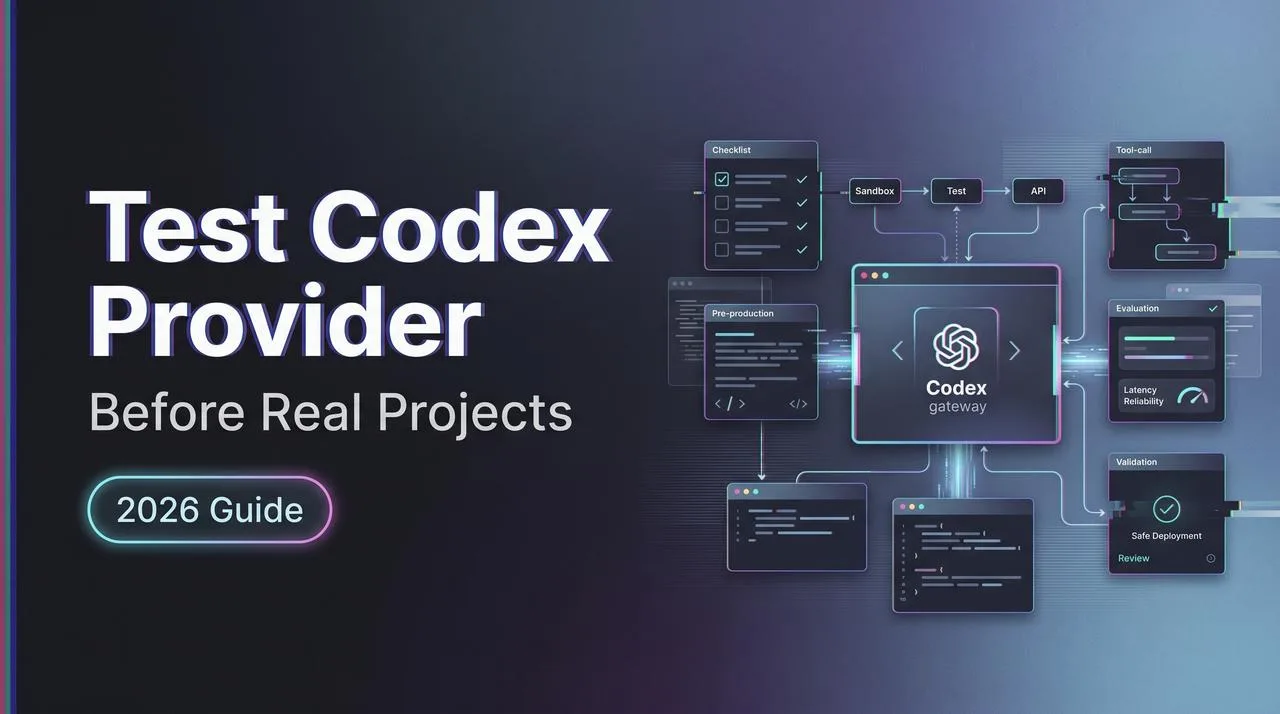
I would not let a new endpoint touch a production repo because it answered one coding question correctly. That test is too clean. If you need to test Codex provider behavior, the question is whether it can survive the shape of real agent work: streamed output, file edits, shell output, tool loops, long context, retry, and unfinished state.
This is the test protocol I would use before giving a third-party model Codex access to anything expensive. Small repo first. Real tools. Boring logs. No hero demos.
Why a One-Line Code Test Is Not Enough
A one-line coding prompt tests language quality. It does not test agent behavior.
Ask a model to write a debounce function and most modern coding models will produce something acceptable. That tells you almost nothing about repository work. Real tasks involve reading local files, following repo instructions, changing code, running tests, interpreting failures, and deciding what to do after the first attempt does not work.
The official Responses API reference shows why this matters. A response can involve inputs, tools, state, metadata, background execution, and richer output items. Codex-style work depends on that structure. A provider that only returns nice text is not compatible enough.
Coding agents need streaming, tools, files, and recovery
A coding agent is not a chat window with syntax highlighting.
It needs to read file contents without losing paths. It needs to propose edits that apply cleanly. It needs to run commands and understand stdout, stderr, and exit codes. It needs to recover after a bad patch. It needs to stop when a tool call is denied or canceled.
I paused here during one provider trial. The final answer looked fine. The event stream was not. Tool arguments arrived out of order, then the final message claimed the test command had passed. The command had not passed. The agent just stopped listening to its own tool output.
That is the failure class you are testing for.
What “works” means for production repository tasks
For production repository tasks, “works” means the repo reaches a reviewable state.
Not perfect. Reviewable.
A useful provider can do five things:
| Capability | What I check |
|---|---|
| File handling | Reads the right files and respects local instructions |
| Edits | Produces small patches that apply cleanly |
| Commands | Runs relevant checks and interprets failures |
| Tool state | Preserves call IDs, ordering, and results |
| Recovery | Continues correctly after errors, retries, and interruptions |
If any one of these breaks, the model may still sound competent. That is the annoying part. The repo tells the truth faster than the final summary does.
Build a Provider Test Suite
Start with a fixture repo. Keep it small enough to run often.
I use four task types. One TypeScript app with tests. One Python package with lint and unit checks. One documentation-heavy repo with local instructions. One messy repo with old conventions, generated files, and one failing script.
The messy repo is not optional. Clean repositories flatter providers.
This becomes your Codex provider benchmark. I know the word “benchmark” gets abused, but here it means something plain: same tasks, same repo state, same tool permissions, same scoring sheet.
File edits, shell output, multi-step reasoning, and long tasks
The first task should force a real edit.
Example:
Add validation for invalid discount codes. Preserve current behavior, add tests, run the relevant test command, and summarize changed files.
A passing run reads the implementation, finds the test pattern, edits only relevant files, runs the command, uses the failure if there is one, and leaves a compact summary.
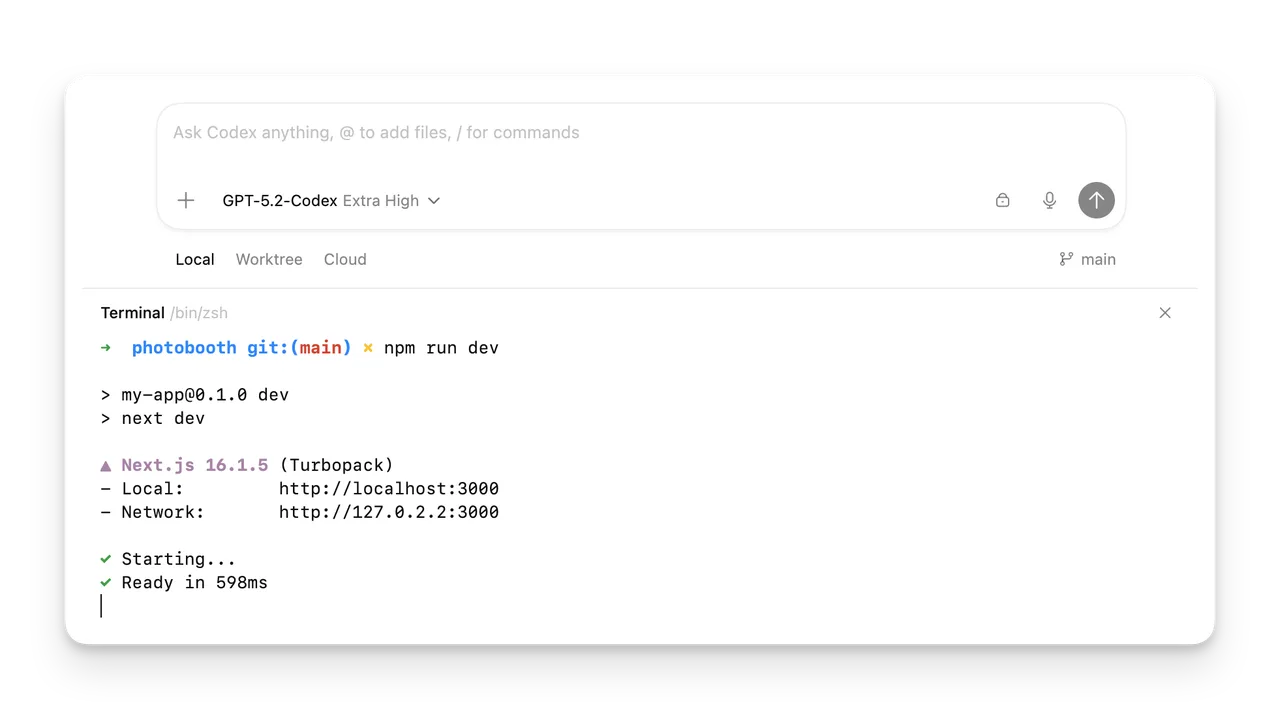
The second task should depend on shell output. Give the provider a failing test and no extra hint. Watch whether it reads the stack trace or guesses. The Codex docs describe the integrated terminal as part of validating changes and inspecting command output. Your provider has to treat command output as state, not background noise.
The third task should take time. Ask for a migration across several files. Include a local rule such as “do not edit generated files.” Then see whether the provider still remembers that rule after multiple tool calls.
Found the pattern on the third try: weak providers fail late, not early.
Tool-call ordering, partial failures, and cancellation behavior
Tool calling is a loop. The model asks for a tool. Your application runs it. The tool result goes back to the model. The model continues. OpenAI’s function calling guide describes this as a multi-step flow that may continue through more tool calls.
So test the loop directly.
Your coding agent provider test should include:
- Two independent read-only file inspections.
- One command that depends on earlier file context.
- One tool failure with a recoverable error.
- One timeout.
- One cancellation during streamed output.
Check whether the provider preserves call_id, status, and order. Check whether the final response reflects the actual command result. Check whether cancellation stops new tool calls.
A canceled task must not end with “All set.” That sentence has caused more cleanup than some bugs.
Test Protocol and State Compatibility
Protocol compatibility is where fake compatibility shows up.
A provider can accept an OpenAI-shaped request and still break the contract. I have seen missing status fields, malformed streamed deltas, tool outputs attached to the wrong call, final messages emitted before tool completion, and reasoning-like text leaking into user-visible output.
The test should be mechanical.
Capture raw events. Rebuild the final response from those events. Compare it with the provider’s final object. Then replay the same task through the agent runtime you actually plan to use.
Streaming deltas, tool results, reasoning blocks, and context restore
Streaming needs three checks.
First, the partial text must reconstruct into the same final message. Second, streamed tool arguments must become valid completed arguments. Third, the final event must clearly mark whether the response completed, failed, or stopped incomplete.
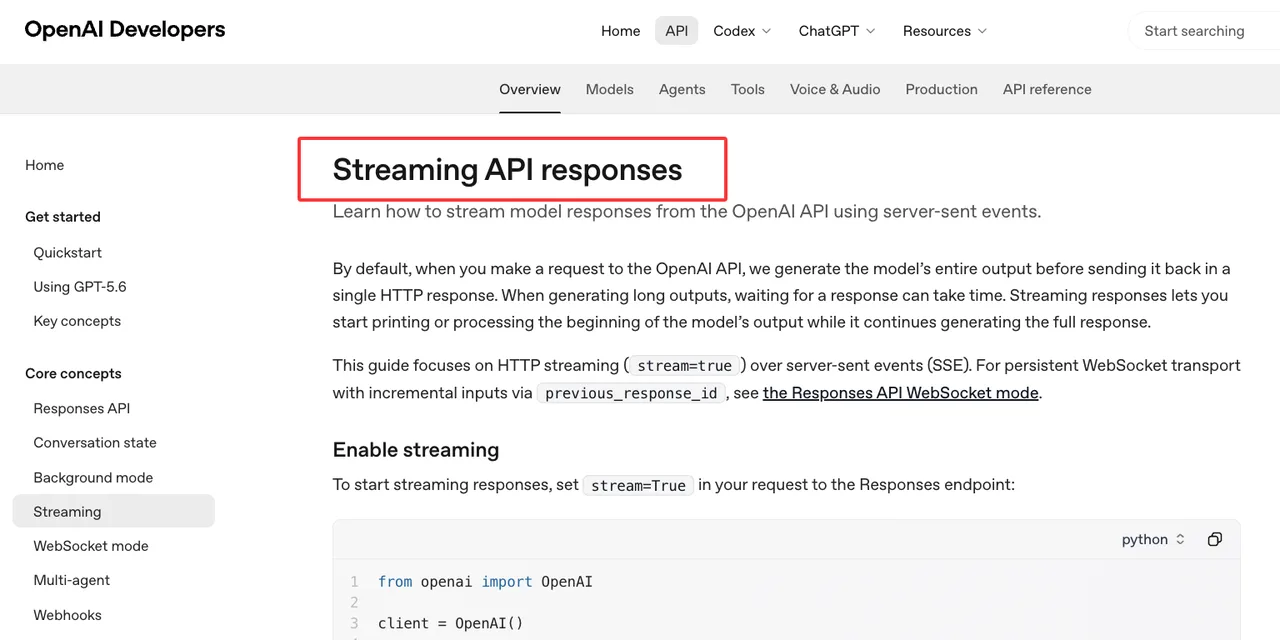
The official streaming guide focuses on processing output while generation continues. In agent work, that means your UI and orchestrator may act before the final answer exists. Bad streaming metadata becomes bad product behavior.
Reasoning needs a separate parser check. The model may use reasoning internally, and some APIs expose summaries or encrypted reasoning fields. Your adapter should preserve supported fields without turning hidden or intermediate reasoning into normal assistant text.
Context restore is the next trap. The conversation state guide covers ways to preserve information across turns. For provider testing, do not only test the happy path. Start a task, stop it after tool calls, restore from stored state, and ask it to continue. It should not repeat finished work. It should not forget earlier constraints. It should not pretend it has files it never reloaded.
Long conversation handoff and retry after network failure
Long tasks need a retry drill.
Run the provider on a task that takes at least 20 tool interactions. Disconnect the network after an edit but before the final answer. Resume with the last saved state. Then measure what happens.
A good run resumes from the known boundary. A weak run starts over, duplicates edits, or summarizes work it did not finish.
This is also where Responses conversion test coverage matters. If your adapter converts older chat-style payloads into Responses-style items, test that layer separately. The provider may be fine while your conversion drops a tool result. Or the conversion may be fine while the provider emits an invalid item. Mixed blame wastes time.
Score Provider Readiness
Do not score only final task success.
Final success hides repair cost. I care about manual repair time because that is what the engineering team actually pays.
Use a compact scoring sheet:
| Metric | Record |
|---|---|
| Completion | Completed, partial, failed, unsafe |
| Manual repair time | Minutes to reach reviewable state |
| Latency | First token, first tool call, final response |
| Cost | Tokens, calls, retries, failed runs |
| Failure class | Protocol, tool, edit, shell, reasoning, safety |
| Evidence | Event log, diff, command output, final message |
This makes comparison less theatrical. Better than expected, but only slightly, is still a useful result if the evidence is clean.
Task completion, manual repair time, latency, cost, and failure class
Separate failure classes.
A protocol failure means the event or state shape broke. A tool failure means the provider called the wrong tool, malformed arguments, or attached output to the wrong call. An edit failure means the patch was too broad, wrong, or did not apply. A shell failure means it ignored command output. A reasoning failure means it lost constraints or invented completion. A safety failure means it tried an action outside the allowed boundary.
Manual repair time should decide close calls.
If Provider A finishes 8 of 10 tasks but needs 30 minutes of cleanup each time, and Provider B finishes 7 of 10 with 5 minutes of cleanup, Provider B may be the better internal pilot. Not always. Often enough.
Red/yellow/green criteria for internal rollout
Red means no production repositories. Use this for unsafe actions, repeated protocol corruption, bad cancellation behavior, state loss after retry, or false claims that checks passed.
Yellow means limited use. Read-only review, sandbox repos, isolated branches, or short tasks. This is where many providers land after the first trial.
Green means controlled rollout. It passes representative tasks, preserves Codex tool call compatibility, handles streaming, edits files cleanly, recovers after failures, and leaves evidence a reviewer can inspect.
Security boundaries still apply. The Codex agent approvals and security docs separate sandbox capability from approval policy. Keep that distinction in the rollout. Provider readiness does not replace branch protection, review, sandboxing, or access control.
FAQ
Who signs off before a provider can touch production repositories?
Use your existing internal release path. The provider test should produce a readiness packet, not a new org chart. Include scores, known restrictions, unresolved risks, and the exact repository scope proposed for the next trial.
What evidence should be kept after a failed provider trial?
Keep the prompt, model string, provider version, request shape, streamed events, tool calls, tool outputs, diffs, command logs, timestamps, and failure class. Redact secrets. The goal is reproducibility, not blame.
How should teams communicate temporary provider restrictions?
Use operational limits. Name allowed repos, blocked tools, maximum task length, retry limits, and review requirements. Avoid “use carefully.” That phrase does not survive contact with release pressure.
Conclusion
A provider that answers coding questions is not ready by default. A provider that edits files, handles shell output, preserves tool state, streams cleanly, restores context, parses reasoning fields, and stops correctly after cancellation is closer.
That is why I would test Codex provider behavior before real projects. Not because testing is tidy. It usually is not. Because the first broken tool loop should happen in a fixture repo, not in the branch your team needs to ship today.
Previous posts:
- Codex Model Gateway for Third-Party AI Providers
- Responses API vs Chat Completions for Codex-Compatible Agent Workflows
- Managed Agent Stack with Multica, Composio, and Multiple Model Providers
- Benchmark Inkling for Production Coding Agent Evaluation
- Comparing Production AI Costs Across Multi-Model Routing Platforms
Related Articles

DeepSeek V4.1 Flash API: Access and Migration

GPT-6 Astra Pro Pricing and Real Workload Cost

GPT Image 2.5 vs Nano Banana 2: Quality, Speed, and Cost

GPT Image 2.5 vs Nano Banana Pro for Precision Editing

Is K2 Horizon Open Source? Audit the Release