
Codex Model Gateway for Third-Party Providers
Codex model gateway design covers local proxying, protocol conversion, model mapping, authentication, retries, and health checks.
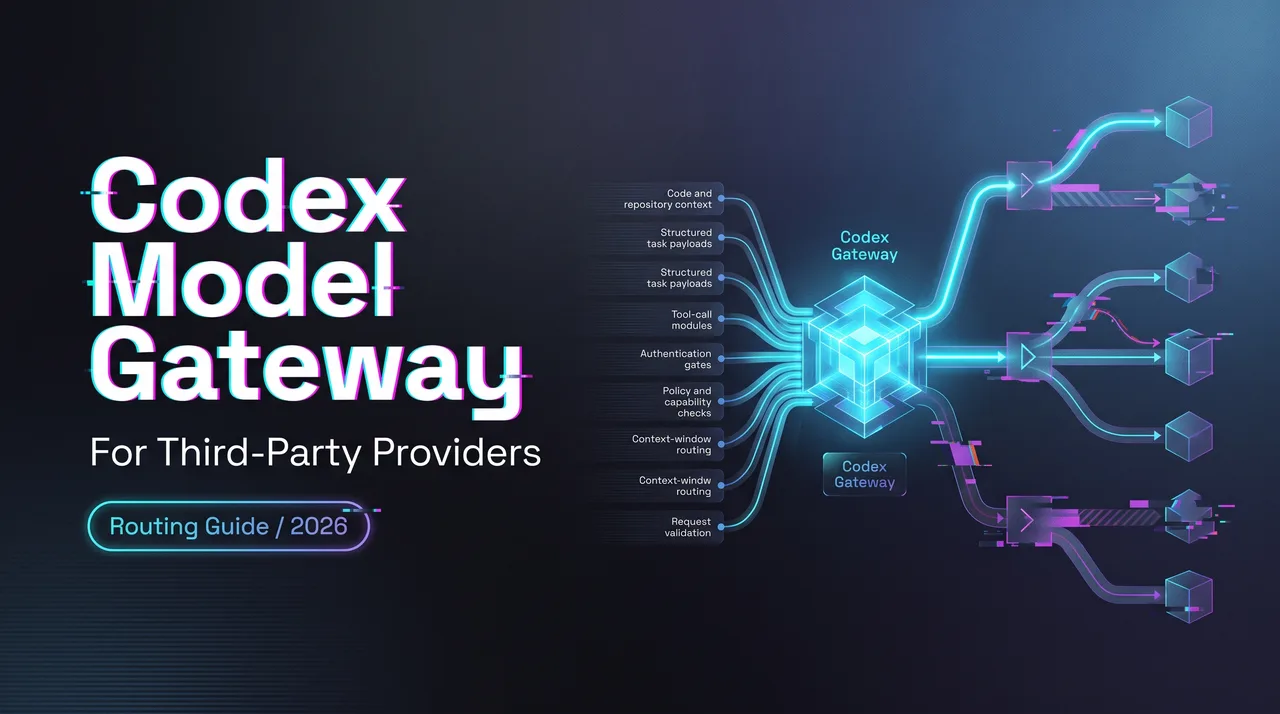
A Codex model gateway is where model freedom meets protocol debt. I see teams start with a local proxy, a few model aliases, and the phrase “OpenAI-compatible.” Then Codex runs a long task, streams a tool call, cancels halfway through, retries, and the pleasant demo turns into log archaeology.
This piece is not a personal alias setup note. It is for teams building a gateway, local proxy, or provider manager for Codex. The useful question is not “can the upstream return text?” It is “can the gateway preserve Codex’s agent loop when the task gets messy?”
Codex Gateway Architecture at a Glance
Codex client, local proxy, protocol adapter, and upstream provider
The clean architecture has four layers.
| Layer | Job | Failure I look for |
|---|---|---|
| Codex client | Sends agent requests, receives streamed events, runs tools | Assumes provider behavior that the gateway does not preserve |
| Local proxy | Handles routing, auth, logs, policy, retries | Becomes an invisible place where state is lost |
| Protocol adapter | Converts upstream behavior into Codex-compatible Responses behavior | Fakes events too casually |
| Upstream provider | Runs the selected model | Claims support without tool-state parity |
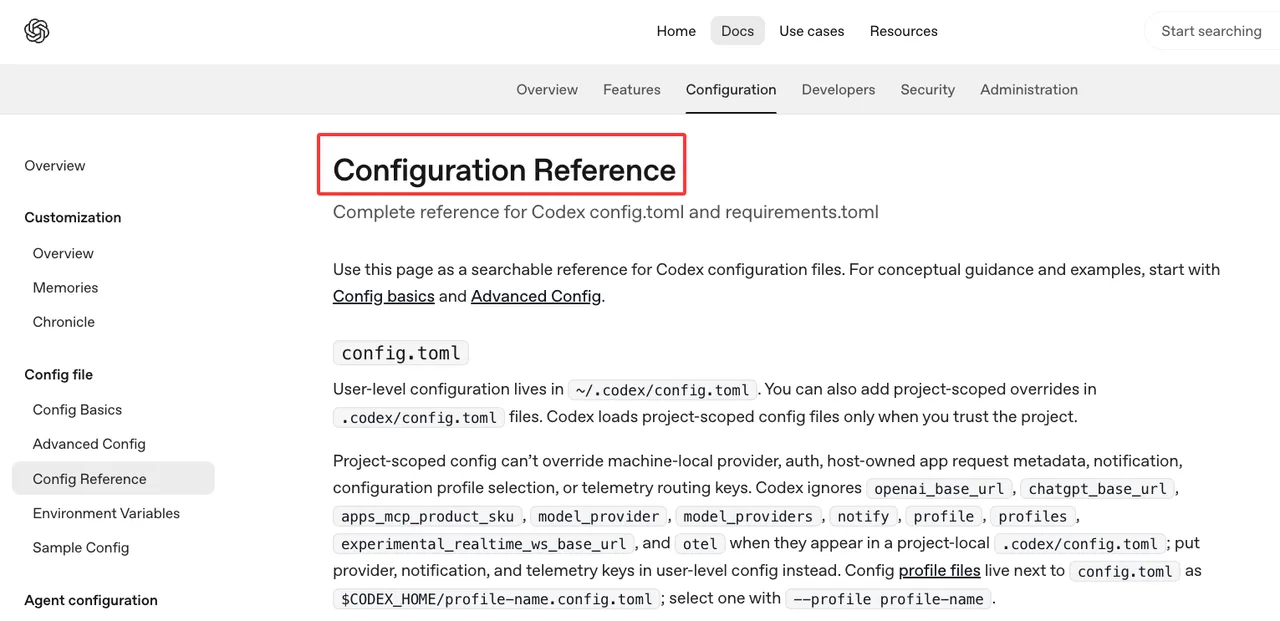
Current Codex docs matter here. The Codex configuration reference describes model providers, model_provider, model_providers.<id>, base URLs, auth fields, retry fields, and wire_api. At publication time, the reference lists model_providers.<id>.wire_api as responses, with responses as the supported value.
That changes the gateway design. A third-party upstream that only speaks a Chat-style API may still be usable behind a proxy, but the proxy now owns the compatibility work. Calling it direct Codex support is too loose.
Why provider routing belongs outside the project codebase
Codex provider routing should not live in application source files. It belongs in a controlled gateway or user/admin config layer because routing is operational state, not repository logic.
A repo should not decide that every engineer’s Codex task now goes through a new vendor. A gateway can apply org policy, workspace allowlists, model fallback, incident controls, and credential separation without modifying project code. That separation also stops secrets from drifting into repos.
There is another reason: project-scoped Codex config has trust boundaries. Provider and auth settings need a machine-local or managed layer. The project can say what kind of work it needs. The gateway decides which approved model can handle it.
For a Codex local proxy, this usually means a small service on the developer machine or inside a controlled dev environment. It accepts Codex-shaped traffic, attaches policy and credentials, then routes to the chosen upstream provider.
Good infrastructure makes you forget it is there. Bad gateway infrastructure makes every bug look like a model bug.
Design the Protocol Adapter
Responses-style events, Chat-style upstreams, and tool state mapping
A Responses API gateway has one main contract: Codex asks for Responses-style behavior, and the gateway must return Responses-style behavior. The official Responses API overview describes stateful interactions, built-in tools, function calling, and model outputs as more than a single text string.
That matters for Codex. A coding agent turn can include assistant output, tool calls, tool results, command logs, intermediate reasoning metadata, and final response text. If the adapter collapses all of that into one text field, the gateway is no longer adapting. It is hiding damage.
Chat-style upstreams are not automatically wrong. The Chat Completions reference still documents message lists, chat completion objects, streamed chunks, tool calls, and finish reasons. A gateway can map some of that into a Responses-shaped interface.
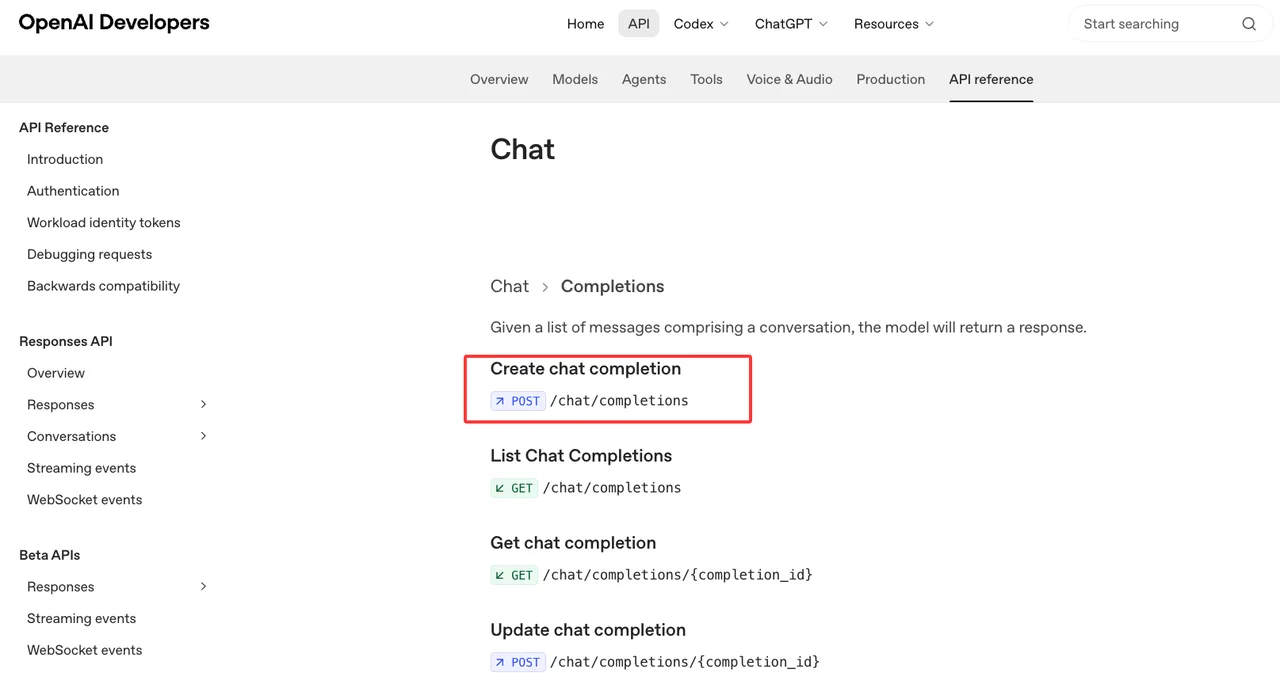
But it is not a one-to-one map.
The adapter has to track output item IDs, tool call IDs, partial function arguments, final tool arguments, tool output attachment, response status, and completion state. It also needs a durable record of what it already emitted. Without that, a retry can duplicate a tool call or re-open a completed step.
Tool state mapping is the part I would test first. Text streaming is the easy demo. Tool streaming is where the demo stops being polite.
SSE conversion, cancellation, retries, and timeout handling
Responses streaming events are typed. They include response lifecycle events, output item events, text deltas, function-call argument deltas, completion events, incomplete events, and error events. The official Responses streaming events page is the adapter checklist, not decoration.
A gateway converting from upstream SSE has to answer these questions:
- Can it emit
response.createdbefore the first token arrives? - Can it separate text deltas from function-call argument deltas?
- Can it finalize arguments only after valid completion?
- Can it emit an incomplete or failed state instead of pretending the task completed?
- Can it preserve event ordering with sequence information?
Cancellation is more than closing the client connection. If Codex cancels a response while a model is still generating, the gateway should stop the upstream request when possible, mark the local task state, and prevent late-arriving chunks from being attached to the next turn.
Retries need idempotency. A retry after a dropped stream should not re-run a tool call that already executed. The gateway needs request IDs, response IDs, tool call IDs, and a “last emitted event” marker. Without those, recovery becomes guesswork. Guesswork is not a strategy. It is just suspense with logs.
Timeouts need separate buckets. HTTP request timeout, SSE idle timeout, upstream queue timeout, and tool wait timeout are different failures. Treating them as one “provider failed” bucket makes support useless.
Manage Models and Credentials
Model aliases, provider allowlists, API keys, OAuth, and secret storage
Model aliases are product decisions disguised as strings. A gateway might expose fast-coder, deep-review, cheap-fix, or internal-default, but each alias needs a mapping table behind it: upstream provider, model ID, context window, tool support, streaming support, retry policy, fallback model, and owner.
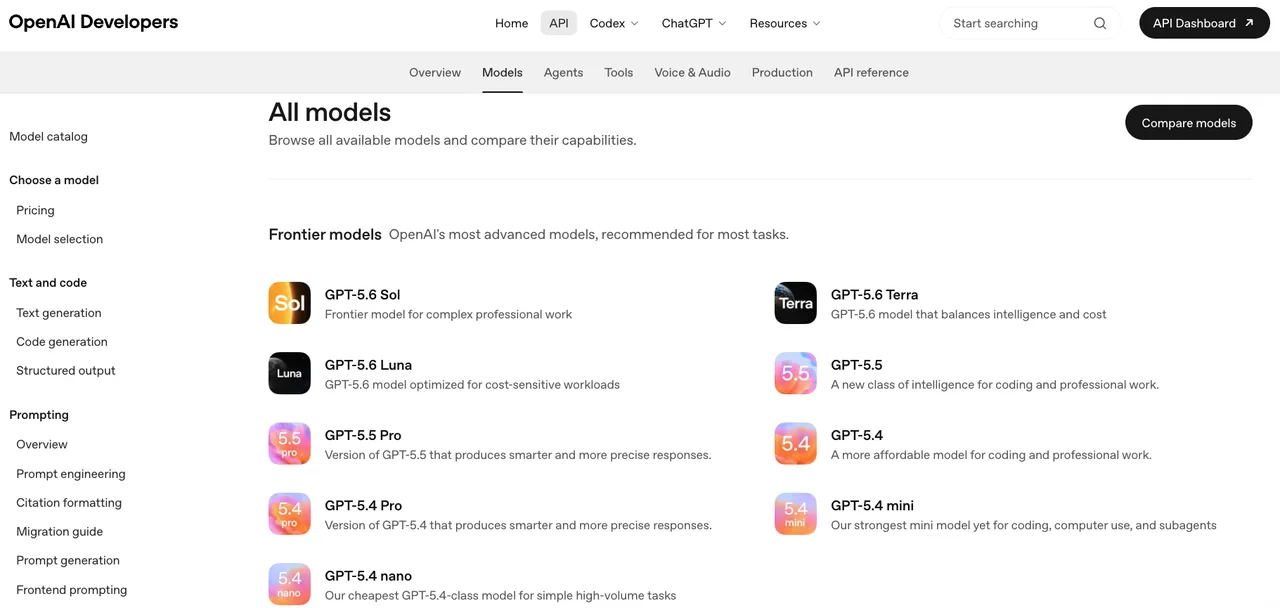
The OpenAI model catalog is the official place to verify OpenAI model availability and capabilities before mapping OpenAI models into that table. Third-party models need the same verification from their own official docs and live tests. I would not publish a mapping based only on a provider dashboard label.
Provider allowlists should be explicit. Some models may be approved for read-only code explanation but not file edits. Some may be approved for short tasks but not long-running repository changes. Some may be blocked for regulated work because audit trails are not good enough.
Credentials belong outside code and outside model aliases. API keys can come from environment variables, secret stores, or command-backed token fetchers. OAuth adds another layer: token refresh, tenant scoping, revocation, and audit identity. If the gateway cannot explain which human, workspace, provider, and model were involved in a request, it is not ready for shared use.
Per-workspace routing, fallback, and audit records
Per-workspace routing is where a gateway becomes useful. A platform team may route internal tools to one provider, experimental repos to another, and regulated repositories to a narrower allowlist. The model choice follows policy, not whoever edited a local file last.
Fallback is useful only when it preserves intent. If a long-context model fails, falling back to a smaller model may produce a confident but incomplete patch. If a tool-capable model fails, falling back to text-only output may break the agent loop. A multi-model coding agent needs fallback rules that include capability checks, not just availability checks.
Audit records need to be boring and complete:
- request ID
- user or service identity
- workspace/repo identifier
- requested alias
- resolved provider and model
wire_apipath- upstream request ID
- response ID
- tool call IDs
- cancellation and retry events
- final status
- policy decision
This is not for paperwork. It is for the day someone asks why a gateway routed a production repository to an unapproved model. That day arrives faster than expected.
Make It Production-Ready
Health checks, latency logs, error buckets, and rollback controls
Health checks should test the actual route, not just whether the proxy process is alive. A gateway can return 200 on /health while the upstream SSE path is broken. Run small Responses-shaped checks that verify auth, streaming, tool-call parsing, and cancellation.
Latency logs need enough stages to locate the bottleneck: client to gateway, gateway policy time, upstream queue time, first event latency, first text delta, tool argument completion, final event, and total duration. Aggregate averages are not enough. Long-tail latency is what users feel during Codex work.
Error buckets should separate auth failure, policy denial, upstream 429, upstream timeout, malformed upstream event, invalid tool arguments, cancellation, client disconnect, and gateway internal error. The model is not always guilty. It is just nearby.
Rollback controls should be boring as well. Disable one alias. Disable one provider. Disable fallback only. Force all workspaces back to the default route. Put a provider into read-only mode. These switches need owners and audit logs.
Speed is not the goal. Not breaking flow is.
Compatibility test suite before real repository use
Do not test a gateway with only “write a Python function.” That prompt is too clean.
A practical compatibility suite should include:
- short text generation
- long coding plan
- file-edit proposal
- command-output interpretation
- streamed tool call
- malformed tool arguments
- cancellation during text output
- cancellation during tool arguments
- upstream 429 and retry
- dropped SSE connection
- timeout during a long task
- fallback with equivalent capabilities
- fallback blocked due to missing capabilities
- context-heavy repository question
The suite should compare what Codex expected, what the gateway emitted, and what the upstream actually returned. Keep raw SSE logs for failing cases. Pretty summaries are fine after the raw evidence exists.
For third-party model Codex support, I would label compatibility by tested surface: text-only, streaming text, tool calls, long tasks, cancellation-safe, fallback-safe, or production-approved. “Compatible” by itself says too little.
FAQ
Who owns the approved model mapping table?
The platform engineering owner should own the mapping table. Security, legal, and support should review it when the table affects regulated repositories, customer data, or external vendors.
The owner should approve alias changes, provider additions, fallback rules, and capability labels. Docs can publish the table, but docs should not own the truth source.
What incident record is needed after a gateway routes incorrectly?
Keep the requested alias, resolved provider, resolved model, policy version, workspace, timestamp, user or service identity, request ID, upstream ID, reason for the route, fallback decision, and final output status.
If a tool ran under the wrong route, preserve the tool schema, tool arguments, execution result, and cancellation or retry timeline. The incident record should make one question answerable: did the gateway choose incorrectly, or did the mapping table allow the wrong choice?
When should a provider be disabled for all Codex users?
Disable a provider globally when it breaks protocol guarantees, returns malformed streaming events repeatedly, loses tool state, ignores cancellation, routes to unapproved models, exposes credential risk, or creates repeated support incidents with no clear recovery path.
A softer degradation path can work for minor issues: text-only mode, no fallback mode, no sensitive repositories, or limited workspaces. But if tool calls or routing integrity are unreliable, global disablement is the cleaner call.
Conclusion
A Codex model gateway is not a URL switch. It is a control plane for provider routing, protocol adaptation, credentials, model policy, streaming state, retries, and evidence.
The gateway earns trust when it can preserve Responses-style behavior across messy upstreams, long Codex tasks, and boring operational failures. That is the line I would use before letting it touch real repositories: not “does it answer,” but “does it recover without lying.”
Previous posts:
Related Articles
/filters:quality(82)/media/images/1773962750383987480_n3hqzHRZ.webp)
Seedance 2.5 vs WAN 3.0 vs Kling 4.0: Specs, References and Price Compared
/filters:quality(82)/media/images/660b4b48-6351-40cd-ba00-51322b7455f4.webp)
How to Use Kling 4.0 Keyframes for a Product Reveal
/filters:quality(82)/media/images/273bf240-30e3-4e6c-8ae4-e3346b487bc7.webp)
Kling 4.0 Pricing: What Does One Usable Clip Cost?
/filters:quality(82)/media/images/bb7ec772-f694-45f4-9a9a-c0e5fd2e7d60.webp)
Kling 4.0 Reference-to-Video: Keep a Product Consistent
/filters:quality(82)/media/images/444431ee-1387-4a40-81ad-866e095a7c75.webp)
Kling 4.0 Review: Can It Handle Product Video Ads?
/filters:quality(82)/media/images/81212eb5-4b43-4cc4-92f4-38a0c439d258.webp)