
pxpipe Models for Fable 5 and GPT-5.6
pxpipe models guide for teams checking which LLMs can read dense renders, compressed context, and multimodal inputs reliably.

I hit the allowlist before I hit the savings number. That was the useful part. pxpipe models are not just “any multimodal model that can see an image.” They are models that can read dense rendered context with enough accuracy that the compression does not quietly damage the task.
That distinction matters for AI coding teams, agent platforms, and anyone routing long tool output through a proxy. pxpipe can make bulky context cheaper by rendering text into PNG pages, but the model still has to read those pages. If it misreads a hash, skips a column, or invents a value from a dense render, the token bill looks better and the work gets worse. Good infrastructure makes you forget it is there. Bad routing makes you debug a cheaper failure.
Why pxpipe Model Support Is Not Universal
Dense text renders need more than generic vision ability
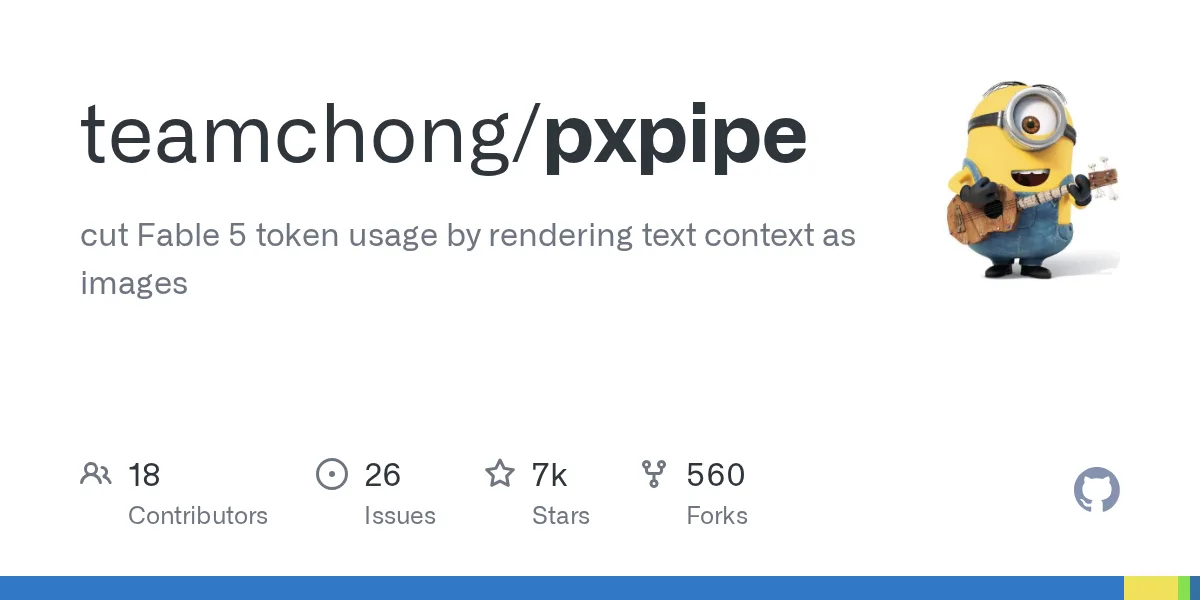
The pxpipe repo describes the core trick plainly: bulky context is rendered as images before the request leaves the machine, while responses stay untouched. That sounds simple until the model becomes the reader.
A normal vision-capable model can describe screenshots, charts, and UI layouts. That does not prove it can read compressed code, logs, JSON, state tables, or tool output packed into small monospace pages. Dense renders punish small reading errors. One missed digit can break a ledger. One skipped file path can send an agent to the wrong module.
This is why the phrase “multimodal LLM” is not enough for model routing. Multimodal support is the entrance ticket. pxpipe compatibility is a production behavior: read accuracy, layout stability, exact-token risk, and fallback behavior under real request shapes.
I paused here. Most routing mistakes start when teams treat image input support as model support.
Reading accuracy, layout sensitivity, and tool-context risk
pxpipe compresses context, not truth. The model receives a visual representation of text. That introduces a lossy step.
The risky content is easy to name: IDs, hashes, secrets, invoice numbers, exact error strings, line numbers, schema keys, and mutated state. If the model needs byte-exact recall, the content should stay raw text or be duplicated into a small factsheet that remains text.
Layout matters too. A model may read plain paragraphs well and still fail on narrow columns, dense tables, wrapped JSON, or long shell output. pxpipe therefore needs routing at two levels: model allowlist and block-level eligibility. A supported model still should not receive every block as an image.
Model Support Checklist
Fable 5 and GPT-5.6 default scope claims to verify
As of July 23, 2026, I would not publish a blanket claim that Fable 5 and GPT-5.6 are both universally defaulted in every pxpipe install. The safer record is more specific.
The source-level applicability helper currently describes the built-in default as Fable 5 only when PXPIPE_MODELS is unset. It also treats GPT-5.6 Sol as an explicit opt-in path. That is the line I would trust first, because source behavior beats a summary page when they drift.
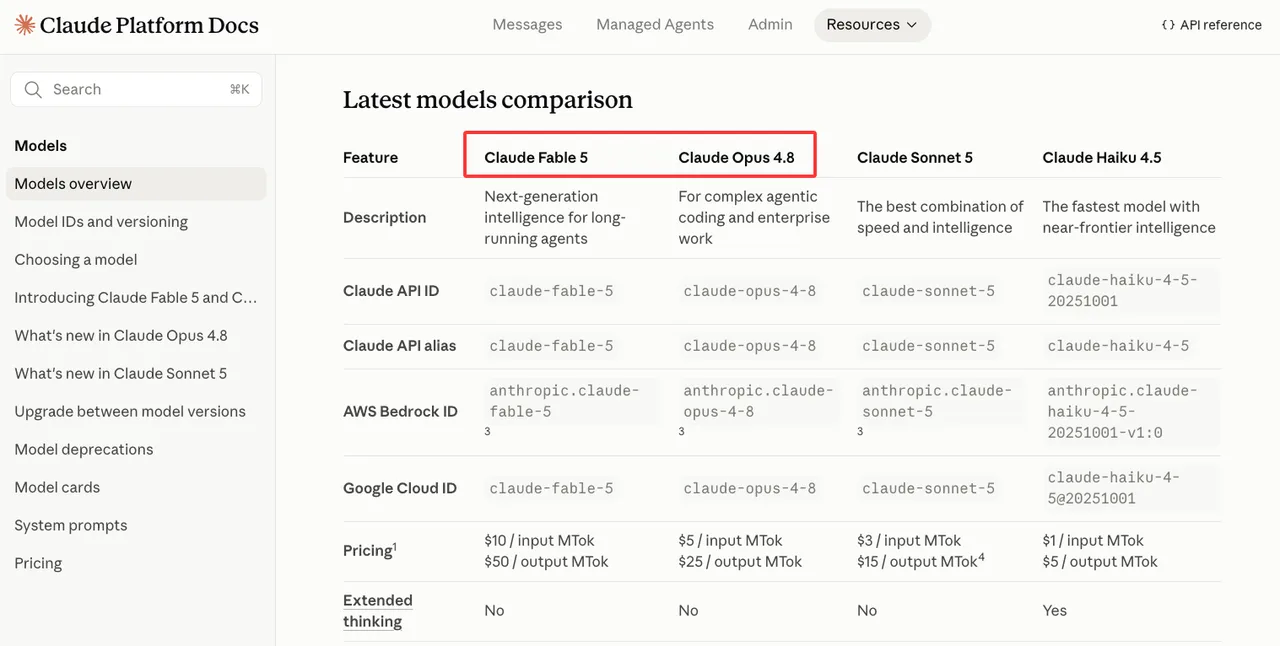
For Fable 5 and Opus 4.8, Anthropic’s Claude model overview confirms current model IDs, image input support, large context windows, and the positioning of Fable 5 as the highest-capability widely released Claude model. That supports testing Fable 5 as a strong candidate. It still does not remove the need for pxpipe-specific evals.
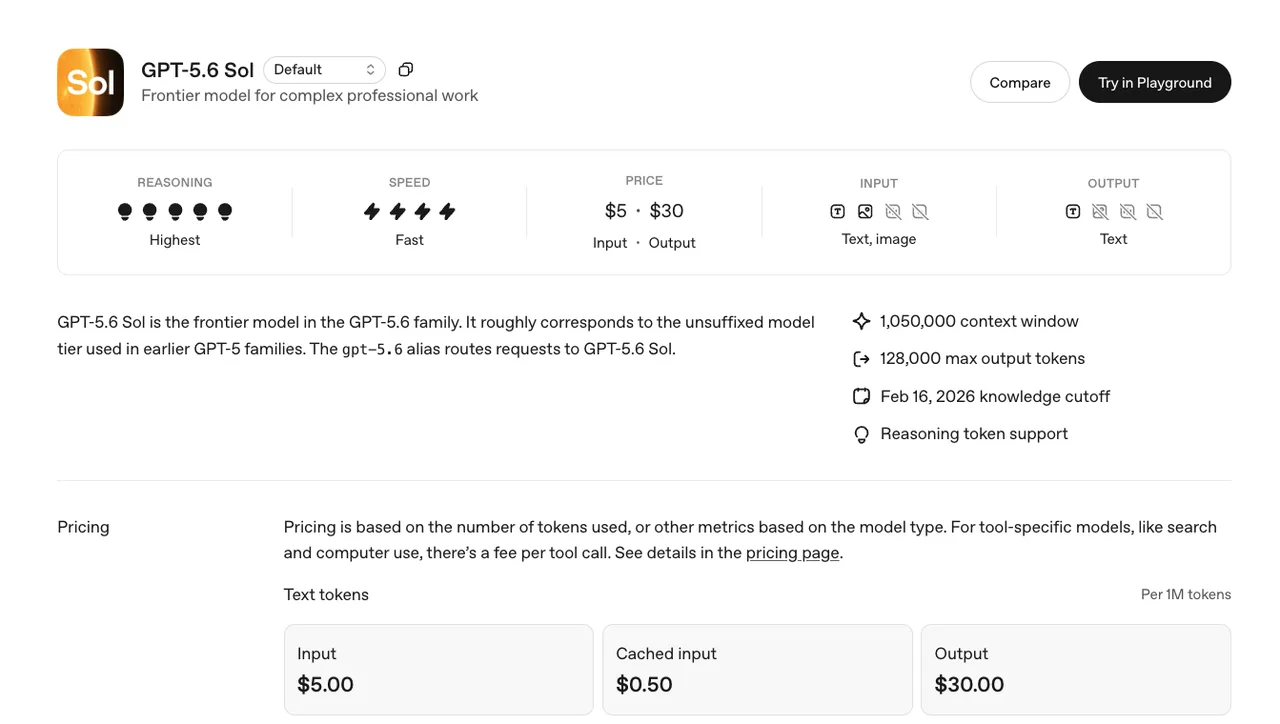
For OpenAI, the GPT-5.6 Sol model page confirms that the gpt-5.6 alias routes to gpt-5.6-sol, with text and image input support. That makes GPT-5.6 technically eligible for visual context experiments. It does not mean every GPT-5.6 family member inherits the same render profile or allowlist status.
My checklist is short:
| Check | Pass condition |
|---|---|
| Exact model ID | The ID matches the pxpipe allowlist or explicit PXPIPE_MODELS setting |
| Provider docs | The model supports image input on the target endpoint |
| pxpipe source | The installed commit supports that route and model base |
| Dense-render eval | The model passes task-specific visual reading tests |
| Fallback path | Raw text remains available for exact or sensitive context |
Found the pattern on the third try. “Supports images” belongs near the top of the checklist, not at the end.
Why Opus, GPT 5.5, and other models need cautious testing
Opus 4.8 is a capable model. That is not the same thing as a pxpipe default. If a model reads normal images well but misses dense rendered strings, it should stay opt-in until your evals say otherwise.
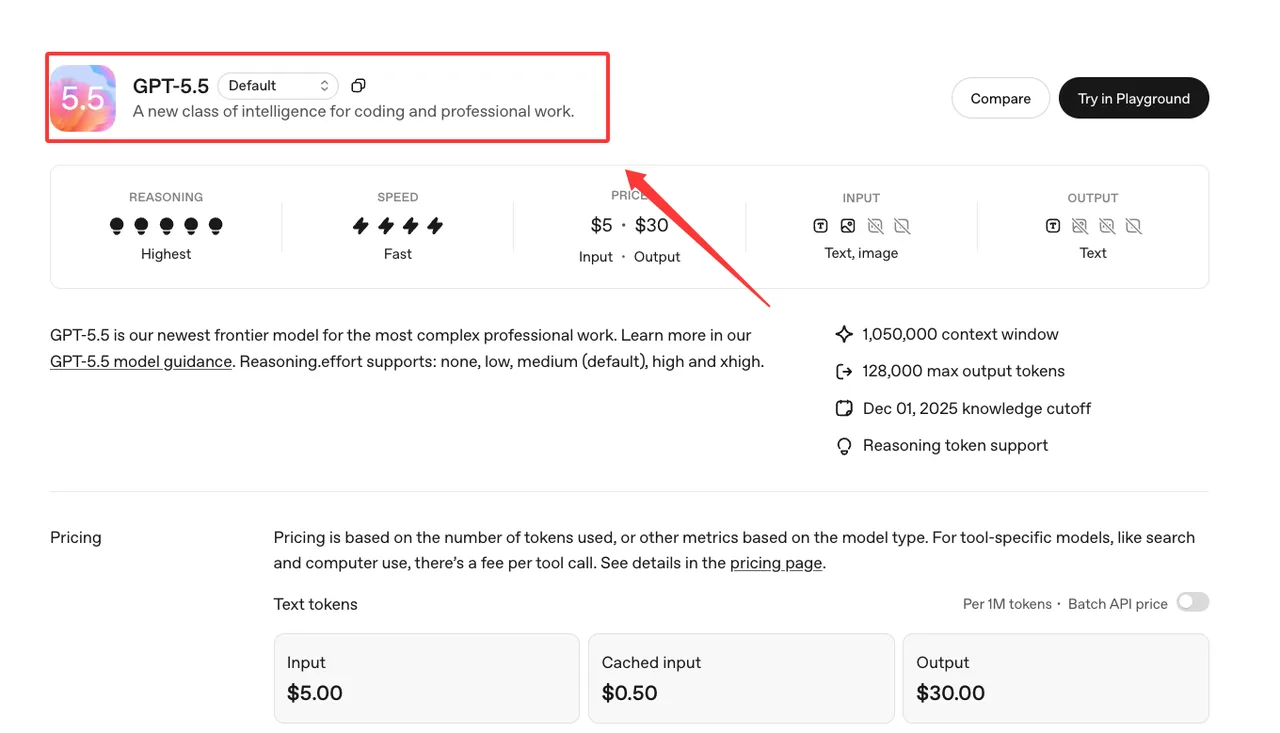 The same applies to GPT 5.5. OpenAI’s GPT-5.5 model page confirms image input support and long-context capacity, but pxpipe’s own project notes treat GPT 5.5 as degraded on imaged history or context. Those two statements can both be true. Provider capability and compression reliability are different layers.
Other models need the same treatment. Do not inherit trust by family name. A sibling model may share a context window, endpoint, and vendor, then fail on a dense page because the visual profile, reasoning behavior, or layout tolerance differs.
That is why I would never phrase this as “Opus 4.8 works worse” in a production doc without a local receipt. I would write: Opus 4.8 requires explicit validation before allowlisting. Boring wording. Correct wording.
Routing Strategy
Allowlist models for dense compression workflows
Model routing should start closed. Not open.
The default policy I prefer is:
PXPIPE_MODELS=offThen enable only the model bases that passed your eval set:
PXPIPE_MODELS=claude-fable-5,gpt-5.6-solDo not use broad prefixes casually. gpt-5.6 and gpt-5.6-sol are not just different strings; they can represent different routing assumptions depending on provider alias behavior and pxpipe’s matching logic. If Sol has the tested render profile, name Sol.
For dense compression workflows, allowlist by task class:
- Static system and tool documentation can be rendered once the model proves stable.
- Old closed tool rounds can be compressed after state tracking tests pass.
- Large logs can be imaged if the task is semantic diagnosis, not exact extraction.
- Code or JSON can be compressed when the model only needs structure and gist.
- Exact IDs, hashes, secrets, migration names, and active tool state stay text.
The allowlist is not a convenience setting. It is a release artifact.
Fallback to raw text when visual reading degrades
Fallback should not depend on human panic. It should be built into the request path.
A good fallback rule is simple: if the model reports uncertainty, misses a known marker, fails a visual-reading probe, or touches a block marked exact, send raw text. The cost goes up. Fine. A correct expensive request beats a cheap distorted one.
I also keep a “force raw” tag for customer incidents. When a user reports context loss, the next reproduction should run with compression off, then with only low-risk blocks compressed. That tells you whether the issue came from the model, the render, the routing rule, or the original prompt.
The worst version is silent degradation. The model answers confidently from a page it half-read. There is no useful error message. Just a clean-looking wrong answer.
Production Validation
Golden prompts, regression tests, and model update review
Golden prompts should include ugly cases. Pretty examples do not tell you much.
My pxpipe validation set would include dense shell output, mixed JSON and prose, file trees, table-like logs, repeated IDs, near-duplicate filenames, long tool histories, and prompts asking for “the exact value.” Include negative probes too: ask for values that are not present and check whether the model invents them.
Run each model in three modes:
- Raw text baseline.
- pxpipe compression on.
- pxpipe compression on with exact fields pinned as text.
Compare task success, refusal behavior, tool decisions, exact recall, false positives, output format, and cost. Do not reduce this to one score. A model that saves tokens but fails exact recall is usable for summaries and risky for migrations.
Model updates need a review gate. If Fable 5, GPT-5.6, Opus 4.8, or any provider endpoint changes behavior, rerun the golden set before keeping it allowlisted. This conclusion has an expiration date. Models update fast.
Logging failures without leaking sensitive context
Logging should explain the failure without copying the customer’s context into another sensitive file.
For each request, I would log model ID, provider route, pxpipe version, render profile, compression decision, image count, raw-token estimate, compressed-token estimate, fallback reason, eval marker result, and operator override. For content, store hashes, block classes, byte counts, and redacted snippets only when policy allows.
Customer context-loss reports need enough structure to reproduce the path:
- Was the request compressed?
- Which blocks became images?
- Which model read them?
- Did the exact field stay text?
- Did the same task pass raw?
- Did the model update recently?
- Was the customer asking for gist, state, or byte-exact recall?
That record is dull. Good. It gives support, infra, and security the same timeline without leaking the thing they are investigating.
FAQ
Who owns approval records for pxpipe model allowlists?
The platform or AI infrastructure owner should own the allowlist record. Legal or security may approve data handling rules, but model support is an engineering control. The record should include the model ID, provider endpoint, pxpipe version, eval suite, pass date, approver, rollback rule, and known exclusions.
For pxpipe models, I would also store the reason a model is excluded. “Not tested” is different from “tested and failed dense hex recall.” Both are useful six weeks later.
How should teams respond to customer context-loss reports?
Reproduce with compression off first. Then replay with the same model and only the suspected block type compressed. If raw text passes and compressed context fails, remove that model or block type from the allowlist until the eval is updated and the failure is understood.
Do not tell the customer “the model lost context” as a hand-wave. Say which context class failed: dense render, old tool history, exact value, layout, or provider update. If you do not know, say that. Better than making something up.
What should teams do when provider docs are incomplete?
Treat provider docs as necessary but not sufficient. They confirm endpoint support, modalities, context windows, aliases, snapshots, and deprecation rules. They usually do not prove dense-render reading quality.
When docs are incomplete, pin the installed pxpipe commit, run your local golden prompts, record the model behavior, and keep the model opt-in. If a docs page and source behavior disagree, production follows the source you deployed, not the sentence that sounds nicer in a model page.
Conclusion
The right way to think about pxpipe models is not “*which LLM is smartest?*” It is “which reader can safely handle this compressed visual context for this workflow?”
Fable 5 has the strongest default case in the pxpipe source path I checked. GPT-5.6 Sol is a serious candidate, but I would route it explicitly and test it against the exact render profile. Opus 4.8, GPT 5.5, and other vision-capable models stay outside the default path until they pass the same dense-reading and regression set.
That is the whole routing policy: allowlist slowly, fall back quickly, and keep exact context as text when the cost of being wrong is higher than the cost of more tokens.
Previous posts:
Related Articles
/filters:quality(82)/media/images/1773962750383987480_n3hqzHRZ.webp)
Seedance 2.5 vs WAN 3.0 vs Kling 4.0: Specs, References and Price Compared
/filters:quality(82)/media/images/660b4b48-6351-40cd-ba00-51322b7455f4.webp)
How to Use Kling 4.0 Keyframes for a Product Reveal
/filters:quality(82)/media/images/273bf240-30e3-4e6c-8ae4-e3346b487bc7.webp)
Kling 4.0 Pricing: What Does One Usable Clip Cost?
/filters:quality(82)/media/images/bb7ec772-f694-45f4-9a9a-c0e5fd2e7d60.webp)
Kling 4.0 Reference-to-Video: Keep a Product Consistent
/filters:quality(82)/media/images/444431ee-1387-4a40-81ad-866e095a7c75.webp)
Kling 4.0 Review: Can It Handle Product Video Ads?
/filters:quality(82)/media/images/81212eb5-4b43-4cc4-92f4-38a0c439d258.webp)