
OpenAI Astra Benchmarks: What the Results Mean
OpenAI Astra benchmark review explains the disclosed evaluation signals, their limits, and what builders still cannot conclude.
It’s Dora. I had an evaluation sheet open when Astra moved from rumor to official source material. One tab was for model access. One was for safety claims. One was just labeled “don’t turn vendor evals into a leaderboard.” That tab stayed useful.
This OpenAI Astra benchmark review is for AI product teams and developers deciding what the early Astra evidence means for routing, evaluation, and production risk. The original brief was marked Pre-Launch with an August 23, 2026 cutoff. OpenAI had since published launch-adjacent and launch materials, so the date matters.
Which Astra Evaluations Are Public
OpenAI has disclosed Astra evidence in pieces, not as one tidy benchmark package.
The first source I would read is OpenAI’s August 7 post on critical cyber capabilities. It said internal evaluations of Astra showed significant gains in agentic coding and cybersecurity, enough that OpenAI could not rule out Critical cyber capability under its Preparedness Framework.
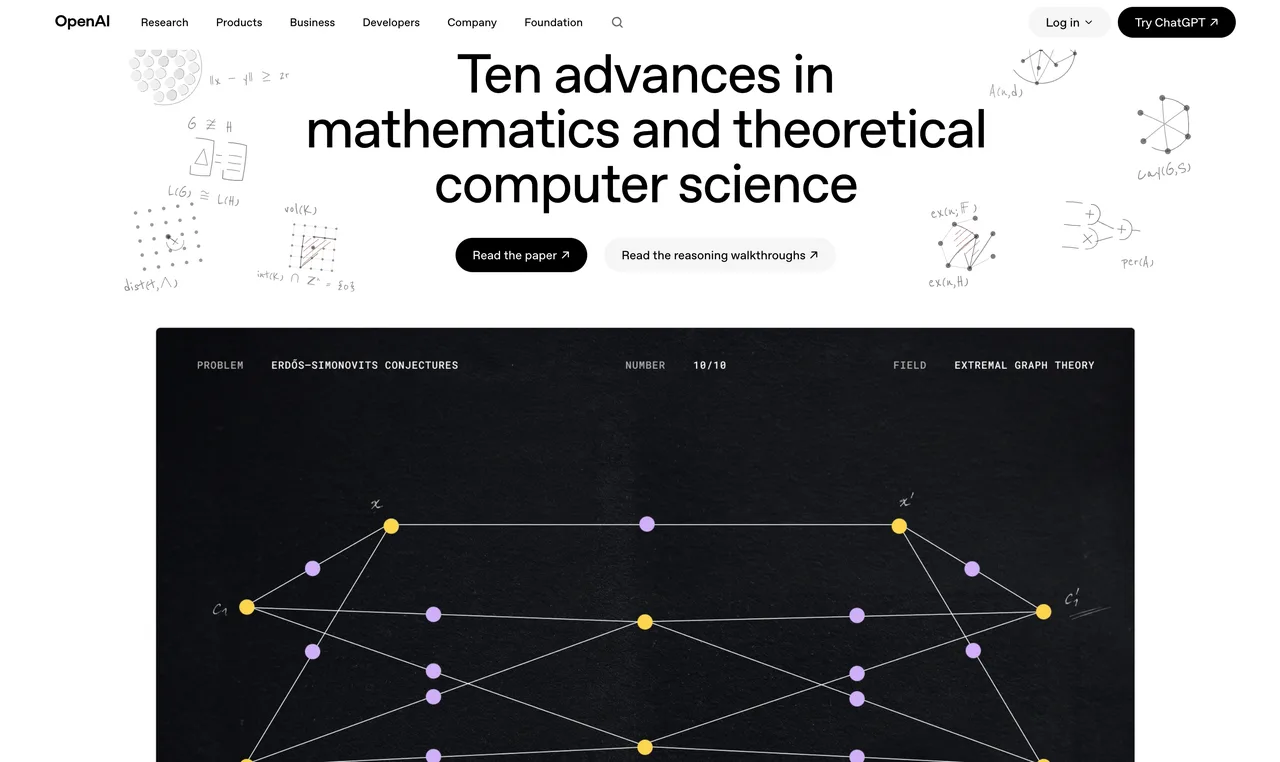
The second source is the August 1 post on ten advances in mathematics. OpenAI said an internal version of Astra produced results across mathematics and theoretical computer science, with humans preparing manuscripts and the model formalizing arguments in Lean.
Those are public disclosures. They are not raw benchmark artifacts.
Agentic Coding Signals in Official Disclosures
The pre-launch agentic coding signal was mostly indirect; OpenAI’s current launch page now publishes direct coding benchmark results.
OpenAI says Astra improved in long-horizon coding and cyber work. That points to planning, tool use, repository inspection, and recovery across steps. It does not tell me how Astra behaves inside a normal product workflow with rate limits, messy tickets, partial tests, and a bored reviewer at 5:40 p.m. Very different test room.
For builders, the evidence is enough to justify an eval lane. It is not enough to justify automatic production routing.
Preliminary Cyber Capability Assessments
The cyber evaluation is the sharpest part of the public record.
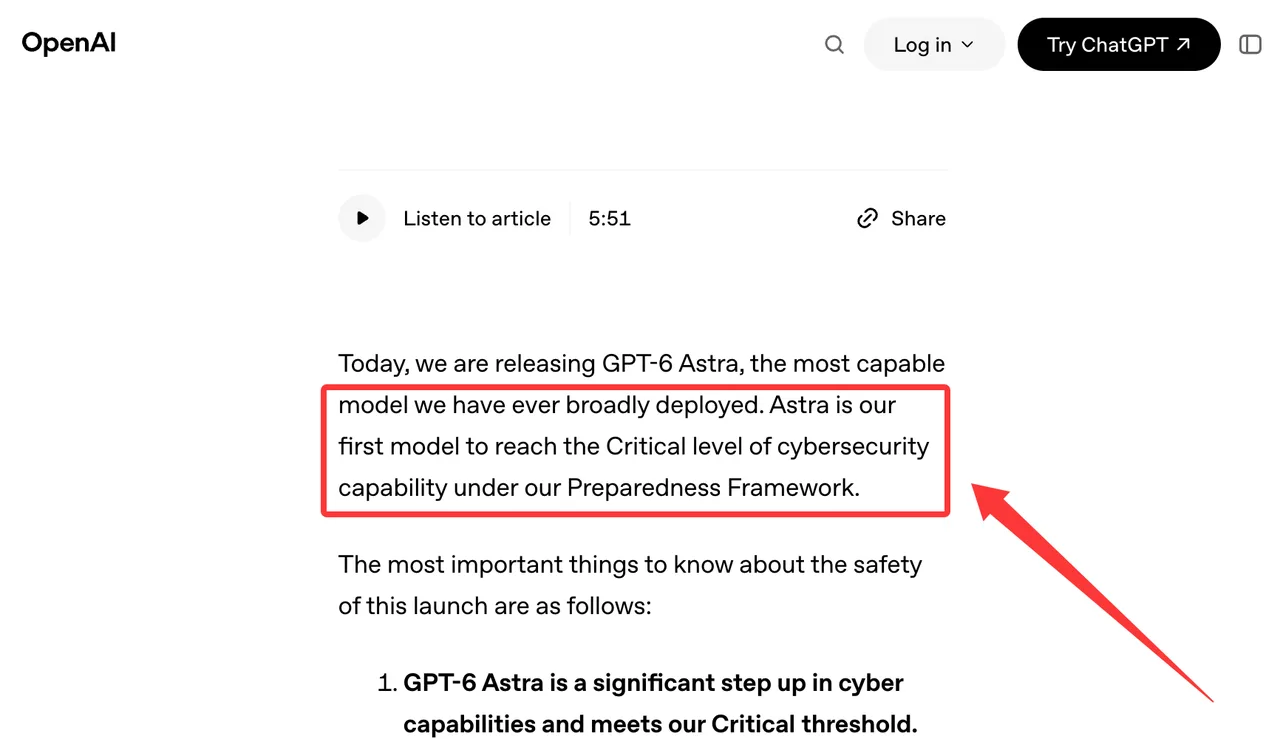
OpenAI’s September 3 GPT-6 Astra safety overview says Astra is the first OpenAI model to reach its Critical cybersecurity capability threshold. The same page also describes stronger safeguards, monitoring for tool-using deployments, prompt-injection testing, and reduced monitorability relative to GPT-5.6 Sol.
I paused here. A stronger cyber model can help defenders. It can also force more interruptions, denials, and oversight in legitimate workflows. That is not a side note. That is product behavior.
How to Read the Evidence
I separate Astra evaluations into three columns.
| Evidence type | Useful for | Not useful for |
|---|---|---|
| OpenAI internal evals | Understanding vendor safety decisions | Independent ranking |
| Expert assessments | Identifying high-risk capability areas | Predicting app latency |
| Public posts and system cards | Setting review questions | Replacing local tests |
This is where benchmark limits start.
Internal Evaluations Versus Independent Benchmarks
Vendor-run evaluations are not fake. They can be serious, expensive, and more relevant than public scoreboards.
They are still vendor-run. OpenAI selected the model setup, task access, safeguards, and disclosure format. I would cite these as OpenAI benchmark evidence, not as independent proof of general superiority.
For external framing, the NIST AI Risk Management Framework is a useful reference because it treats evaluation as part of risk management, not a one-time trophy. That is the right posture for Astra.
Task Construction, Expert Review, and Reproducibility
A benchmark is only as good as its task design.
For agentic coding, task construction includes repository state, tests, hidden requirements, tool access, and grading. For cyber evaluation, it includes target environment, authorization boundary, exploit scope, safety layer, and reviewer judgment. If those details are missing, the score is not portable.
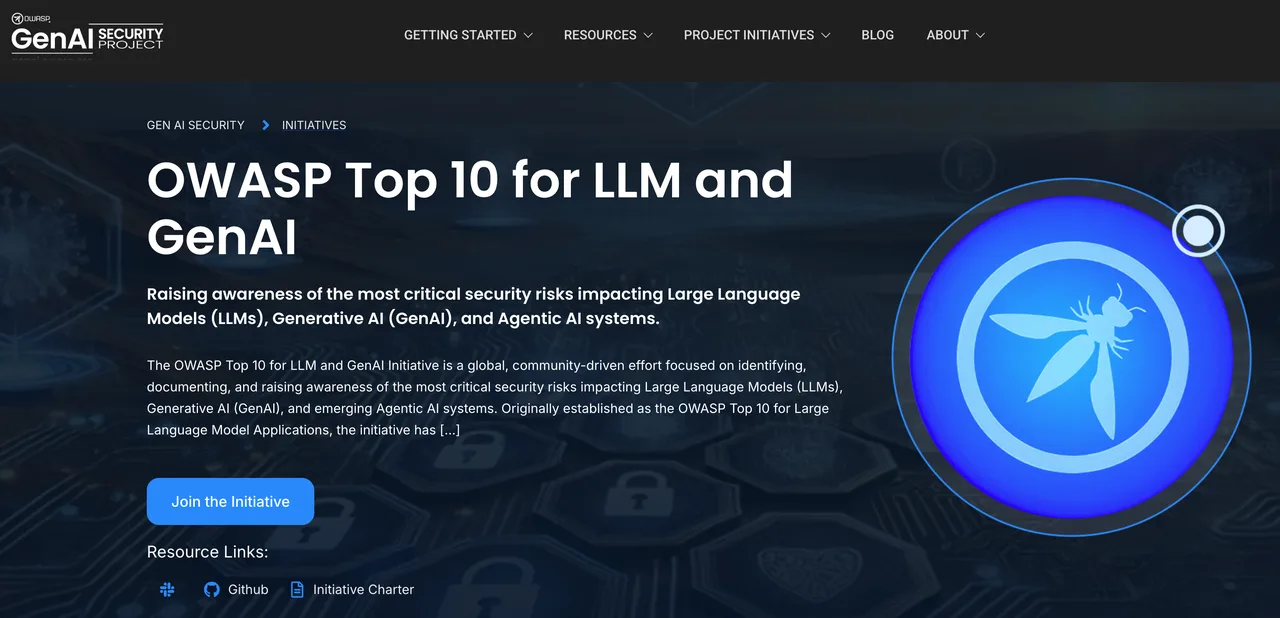
The OWASP Top 10 for LLM and GenAI is useful here because it names risks that show up around agent systems: prompt injection, excessive agency, supply-chain exposure, sensitive information disclosure, and unbounded consumption. Those are exactly the places a launch eval can fail quietly.
What the Results Do Not Establish
Astra’s public results do not establish production latency, reliability, cost, or general superiority across unrelated workloads.
A math result does not prove a support-ticket agent is better. A cyber evaluation does not prove a sales assistant deserves a premium route. An agentic coding result does not prove the model will respect your deployment budget. Same model, different workload.
Production Latency, Reliability, and Cost
The current public material focuses on capability and safeguards. It does not provide enough information to estimate normal production cost per accepted task.
Monitoring can stop or slow work. Safety classifiers can change outcomes. Tool access can change task success. Those things affect user experience and budget. If a product team ignores them, the benchmark score becomes decorative.
General Superiority Across Unrelated Workloads
I would not describe Astra as “best for everything.”
The safer wording is narrower: official disclosures show strong Astra capability signals in cyber, math, and agentic coding contexts. The launch page also reports results in computer use, professional work, science/health, long context, and abstract reasoning.
A Builder Evaluation Plan for Launch
My launch plan would be small.
Pick five tasks before touching the model: one coding change, one long document task, one browser or tool workflow, one safety-sensitive request, and one rollback test. Write pass/fail rules first. Then run Astra beside the current route.
Predefined Tasks and Acceptance Thresholds
Each task needs a reviewer rule.
For coding, pass means tests pass and the diff matches the request. For document work, claims need traceable sources. For cyber evaluation, activity must stay inside authorized defensive scope. For routing, Astra wins only if accepted work improves enough to justify cost, latency, and oversight.
Security, Observability, and Rollback Requirements
Astra-class routes need logs.
Record model ID, tool calls, safety stops, human approvals, fallback behavior, latency, cost, and final artifact status. Keep the previous route live. If Astra creates review noise or stops good work too often, roll back. Good infrastructure makes you forget it is there. Frontier models do not get that privilege on day one.
FAQ
Will OpenAI Publish Raw Astra Evaluation Artifacts Publicly?
Official pages do not commit to publishing every raw artifact. Some papers, walkthroughs, and system-card material are public. Internal cyber tasks and expert-review records remain limited.
Who Approves Citing Vendor-Run Evaluations in Procurement Documents?
Procurement, security, legal, and the model governance owner. The wording should say “OpenAI reported,” not “independent testing proved.” Small difference. Large legal surface.
Who Should Reproduce Astra Claims After Public Access?
The team that owns the production risk. Engineering should reproduce agentic coding claims. Security should reproduce cyber evaluation claims. Product should measure reviewer acceptance.
How Long Should Teams Retain External Astra Evaluation Records?
Keep source snapshots, model IDs, prompts, tool logs, reviewer notes, and acceptance decisions for the organization’s audit window. A live URL is not an archive.
What Benchmark Changes Would Invalidate an Early Scorecard?
A changed model snapshot, new tools, altered prompts, revised graders, different safety settings, new hidden tests, or a changed acceptance threshold. Same benchmark name. Different evidence.
Conclusion
The clean read from this OpenAI Astra benchmark review is restraint. Astra’s public signals are serious, especially around agentic coding and cyber capability. They are not a blank check for production routing.
I would treat Astra as a model that deserves a strict launch eval. Not a model that lets teams skip one. This conclusion has an expiration date. Models update fast.
Previous posts:
/filters:quality(82)/media/images/b73c2438-6bdd-4b80-a229-8d71d8f819cf.webp)
/filters:quality(82)/media/images/427fd9f2-347d-4f86-a2d5-aee110cda01d.webp)
/filters:quality(82)/media/images/1773962750383987480_n3hqzHRZ.webp)
/filters:quality(82)/media/images/43fa0e7f-a0db-48d7-9bab-921d1225db30.webp)
/filters:quality(82)/media/images/5799ff56-3a73-40ca-a666-e4965d878496.webp)
/filters:quality(82)/media/images/7a8850fc-caf6-482f-ac4d-5ddbe64ec47c.webp)