
Laguna S 2.1 Benchmark Review for Coding Agents
Laguna S 2.1 benchmark review explains what its published coding-agent scores can and cannot support in one adoption decision.
The Laguna S 2.1 benchmark matters only when an eval team is about to spend real pilot time. The task is not to admire a leaderboard. It is to decide whether Poolside’s public coding-agent evidence is strong enough to retest inside your own repository workflow.
I’m John. This is a source review, not an in-house reproduction. I did not run a private benchmark here. I’m reading the published setup, the score bindings, and the parts that can break when the model leaves Poolside’s harness.
Verdict on the Published Evidence
The evidence is good enough to start a controlled pilot. It is not good enough to approve adoption by itself.
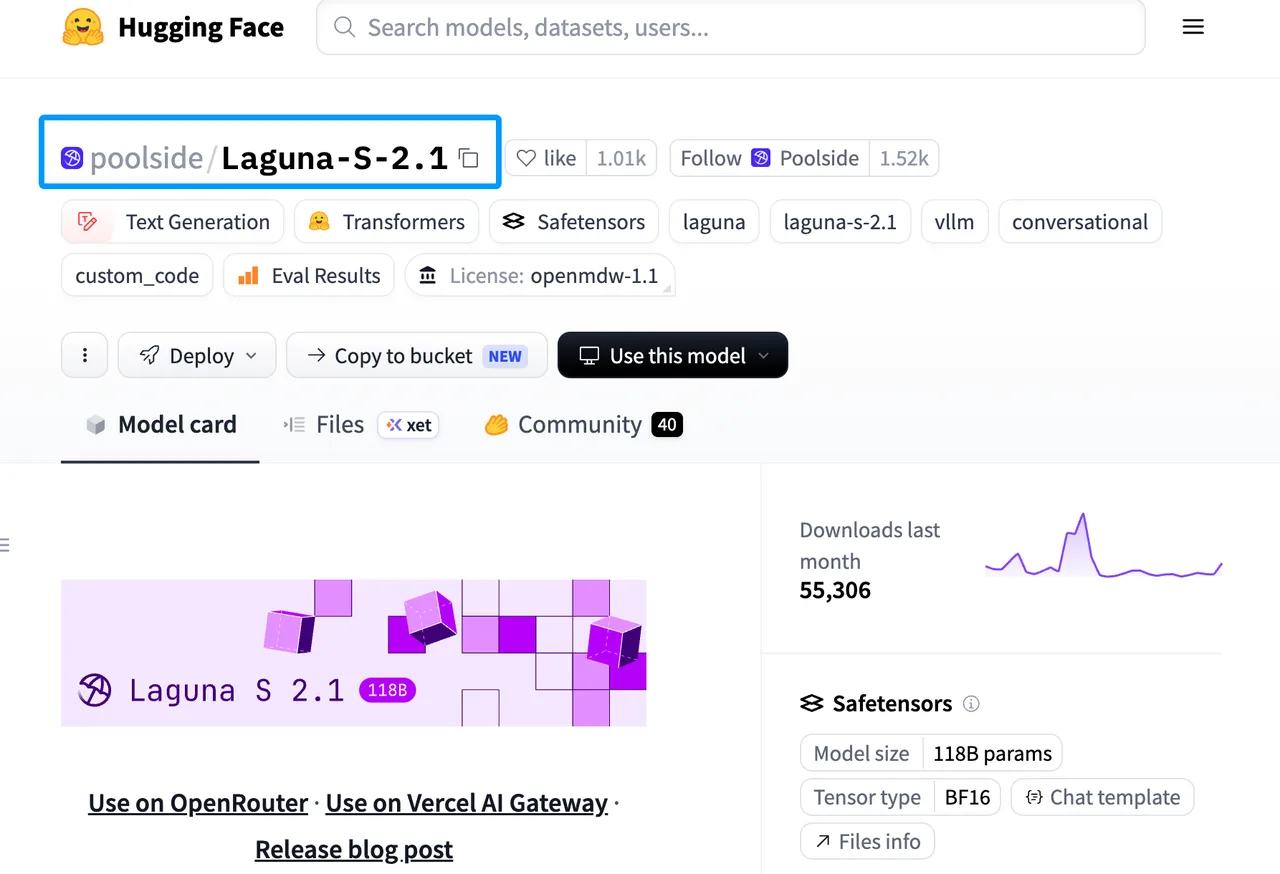
Poolside’s Laguna S 2.1 model card lists the model as poolside/Laguna-S-2.1, with 118B total parameters, about 8B active parameters per token, a 1,048,576-token context window, reasoning support, and OpenMDW-1.1 licensing. Those details matter because this is not a small local helper model. It needs a real serving plan.
Understand the Evaluation Setup
Tasks, Harness, and Model Configuration
Poolside’s release post says the July 21, 2026 agentic results were run with its own agent harness, an internal fork of the Laude Institute’s Harbor Framework, sandboxed execution, and a maximum of 500 steps.
That is the first thing I would pin in any retest. For agent models, the harness is part of the result. Tool schema, sandbox limits, timeout policy, network access, and thinking mode can all move the score.
One person can remember parameters. A team cannot.
Metrics, Baselines, and Reported Results
Here is the usable version for an eval brief:
| Dataset | Poolside-Reported Result | Binding |
|---|---|---|
| Terminal-Bench 2.1 | 70.20% | July 21, 2026; Poolside harness; thinking enabled; mean pass@1 over 4 attempts |
| SWE-bench Multilingual | 78.50% | July 21, 2026; Poolside harness; mean pass@1 over 4 attempts |
| SWE-Bench Pro public dataset | 59.40% | July 21, 2026; Poolside harness; mean pass@1 over 4 attempts |
| DeepSWE v1.1 | 40.40% | July 21, 2026; Poolside harness; thinking mode; mean pass@1 over 3 attempts |
Poolside also states that comparison rows may use vendor self-reports, benchmark leaderboards, or third-party leaderboard figures. So the Laguna row is useful vendor-published evidence. It is not a clean independent rerun across every baseline.
Read the Signals That Matter
Repository Issue Resolution
The repository signal comes from SWE-style tasks. The SWE-bench Multilingual page describes 300 curated tasks from 42 repositories across 9 programming languages. That gives useful SWE-bench evidence, especially for teams that need more than Python-only issue repair.
I would not copy the public score into a buying memo and stop there. I would build a 20-ticket internal set: real issues, known fixes, normal dependency trouble, and a verifier that cannot be passed by lucky text. The patch matters. The trajectory matters more.
Terminal Reliability and Long-Horizon Work
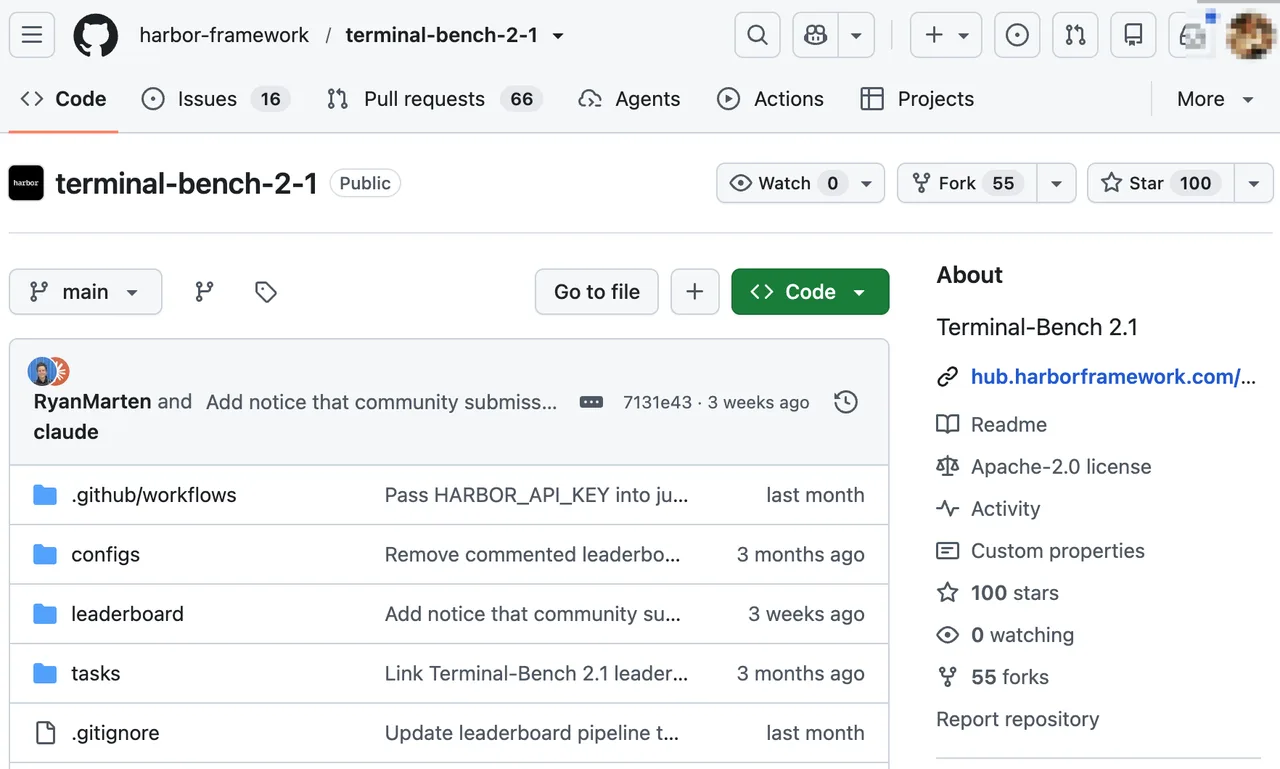
The terminal signal is separate. The Terminal-Bench 2.1 repository frames the benchmark around agents completing complex tasks in container environments. That maps to terminal agent tasks: inspect files, install dependencies, run commands, repair failures, and keep moving when the first attempt breaks.
This is where many coding agents look better in screenshots than in work. A tool call formatted wrong is not a small defect. It can stop the run.
Poolside’s own notes mention issues such as tool-schema mismatch, nested tool-call formatting, and long thinking. Those are not side details. They are pilot risks.
Decide Whether the Evidence Supports a Pilot
Findings Strong Enough to Retest
The public evidence supports retesting Laguna S 2.1 when your team cares about repository-level issue resolution, long context, terminal use, and visible trajectories.
For the first pilot, lock these variables:
| Variable | What to Record |
|---|---|
| Model | Exact model revision or hosted model ID |
| Harness | Poolside pool, Harbor, or internal runner |
| Reasoning | Thinking mode on/off and token budget |
| Sandbox | Network, file, package, and timeout rules |
| Verifier | Test command and pass condition |
| Artifacts | Patch, logs, trajectory, and failure notes |
This cannot be judged by feeling. It needs a sample run.
Gaps Requiring Independent Evaluation
The biggest gap is transfer. Poolside’s result uses Poolside’s harness. Your stack may use different context packing, approval rules, command limits, or tool schemas.
The second gap is benchmark freshness. Poolside’s reported numbers are dated July 21, 2026. Some benchmark pages keep changing. Do not mix a July model result with a later leaderboard and call it one clean comparison.
For coding model evaluation, the pilot question is narrow: does the shape of the public result survive inside your workflow?
FAQ
Where can researchers report suspected contamination in Laguna benchmark data?
Use the source benchmark maintainers for dataset issues: Terminal-Bench, SWE-bench, SWE-Bench Pro, or DeepSWE. For Poolside-specific trajectories or docs, contact Poolside through its official channels. I did not find a public registry dedicated only to Laguna contamination reports.
Does Poolside retain Laguna benchmark artifacts after model revisions?
Poolside says it published final evaluation trajectories for Laguna S 2.1. I did not find a public retention guarantee for how long those artifacts remain available after later revisions.
May teams republish Laguna benchmark charts in commercial evaluation reports?
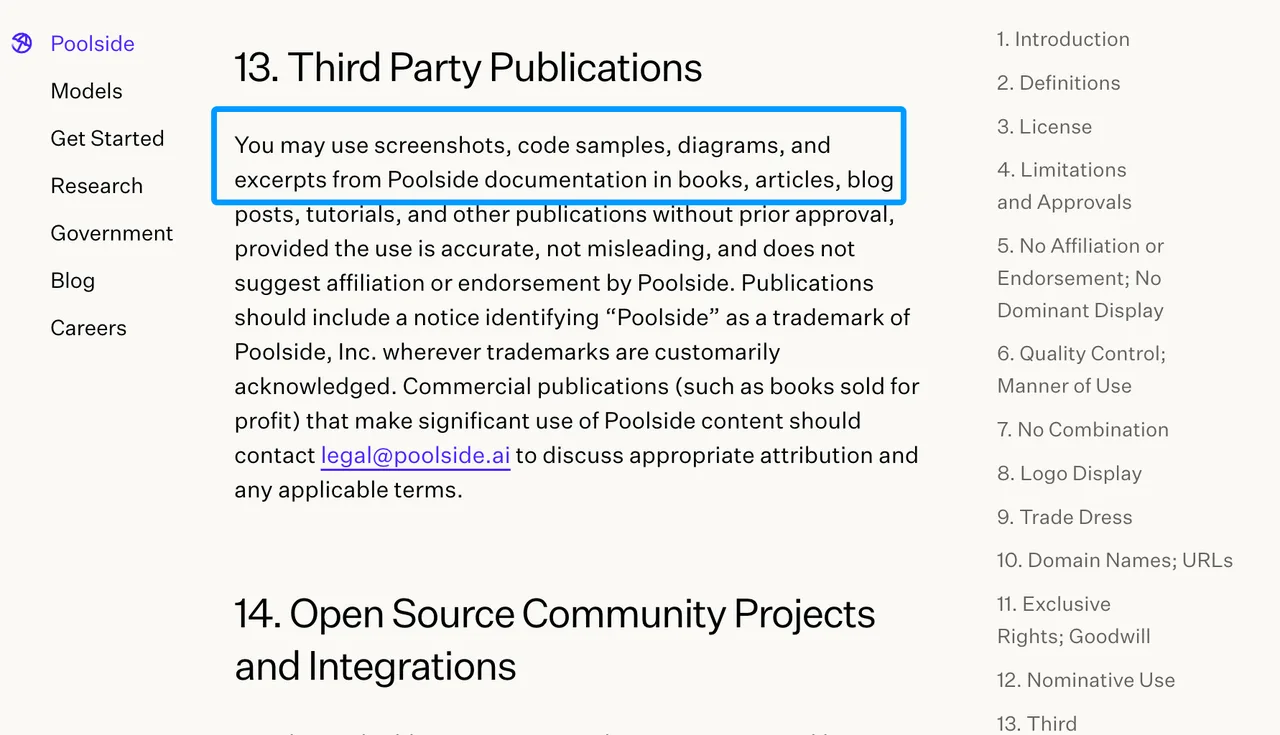
Poolside’s trademark guidelines allow certain accurate excerpts, screenshots, code samples, and diagrams when they do not imply endorsement. Commercial reports should treat that as a legal review item, not a content shortcut.
Who maintains corrections to Laguna S 2.1 benchmark documentation?
Poolside maintains its model card, release post, trajectory archive, and model documentation. Benchmark owners maintain their own datasets and leaderboards. Keep those correction paths separate.
Are independent Laguna benchmark reproductions listed in an official registry?
I did not find an official registry of independent Laguna reproductions. Treat outside runs as separate evidence unless Poolside or the benchmark owner lists them as accepted results.
Conclusion
The bottom line for this Laguna S 2.1 benchmark review is simple: start a pilot, but do not skip your own eval.
Use the public numbers to choose what to retest. Pin the harness, model revision, sandbox, thinking mode, and verifier. Then read the failed trajectories. That is where the adoption decision usually gets made.
Previous posts:
/filters:quality(82)/media/images/b73c2438-6bdd-4b80-a229-8d71d8f819cf.webp)
/filters:quality(82)/media/images/427fd9f2-347d-4f86-a2d5-aee110cda01d.webp)
/filters:quality(82)/media/images/1773962750383987480_n3hqzHRZ.webp)
/filters:quality(82)/media/images/43fa0e7f-a0db-48d7-9bab-921d1225db30.webp)
/filters:quality(82)/media/images/5799ff56-3a73-40ca-a666-e4965d878496.webp)
/filters:quality(82)/media/images/7a8850fc-caf6-482f-ac4d-5ddbe64ec47c.webp)