Infrastructure for Autonomous Coding Agents
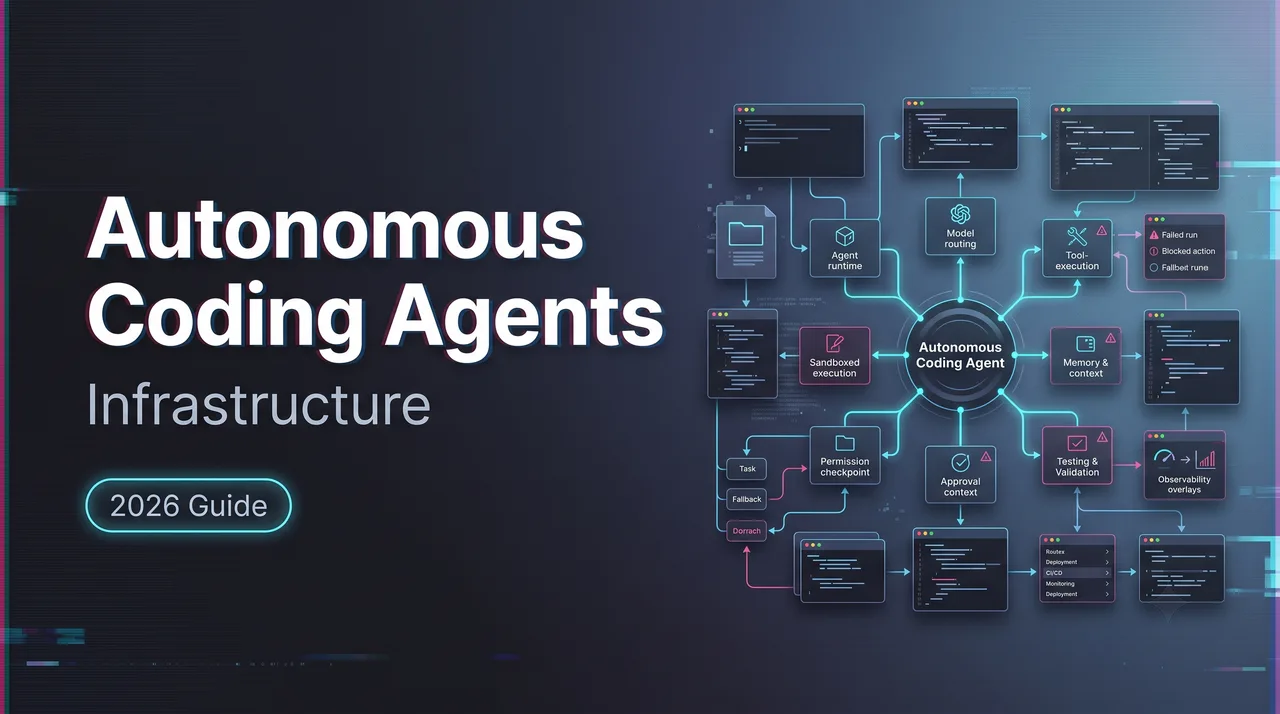
Autonomous coding agents need infrastructure for model routing, repo access, tools, tests, logs, permissions, and review.
Hello, I’m Dora. I stopped trusting demos the first time an agent fixed one file, broke the test setup, retried the same command three times, and left me with a patch that looked reasonable until review. That is where autonomous coding agents stop being a tool conversation and become an infrastructure conversation.
If a team is building a platform for repo automation, the job is not “let the model write code.” The job is runtime, sandboxing, tool permissions, model routing, test execution, logs, rollback, human review, and cost limits.
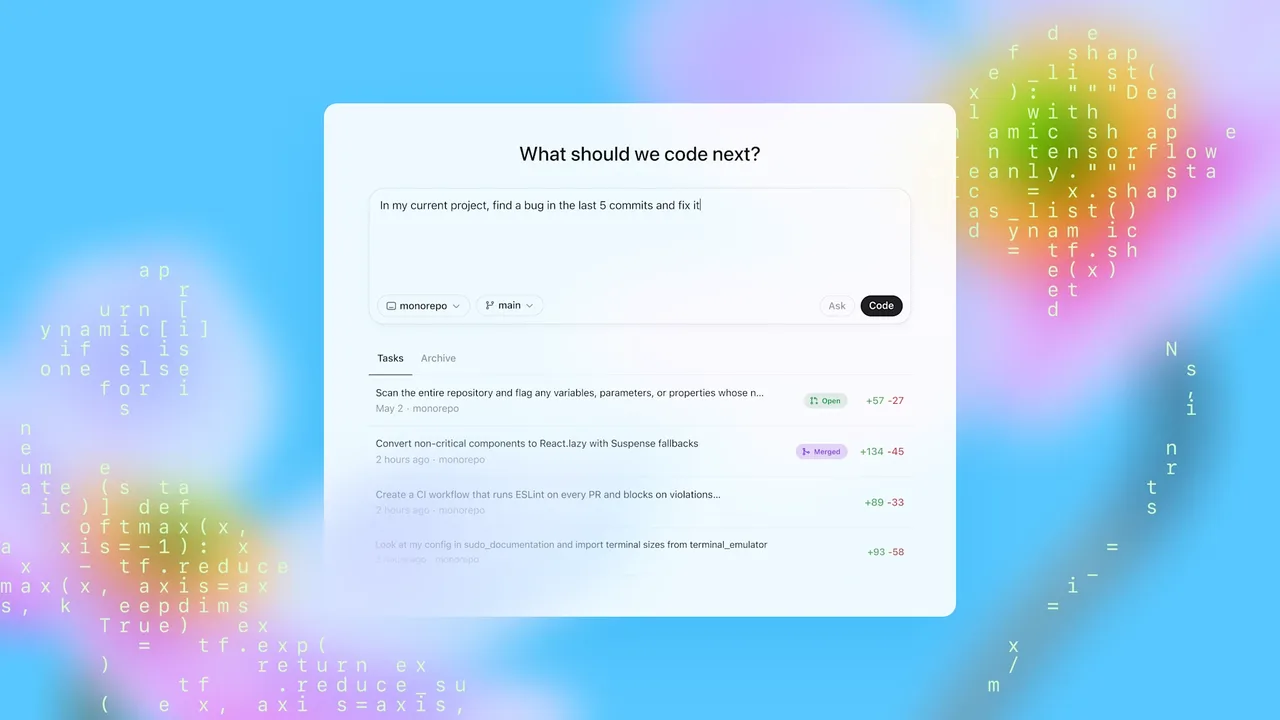
OpenAI’s Codex notes describe agents working in isolated environments, editing files, running commands, and producing test evidence through Codex task execution. That shape is worth studying. It also proves the uncomfortable part: once an agent can act on a repo, the repo becomes production surface area.
Why Autonomous Coding Needs Infrastructure
Coding agents fail differently from chat assistants
Chat assistants fail in text. Coding agents fail in state.
A chat assistant can invent an API name. Annoying. A coding agent can update a migration, modify tests to match the bug, delete a fixture, run only the short test path, and open a pull request that looks clean at first glance.
The common failures are smaller:
- It edits the right file but misses the second call site.
- It runs tests from the wrong directory.
- It installs a dependency that should not be there.
- It inherits secrets from the local shell.
- It retries a flaky test until one pass appears.
- It writes a patch that works on its branch and conflicts everywhere else.
This is why AI coding infrastructure has to treat every run as an execution event, not a conversation. There is input, repo state, permission scope, command history, output, evidence, review, and possible rollback.
Having many tools isn’t the problem. Having to manage your tools is.
Repository state, tools, tests, and long-running tasks
Repository automation depends on the repo state at the moment work starts. Teams often imagine a clean main branch, clear issue, deterministic tests, and a setup command that works on the first try. Nice repo. Rare repo.
A real repo has stale branches, generated files, local assumptions, undocumented environment variables, flaky integration tests, and one lockfile everyone avoids touching.
Long-running tasks make this worse. A two-minute edit can run with loose controls. A 40-minute refactor needs lifecycle management. It needs timeout rules, checkpoints, logs, and a stop condition before it creates a diff no one wants to review.
The first rule is simple: do not let an agent improvise the development environment. Give it a known runtime, known tools, known commands, and known boundaries.
Core Infrastructure Components
Repo access, sandbox runtime, command execution, file edits, and test loops
The runtime is the agent’s workplace. Treat it like one.
It needs a clean checkout or intentional worktree. It needs branch policy. It needs write boundaries. It needs package caches that do not leak across trust zones. It needs predictable shell behavior. If it can run commands, those commands need resource limits.
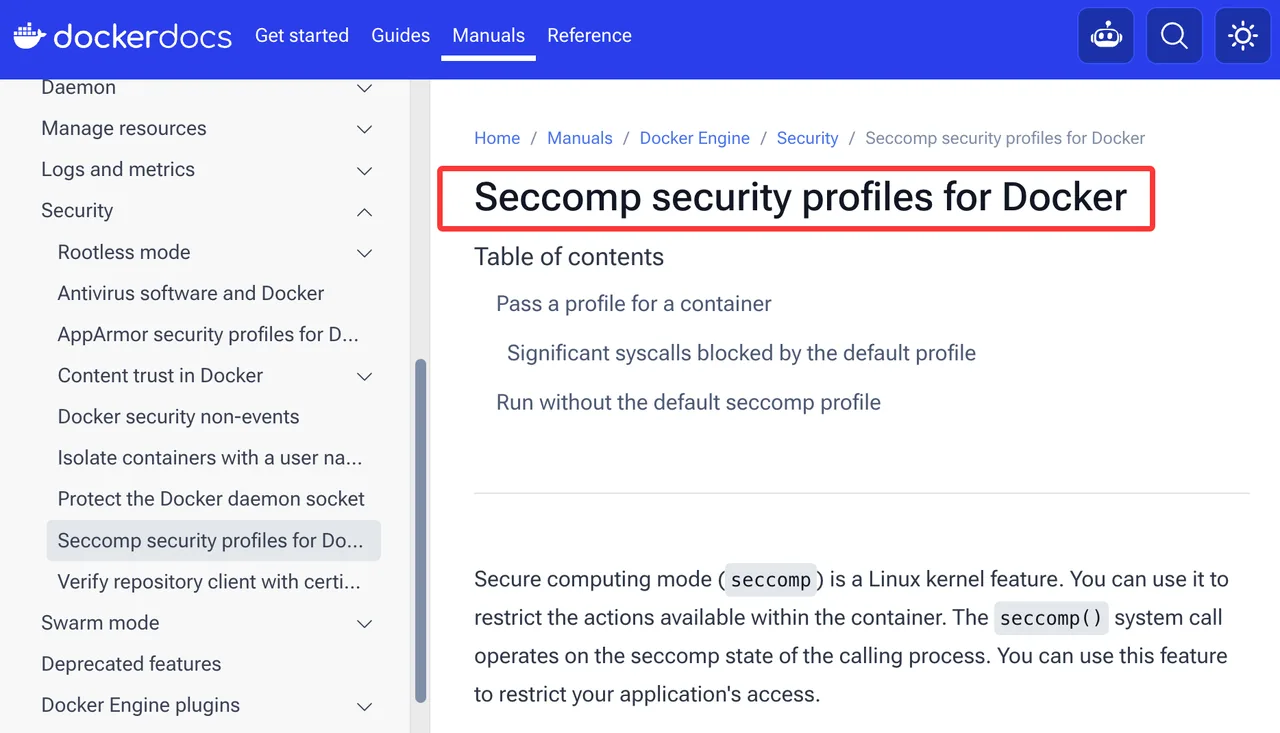
Sandboxing is not decoration. It is what keeps a bad patch from becoming a host problem. Docker’s seccomp profiles are a useful reference because they show how container runtimes can restrict system calls. That does not make containers magic. It makes “agent ran shell commands” less open-ended.
A baseline platform needs this shape:
| Component | What it controls | What to verify |
|---|---|---|
| Repo access | Clone, branch, worktree | No direct push to protected branches |
| Sandbox runtime | Files, network, processes | No broad host mounts or default secrets |
| Command execution | Shell, installs, tests | Timeouts, allowlists, output capture |
| File edits | Patch scope | Diff attribution and blocked paths |
| Test loops | Unit, lint, integration | Agent cannot hide failures loosely |
| Review handoff | PR, summary, evidence | Reviewer sees commands and test results |
| Rollback path | Revert and restore | Owner and trigger conditions exist |
The test loop deserves special attention. Agents should not just run “the tests.” They should run the right tests.
A docs edit does not need the full browser suite. A payment change probably does. If every task runs everything, cost explodes. If every task runs the shortest path, confidence collapses. I paused here because teams often ask for model improvements at this point. Sometimes the model is not the bottleneck. The bottleneck is that the test plan is tribal knowledge.
Model routing, context management, secrets, and permission scopes
Model routing should be boring. Use cheaper, faster models for bounded search, summarization, issue triage, and small edits. Route harder planning, cross-file reasoning, and risky refactors to stronger models. Keep the routing rules visible.
OpenAI’s model documentation shows why routing exists: models differ by reasoning profile, cost, context, and tool support. A production platform should store that decision. Which model handled the task. Why it was selected. Whether fallback happened. Whether fallback improved the result.
Context management is the same problem in another form. More context is not always better. It can bury the relevant files. It can also leak information across tasks if the platform is careless.
A good context layer answers four questions:
- Which files were provided?
- Which files did the agent read?
- Which repo instructions applied?
- Which previous outputs were reused?
Secrets need stricter treatment. The agent should not inherit a developer’s full shell. It should receive task-scoped credentials with short lifetimes and narrow permissions. GitHub’s guidance on GITHUB_TOKEN permissions is the right pattern: default access should be explicit, and elevated access should be intentional.
The agent runtime should separate read, write, execute, network, and deploy permissions. Those are not one permission. If they are one permission, the platform is not ready.
Production Controls
Logs, rollback, human review, cost limits, and failure queues
Production controls are what make the platform usable by people who did not build it.
Every run needs an audit trail: prompt, model, repo commit, branch, files read, files changed, commands run, command output, tests attempted, tests passed, tests skipped, retries, and final diff. Not because anyone wants to read all of it. Because when something breaks, someone will need the exact evidence.
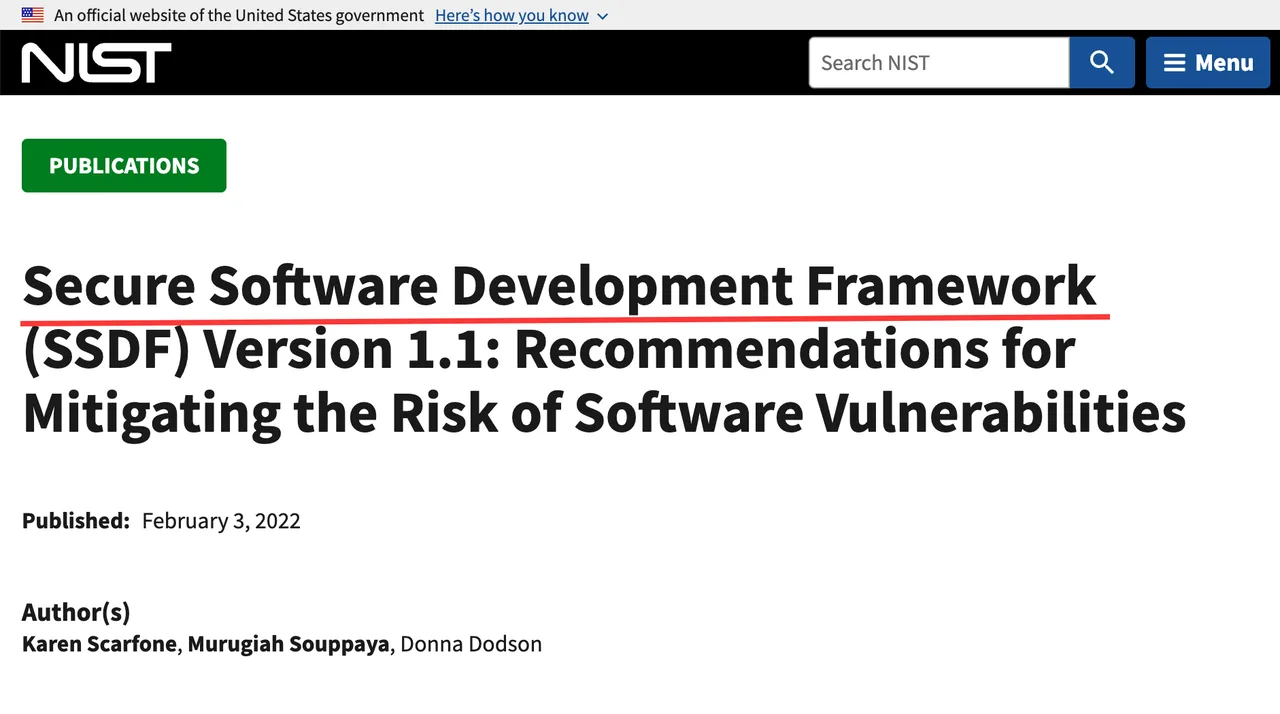
Human review stays in the path. Agent-generated code still needs owner review before merge, especially in critical repositories. NIST’s Secure Software Development Framework is not written for coding agents specifically, but its point holds: secure software work needs defined practices, review, traceability, and vulnerability handling.
Rollback needs to be designed before the first incident. A platform should know who can revert an agent patch, which systems need notification, whether the agent can open a revert PR, whether automation can disable itself, and which repositories block future runs after failure.
Cost limits sit beside safety limits. A runaway agent that spends tokens, runs CI repeatedly, and opens bad patches is both a budget issue and an operational issue.
The useful limits are close to the task:
- maximum wall-clock time
- maximum command retries
- maximum CI attempts
- maximum changed files
- maximum diff size
- model spend cap
- escalation threshold
A monthly budget cap is too late. By then the work already ran.
Failure queues are not optional. Do not let failed tasks vanish into logs. Group them by runtime failure, test failure, permission failure, model refusal, ambiguous task, human rejection, rollback, and provider error.
Found the pattern on the third try: the queue tells you whether to fix prompts, repos, tests, permissions, or the platform.
When to pause automation and escalate to engineers
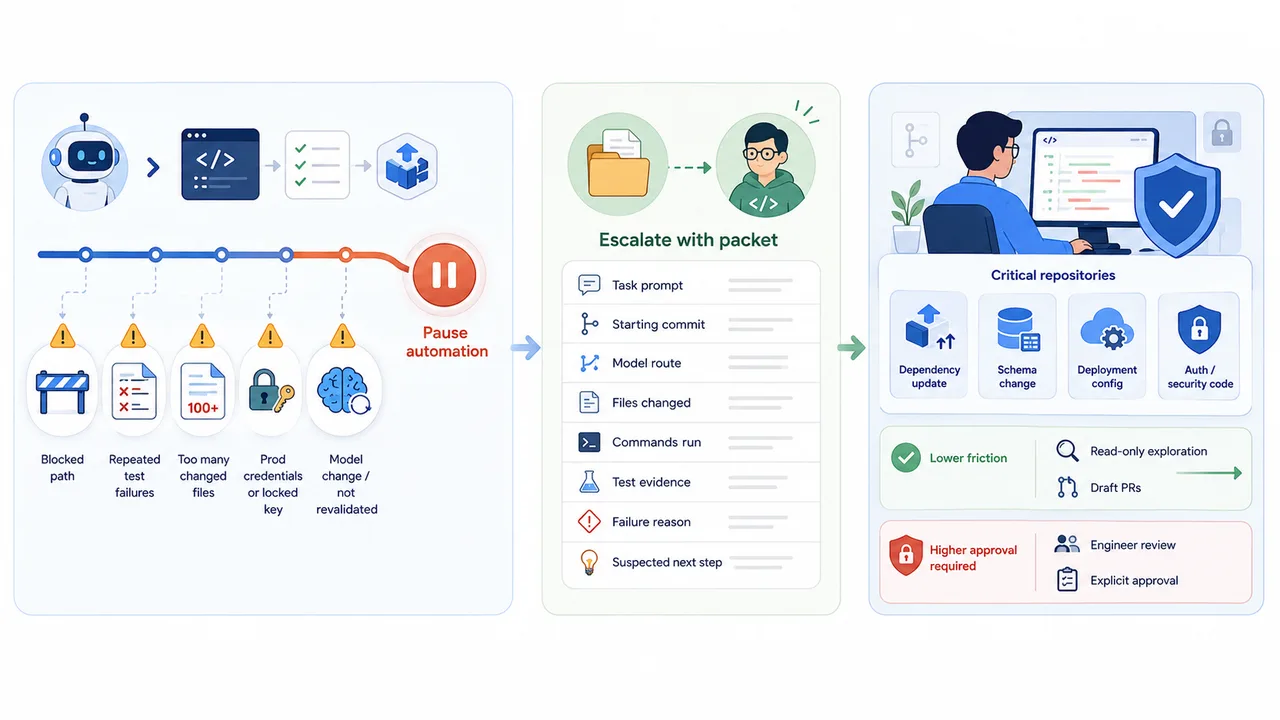
Automation should pause before trust is gone.
Pause when an agent touches blocked paths. Pause when tests fail twice for the same reason. Pause when a diff crosses the file-count limit. Pause when the task needs production credentials. Pause when the model changes and the task class has not been revalidated.
Escalation should not be vague. The platform should hand an engineer a packet: task prompt, starting commit, model route, files changed, commands run, test evidence, failure reason, and suspected next step.
Without that packet, escalation becomes “the agent got stuck, please investigate.” That is not escalation. That is cleanup.
For critical repositories, automation boundaries should be tighter. Read-only exploration may be fine. Draft PRs may be fine. Direct dependency updates, schema changes, deployment config edits, and authentication code should require higher approval. Good infrastructure makes you forget it’s there. Bad infrastructure makes every agent run feel like a small production incident.
FAQ
Who approves exceptions for critical repositories?
The repository owner should approve exceptions. Security or platform can define the policy, but repo owners know the blast radius.
For critical repositories, I would require written approval for anything that expands agent permissions: write access, network access, secret access, deploy-adjacent files, migrations, or broad refactors.
The approval should name the repo, task class, allowed actions, model route, review owner, and rollback path. Temporary exceptions should expire. Permanent exceptions become folklore.
How should teams communicate incidents on customer projects?
Start with evidence, not narrative.
The incident note should say what automation ran, when it ran, which repository and commit it touched, what changed, what failed, what customer surface was affected, and what action stopped the problem.
If the agent did not cause the issue but made diagnosis harder, record that too.
Customer-facing language should describe system behavior, correction, and prevention. Do not mention internal model guesses unless they matter.
Who records responsibility after model or provider changes?
Platform owns the change record. Engineering owners approve continued use for their repositories.
A model or provider change can alter behavior even when prompts stay the same. The platform should record the old model, new model, affected task classes, validation results, rollback option, and activation date.
If no one can answer which agent runs changed after a provider update, automation should pause for sensitive repos. Not forever. Long enough to verify.
Conclusion
Infrastructure for autonomous coding agents is not a wrapper around a chat box. It is the system that decides where the agent runs, what it can see, what it can change, which model it uses, which tests count, which logs survive, who reviews the patch, and when automation stops.
The durable platform is not the one with the most agents. It is the one with the clearest boundaries.
Build the runtime first. Then routing. Then permissions. Then evidence. Then rollback. The code generation part can be impressive. Fine. The production system around it decides whether autonomous coding agents become useful, or just noisy.
Previous posts: