Sora 2 Review 2027: API Quality, Cost, and Limits
Sora 2 review 2026 separates retired product access from API status, then evaluates output quality, usable cost, and migration risk.
If Sora 2 still sits behind a production feature flag, this is no longer a normal review. It is a shutdown drill. On September 18, 2026, the API had six days left. I would stop debating whether one clip looks cinematic and ask whether the team can export what matters and remove the dependency without breaking delivery.
This Sora 2 review separates the retired consumer experience from the API, defines a quality test, and calculates cost and migration risk. No live video job was submitted, so output sections are an evidence review, not a hands-on claim.
What Access to Sora 2 Still Means
The Retired Consumer Product and Remaining API Surface
The retired consumer product, historical sora ChatGPT entry points, and API are different surfaces. A past subscription, invitation, web experience, or mobile app does not establish API access. “sora2 android” is a consumer-access query, not a production route.
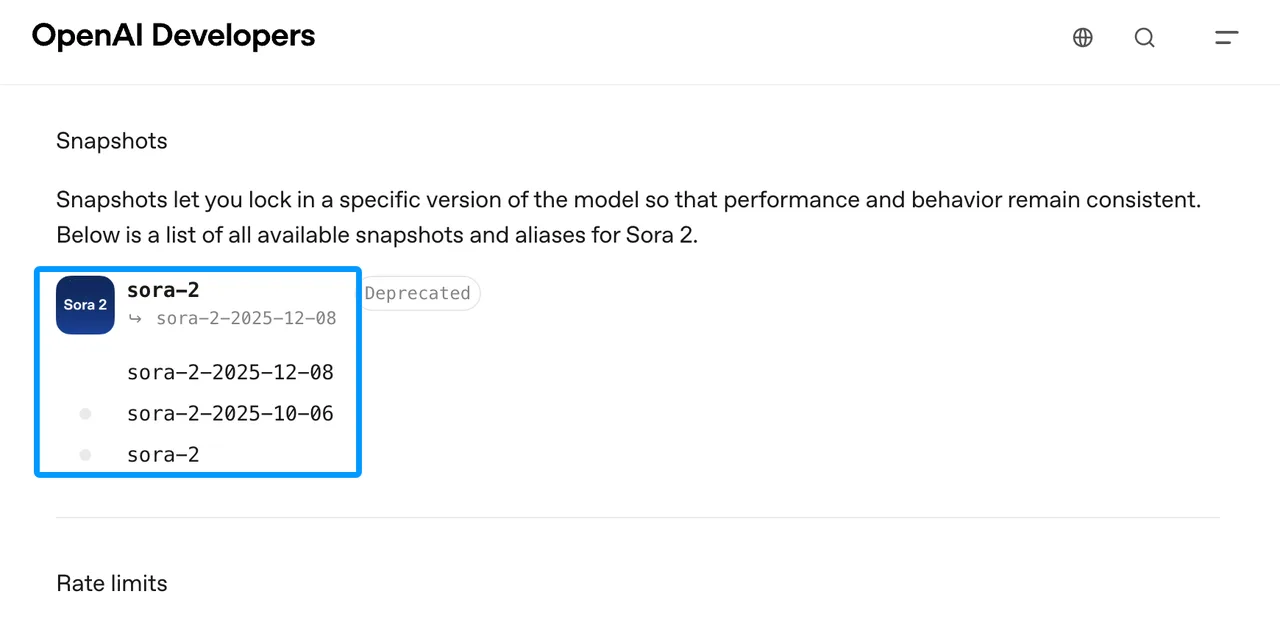
The current Sora 2 model page marks the model as Legacy and lists sora-2, sora-2-2025-10-06, and sora-2-2025-12-08, with the December snapshot deprecated. The Videos API remains the only relevant developer surface, and it is already deprecated.
This also answers “is Sora AI free?” for developers: no free API tier is supported. Historical ChatGPT access does not create API usage.
The Status Checks to Run Before Testing
Run four checks before spending another dollar:
- Confirm the model appears for the exact API project and key.
- Read the endpoint banner rather than an old SDK tutorial.
- Verify the shutdown date and asset-expiration fields.
- Confirm a replacement path and an owner for migration.
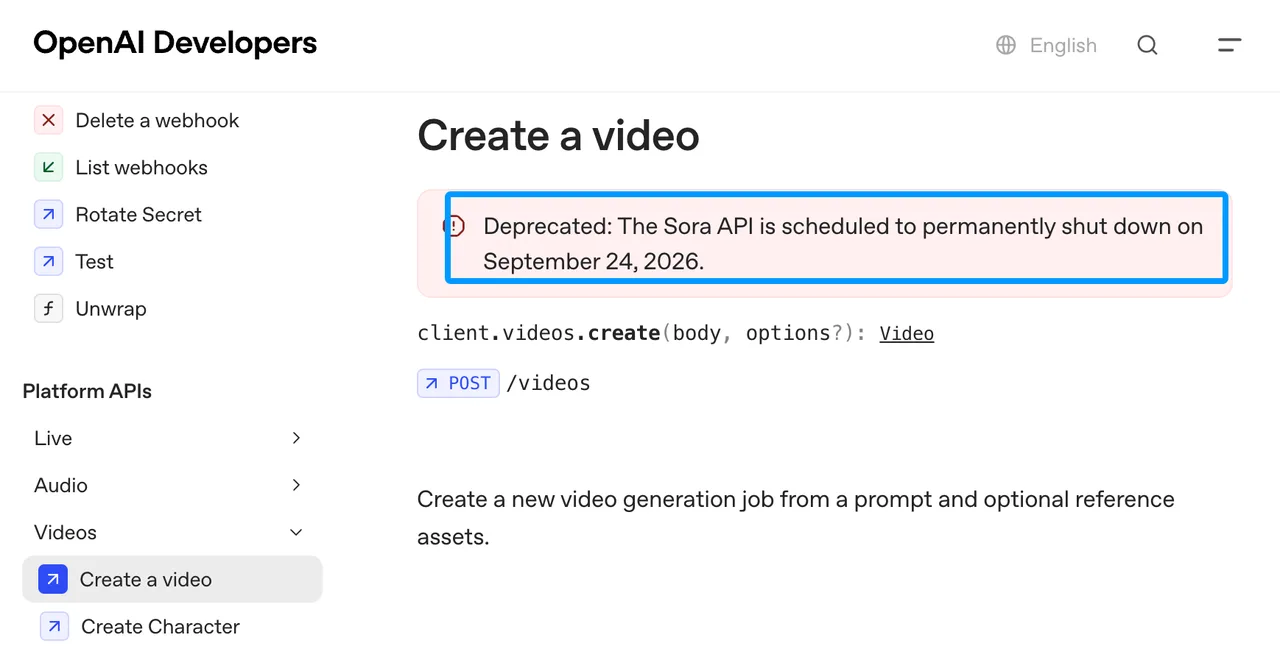
The video creation reference says the API will permanently shut down on September 24, 2026. It covers the Videos API, both models, and listed snapshots. Do not switch models yet. Look at the workflow first—but give it an exit date.
How We Evaluate Sora 2
Prompt Adherence, Motion, Audio, and Reference Fidelity
A defensible evaluation holds six prompts, two owned references, duration, size, and acceptance rules steady. Split the set across one-subject motion, a two-action interaction, and a product shot with locked geometry. Run each from text and reference.
Score five fields independently:
| Dimension | Pass condition |
|---|---|
| Prompt adherence | Every required action appears; forbidden additions do not |
| Motion | No visible geometry break, teleport, or unfinished action |
| Audio | Speech, ambience, and events align with the visible scene |
| Reference fidelity | Identity, silhouette, color, and locked details remain recognizable |
| Delivery fit | Correct duration, orientation, resolution, and downloadable file |
One attractive clip that fails reference fidelity is still a rejection. A good single output does not mean the production workflow is ready.
Latency, Failed Jobs, and Cost per Usable Clip
Record request time, completion, final status, error code, progress, expiration, and reviewer decision. Separate policy blocks, technical failures, and creative rejections.
Cost per usable clip is:
total billed video seconds × per-second rate ÷ approved clips
At the published $0.10 per second, ten eight-second Sora 2 attempts cost $8 before retries. If five pass, the generation cost is $1.60 per usable clip. Sora 2 Pro at $0.30 per second would cost $24 for the same batch, or $4.80 per approved clip at the same pass rate. Those are calculation examples, not measured approval rates.
Sora 2 Output Quality
Where the Model Produces Usable Results
Official documentation describes text or image input, synchronized audio, and 4-, 8-, or 12-second clips. The clearest test is one subject, one action, a named camera move, and a simple audio event.
Use it for a bounded comparison or archive test. Define subject, setting, action, camera, pacing, and sound. For reference-led work, list details that must not change.
I cannot assign a credible usable-output rate without running the matched set. Published capability language establishes what to test, not how often the result will pass your review.
Common Failure Patterns and Retry Conditions
Check physical discontinuity, object count, identity drift, text, audio timing, and unfinished final-frame action. The API exposes a failed state plus code, message, and possible misalignment details.
Retry only when the request is technically valid and the failure is stochastic. Do not retry a safety rejection repeatedly, change three prompt variables at once, or pay for a longer duration to hide an unresolved motion problem. This step cannot be skipped. If you skip it, you pay it back later.
API Workflow and Cost
Inputs, Outputs, Job Tracking, and Current Rates
POST /videos accepts a prompt, optional reference, model, duration, and size. Durations are 4, 8, or 12 seconds; sizes are 720×1280, 1280×720, 1024×1792, and 1792×1024. It returns a job, not a finished file.
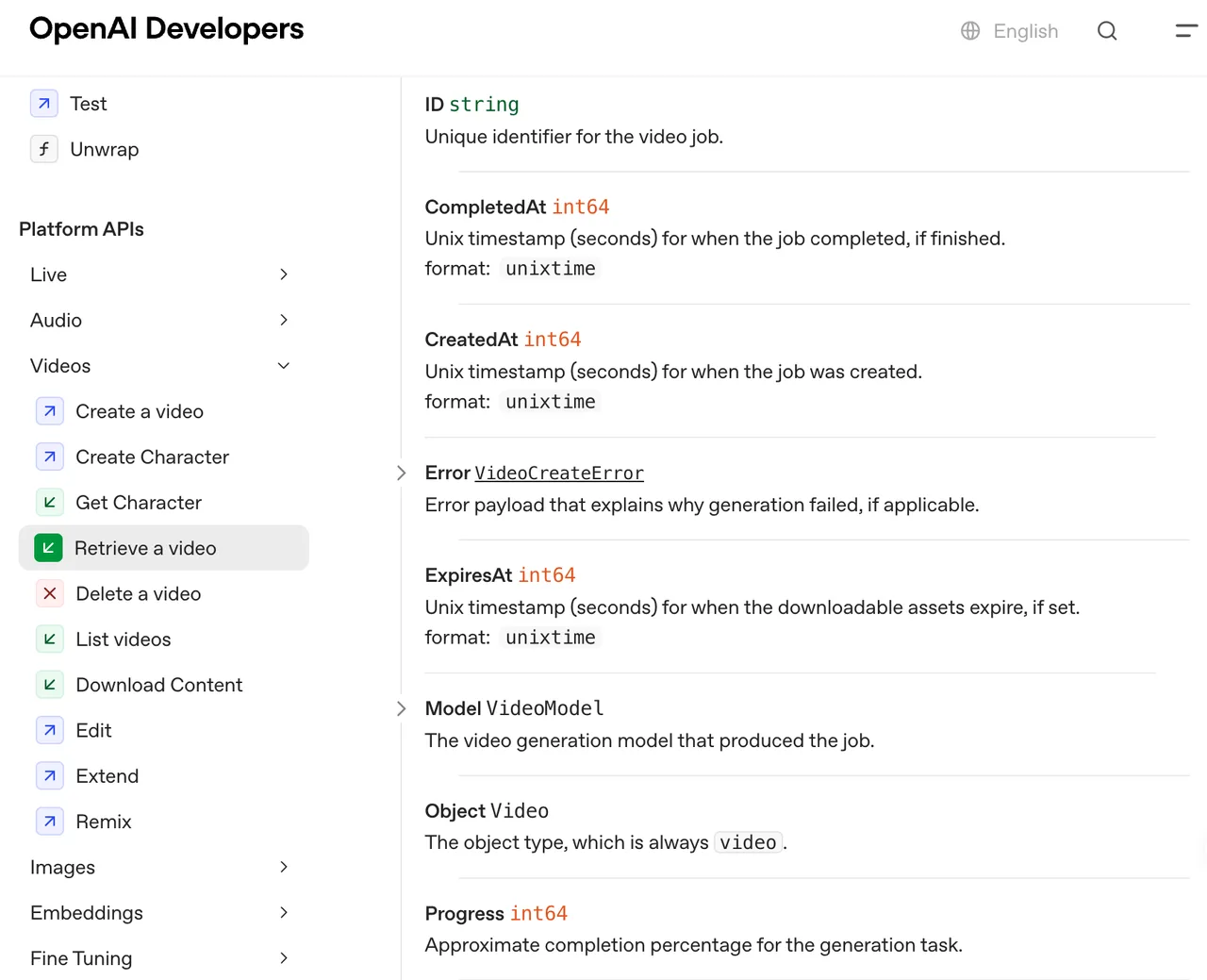
Poll until completed or failed, then download before expires_at. The retrieve-video contract returns ID, model, prompt, progress, status, timestamps, duration, size, remix source, error, and expiration. Save it beside the output.
Current Sora pricing is $0.10 per generated second at 720p portrait or landscape. Sora 2 Pro is $0.30 per second. That makes a base four-second clip $0.40, an eight-second clip $0.80, and a 12-second clip $1.20. Pro costs $1.20, $2.40, and $3.60, respectively.
What Retirement Risk Means for New Integrations
A new integration makes sense only for migration validation, evidence preservation, or controlled comparison. Even one day creates code, tests, monitoring, and support work that must immediately be removed.
Existing teams should stop accepting new product requirements against this endpoint. Export completed files and metadata, identify every call site, freeze prompts, and run the same evaluation against a supported alternative. The real bottleneck is the handoff, not the generation.
Limits and Trade-Offs
Safety Blocks, Availability, and Operational Continuity
Safety enforcement can reject a request before an asset exists. Availability also depends on project and usage tier; limits start at 25 RPM for Tier 1, with no free support.
More importantly, /v1/videos is not compatible with Zero Data Retention controls. An organization using retention controls must configure an eligible project accordingly, and that exception deserves security review. A deprecated endpoint with a fixed shutdown date cannot provide operational continuity, regardless of its best output.
When to Choose a Current Alternative
Choose a supported alternative when work extends beyond September 24 or needs unattended retries, regional processing, continuity, or tuning. Match reference input, duration, audio, dimensions, latency, safety, and usable cost.
Do not migrate by selecting the model with the best showcase. Re-run the same prompts and references, then compare approval rate and repair time. Demos show the ceiling. Production shows the floor.
Is Sora 2 Worth Using?
Suitable Short-Term Evaluation Cases
Yes, only for work finished before shutdown: validating an integration, exporting jobs, recording a baseline, or comparing replacements. Pin the model ID, download assets immediately, and keep metadata.
There is no sensible “sora pricing” optimization for a dependency about to disappear. The useful question is how much migration evidence the final spend buys.
Cases That Need a Migration Plan First
Any customer feature, recurring campaign, Android or web product, automated pipeline, or regulated workload needs migration first—especially with sensitive references or regional-processing commitments.
If the current feature cannot survive the endpoint returning unavailable, it is already late. Stop expanding it, preserve evidence, and move the acceptance suite.
FAQ
Do Sora 2 outputs include provenance metadata?
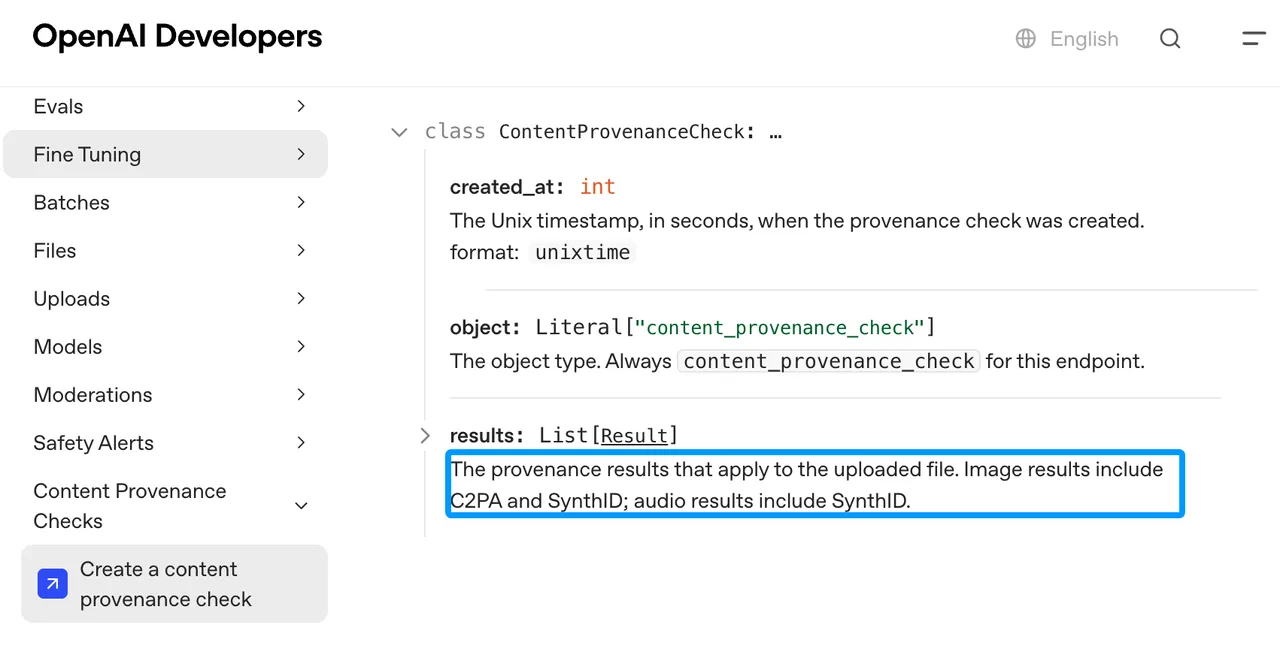
The Videos API job object does not document a C2PA or provenance field. OpenAI’s separate content-provenance reference explicitly describes C2PA and SynthID for images and SynthID for audio, but does not confirm video support. Do not promise embedded Sora provenance without inspecting the exported file and obtaining current written confirmation.
Can Sora 2 outputs be used commercially under current terms?
There is no separate Sora-specific commercial license on the model page. Use depends on the applicable services agreement, policies, input rights, and customer obligations. Review the API organization’s agreement before delivery. This is not legal advice.
Does the Sora 2 API offer regional data residency?
No documented regional residency applies to this endpoint. OpenAI’s data-controls documentation lists /v1/videos as incompatible with data-retention controls and does not include it among residency-supported services. Confirm requirements with OpenAI before sending regulated data.
Can organization admins restrict Sora 2 access by project?
Admins can isolate users and API keys through projects, revoke keys, and archive projects. I found no Sora-specific project toggle, but OpenAI does document project-level model allowlists and denylists. Use a dedicated project and configure model permissions where appropriate, then verify the effective permissions before relying on them.
Can developers retrieve job metadata after output files expire?
The retrieve response separates job metadata from downloadable assets and provides expires_at, but the documentation does not promise indefinite metadata retention after asset expiry—or after the API shutdown. Export the full job object before September 24 rather than designing around later retrieval.
Conclusion
Sora 2 can still provide a final comparison baseline, but it is not a defensible new production dependency in September 2026. The API is deprecated, free access is unsupported, regional residency is undocumented, and permanent shutdown is scheduled for September 24. Finish only bounded evaluations, download assets and job records, and move the same acceptance test to a supported video route. The next useful result is not another impressive clip. It is a migration the team can verify.
Previous posts: