Best Sora 2 Alternatives for Video Teams in 2027
Sora 2 alternatives 2027 compares five migration paths by control, audio, API access, provider stability, and cost per usable clip.
The first broken migration is rarely a failed API call. It is the Friday afternoon when a team discovers that “Sora” meant three things: a model, a review interface, and project history nobody exported. Replacing only the model leaves two-thirds of the workflow behind. That is the friction behind this Sora 2 alternatives 2027 shortlist.
It’s Dora here. My hypothesis is that the safest replacement is the route that restores the control, audio, retry, and delivery behavior the team depended on. Facts and prices were checked on September 18, 2026. I did not run the 25 paid generations below, so the performance section is a reproducible protocol, not invented results.
Why Video Teams Need a Sora 2 Migration Plan
Separate the Retired Product Experience From Remaining Model Access
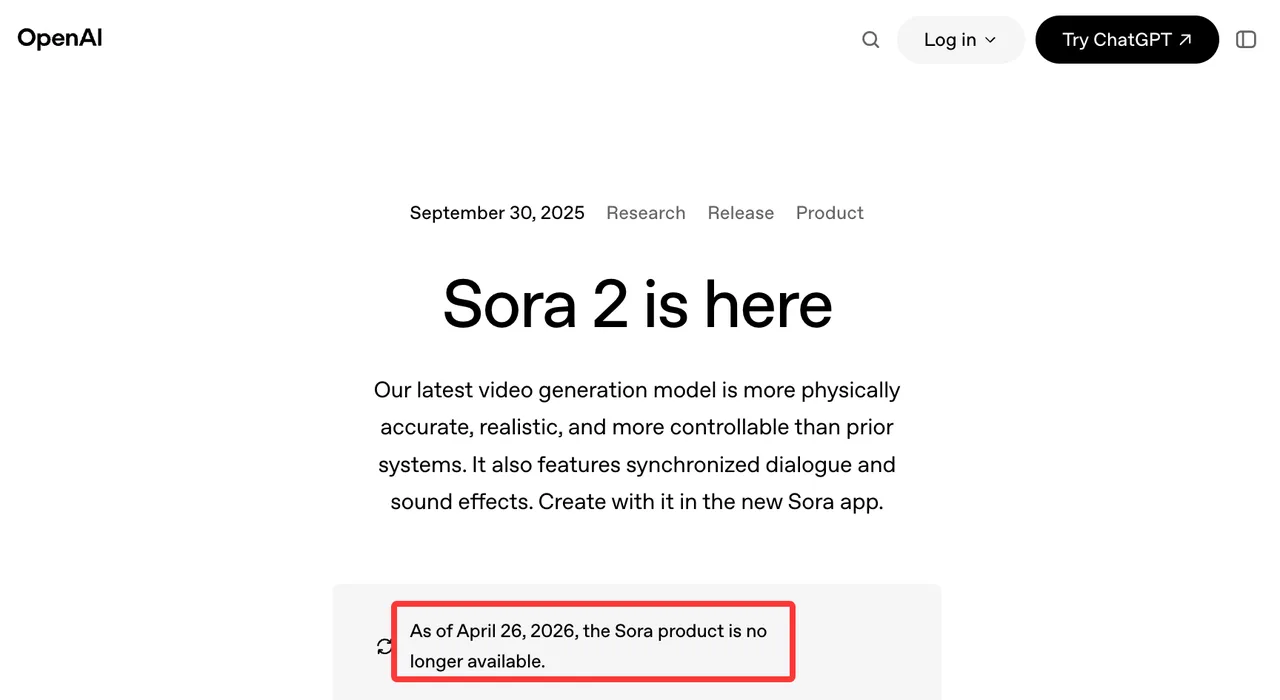
OpenAI says the Sora product stopped being available on April 26, 2026. The separate Video API is deprecated and scheduled to shut down on September 24, 2026. Those are different closures, but neither is a dependable 2027 path. OpenAI’s Sora 2 announcement records the product status; the Video API reference carries the API deadline.
Before shutdown, export source images, prompts, seeds, model IDs, clips, moderation outcomes, and billing records. A video alone cannot reproduce its route.
Define the Workflow You Need to Replace
Write the replacement contract first. An I2V product shot might require 16:9 output, eight seconds, label fidelity, one camera move, native audio, an asynchronous API, job IDs, retries, and commercial rights.
If signed callbacks and fixed versions are mandatory, several browser tools leave the shortlist before quality is considered. If editors mainly need campaign variants, a browser workspace may fit better than a direct API.
How We Evaluate Sora 2 Alternatives
Prompt Control, Reference Fidelity, and Native Audio
Use one owned source image: a matte-black bottle, centered on a neutral background, with a readable logo. Use this exact brief on every route:
Create an 8-second, 16:9 product reveal. Preserve the bottle shape, cap, logo, and matte finish. Make a slow 15-degree clockwise orbit with soft studio reflections. Add restrained room tone. Do not add hands, text, props, or geometry changes.
Run five generations per route at 720p. Score logo legibility, geometry, first-frame fidelity, camera direction, prohibited additions, audio relevance, and artifacts. Record whether audio is native, platform-added, or unavailable.
API Stability, Latency, Retries, and Usable Cost
For every run, retain submission and completion times, job ID, model route, charge, moderation state, retry reason, and acceptance decision. A usable result passes every hard requirement. Its cost is:
(all charged attempts + platform fees + required finishing cost) / accepted clips
Log refunded failures separately and retain p50 and p95 latency. Test one timeout, duplicate request, and malformed callback. Cheap successful output does not offset lost job state.
The Best Sora 2 Alternatives by Workflow
Google Veo for Direct Model Access
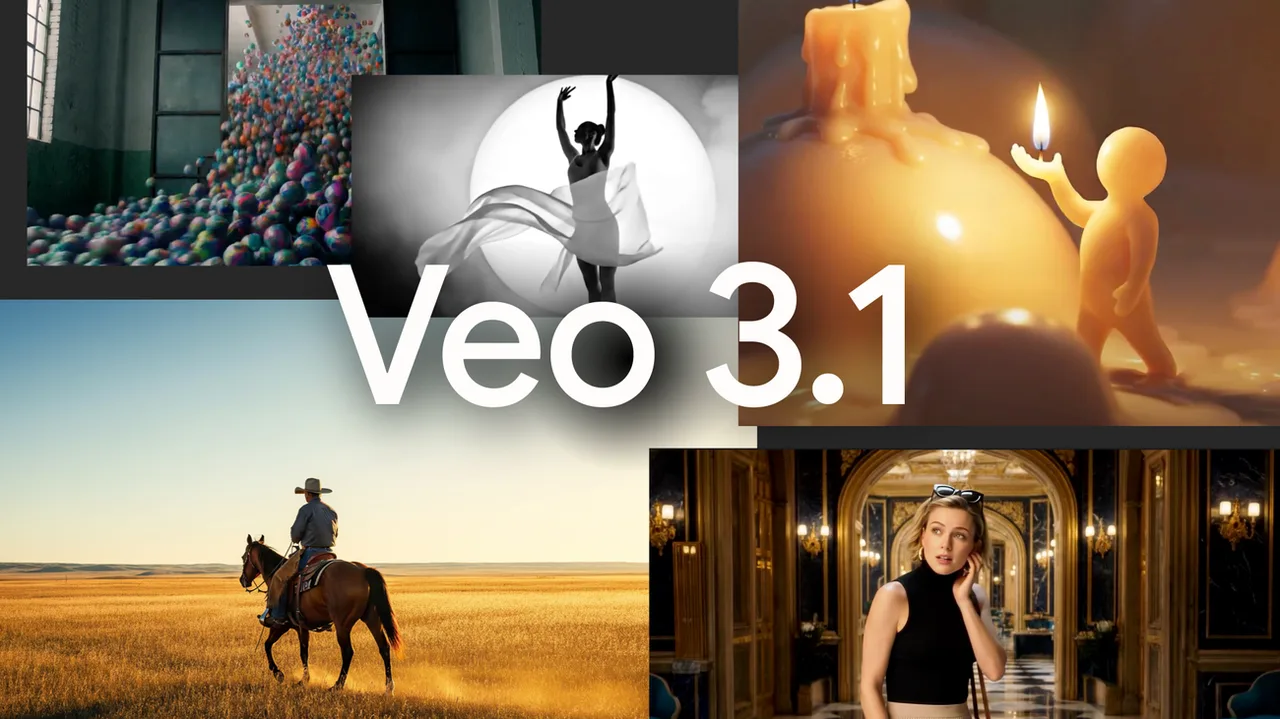
Google is the clearest direct-model candidate among these Sora 2 alternatives in 2027. Current Veo 3.1 documentation lists I2V, first-and-last-frame control, up to three references, asynchronous operations, native audio, and SynthID. Files remain available for two days, requiring immediate download and verification.
The current Google Veo 3 pricing snapshot lists Veo 3.1 Fast at $0.10 per second for 720p and standard at $0.40 for 720p or 1080p. An eight-second attempt is $0.80 or $3.20 before retries. Blocked generations are not charged. The 3.1 IDs are preview routes, not long-term snapshot guarantees.
Luma AI for App and API Workflows
Luma suits teams wanting a creative surface and developer route. Current guidance names Ray3.2 as the video model and calls Dream Machine an older name, correcting stale Luma Dream Machine searches. The Luma model-status page separates the App from the credit-based API and lists third-party models.
The current Agents API accepts model selection and uses polling for job completion; Luma’s legacy Dream Machine API documented callback URLs; Its current Agents API FAQ says content_moderated, generation_failed, and output_not_found failures are refunded, while budget_exhausted may incur a partial charge.. The app adds boards and teams. Log whether each clip came from Luma Ray or a third party. Luma also says project history cannot transfer between accounts, so offboarding needs exports.
Pollo AI for Multi-Model Testing
Pollo AI is the strongest aggregator-shaped option here. Its API exposes named routes, asynchronous task IDs, polling, a webhookUrl, and cost fields. That supports provider comparison behind one integration. Start with the Pollo API documentation, not its gallery.
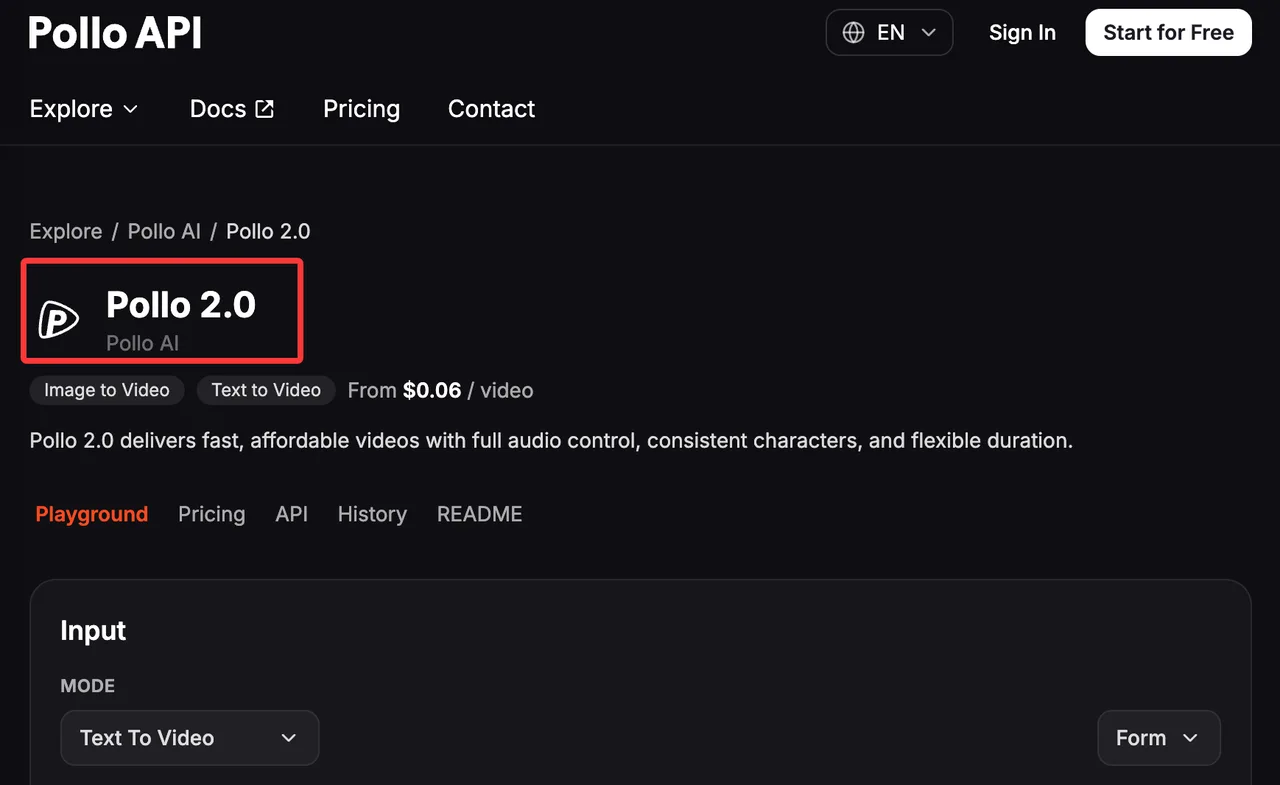
Aggregation adds a processor and failure boundary. Pollo says content may pass to third-party model providers. Do not equate its route with direct access unless version, parameters, and moderation are documented.
Lanta AI for Browser-Based Short Video
Lanta AI fits browser-led teams testing short-video models without orchestration. Its generator exposes multiple models with route-dependent duration and resolution controls, useful for campaign variants.
I found no public developer API, signed webhook specification, or fixed-version policy. Its privacy notice uses purpose-based retention, not a clip-specific window. Treat Lanta as a creator workflow unless a contract fills these gaps.
Deevid AI for Template-Led Production
Deevid AI is the template-led route. Its browser product combines model selection, effects, product-video templates, editing, and export. The Deevid model catalog shows broad access; paid plans advertise private, watermark-free output and commercial use subject to terms.
It can shorten social-variant delivery when finishing dominates generation. Public developer documentation for stable IDs, callbacks, and usage records was not found, weakening its API fit.
Compare the Migration Options
Output Controls and Media Capabilities
| Route | Product shape | Best-fit control | Audio position | Main migration risk |
|---|---|---|---|---|
| Google Veo | Direct API | References, first/last frames, explicit parameters | Native and always generated | Preview model lifecycle |
| Luma AI | App plus API | Creative boards, keyframes, model choice | Route-dependent | Mixed first- and third-party models |
| Pollo AI | Multi-model API | One integration across many routes | Model-dependent | Added processor and route opacity |
| Lanta AI | Browser platform | Fast short-form model switching | Model-dependent | Limited public production controls |
| Deevid AI | Browser creator suite | Templates, editing, campaign variants | Workflow-dependent | No verified public API contract |
Access, Billing, and Operational Risk
Google has the shortest accountability chain. Luma splits creative and API surfaces. Pollo concentrates access but adds aggregator billing. Lanta and Deevid use subscriptions or credits, making per-attempt accounting harder.
Do not compare per-second rates with monthly credits. Record consumption, failures, refunds, plan fees, export work, and reviewer minutes. Test cancellation, queue saturation, credential rotation, and deletion.
Choose an Alternative by Team Type
AI Product Teams Building an API Workflow

Start with Google Veo for direct schema control and native audio. Use Luma when Ray and a creative workspace belong together. Use Pollo when switching providers is the requirement, but store the underlying route and maintain a direct fallback.
The gate is whether the provider exposes enough state to retry, attribute cost, delete inputs, and identify the model.
Creative Teams Producing High-Volume Variants
Start with Lanta or Deevid when editors need models, templates, and exports more than an API. Luma better bridges creative and developer work. Run five matched attempts before buying annual credits; identity failures can erase plan savings.
Limits and Trade-Offs
No Platform Replaces Every Part of Sora
Google offers the clearest direct generation path but not Sora’s old product history. Luma mixes workspace and API capabilities but has its own account and model boundaries. Pollo optimizes breadth, while Lanta and Deevid optimize browser production. None should inherit a Sora acceptance threshold without a fresh test.
This is where my data ends. Without saved outputs, timestamps, and invoices from the matched run, I cannot rank motion quality, latency, or usable cost honestly.
Provider and Model Status Can Change Quickly
The Sora shutdown itself is the warning. Preview IDs, credit schedules, integrated models, and commercial terms can move within a quarter. Maintain a registry containing provider, route, model ID, terms date, unit price, retention rule, and fallback. Recheck it every quarter and before any annual renewal. This conclusion has an expiration date.
FAQ
Which alternatives publish enterprise data-retention options?
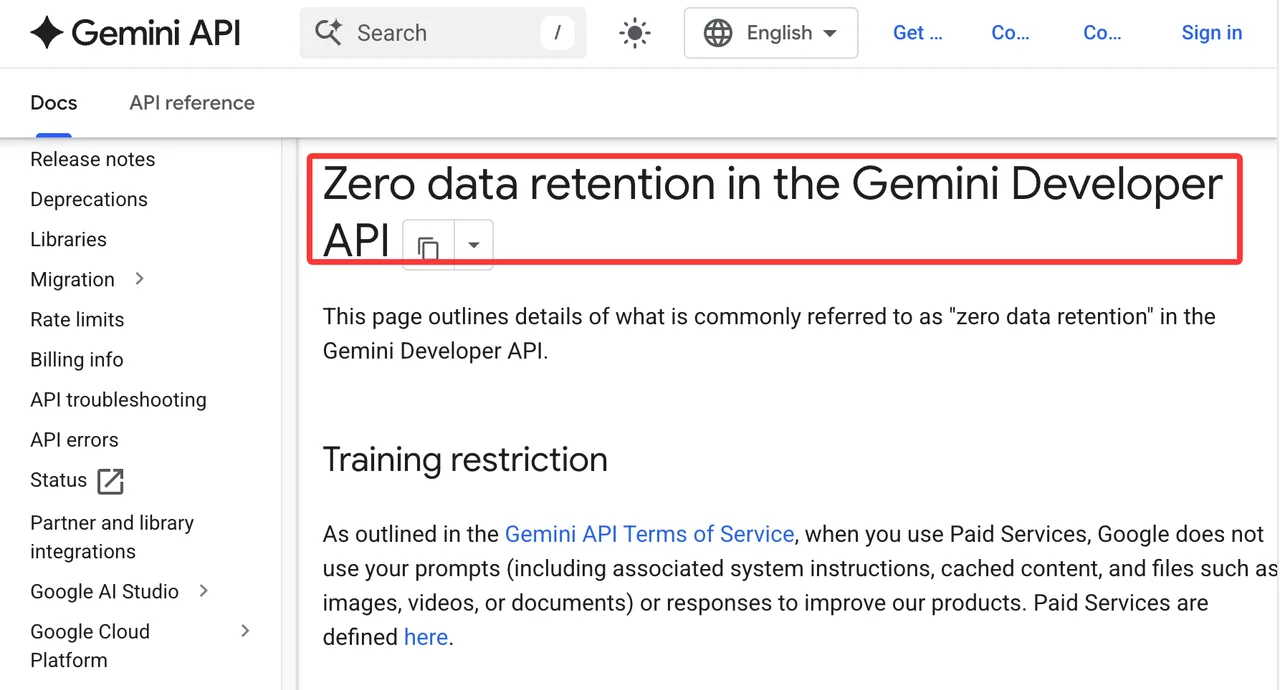
Google publishes paid-service data terms and a zero-data-retention guide, with Vertex AI identified for stricter enterprise controls. Luma publishes an enterprise DPA. Pollo publishes a DPA-backed policy but no fixed content-retention period. Lanta uses a purpose-based retention statement. I found no precise enterprise deletion window for Deevid in the reviewed public material.
Can generated clips be used commercially under each provider’s terms?
Each offers a commercial-use path with conditions. Google does not claim output ownership. Luma app rights vary by plan; its API permits commercial use. Pollo says customers retain input and output ownership. Lanta permits business use, and Deevid advertises it on paid plans. Source-image, likeness, music, trademark, and legal clearance remain the user’s responsibility. This is not legal advice.
Which alternatives support project ownership transfer between users?
No reviewed provider publishes a universal transfer workflow. Luma says generations and history cannot move between accounts. The other public docs do not establish transferable browser projects. Use organization-owned accounts, shared storage, and exports.
Do any alternatives expose signed webhook callbacks?
Luma documents a callback URL, and Pollo documents webhookUrl; neither reviewed page specifies a verifiable signature scheme. Google’s Veo examples use polling for long-running operations. No public API callback contract was found for Lanta or Deevid. Treat callbacks as untrusted until a provider documents signatures, replay protection, and verification.
Which services let developers pin a model version for reruns?
Google, Luma, and Pollo expose identifiers, not necessarily immutable snapshots. Google’s Veo 3.1 routes are preview models. Luma and Pollo do not promise indefinite replay of a fixed build. Lanta and Deevid have no documented pinning contract. Archive outputs and parameters.
Conclusion
The best Sora 2 alternatives 2027 decision is conditional. Google Veo is the clearest direct API route; Luma connects creative and developer work; Pollo supports multi-model experiments; Lanta favors quick browser production; Deevid favors templates and finishing. Freeze one owned I2V brief, measure accepted clips rather than attractive samples, and choose the route whose failure, billing, retention, and export behavior the team can actually operate.
Previous posts: