Gemini Omni 1.1 vs Seedance 2.5 for Video Control
Compare Gemini Omni 1.1 vs Seedance 2.5 on editing control, scene continuity, and access for one iterative video workflow.
It’s John.
An eight-second campaign clip needs one continuity fix and three revisions. That makes Gemini Omni 1.1 vs Seedance 2.5 a workflow decision—not a beauty contest. Without matched API results, I will not invent a winner. I would test Omni for stateful revision and Seedance for longer, mixed-reference jobs.
Quick Verdict by Video Workflow
Gemini Omni for conversational revisions
Gemini Omni fits when every instruction must build on the previous edit. Google’s Gemini Omni video editing route uses gemini-omni-1.1-flash through the Interactions API. Passing previous_interaction_id keeps the conversation and video state connected.
The Gemini Omni API guide documents editing, tail extension, reference media, first-and-last-frame interpolation, and 3–10 second outputs. Uploaded edit or extension inputs stop at 10 seconds; some controls vary by region, and provisioned throughput is unsupported. Conversation state reduces handoff work, but it does not guarantee that protected details survive three rounds.
Seedance 2.5 for its verified production surface
Seedance has the broader documented surface for longer mixed-media jobs. ByteDance’s Seedance 2.5 release describes 30-second generation, multi-round extension, timestamp editing, and up to 30 image, 10 video, and 10 audio references. Those maker claims are not automatic API guarantees.
Current BytePlus LAS documentation verifies dreamina-seedance-2-5-260628, 4–30 second MP4 output at 480p or 720p, boundary frames, editing, extension, and multimodal inputs. It lists Johor ap-southeast-1. I would build the Seedance 2.5 workflow around that API surface.
Compare Three Decision Factors
Edit and extension controls
For a video extension comparison, give both models the same eight-second 720p source and request eight more seconds. Omni appends at the tail; it cannot prepend or extend the middle. Seedance documents extension and timestamp control, but the tested provider must expose the operation.
Then replace one prop, change lighting, and remove it again. Count completion, collateral changes, rerenders, and review minutes. Conversational memory is not an undo stack.
Scene and boundary-frame continuity
Both APIs document a first last frame video route. Use identical owned boundary images, transition text, and an eight-second target. Lock subject identity, product shape, camera direction, background geometry, and final-frame arrival.
Run five attempts. Reaching the end frame but changing the product differs from preserving it but missing the boundary. Score both. A good single output does not mean the production workflow is ready.
API, studio, and provider access
Keep the surfaces separate. Google lists Omni 1.1 as a stable paid API model, while its enterprise platform uses a preview ID. Flow controls do not automatically exist in the API. BytePlus LAS exposes a defined Seedance subset.
Third-party providers may split generation, edit, and extension into separate endpoints. Check the live schema. A matching model name does not make studio and API controls identical.
Run One Matched Workflow Test
Use the same owned source assets
Start with an eight-second 720p clip, one boundary pair, two stills, and an audio stem. Confirm rights to every face, voice, logo, and soundtrack. Lock ratio, duration, prompt, and moderation settings.
Run three jobs per model: localized edit, eight-second extension, and boundary interpolation. Repeat each five times. Save inputs, model IDs, routes, parameters, outputs, errors, and charges. This cannot be judged by feel. It needs a sample run.
Score instruction adherence and review effort
Define a binary acceptance sheet before review:
| Measure | Pass rule |
|---|---|
| Target edit | Requested object or interval changed |
| Protected regions | No visible change outside scope |
| Continuity | Identity, geometry, direction, and audio remain acceptable |
| Boundary compliance | First and last frames land within the agreed tolerance |
| Review effort | Minutes, reruns, and repair recorded |
For AI video control, report pass rate by job type. Extension and edit failures create different repair work. Keep review time beside API cost, or the cheaper route may hide manual fixes.
Limits and Trade-Offs
The products may expose unequal controls
Omni’s conversation state, Seedance’s timestamps, and provider endpoints are unequal controls. If one route gets extra references or a native edit mode, call the result “workflow fit,” not superiority. Record unmatched controls.
Access and pricing can change quickly
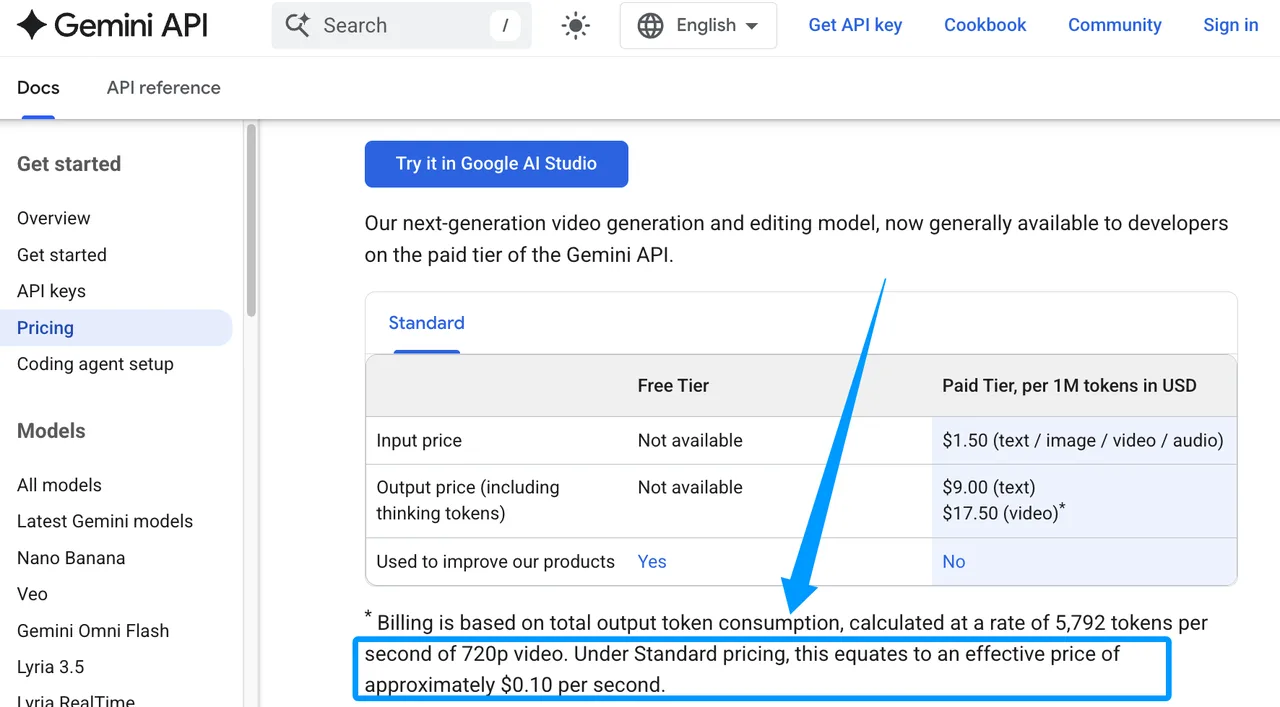
Google’s current Gemini API pricing puts 720p Omni output near $0.10 per second. BytePlus Seedance pricing varies by resolution and can count input plus output duration. Recheck price, region, retention, model ID, and quota on test day. Old screenshots make bad cost models.
FAQ
Do both models preserve source audio tracks?
No API contract found guarantees bit-for-bit preservation. Gemini ignores audio in reference videos and does not support voice editing. Seedance accepts audio references and can generate synchronized audio; BytePlus LAS separately integrates audio/video merge.
Can either model export edit decision metadata?
Neither documents an EDL, timeline diff, or changed-region map. Gemini returns steps and IDs; BytePlus returns model, seed, duration, status, and task metadata. Maintain your own revision ledger.
Do both models attach content credentials to output files?
No. Google’s enterprise model card lists C2PA support for Omni 1.1. BytePlus offers an optional watermark but does not promise C2PA metadata in its current Seedance response. Inspect the exported file.
Can either model return transparent-background video?
Not through the documented outputs checked here. Both return MP4, with no alpha-channel option. Request a clean green screen, then key it and export an alpha-capable format in post.
Are both models available under enterprise support contracts?
Both have enterprise paths, but equal model-specific support is not publicly guaranteed. Google lists Omni through its Enterprise Agent Platform; BytePlus offers Seedance through LAS. Put model ID, region, quota, escalation, retention, and SLA into the contract.
Conclusion
My decision on Gemini Omni 1.1 vs Seedance 2.5 follows the revision path. Test Omni for stateful changes. Test Seedance for longer output, mixed references, and verified edit modes. Keep the route with fewer unintended changes and less review work. The next action is a matched fifteen-run sample—not another demo reel.
Previous posts: