H3 Max API Review 2027: Choose the Right Video Endpoint
H3 Max API endpoint choices cover text, image, and reference inputs; use this guide to select one production integration route.
!A builder has one brief but three possible inputs: a prompt, an approved keyframe, or a package of character, motion, and audio references. The first H3 Max API decision is not “Which endpoint is best?” but “Which source asset must the output preserve?” My rule is to choose the narrowest contract that expresses that constraint, then reject ambiguous requests before they reach fal.
This review is an endpoint guide, not a quality ranking.
Choose the Endpoint Before You Integrate
Text input for fast concept drafts
Use the text-to-video schema when the job begins with language alone. The model ID is minimax/h3-max/text-to-video; prompt and prompt-expansion mode are required, while duration, resolution, seed, aspect ratio, safety checking, and synchronous delivery are configurable. This H3 Max text-to-video API suits concept drafts because no uploaded visual must survive. Set aspect ratio explicitly rather than inheriting the default.
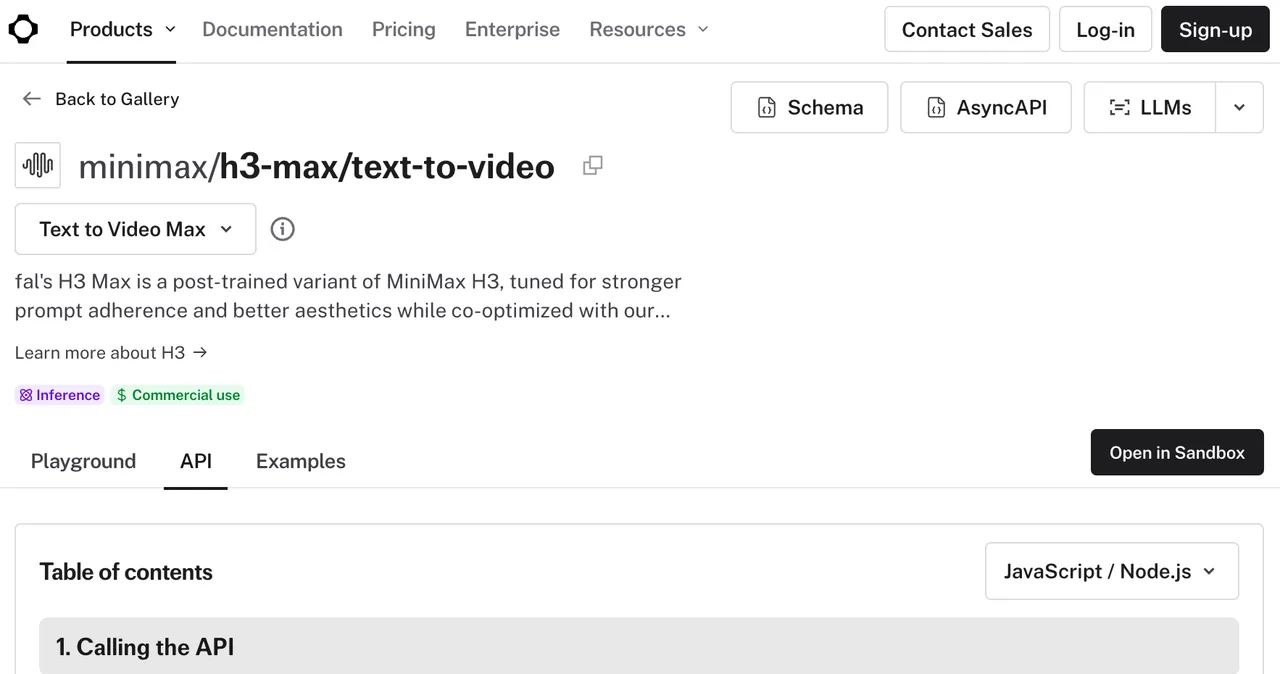
Image input for motion from a controlled frame
Choose the image-to-video schema when an approved first frame, last frame, or both define the shot. It accepts image_url and end_image_url, including an end-frame-only request. Crucially, if neither is supplied, fal handles the job as text-to-video. I would require media validation in my wrapper; Otherwise, a broken upload can silently change the route. The H3 Max image-to-video API follows the supplied image canvas.
References for identity and style constraints
Use the reference-to-video schema when the brief depends on several identity, style, movement, video, or audio cues. Prompts identify assets by modality and order, such as “Image 1.” The H3 Max reference-to-video API accepts up to 12 files across image, video, and audio lists; documented media-duration limits also apply. References add control, but they do not guarantee exact identity reproduction.
Compare the Three Input Contracts
Required media, request fields, and outputs
These H3 Max API endpoints share a prompt-led request and return a video file, expanded-prompt information, and timing data, although requiredness differs. R2V also returns the base seed.
| Route | Source contract | Distinct control | Guardrail |
|---|---|---|---|
| T2V | No media required | Aspect ratio | Reject accidental media fields |
| I2V | First and/or last image | Boundary frames | Fail if intended URLs are absent |
| R2V | Ordered image/video/audio lists | Multimodal references | Validate count, duration, labels |
Verify the output file’s content type, URL, and download instead of trusting a sample filename. Save durable copies because hosted result URLs are not permanent storage.
Job states, errors, and result retrieval
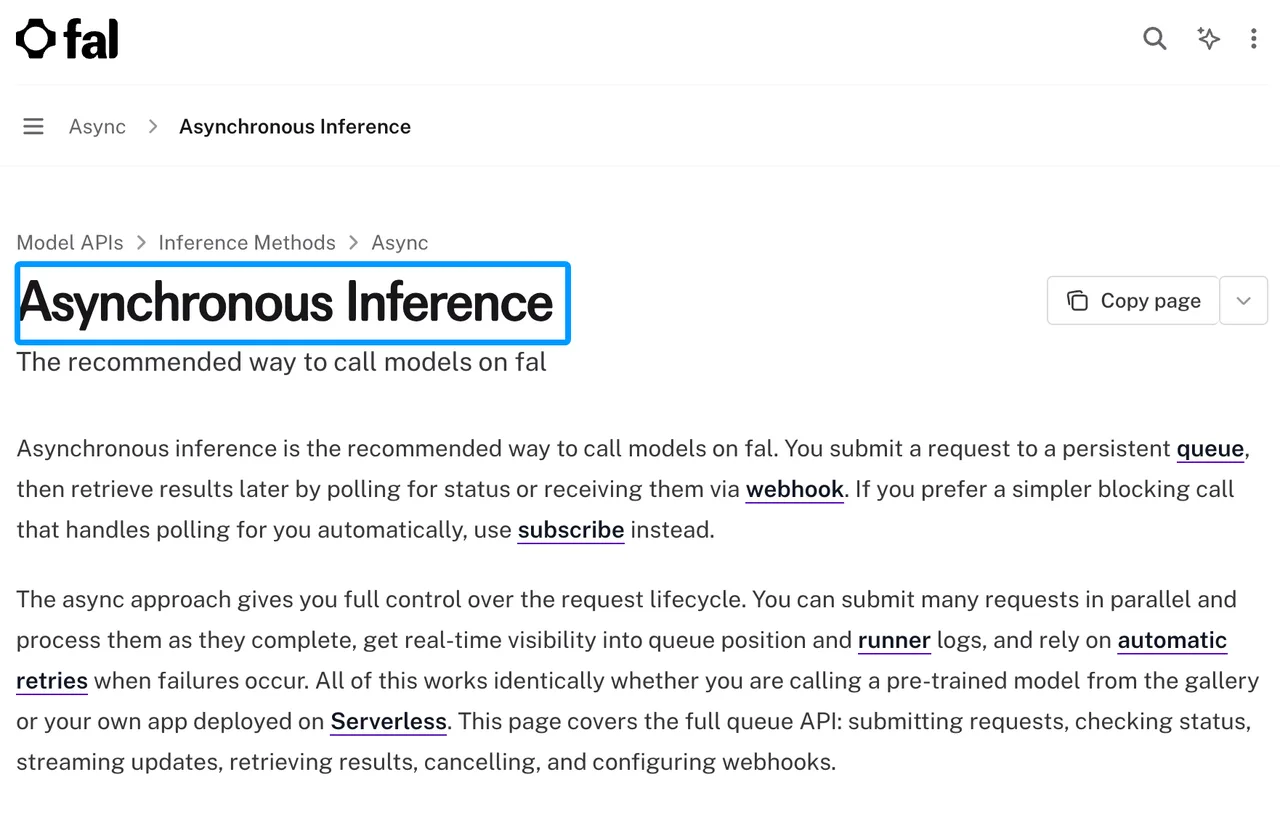
Use fal’s asynchronous queue lifecycle for production video. Submit with a server-side FAL_KEY, store request_id, poll or receive a webhook, then fetch the result. States are IN_QUEUE, IN_PROGRESS, and COMPLETED; completion can still contain error and error_type. Model that distinction. Never expose the key in client code.
Select One Production Route
Match the endpoint to the source asset
Route by evidence, not prompt length:
- No owned source image or reference package: T2V.
- One controlled opening or closing composition: I2V.
- Multiple identity, style, motion, video, or audio references: R2V.
- Mixed or missing assets: stop for validation.
Do not switch models yet. Look at the workflow first. I would place this classifier before the fal H3 Max API client and record the endpoint, asset hashes, schema date, and internal job ID. That makes failures explainable.
Define fallback behavior for failed requests
Give each job an internal ID separate from fal’s request ID. Let the queue handle documented transient retries; do not resubmit because polling is slow. On validation, safety, or asset-fetch failure, return the job for review. Never degrade R2V to T2V—or omit an I2V frame—without explicit permission. For webhooks, follow fal’s Ed25519 verification guide, check timestamp and raw-body signature, and deduplicate by request ID.
Limits and Trade-Offs
One endpoint cannot cover every control need
T2V minimizes asset handling but cannot lock a supplied frame. I2V controls shot boundaries but does not replace ordered multimodal references. R2V carries richer context with more upload validation and a larger failure surface. None exposes an edit timeline or promises every detail will remain fixed. This cannot be judged by feel. It needs a sample run with the same brief and acceptance checklist.
Provider schemas can change independently
Treat each endpoint as a separate dependency. Record the schema date, pin the SDK where possible, test required fields and enums, and alert on response changes. Keep capability flags outside business logic so one route can be disabled independently. Current fal pages list 480P, 768P, and 1080P, with 1080P described as refinement from native 768P; do not generalize that note to another provider or revision.
FAQ
Does H3 Max support idempotency keys?
No client-supplied idempotency key is documented for current generation submissions. Use an internal logical-job key, persist fal’s request_id, and deduplicate retries and webhook deliveries yourself.
Which webhook signatures does fal use?
fal documents Ed25519 signatures. Verification uses request ID, user ID, timestamp, the raw-body SHA-256 hash, signature header, and fal’s JWKS. Reject stale timestamps and verify before processing.
Can API keys be scoped to H3 Max only?
Not in the documented key scopes. fal describes API and ADMIN scopes, not a key limited to one H3 Max model. Isolate this integration behind your own authorization layer.
Does fal provide H3 Max maintenance notices?
No H3-Max-specific maintenance feed is documented. Monitor fal’s general status page and changelog, then add endpoint health checks and schema-diff alerts. Do not interpret silence as guaranteed availability.
Which support channel handles failed H3 Max production jobs?
fal lists support@fal.ai; enterprise customers should also use their account channel. Include request ID, model ID, UTC time, status, error type, SDK version, and sanitized request details. Never send API keys.
Conclusion
Choose the H3 Max API from the asset contract: T2V for prompt-only ideation, I2V for controlled boundary frames, and R2V for ordered multimodal references. The production-grade choice is the one your service can validate, observe, and fail safely. Start with one route, store request lineage, and add another only when a real source constraint requires it.
Previous posts:
Related Articles
Gemini 3.8 Live vs Extended Thinking: Which Should You Use?

GPT-6 Astra 3D: Blender MCP vs AI 3D Generators

K2 Horizon 36B Review 2027 for Local Agent Workloads

H3 Max Pricing: Cost per Usable Video Clip
H3 Max vs MiniMax H3: Speed, Output, and Access