H3 Max Pricing: Cost per Usable Video Clip
H3 Max pricing should be measured per usable clip, including retries and review time, before choosing it for a production workflow.

Guys, it’s John. When I price a campaign clip, I start with the output that survives review after retries and downstream work. That is the only H3 Max pricing number a production team can defend.
fal publishes per-second charges, not your acceptance rate. This guide turns the rate card into a cost-per-approved-clip worksheet for fal’s H3 Max only. Base MiniMax H3 stays in the existing minimax-h3-pricing analysis.
Current H3 Max Pricing Snapshot
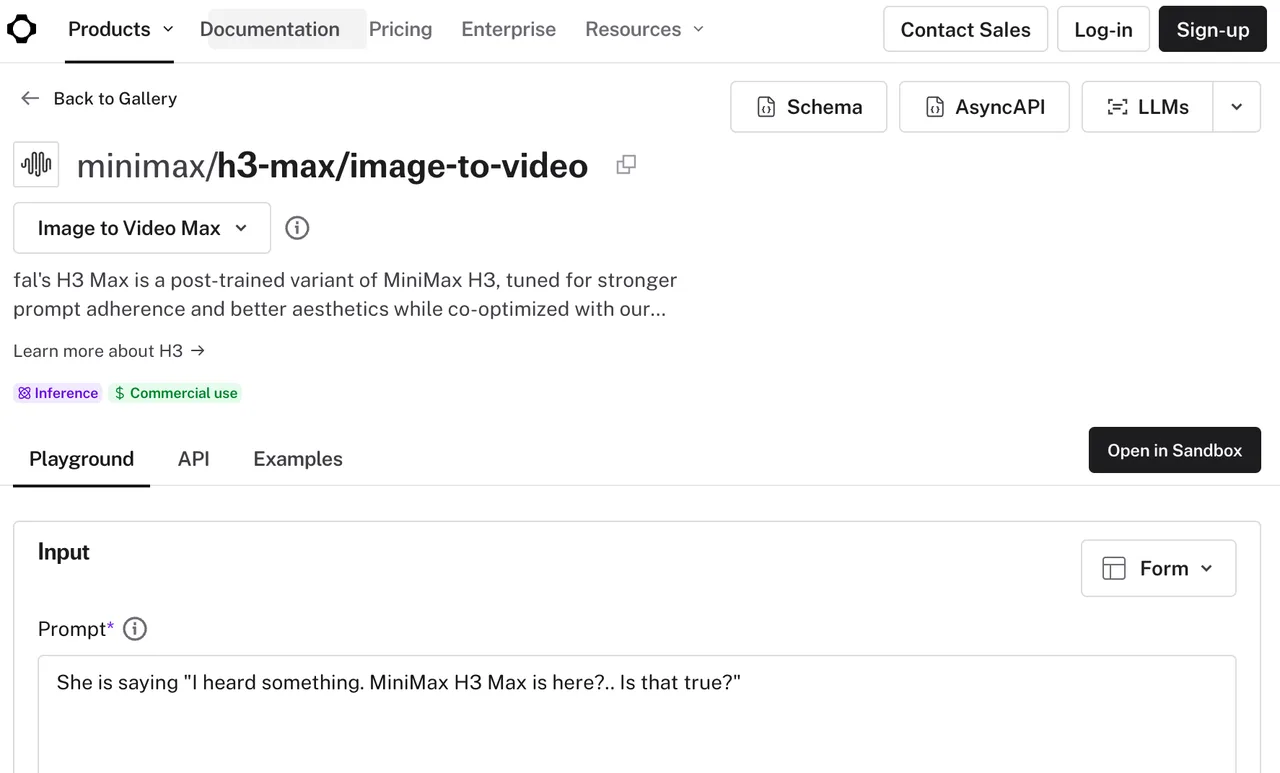
Normalize charges by duration and resolution
As checked on September 15, 2026, the standard rates stated on the H3 Max model endpoint are $0.05 per second at 480p, $0.08 at 768p, and $0.16 at 1080p. The image-to-video model ID is minimax/h3-max/image-to-video. Price each route separately.
| Resolution | Standard rate, checked 2026-09-15 | 5-second output | 10-second output |
|---|---|---|---|
| 480p | $0.05/sec | $0.25 | $0.50 |
| 768p | $0.08/sec | $0.40 | $0.80 |
| 1080p | $0.16/sec | $0.80 | $1.60 |
This is arithmetic, not a production benchmark. The H3 Max price per video is duration multiplied by the resolution rate. For reference-to-video, add another column: fal’s reference-input billing includes 4,096 tokens, then charges $0.02 per additional 1,000. Reference-heavy requests can cost more than the table suggests.
Separate promotional access from standard rates
The model page still displays launch prices of $0.0125, $0.02, and $0.04 per second, while saying the 75% discount ended September 14. I would not use them in a September 15 forecast. Put free generations or coupons in a temporary-credit row with an expiry date, not recurring budget.
Calculate Cost per Usable Clip
Generation charges, retries, and rejected outputs
Use this formula:
Cost per usable clip = (all billed generation charges + review labor + downstream processing) / approved clips
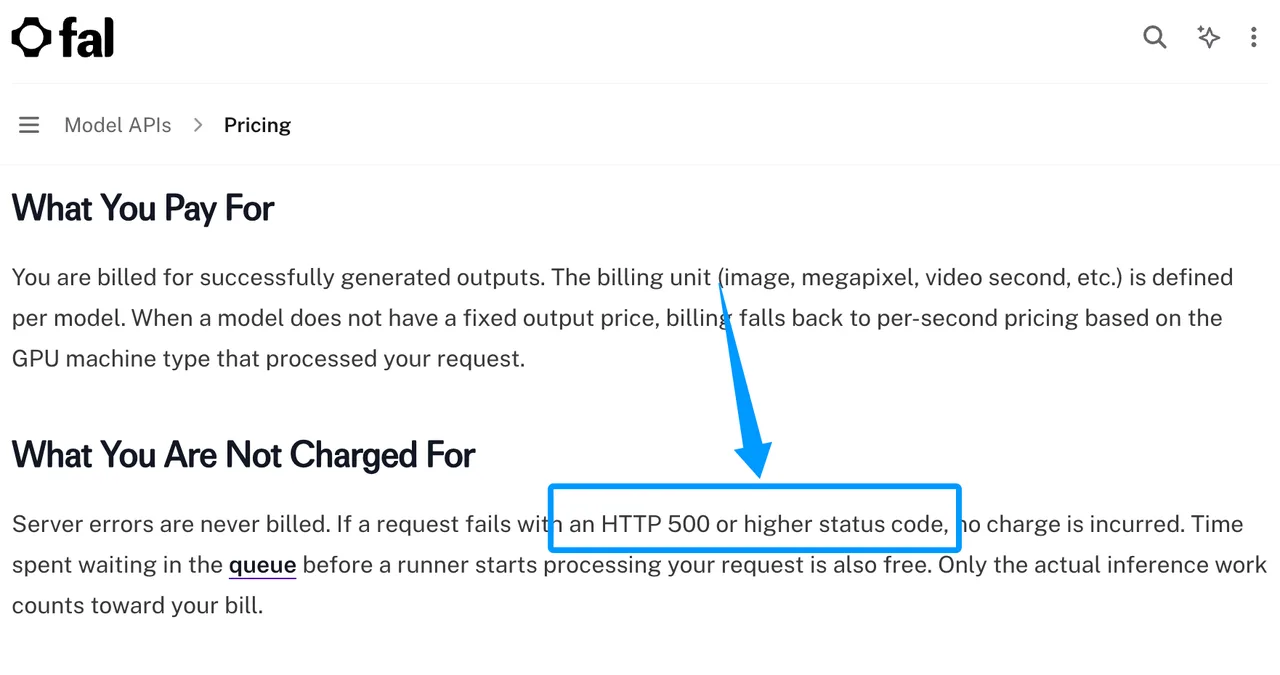
Under fal Model API billing rules, successful outputs are billed; HTTP 500+ server errors and queue waiting are not. A completed clip rejected for a broken subject or missed brief is still paid. That distinction drives H3 Max failed generation cost.
Worksheet example, not measured performance: ten 10-second, 768p outputs cost $8.00. Four approvals make generation-only cost $2.00 each; seven make it about $1.14. Same rate card, different result. Cheap does not always mean cost-saving. Unusable generations are expensive.
Review time and downstream processing
Log reviewer minutes per attempt. Add caption repair, audio replacement, upscaling, storage, and export time. Keep labor as review hours × loaded hourly rate; do not invent one.
Tag each rejection: instruction, visual, continuity, audio, or format. The invoice shows spend, not what to fix.
Compare One Production Cost Decision
H3 Max for rapid iteration
For a 768p campaign test, H3 Max starts at $0.08 per second. I would lock briefs, duration, and resolution, then count approvals per ten attempts. This cannot be judged by feel. It needs a sample run.
Rapid iteration only wins if the approval rate holds. The H3 Max cost advantage disappears when repeated generations create extra review or post work.
MiniMax H3 for different output requirements
Keep the base model separate. If a job requires MiniMax H3’s output surface or deployment options, use the earlier page rather than importing its rate here. MiniMax H3 pricing and fal’s post-trained H3 Max are not interchangeable.
No matched acceptance dataset is provided, so I am not declaring a winner. Choose the route that meets the brief, then compare cost per approval under identical inputs and review rules.
Limits and Trade-Offs
Published rates can change without benchmark changes
A model can behave the same while its economics change. Save the endpoint ID, unit rate, currency, and lookup timestamp with every benchmark. Otherwise last week’s spreadsheet becomes fiction.
Lowest unit price may not yield lowest usable cost
Per-second price ignores acceptance and labor. A cheap run with two more review rounds can lose to one that ships. Long-term cost depends on rework, not only unit price.
FAQ
Do unused fal credits expire for H3 Max?
Yes. The fal Terms of Service, updated September 8, 2026, say purchased credits expire 365 days after purchase and free or promotional credits expire after 90 days. Credits are platform-wide, not H3-Max-specific.

Are canceled H3 Max jobs billed?
In the H3 Max and billing materials reviewed for this article, I found no H3-Max-specific blanket answer. Its queue cancellation behavior says an IN_QUEUE job is removed before processing, while an IN_PROGRESS job may still complete. Treat cancellation acknowledgment as workflow state, not proof of zero charge; reconcile the request ID against usage records.
Can enterprise buyers receive committed-use discounts?
In the public pricing materials reviewed for this article, I found no H3 Max committed-use schedule. fal’s billing documentation says enterprise customers can receive custom per-endpoint pricing and volume discounts. Use the signed order form in the forecast; do not assume a percentage.
Which currencies appear on H3 Max invoices?
Public pricing examples use USD, and the terms say card or ACH credit purchases are made in U.S. dollars. The public material checked does not say whether negotiated enterprise invoices support additional currencies. Procurement should confirm invoice currency before modeling exchange-rate exposure.
Are taxes included in displayed H3 Max prices?
No. fal’s terms say displayed prices exclude taxes and that the customer is responsible for applicable taxes, charges, tariffs, and duties. Tax treatment depends on the buyer and jurisdiction, so the API rate is not necessarily the final payable amount.
Conclusion
The useful H3 Max pricing figure is not $0.08 per second in isolation. It is the billed output, reference input, rejection rate, review time, and downstream work divided by clips that pass the delivery checklist.
For the next production run, snapshot the September 15 standard rate, exclude temporary credits, and review ten matched attempts before scaling. That turns video API cost from a product-page number into a budget your team can audit.
Previous posts:
Related Articles
H3 Max vs MiniMax H3: Speed, Output, and Access

Hyper3D WorldGen Review 2027: From One Image to an Editable Scene

Mercury Agent Review 2027: Provider-Agnostic Runtime Trade-Offs

FLUX 3 Video vs Seedance 2.5 for Production Workflows

Gemini Omni 1.1 vs Seedance 2.5 for Video Control