H3 Max vs MiniMax H3: Speed, Output, and Access
Compare H3 Max vs MiniMax H3 on iteration speed, output scope, and access route to choose the better fit for one video workflow.
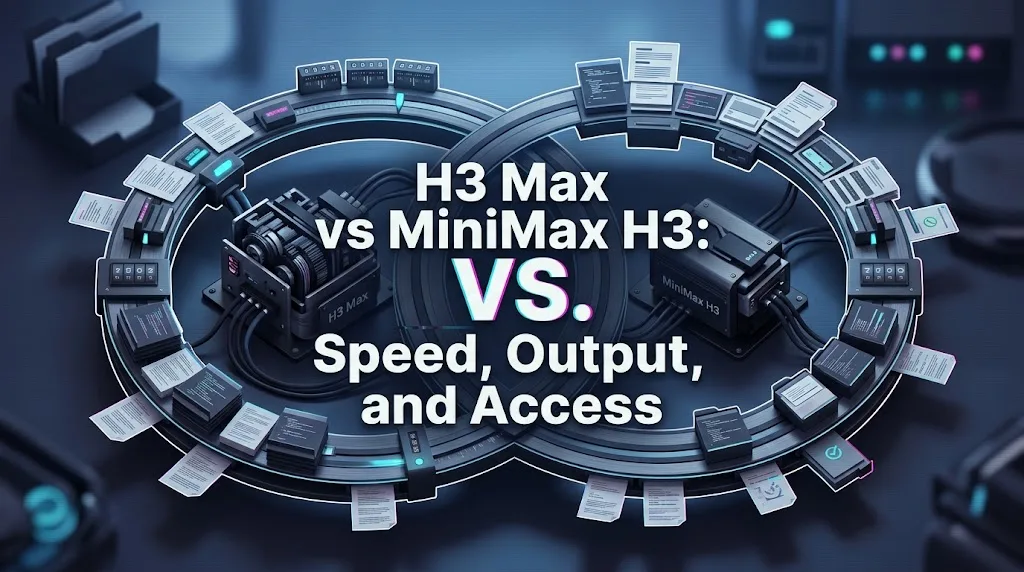
A team with one shot list can need two production routes: fast drafts for repeated review, or 2K delivery with more control over the serving stack. That is where H3 Max vs MiniMax H3 becomes a workflow decision—not an “absolute quality” contest.
I have not run a matched dataset, so I will not invent a winner. This checks throughput, output scope, and access using public information verified September 15, 2026.
Quick Verdict by Workflow Need
H3 Max for fast hosted iteration
Choose H3 Max when generation delays a hosted prototype loop. In its H3 Max release note, fal says a five-second video takes about three seconds and delivers roughly 35 times the throughput of MiniMax’s official H3 endpoint. Those are fal’s measurements, not my results.
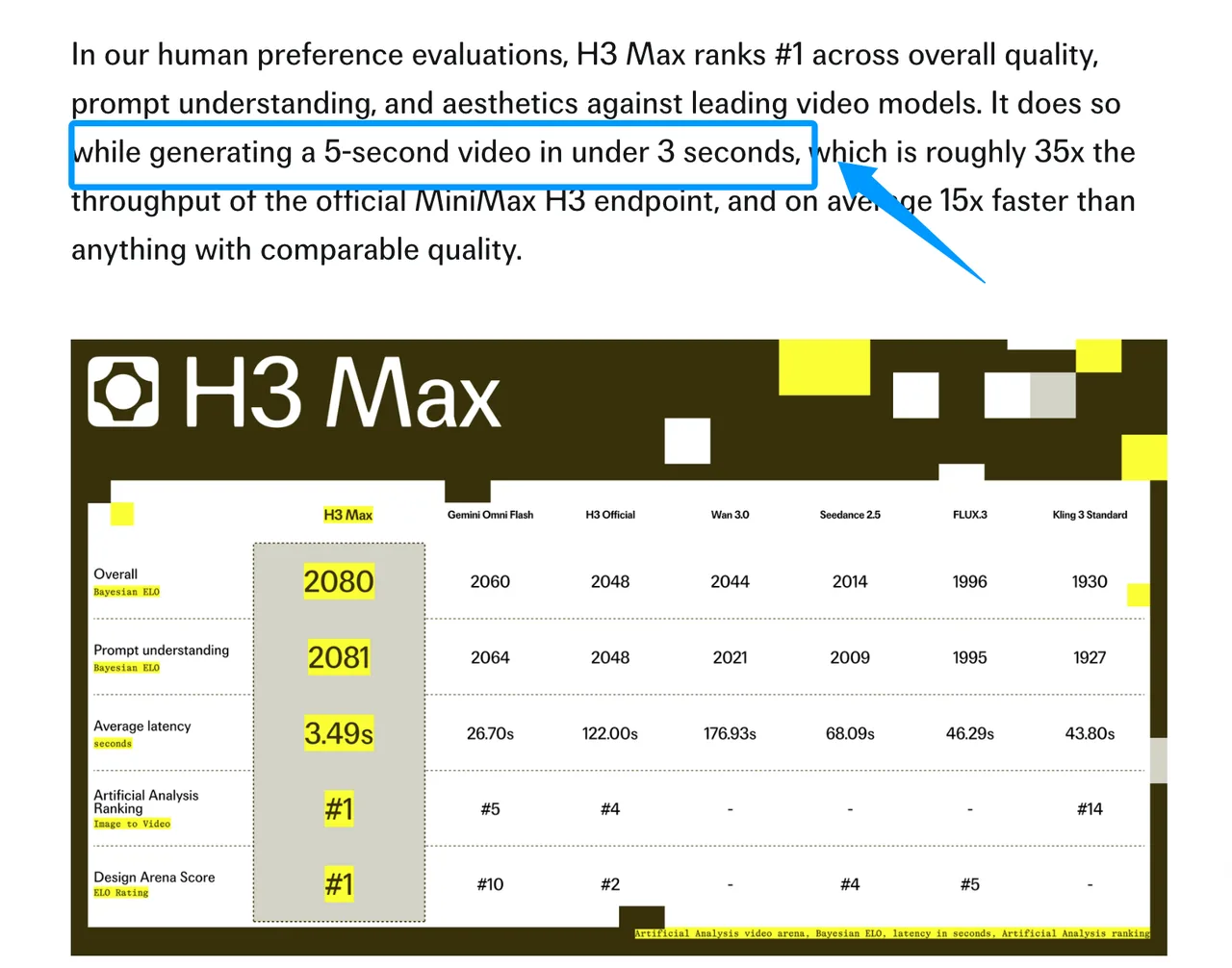
The attraction is a short submit-review-rerun loop. The current H3 Max API has text, image, and reference-to-video routes. H3 Max is fal’s post-trained model, not a WaveSpeed-owned model.
MiniMax H3 for broader deployment choices
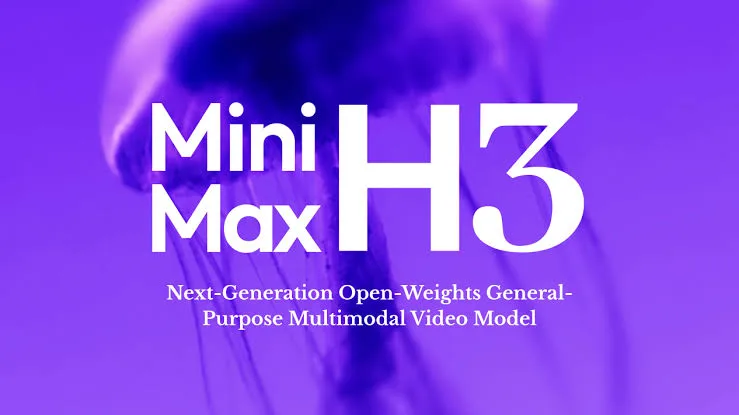
Choose the base model when deployment freedom matters more than the shortest hosted loop. MiniMax publishes FL2VA and Ref2VA checkpoints; fal also hosts minimax/h3/... endpoints.
The official MiniMax H3 repository says local H3-Base produces 768p, while full 2K uses hosted Context-IR and Regenerate-2K components. MiniMax H3 open weights expand choice without making every component local. A Community License governs the weights.
Compare Three Decision Factors
Throughput and end-to-end latency
The fal H3 Max comparison needs two clocks. timings.inference covers backend denoising; wall time adds upload, queueing, prompt expansion, encoding, download, and application overhead.
Keep approval outside this latency table. A route can finish inference first and still lose time if reviewers reject more outputs or the client waits on large downloads. Throughput answers capacity; it does not answer usable rate.
For MiniMax H3 speed, comparing fal-hosted Max with local H3 also compares infrastructure. I would run ten matched prompts per route and report median plus slow-tail latency, not one best run.
Resolution, controls, and output scope
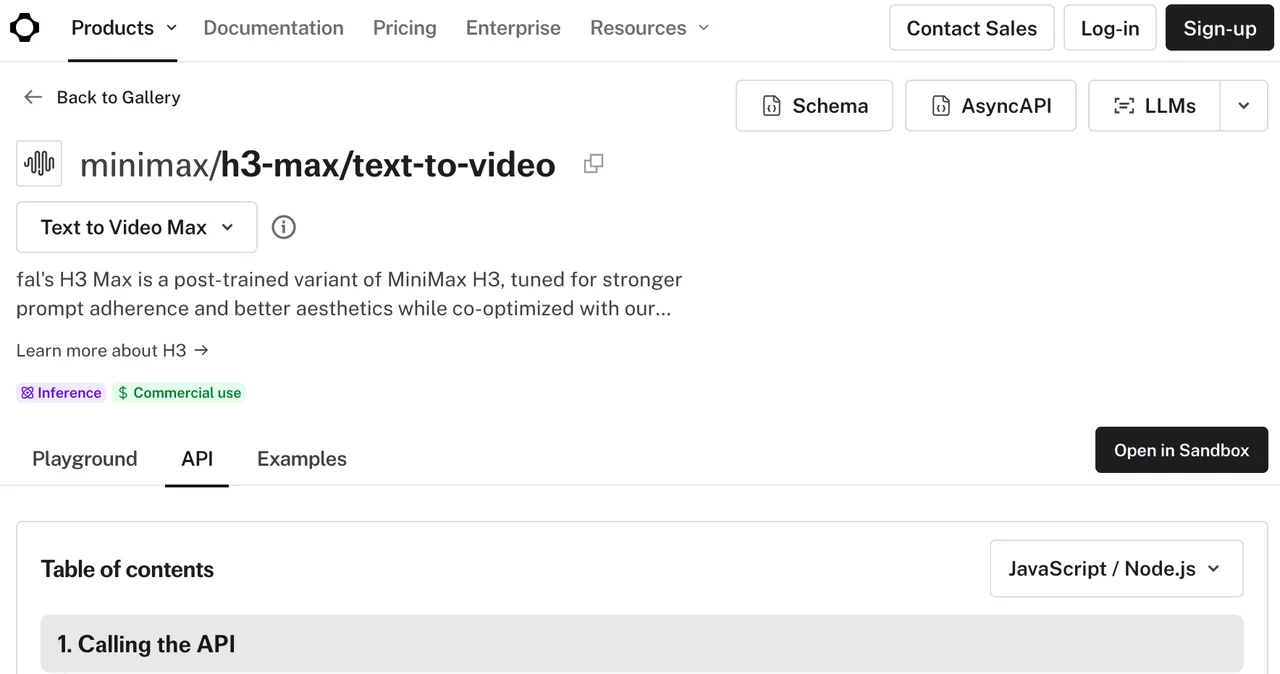
Across the current H3 Max schema, 480p, 768p, and 1080p; 1080p is latent refinement from native 768p. It exposes a seed, prompt expansion, common ratios, first/last-frame input, and a separate multimodal-reference route.
Base H3 targets 768p locally and up to 2K through regeneration. Ref2VA documents nine images, three videos, and three audio clips, capped at 12 files. H3 Max resolution options fit 480p-to-1080p iteration; base H3 fits briefs needing its wider scope.
Do not turn 1080p versus 2K into a quality verdict. Confirm the client’s delivery resolution, then inspect text, fine detail, audio, and reference adherence at that output. More pixels cannot repair a missed instruction.
Hosted endpoints and open-weight deployment
H3 Max is fal-hosted. It removes model provisioning, while fal controls deployment updates and endpoint behavior.
Base H3 offers hosted access and downloadable task-specific weights. Self-hosting enables artifact pinning and data-path control, but transfers capacity, upgrades, monitoring, safety, and incident response to the team. One fewer vendor does not mean one fewer job.
Before self-hosting, run a deployment smoke test with both checkpoint families, the intended GPU layout, and production-length inputs. Record cold load, steady-state latency, peak memory, and failed-worker recovery. Those numbers belong in the route decision.
Choose the Right Route for One Project
Prototype loops with frequent reruns
For storyboards or ad variants, I would start with H3 Max when each review note triggers a rerun. Lock prompts, references, duration, resolution, and expansion mode. Record inference time, wall time, failures, and reviewer decisions.
Do not switch after one fast result. A good single output does not mean the production workflow is ready.
Higher-control or self-hosted requirements
Use base H3 for 2K regeneration, fuller references, local H3-Base, fine-tuning, or pinned weights. Map which stages remain hosted and review the license with counsel.
Local deployment adds GPUs, loading, scaling, monitoring, and reproducibility work. Choose it because those controls solve a requirement.
Limits and Trade-Offs
fal’s post-training claims need matched testing
fal attributes the speed and preference results to post-training and its inference stack. Test that claim with identical prompts, inputs, durations, regions, and review rules. Demos show the ceiling. Production shows the floor.
Endpoints and weights can change independently
A hosted ID can keep its name while defaults change; repositories can move while pinned copies stay fixed. Save endpoint IDs, schemas, response metadata, commit hashes, and dates.
FAQ
Can one prompt migrate between both APIs unchanged?
Not reliably. The brief can transfer, but payloads, reference tags, expansion, and controls differ. Translate and validate it.
Do both routes expose identical safety filters?
No. H3 Max exposes enable_safety_checker on fal. MiniMax documents hosted moderation and separate license obligations; self-hosters must implement production safeguards.
Can either model pin a specific checkpoint?
H3 Max exposes no checkpoint-version parameter. Base H3 artifacts can be pinned by repository revision, but hosted Context-IR and 2K regeneration are not thereby pinned.
Are input retention terms identical across providers?
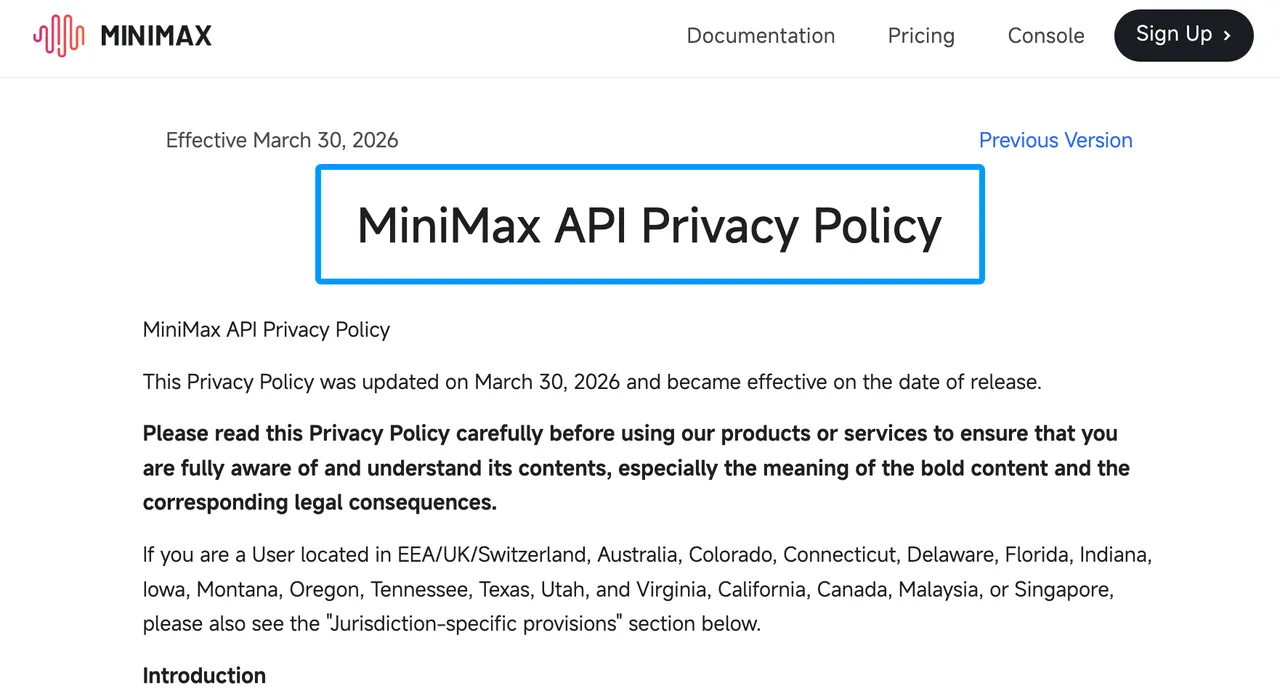
No. fal’s data-retention controls offer X-Fal-Store-IO: 0, while CDN uploads remain separate. The MiniMax API privacy policy uses purpose- and law-based retention instead. Check the contract for the route used.
Can teams reuse evaluation seeds across both models?
They can store the same integer, but should not expect matching videos. Different weights, preprocessing, serving code, and resolution paths break cross-model reproducibility.
Conclusion
The answer to H3 Max vs MiniMax H3 is conditional. Use Max when hosted reruns shorten approval. Use base H3 when 2K scope, downloadable weights, or infrastructure control justify the operational work.
Run one matched sample set and separate inference, wall time, output compliance, and deployment burden. That is enough to decide without pretending either model wins every task.
Previous posts:
Related Articles

H3 Max Pricing: Cost per Usable Video Clip

Hyper3D WorldGen Review 2027: From One Image to an Editable Scene

Mercury Agent Review 2027: Provider-Agnostic Runtime Trade-Offs

FLUX 3 Video vs Seedance 2.5 for Production Workflows

Gemini Omni 1.1 vs Seedance 2.5 for Video Control