Muse Spark 1.3 Max vs Contributor
Compare Muse Spark 1.3 Max with Contributor on capability, access, and task economics to choose one route for an agent workflow.

A coding agent gets one ticket, reads the repository, calls three tools, and opens a patch. When the first attempt stalls, should the team spend more reasoning or stay on the cheaper route? For Muse Spark 1.3 Max vs Contributor, my answer is not “pick one tier.” Meta’s current language makes Max a reasoning setting, while Contributor is a catalog route. This article turns that mismatch into a routing rule.
Quick Verdict by Workload
Do not switch models yet. Look at the workflow first. Max and Contributor describe different controls. Contributor’s official technical definition is not disclosed beyond its catalog route and commercial conditions.
Max for harder reasoning-heavy tasks
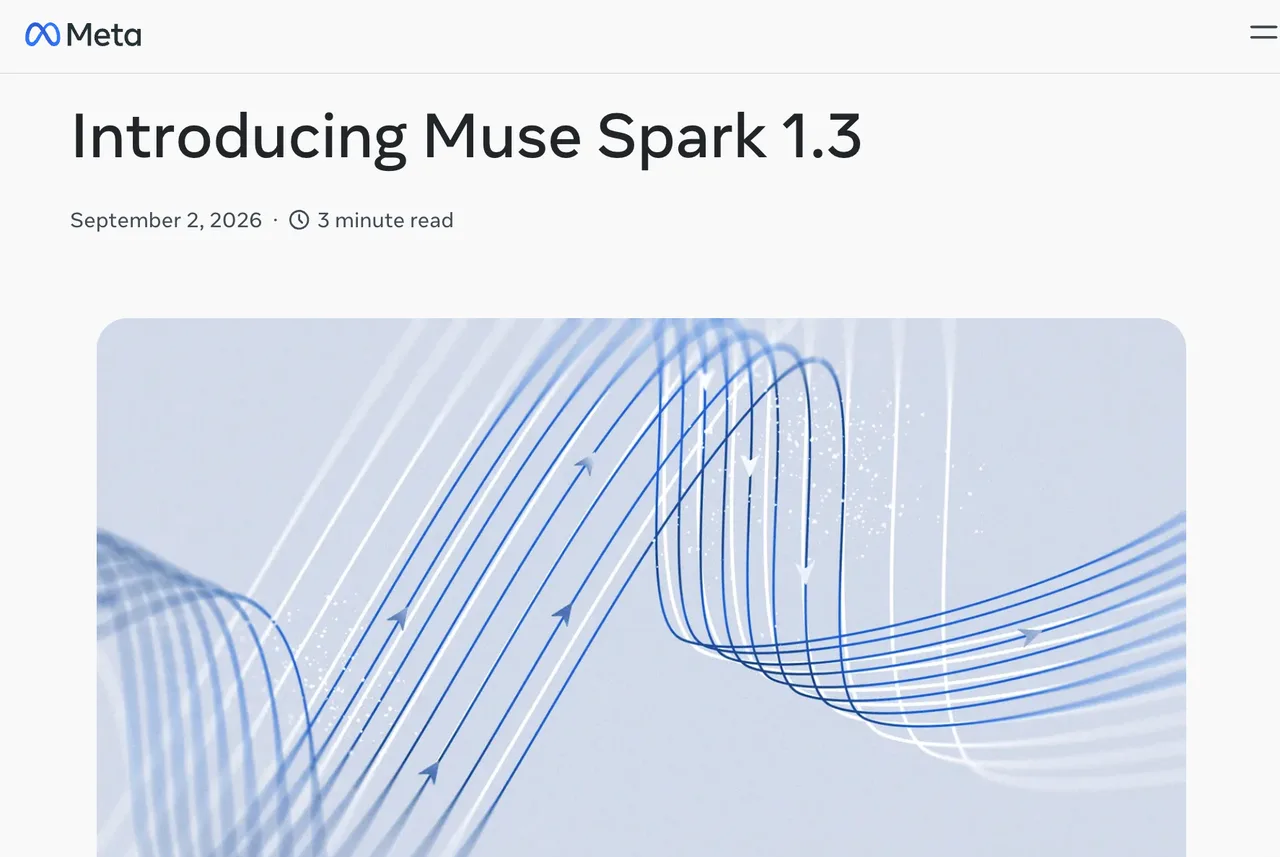
Use max reasoning for expensive ambiguity: conflicting test failures, multi-file migrations, unfamiliar dependencies, or recovery after a bad tool step. Meta’s Muse Spark 1.3 release note confirms max reasoning on Muse Code and Meta Model API.
Give escalation a trigger: two failed repairs, one unresolved contradiction, or a security-sensitive decision. “Muse Spark Max” is useful shorthand, not a separate official model ID.
Contributor for lower-cost delegated work
Use Muse Spark Contributor for reviewable work: issue classification, documentation drafts, test fixtures, or a narrow refactor with deterministic checks. Its lower price matters only when the input is eligible for the route’s current data terms.
Never send proprietary code merely because the route is cheap. Check the Contributor agreement inside your account first. If its policy is unacceptable, the task is ineligible.
Compare Three Decision Factors
Model identity and capability scope
The official catalog for Meta Model API models lists model IDs and supported inputs, although developer sign-in may be required. It does not disclose enough architecture detail to prove that Contributor uses different weights, training, or reasoning ability.
| Decision factor | Max | Contributor |
|---|---|---|
| What it is | Reasoning configuration | API/catalog route |
| Routing signal | Task uncertainty | Data eligibility and economics |
| Still unproven | Universal quality gain | Separate base-model identity |
Both may expose multimodal inputs through Muse Spark, but verify the exact model card revision before routing images, video, audio, or PDFs. A label is not a modality guarantee.
Access surfaces and usage limits
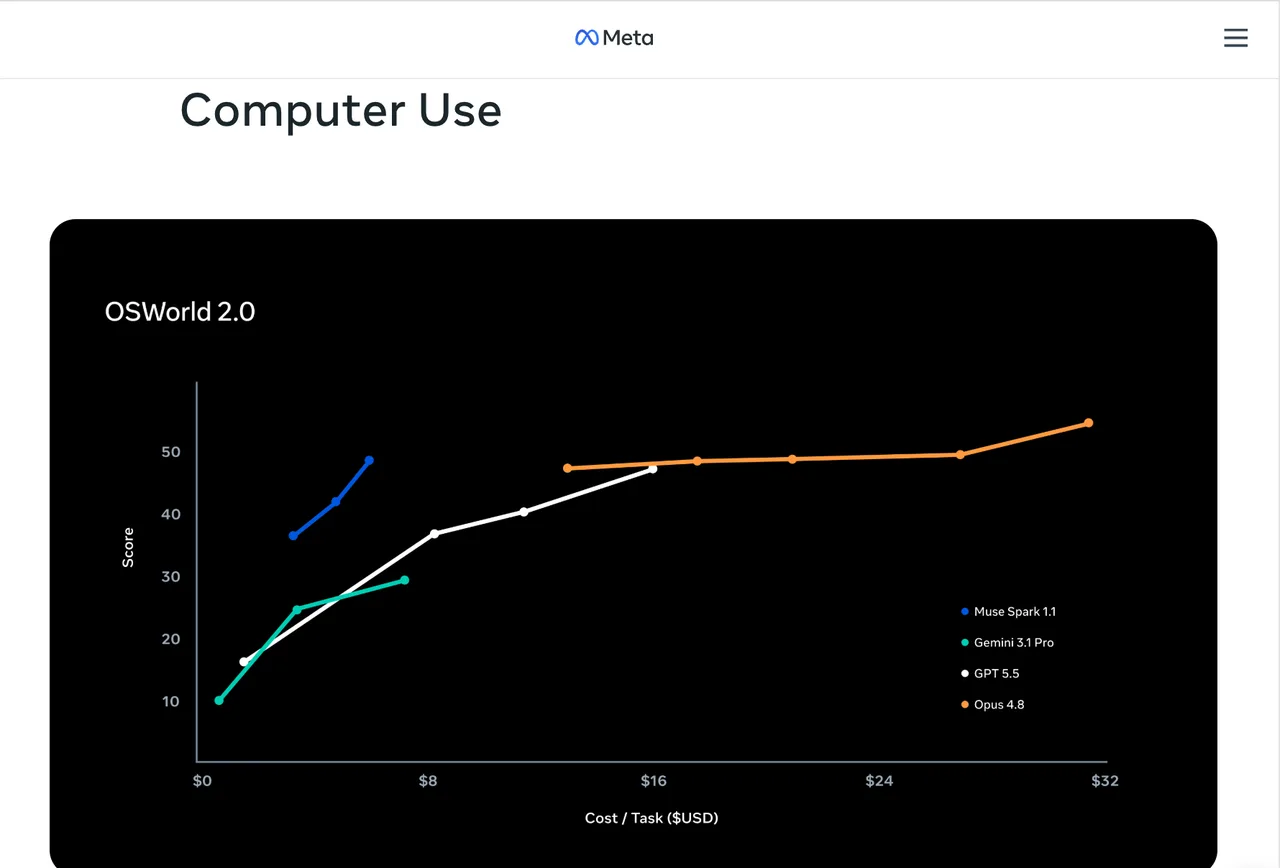
Meta makes 1.3 available through Muse Code and Meta Model API. Its earlier Meta Model API launch documentation describes compatible API formats, tool use, and structured output.
Muse Code tiers are not the same as API billing. Subscription quota, rate limit, context cap, and concurrency are separate controls. Record the surface, model ID, reasoning configuration, account tier, and 429 behavior. I could not verify public, stable Contributor-specific limits on September 17, 2026.
Cost per successful task
Do not compare list price alone:
Cost per success = (input + cached input + reasoning/output + retries + review labor) / accepted tasks
A Contributor run that fails twice can exceed one accepted max run. Max can also waste reasoning on work a validator could settle. Long-term cost depends on rework, not only unit price.
Route One Agent Workflow
Use one repository-ticket workflow. Lock the prompt, tools, context files, timeout, acceptance tests, and maximum turns. Route by risk, not job title.
Keep routine work on the lower-cost route
Start eligible tickets on Contributor. Require a plan, patch, targeted tests, and a short failure record. Stop after two invalid tool calls or two patches failing the same check.
Log tokens, wall time, retries, reviewer minutes, and final acceptance. That is task economics. A cheap request is not necessarily a cheap completed ticket.
Escalate bounded failures to Max
Escalate the same task package—prompt, tool state, failed output, and acceptance rules—to max. Do not add better context during escalation; that tests two changes at once.
This cannot be judged by feel. It needs a sample run. Use at least 20 representative tickets before changing policy, then compare completion and review burden. Without a matched harness, this is a method, not a performance verdict.
Limits and Trade-Offs
Product labels may not map to separate base models
Meta has not publicly disclosed that Contributor is a distinct checkpoint. Treat it as a route until official documentation says otherwise. Max identifies compute effort, not a new product family. That keeps architecture claims out of an economics decision.
Cross-tier tests require identical harnesses
Keep prompts, tools, context, stopping rules, and reviewers identical. Save raw responses and tool traces. If Muse Code injects instructions while your API harness does not, test the surfaces separately. Otherwise, the harness difference gets credited to the model.
FAQ
Can the Contributor route and max reasoning tiers use the same system prompt?
At the API-schema level, likely yes: Meta’s Messages API reference documents a shared message surface, although sign-in may be required. Reuse the prompt, then regression-test behavior; Muse Code may add wrapper instructions.
Can Contributor conversations be exported in a portable format?
I found no official portable Contributor export. API clients can store messages, tool calls, and multimodal asset references in their own schema, but that is client logging—not a Meta export standard.
Can teams pin an exact model revision?
Not from the public evidence I could verify. The 1.3 IDs identify a product version, but Meta does not document immutable, date-stamped Contributor checkpoints. Store the ID and response metadata, and expect aliases to change.
Are data-retention terms identical across tiers?

Do not assume so. Meta’s general privacy policy is not a route-specific retention schedule, and I found no public guarantee of identical retention. Check account terms and enterprise agreements before sending client data.
Does Meta publish breaking-change notices for the Contributor tool schema?
I found no Contributor-specific breaking-change feed. Monitor general developer documentation, pin the client library, and contract-test tool names, arguments, and response parsing. A general API notice is not a route-specific compatibility guarantee.
Conclusion
The practical answer to Muse Spark 1.3 Max vs Contributor is routing, not ranking. Keep eligible, bounded tasks on Contributor; escalate recorded failures to max reasoning; and exclude sensitive inputs unless current terms permit them. Run the matched ticket set first. The cost sheet needs successful tasks and reviewer minutes—not just token prices.
Previous posts:
Related Articles

Build a GPT-6 Astra 3D Workflow With Blender Assets
GPT-6 Astra Pro for AI Agents: When Models Matter
StepAudio 3 Explained: Which Audio Model Fits Your App?
Gemini 3.8 Live vs Extended Thinking: Which Should You Use?

GPT-6 Astra 3D: Blender MCP vs AI 3D Generators