GPT-6 Astra Pro vs Astra: Which Should You Use?
Compare GPT-6 Astra Pro vs Astra on access, workload difficulty, latency, and task economics to choose the right tier.
The expensive route becomes the default surprisingly fast when nobody defines what “hard” means. I’m Dora. I paused here because GPT-6 Astra Pro vs Astra is also slightly misleading official naming. OpenAI calls the standard model GPT-6 Astra. The higher-compute ChatGPT option is GPT-6 Pro, powered by Astra.
For a two-tier workflow, start with standard Astra. Escalate only when a task fails a written quality rule and the expected value justifies more waiting or usage. OpenAI has not published a controlled standard-versus-Pro study covering every professional workload, so this is a routing framework rather than a claimed hands-on victory.
Quick Verdict by Workload
Standard Astra for Routine Production Work
Use standard Astra for work with stable instructions, familiar tools, and an output that can be checked automatically or quickly by a person. Examples include document extraction, routine research, first-pass code changes, support analysis, spreadsheet updates, and drafts built from established templates.
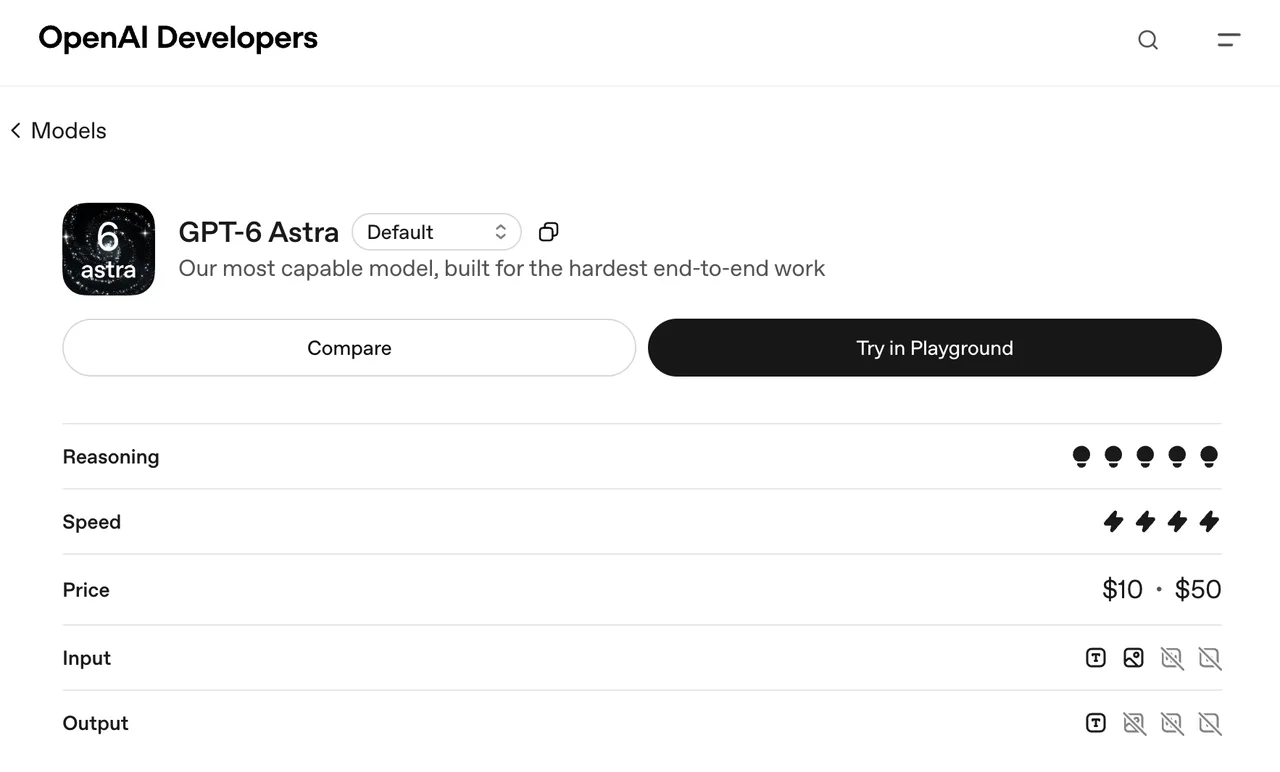
The current GPT-6 Astra documentation lists text and image input, a 1.05-million-token context window, and reasoning levels from low through max. That gives GPT-6 Astra standard enough range for many difficult tasks without routing every request into Pro.
A task being long does not make it a Pro task. Difficulty, failure cost, and review effort matter more than page count.
Astra Pro for Bounded High-Difficulty Tasks
Reserve GPT-6 Pro for tasks where standard Astra produced a specific, costly failure. Suitable candidates include cross-repository debugging, high-stakes document reconciliation, complex financial modeling, or research that requires several tools and repeated verification.
“Bounded” matters. Give Pro a clear artifact, acceptance test, time limit, and maximum number of attempts. Otherwise, an Astra Pro comparison turns into two impressive outputs and no usable routing evidence.
OpenAI’s Astra launch disclosure says GPT-6 Pro is available to eligible Pro, Business, and Enterprise users. Plus users receive standard Astra access. API access is separate: the public API model is gpt-6-astra, and OpenAI does not currently list a separate gpt-6-astra-pro model ID.
Compare Three Decision Factors
Access and Usage Limits
Access depends on the product surface, plan, seat, workspace settings, and rollout status. Enabling Astra in a ChatGPT workspace does not grant API access. API availability follows the organization and project attached to the API key.
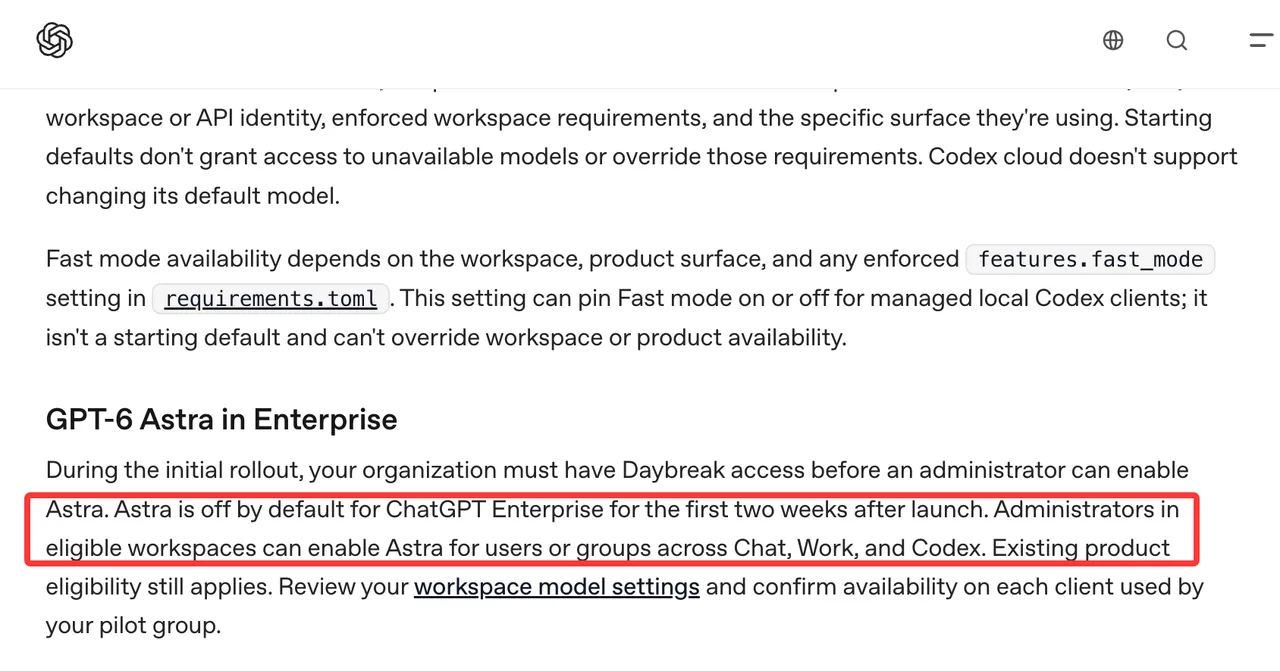
OpenAI’s workspace model guidance says eligible Enterprise administrators can enable Astra for users or groups in Chat, Work, and Codex. Astra is initially disabled for Enterprise during the first two launch weeks, with Daybreak access required during that rollout phase.
Treat published Astra usage limits as current estimates rather than fixed message counts. Limits can vary with workload, reasoning, plan, purchased credits, and active capacity.
| Factor | Standard Astra | GPT-6 Pro |
|---|---|---|
| Default route | Routine and moderately difficult work | Defined escalation cases |
| Eligibility | Plus, Pro, Business, Enterprise | Eligible Pro, Business, Enterprise |
| Public API identity | gpt-6-astra | No separate public model ID documented |
| Evaluation target | Completion and low review effort | Recovery from a documented standard failure |
Outcome Quality and Operator Time
Score the accepted result, not the most polished paragraph. For one Astra professional task, record factual errors, missing requirements, tool failures, reviewer corrections, and minutes spent reaching approval.
Suppose standard Astra completes a procurement memo in 12 minutes but needs 18 minutes of correction. Pro takes 25 minutes and needs three minutes of correction. Pro wins on operator time despite slower generation. Reverse those review numbers and standard wins.
Run repeated trials with identical source files and acceptance rules. Output variance can make one lucky result look like a tier difference.
Latency and Effective Task Cost
OpenAI has not published a universal latency multiplier for GPT-6 Pro relative to standard Astra. Do not invent one. Record time to first output, total completion time, pauses, retries, and human waiting time.
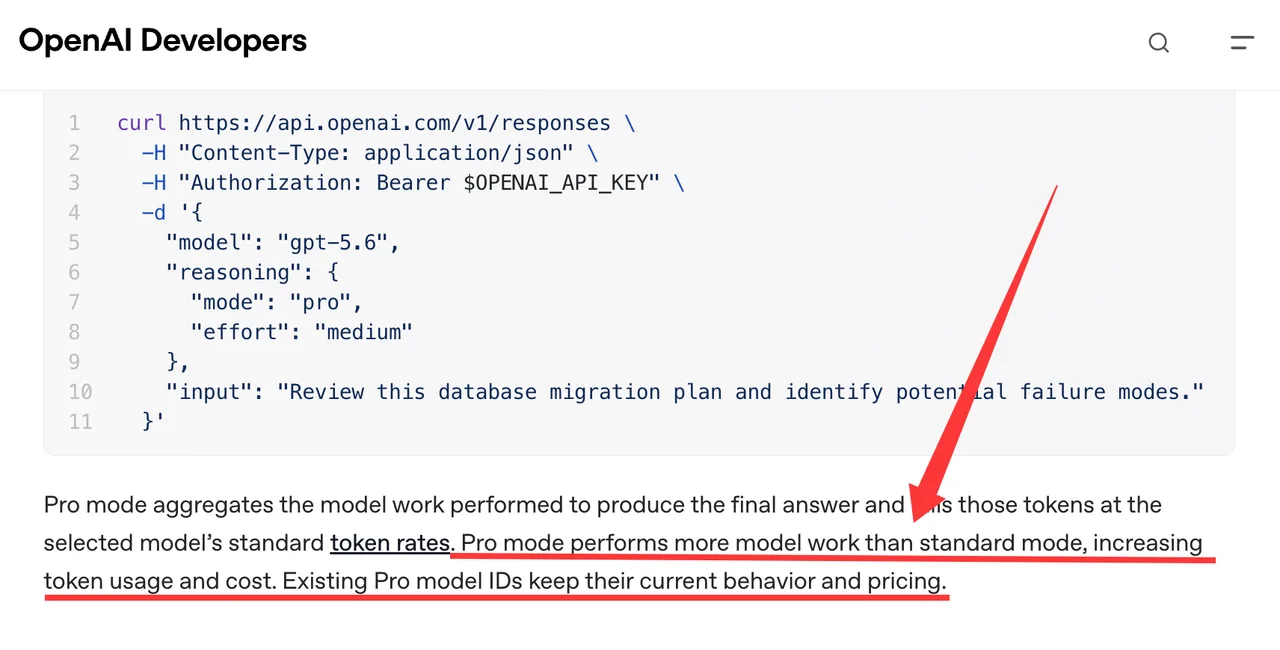
For API workloads, the reasoning documentation confirms that more model work raises token use and cost. ChatGPT plan allowances follow different accounting. A Pro subscription is not an API rate.
Use this calculation:
effective task cost = model usage + retry cost + operator minutes + delay cost
The cheapest request can still produce the most expensive accepted result. Annoying, but measurable.
Build a Two-Tier Routing Rule
Start on Standard Astra
Send every eligible task to standard Astra unless it matches a pre-approved exception. Attach a compact acceptance contract:
- Required files and tools
- Output schema
- Factual and calculation checks
- Maximum completion time
- Maximum reviewer interventions
- Conditions that count as failure
Store the model selection, reasoning setting, completion time, usage, tool events, and reviewer decision. Without those fields, later routing analysis becomes memory with a spreadsheet attached.
Escalate Only Defined Failures to Pro
Escalate once when standard Astra fails a rule that Pro could reasonably address. Examples include an unresolved contradiction, failed test suite, missing evidence, invalid calculation, or excessive reviewer repair.
Do not escalate timeouts caused by a broken tool, inaccessible file, or bad permission. More reasoning cannot open a file the system refused to provide.
Send Pro the original task, relevant execution evidence, and the failed acceptance rule. Avoid forwarding a long complaint about the first attempt. One fewer interpretation layer. Adds up fast.
Limits and Trade-Offs
Pro Is Not Automatically Better for Every Task
GPT-6 Pro may spend more time on a task that standard Astra already handles well. More analysis can also produce longer outputs and slower review. The useful question is whether Pro raises the accepted-result rate enough to reduce total operator work.
This comparison does not establish a universal quality gap. OpenAI has not published matched results for every workflow, tier, interface, and reasoning configuration.
Current Product Details Can Change
The boundary between OpenAI model tiers, plan eligibility, usage allowances, and workspace controls can change after launch. Record the verification date in the routing policy and recheck access before expanding a pilot.
FAQ
Can One Conversation Switch Between Astra Tiers?
OpenAI does not clearly guarantee same-conversation switching between standard Astra and GPT-6 Pro across every ChatGPT surface. Where the model picker permits a change, test whether prior context and tool state carry correctly. Use separate runs with frozen inputs for an auditable comparison.
Do Both Tiers Support the Same File Types?
No tier-specific file-format difference is publicly documented. The API model accepts text and image input, while ChatGPT file support depends on the product interface and enabled tools. Confirm each required format in the actual workspace.
Are Safety Policies Identical Across Both Tiers?
Both tiers remain subject to applicable OpenAI policies. OpenAI has not stated that every runtime safeguard behaves identically. GPT-6 Astra also includes asynchronous monitoring in supported Codex and Work environments, as described in the agent safety guidance.
Can Admins Restrict Pro Access by User Group?
Eligible Enterprise administrators can grant Astra access to users or groups. The public workspace documentation does not clearly confirm a separate group control specifically for GPT-6 Pro. Check the live model settings before designing a Pro-only group policy.
Do Both Tiers Retain the Same Conversation History?
Conversation retention follows workspace and product settings rather than a separately published model-tier policy. Files, hosted execution state, memories, and compliance logs may have different lifecycles. The Work security documentation describes those categories separately.
Conclusion
For GPT-6 Astra Pro vs Astra, route routine work to standard Astra and reserve Pro for named failures with measurable business cost. Compare accepted outcomes, operator minutes, and total delay. This is where my data ends: OpenAI has not published enough matched tier evidence to justify an unconditional Pro default.
Previous posts: