Open Video Models: How MiniMax H3 Changes AI Workflows
Open video models are entering multimodal workflows. See what MiniMax H3 offers through hosted APIs and which open-weight claims still need proof.
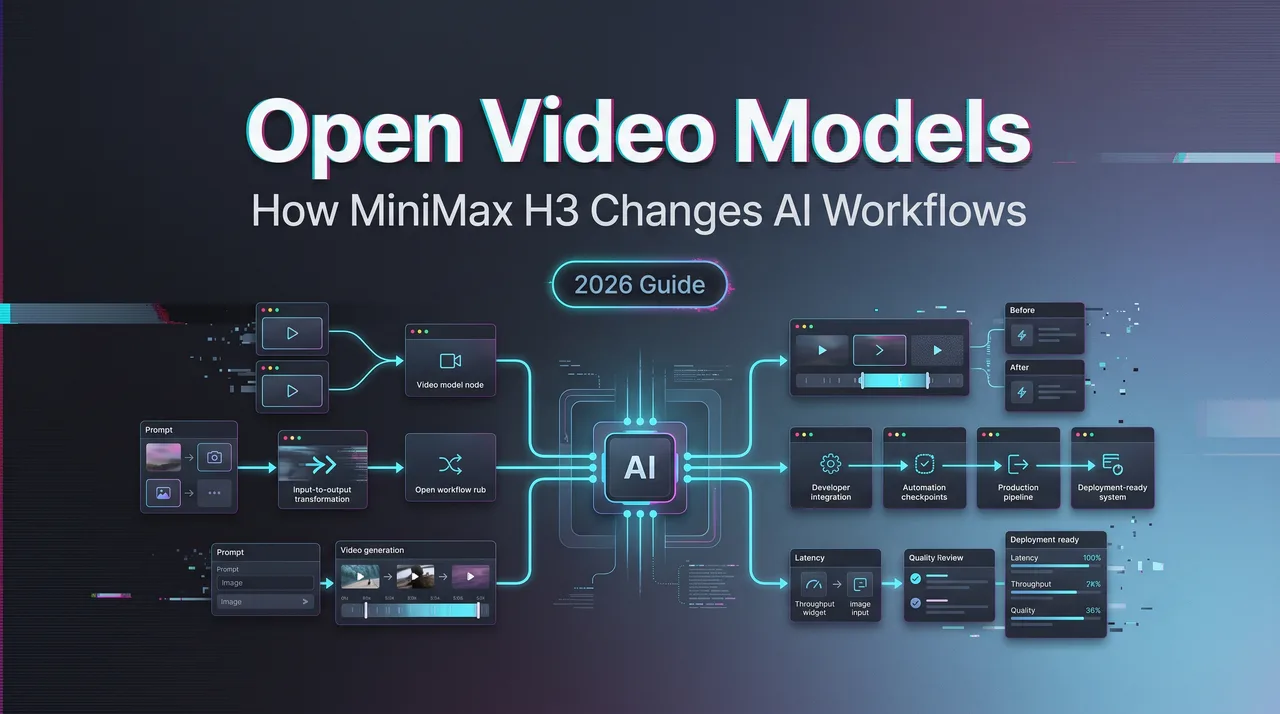
The sentence that matters is not “MiniMax H3 is available.” The sentence that matters is “available how?
For teams evaluating open video models, hosted access and open-weight access are different operational facts. MiniMax’s official video generation docs already show the API pattern for video generation: create an async task, poll status, then fetch the output file. That proves API access for MiniMax video generation. It does not, by itself, prove that H3 weight files are downloadable, licensed for self-hosting, or ready for a private inference stack.
That distinction is the whole article. Hosted video API is a product surface. Open weights are an infrastructure commitment.
Why MiniMax H3 Matters to Open Video Models
A multimodal video model that accepts text, image, video, and audio context
MiniMax H3 matters because it moves the video workflow away from one-input generation.
A basic text-to-video model starts from a prompt. Useful, but blunt. A stronger production workflow usually needs more context: a reference image, a brand frame, a character sheet, a previous clip, a sound cue, or a timing reference.
That is where H3 becomes interesting for AI product teams. If a model can take text, image, video, and audio context, the workflow changes from “generate a clip” to “control a scene.” The difference is not academic. It affects previsualization, ad variants, recurring characters, product motion, and style continuity.
For an open multimodal video model, the question is whether that context control can move beyond a hosted endpoint into private or managed inference.
Why “open model” can describe different levels of practical access
“Open” is a slippery word. I do not love that. It creates procurement meetings.
An open model can mean an API is broadly available. It can mean model weights are downloadable. It can mean the license allows commercial use. It can mean the architecture paper is public. It can mean the inference code is open but the weights are not.
Those are not interchangeable.
For H3, the practical access checklist needs four columns:
| Access layer | What it proves | What it does not prove |
|---|---|---|
| Hosted API | Builders can call the model | Weights are downloadable |
| Managed inference | A provider runs the model for you | License allows redistribution |
| Open weights | Teams can inspect and deploy files | Runtime is production-ready |
| Open license | Commercial boundaries are stated | Hardware cost is acceptable |
This is where teams need to slow down. The word open is not the decision. The access package is.
Separate Hosted API Access From Open-Weight Availability
What builders can use through WaveSpeedAI and MiniMax APIs now
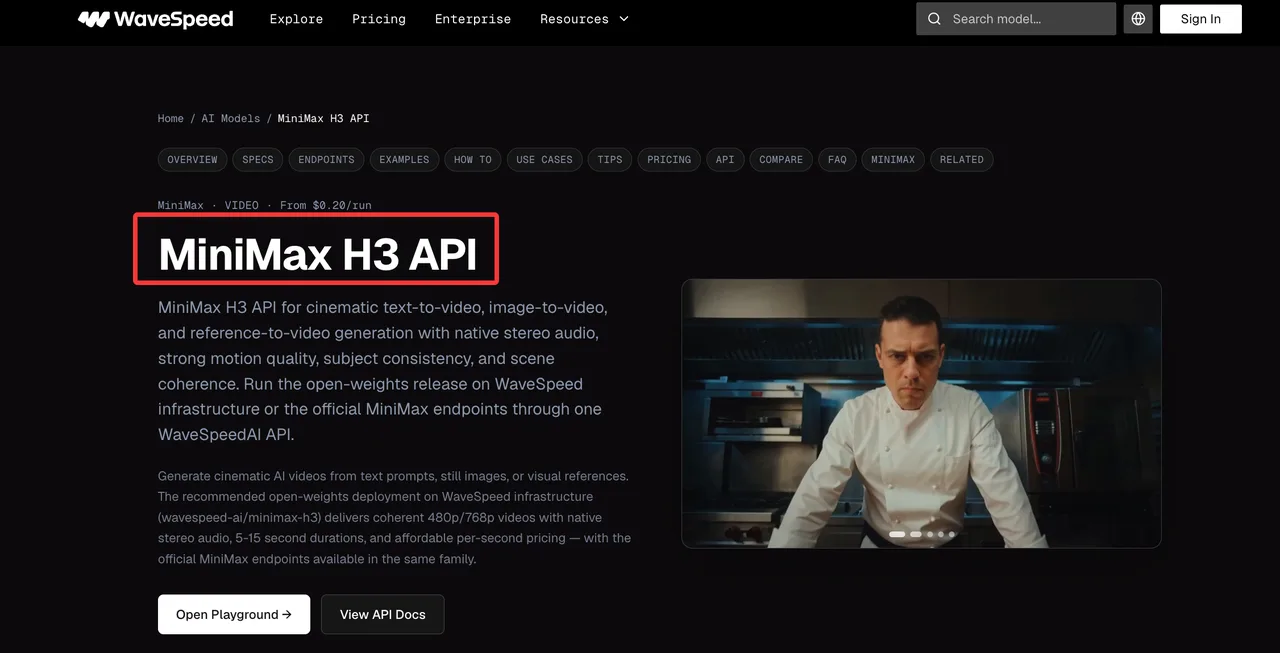
WaveSpeedAI lists MiniMax H3 as a hosted REST API with text-to-video, image-to-video, and reference-to-video routes on its MiniMax H3 API page. That is useful for builders who want to test H3-like workflows without building video inference infrastructure first.
MiniMax’s own API documentation currently describes video generation as an async platform workflow. The MiniMax API release notes also show how video models are added to the API platform over time, with model names, supported modes, duration, and resolution details tied to release dates.
That gives teams a starting point for hosted evaluation.
It does not answer the self-hosting question.
What still requires weight files, formats, license terms, and runtime support
To call H3 open-weight in a production planning doc, I would require specific evidence:
- official weight download location
- model file format
- parameter or active-parameter scale
- license text
- commercial-use terms
- redistribution terms
- runtime instructions
- supported inference frameworks
- minimum and recommended hardware
- known quality or latency tradeoffs
Without those, “self-hosted H3” stays in the pending column.
This is not nitpicking. If a team builds a roadmap around self-hosting and later discovers that the license, file format, or hardware profile does not work, the cost is not just technical. It becomes customer commitments, procurement cleanup, and awkward release notes.
Found the pattern on the third try: the missing sentence is usually the expensive one.
What Verifiable Open Weights Could Change
Inference optimization, customization, fine-tuning, and data control
If H3 weights become officially downloadable with clear licensing, the workflow changes.
Teams could test lower-level inference optimization instead of only API-level latency. They could measure batching, quantization, GPU memory, cold start, queueing, and per-clip throughput inside their own infrastructure. A self-hosted video AI path could also support stronger data-control requirements for sensitive media workflows.
Customization is the other reason teams care. Some video pipelines need house style, repeated characters, controlled product geometry, or industry-specific motion patterns. Hosted APIs can handle part of that through references and prompts. Fine-tuning or adapter-style customization, if officially supported, would change the ceiling.
But that is conditional. “Open weights” does not automatically mean fine-tuning is supported, cheap, or legally allowed.
New roles for model hosts, inference frameworks, and aggregation platforms
Open weights do not remove the need for hosted infrastructure. They change what infrastructure does.
A model host may become the fastest way to try the model. An inference framework may become the place where cost and latency are tuned. An aggregation platform may become the routing layer across hosted, managed, and self-hosted paths.
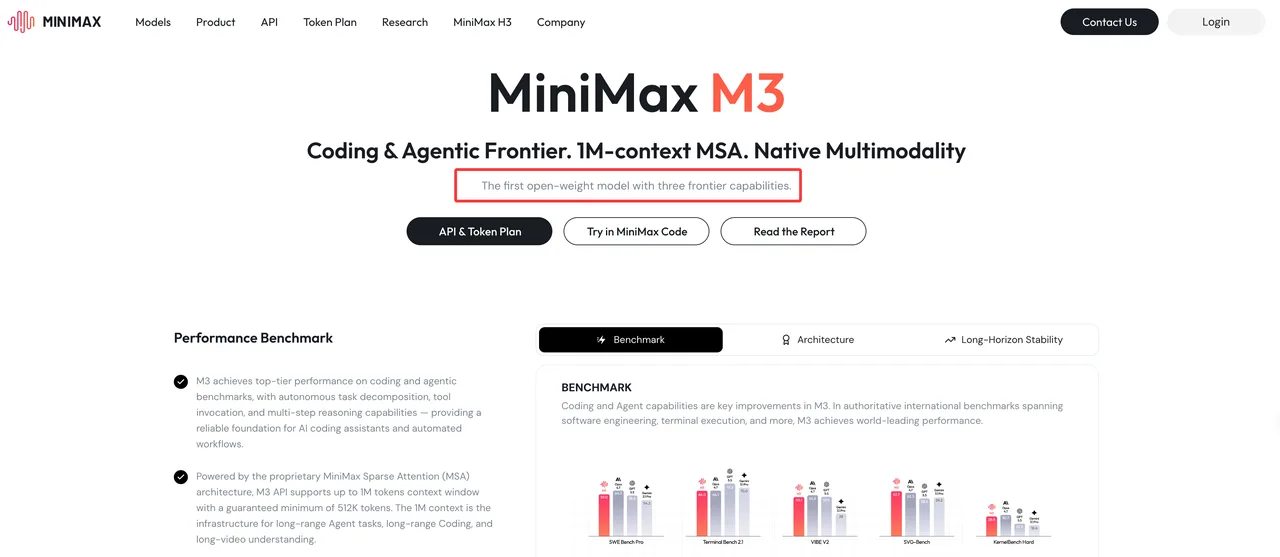
MiniMax already has a public open-weight precedent with M3. Its official MiniMax M3 page describes M3 as an open-weight model and points toward open-source and local deployment. That precedent matters as context. It does not prove H3 has the same release package.
This is where my data ends.
Choose a Video Deployment Path
Hosted API, managed inference, self-hosting, and hybrid routing
I would compare four paths.
Hosted API is the fastest evaluation route. It works when the team needs product validation, prompt testing, and workflow integration before infrastructure work.
Managed inference sits between API and self-hosting. The team may get more control over region, scaling, or private deployment while avoiding full runtime ownership.
Self-hosting gives maximum control, if weights, license, hardware, and runtime support are real. It also moves maintenance onto the team.
Hybrid routing is often the least dramatic answer. Use hosted API for new campaigns, burst traffic, or fallback. Use self-hosting for stable high-volume workloads after the economics and license pass review.
Control, latency, cost, maintenance, and operational responsibility
The deployment decision should not start with ideology. Start with responsibility.
| Path | Control | Main burden |
|---|---|---|
| Hosted video API | Lowest | Provider dependency, policy changes, cost monitoring |
| Managed inference | Medium | Contract clarity, region, scaling assumptions |
| Self-hosted inference | Highest | GPUs, runtime, upgrades, reliability, license review |
| Hybrid routing | Mixed | Routing logic, QA drift, duplicate observability |
The hard part is not getting one clip to render. The hard part is keeping quality, latency, and cost inside bounds for week two and month three.
Good infrastructure makes you forget it is there. Video inference infrastructure rarely starts that way.
Evidence Gaps and Production Risks
Download availability, model size, hardware, benchmark, and runtime evidence
For H3, treat each missing item as a risk until confirmed.
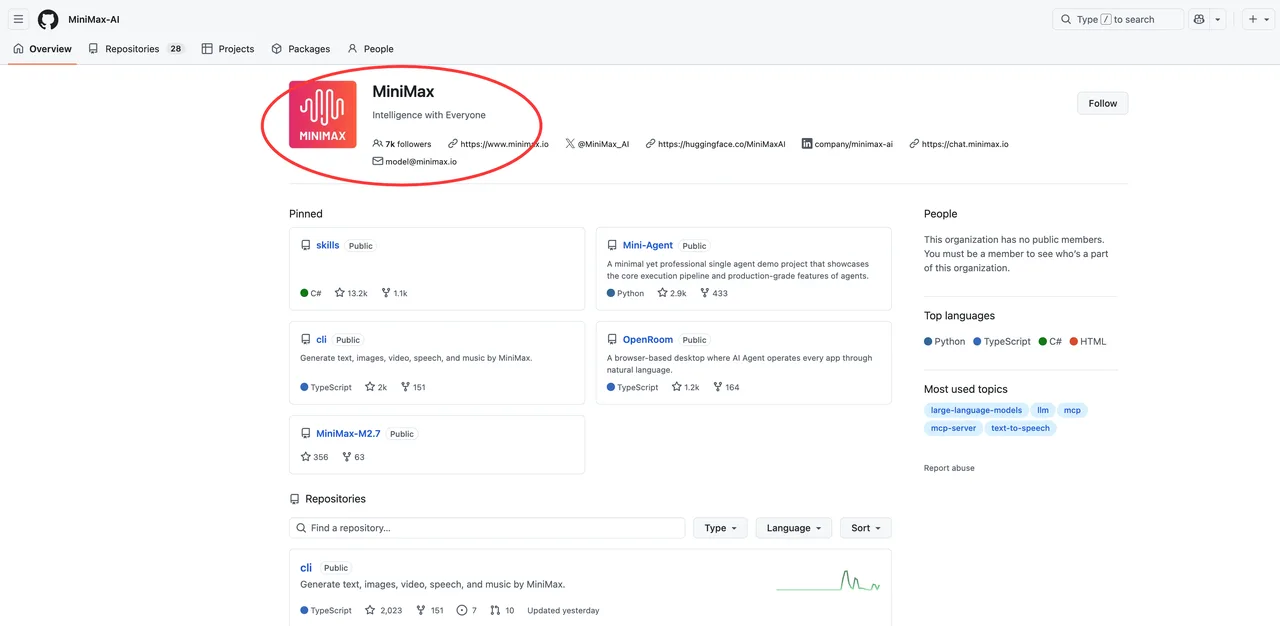
Download availability matters first. The official MiniMax GitHub organization and MiniMax-linked Hugging Face presence are the places I would check before calling any weight package official. A third-party page saying “open weights” is not enough.
Model size matters because video models are operationally heavy. Hardware matters because a model that technically runs may still be too slow or expensive for production. Runtime support matters because vLLM, ComfyUI, custom CUDA kernels, diffusion runtimes, and video pipelines each imply different teams and different failure modes.
Benchmark evidence needs the same caution. A leaderboard result does not replace an internal workload test. For video, the team should test prompt adherence, temporal consistency, subject stability, motion realism, audio sync if used, retry rate, and accepted-output cost.
License, commercial-use, redistribution, and customer-notice boundaries
This article is not legal advice.
License review needs the current MiniMax and deployment-provider terms. Commercial use, fine-tuning, model redistribution, generated-content rights, customer data handling, and safety obligations should be reviewed by legal or compliance before a self-hosted pilot becomes a product commitment.
Customer notice is easy to forget. It should not be.
If the inference path changes from hosted API to self-hosted, or from self-hosted to hosted fallback, customers may need updated documentation. That depends on contract language, data-processing terms, region, retention, and whether the output pipeline materially changes.
FAQ
Who should approve the first self-hosted H3 pilot?
Platform engineering should approve the infrastructure plan. Security should approve data handling. Legal or compliance should approve license interpretation. Product should approve the workload and customer impact. No single team should approve all of it.
How should teams record a later license interpretation change?
Keep a dated license memo, the exact source text reviewed, the reviewer, the affected deployment paths, and the decision taken. If the interpretation changes, archive the old memo instead of replacing it silently.
Who owns customer communication after an inference-path change?
Product owns the customer-facing message. Legal owns required disclosure language. Platform owns the technical facts: path, region, retention, fallback, and operational impact. Support needs the final version before customers ask.
Conclusion
MiniMax H3 could matter a lot for open video models, but the useful question is not whether the word open appears near the model. The useful question is what access is actually available.
Hosted API access is already a practical route for testing H3 workflows. Open-weight deployment needs separate proof: official files, license, format, runtime, hardware, and commercial-use boundaries.
Run the hosted workflow if the product question is urgent. Wait for verifiable weight and license evidence before promising self-hosted video AI. That is slower. It is also how teams avoid building on a label.
Previous posts:
Related Articles

Best AI Video Platforms for Production Teams in 2027

Best Sora 2 Alternatives for Video Teams in 2027

Lanta AI Review 2027: Best Uses, Pricing, and Limits
Sora 2 Review 2027: API Quality, Cost, and Limits

Build a GPT-6 Astra 3D Workflow With Blender Assets