
Is Wan 3.0 Open Source? Weights and Local Status
Is Wan 3.0 open source? Check official weights, repositories, licensing, and local deployment status before planning a self-hosted workflow.
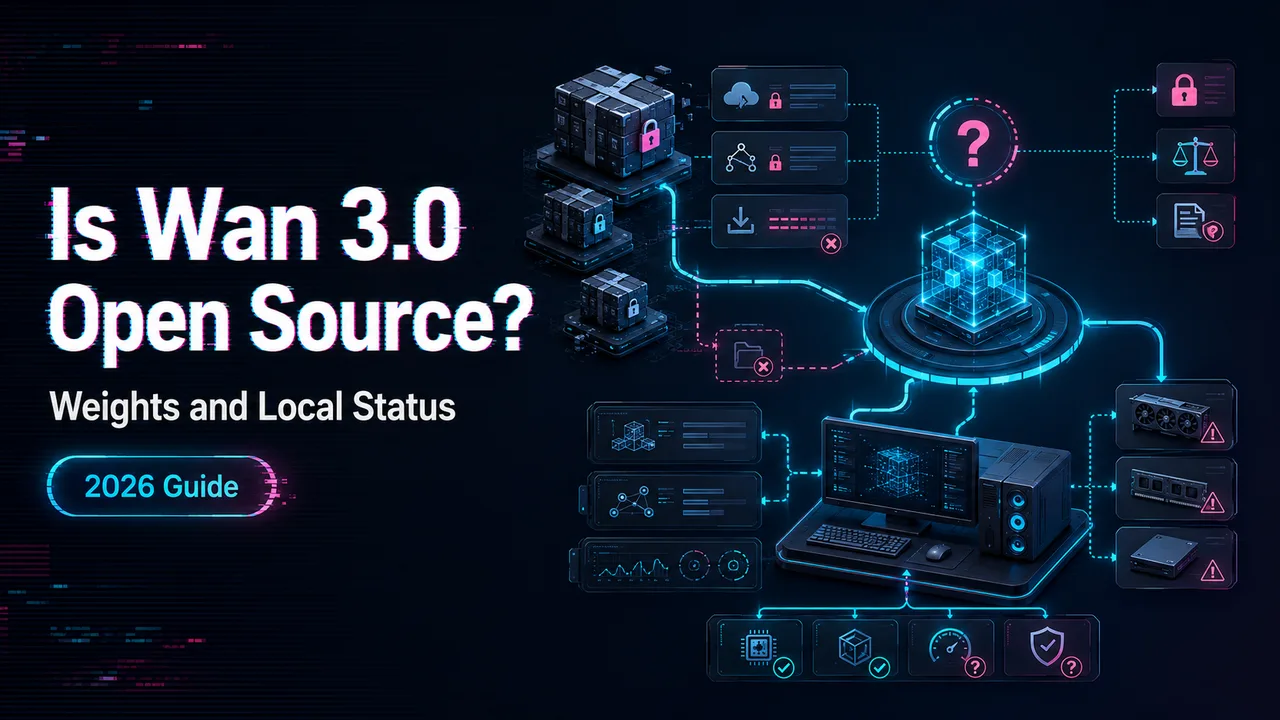
A Wan 3.0 deployment review should not start with the demo. It should start with one question: can your team run the weights, or only call an endpoint?
That is where Wan 3.0 open source gets messy.
It’s John. I found hosted Wan 3.0 access, but not official open Wan 3.0 weights. This article checks Alibaba Cloud, Wan-Video GitHub, Wan-AI Hugging Face, and WaveSpeed’s model directory so builders can decide whether to self-host, use hosted API access, or stay with earlier open Wan models.
The Current Wan 3.0 Open-Source Status
Hosted access is not an open-weight release
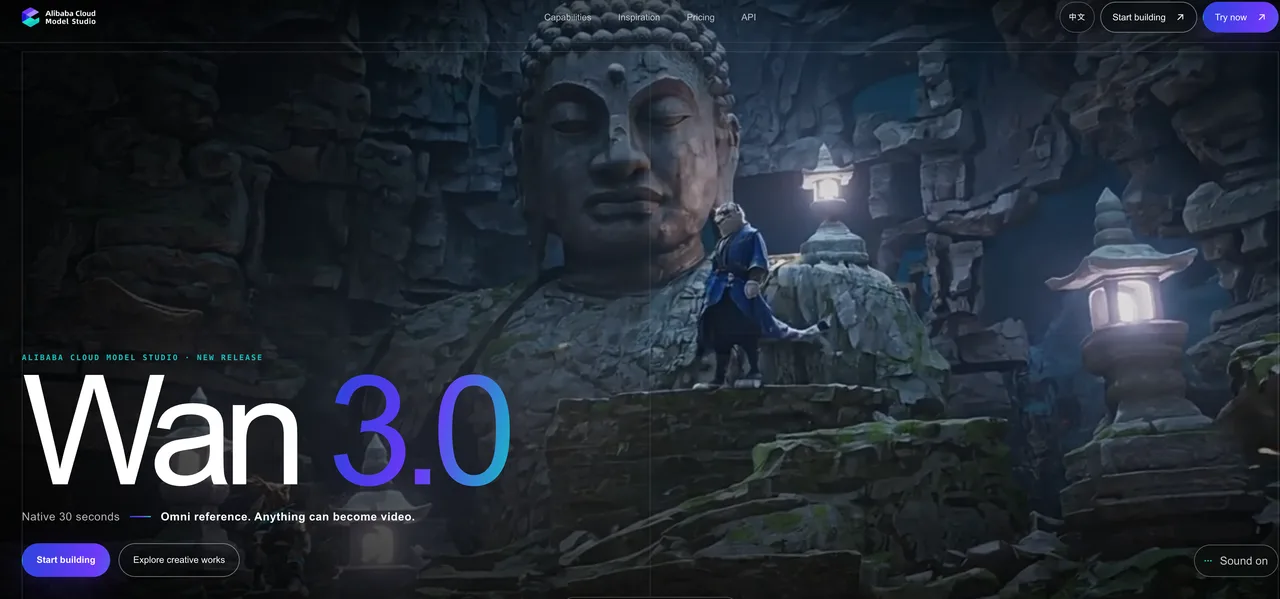
The Alibaba Cloud Model Studio release presents Wan 3.0 as a 30-second video model with API preview access. That is real access, but it is not the same as a downloadable checkpoint.
For builders asking is Wan 3.0 open source, the working answer is: no official evidence yet. A hosted API can expose text-to-video, image-to-video, reference-to-video, audio controls, seed fields, and pricing. None of those prove Wan3 is open-weight.
This cannot be judged by feeling. It needs an artifact check.
The evidence required for an official release
For Wan 3.0 to count as open-weight in a production review, I would want to see four things in official channels:
| Required artifact | Why it matters |
|---|---|
| Official model card | Confirms model identity, intended use, limits, and provider |
| Checkpoint files | Makes local inference possible |
| Inference code or supported runtime | Shows how to run the model outside hosted APIs |
| License text | Defines commercial use, modification, redistribution, and restrictions |
Without that set, “open source” is only a claim. It may be a wrapper, a mirror, a ComfyUI node, or a hosted endpoint with a friendly SDK. Useful, maybe. Evidence, no.
Check the Official Release Channels
Wan-Video on GitHub and Wan-AI on Hugging Face
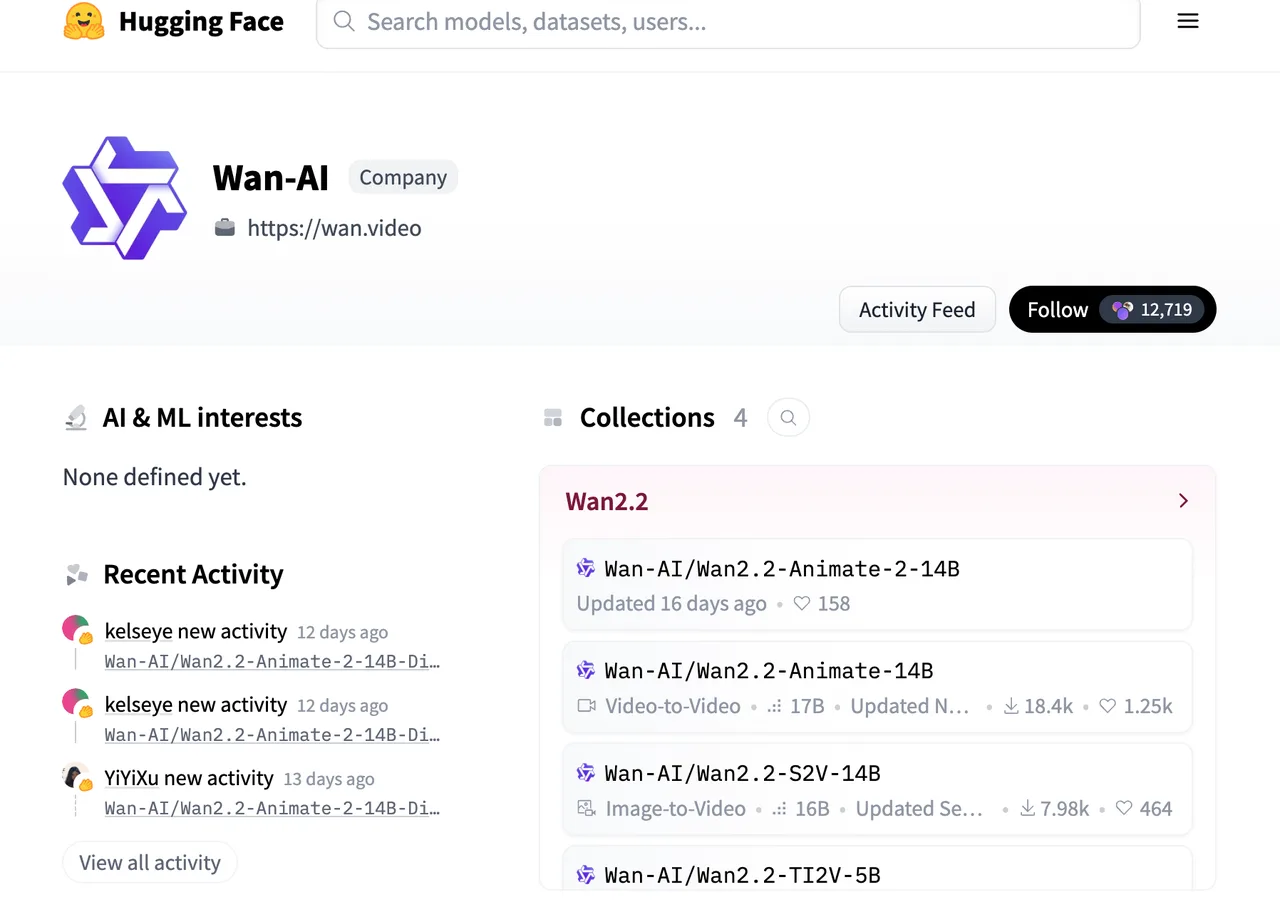
The official Wan-Video GitHub organization showed public repositories for Wan2.2, Wan2.1, Wan-Dancer, Wan-Animate-2, Wan-skills, and a diffusers fork when checked. I did not find a Wan 3.0 repository there.
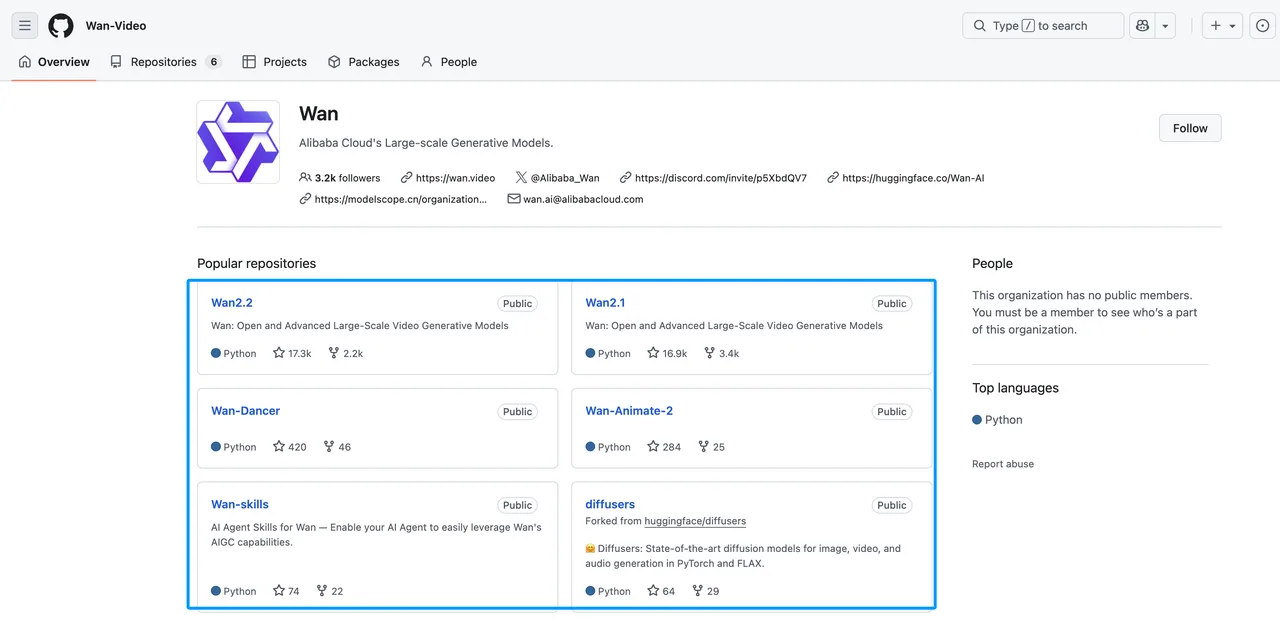
The official Wan-AI Hugging Face organization showed Wan2.2-related models, Wan-Dancer, and other prior Wan assets. I did not find a Wan 3.0 model card or checkpoint listing there.
That is the core local status. You cannot run Wan 3.0 locally from an official open checkpoint if the official checkpoint is not published.
Model cards, checkpoints, inference code, and licenses
The Wan3.0 API reference documents describe hosted API behavior: model name Wan3.0-video, async task flow, Beijing, Singapore, and US endpoints, 2-30 second duration, 480P/720P/1080P output, media references, seed, watermark, and audio parameters.
Good API documentation helps with a hosted integration. It does not explain how to install Wan 3.0 locally.
For local work, the license is not a footnote. It decides whether your team can redistribute a modified wrapper, fine-tune, package inside a product, or run commercial workloads. Do not copy Wan 2.2’s Apache 2.0 status onto Wan 3.0. That is how a deployment note becomes a legal problem.
Choose an Access Route Today
Hosted API access through Alibaba and WaveSpeed
If the task is “use Wan 3.0 now,” the access route is hosted. Alibaba Cloud exposes Wan 3.0 through Model Studio preview, subject to account, region, approval, and provider controls.
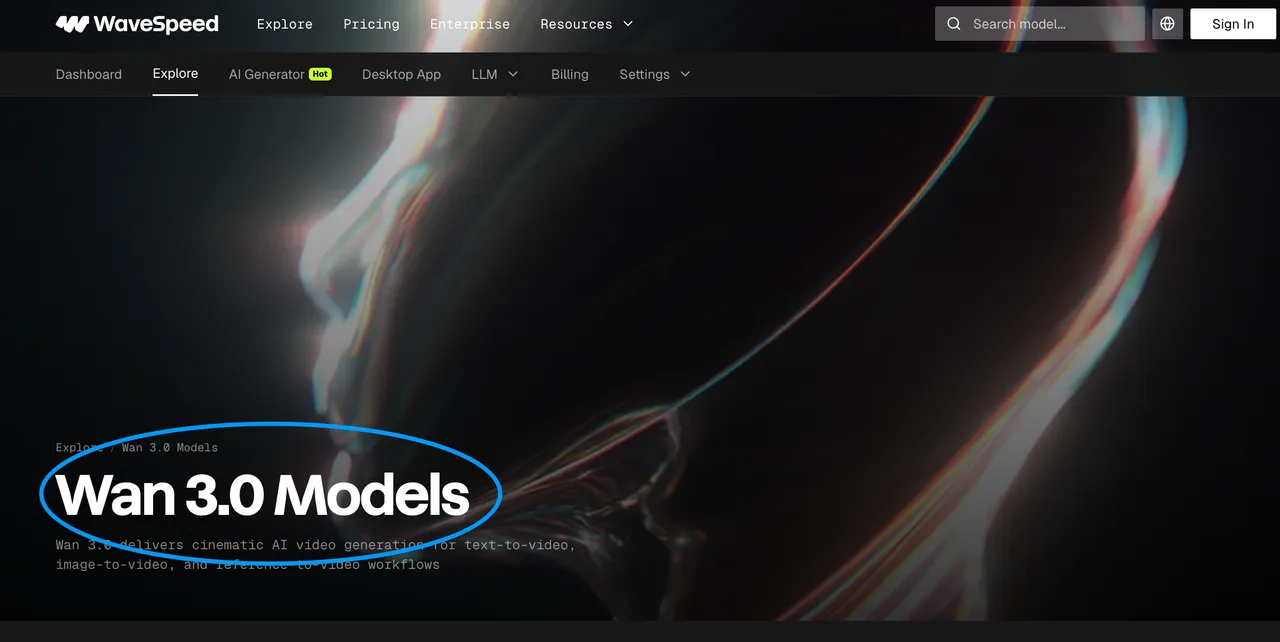
WaveSpeed also lists current Wan 3.0 options in its WaveSpeed Wan 3.0 collection, including text-to-video, image-to-video, reference-to-video, and Prime variants. This supports the statement “Wan 3.0 is callable on WaveSpeed.” It does not support the statement “WaveSpeed provides open Wan 3.0 weights.”
For an AI builder, this route is useful when the goal is product testing, customer demos, workflow comparison, or a temporary hosted integration. It is the wrong evidence if your architecture review requires self-hosting.
Open Wan models for local deployment
If the task is local deployment today, use an open Wan version that actually has official artifacts. Wan2.1 and Wan2.2 are the practical candidates because their official GitHub and Hugging Face channels expose public assets.
That path gives you the local controls hosted APIs usually hide: runtime environment, GPU sizing, queue behavior, quantization experiments, container policy, and internal data routing. It also gives you more operational work. Local video models do not install themselves politely. You need hardware planning, dependency pinning, storage, monitoring, and rollback.
A good single output does not mean the production workflow is ready.
Verify Future Download Claims
Distinguish API wrappers from model releases
A page that says “Wan 3.0 API” is not a model release. A Python package that calls a hosted endpoint is not a checkpoint. A ComfyUI node can be useful while still depending on remote inference. A Hugging Face Space can run a demo without publishing weights.
Use this simple check:
| Claim | What to verify |
|---|---|
| “Wan 3.0 GitHub is live” | Is it under the official Wan-Video org? |
| “Wan 3.0 Hugging Face weights are available” | Is it under Wan-AI with files and a license? |
| “Local install works” | Does it download official checkpoints, not just call an API? |
| “Apache 2.0” | Does the Wan 3.0 artifact itself carry that license? |
Third-party repos can help engineering. They should not become release evidence.
Recheck every artifact before local deployment
When a future Wan 3.0 package appears, do not stop at the README. Record:
- Repository owner and URL
- Commit hash or release tag
- Checkpoint filename and checksum
- Model card revision
- License file
- Runtime versions
- Hardware used
- Sample prompts and outputs
- Failure cases
- Rollback model
One person can remember parameters. A team cannot.
Limits and Trade-Offs
Hosted access limits model customization
Hosted access is faster to test. It also limits what you can change. You usually cannot inspect weights, tune runtime kernels, patch sampling behavior, control every queue decision, or guarantee that provider-side model updates never affect output.
For many teams, that is acceptable. If your product only needs a video generation endpoint, hosted API access may be the better route. If your product requires strict reproducibility, private infrastructure, or deep model customization, hosted Wan 3.0 is not a replacement for open weights.
A future open release is not guaranteed
Wan has open releases in earlier versions, but that history is not a promise. A future Wan 3.0 release may arrive. It may also remain hosted, delayed, limited, or released under a different license. The only safe statement is the one the official artifacts support on the day you publish.
That is the production-floor rule: write down what exists, not what would be convenient.
FAQ
Can hosted Wan 3.0 outputs be used commercially?
Possibly, but not because of open-source status. Commercial use depends on the terms of the hosted provider, your account contract, the model provider’s rules, input rights, and output policy. Treat Alibaba-hosted and WaveSpeed-hosted usage as separate checks. Do not assume a general Wan license covers hosted Wan 3.0 outputs.
Does WaveSpeed expose deterministic seed controls for Wan 3.0?
WaveSpeed’s current Wan 3.0 model page lists a seed parameter. I would treat it as a reproducibility control, not a permanent determinism guarantee. For production, log endpoint name, seed, duration, resolution, reference files, prompt, date, and returned metadata. If the provider updates the backend model, the same seed may not be enough.
Can Wan 3.0 requests run inside a private VPC?
The public evidence I checked does not prove private VPC deployment for Wan 3.0. Hosted APIs can sometimes support enterprise networking through separate agreements, but that is not the same as a public model feature. Ask the provider for written confirmation before putting it into an architecture plan.
How are Wan 3.0 input assets deleted after hosted generation?
The public API docs describe task IDs, polling, and temporary result links, but they do not fully answer every input asset retention question. For sensitive media, require a provider retention statement, deletion process, audit trail, and data processing terms before pilot use.
Can prompt and generation metadata move between providers?
Not cleanly. You can move the prompt, references, seed, duration, aspect ratio, and resolution into your own run log. Provider-specific IDs, history pages, billing records, safety settings, and hidden defaults usually do not migrate. Keep your own metadata ledger if you expect to compare Alibaba, WaveSpeed, and local Wan runs later.
Conclusion
The current Wan 3.0 open source answer is simple but important: Wan 3.0 is available through hosted routes, but I did not verify official open weights on Wan-Video GitHub or Wan-AI Hugging Face as of August 25, 2026. If you need Wan 3.0 now, use hosted access and log the workflow carefully. If you need self-hosting now, stay with an officially open Wan version until a real Wan 3.0 model card, checkpoint, inference path, and license appear.
Previous posts:
/filters:quality(82)/media/images/c347367a-a007-4466-b8f7-d37f5fb52819.webp)
/filters:quality(82)/media/images/cd4db796-7728-45fb-8267-6813ed28e173.webp)
/filters:quality(82)/media/images/1791535252286714222_v4jvJT2a.webp)
/filters:quality(82)/media/images/1791451065663755033_qNqAKS1a.webp)
/filters:quality(82)/media/images/1791359984291066138_tW5eOX6f.webp)
/filters:quality(82)/media/images/1773962750383987480_n3hqzHRZ.webp)