AI Video API Comparison: Speed, Cost, Reliability
AI video API comparison for builders evaluating speed, cost, reliability, queue behavior, and fallback strategy.
Hey, guys. I’m Dora. I stopped trusting demo clips the first time a batch of user-facing videos sat in a provider queue long enough for the campaign window to move. The clip quality was fine. The AI video API behavior was not. For product teams, that difference matters.
A video generation API is not just a model endpoint. It is a job system: submit request, wait, poll or receive a webhook, download output, store files, classify failures, retry only when retrying makes sense, and explain delays to customers when the queue gets heavy.
This article is not a pricing benchmark. That topic needs its own cost model. This one is about API reliability, latency, integration shape, and fallback decisions.
What Matters in an AI Video API
A good comparison starts with the boring parts. The boring parts break production.
When I evaluate a provider, I split the test into four buckets: job lifecycle, input support, output handling, and operations. Model quality comes after that. Not because quality is less important, but because a beautiful video that arrives too late is still late.
Most production video APIs follow an asynchronous pattern. WaveSpeedAI’s own prediction workflow is a typical example: submit a model request, receive a task identifier, then retrieve results later or use a webhook. Runway, fal, Replicate, Google, and others expose their own versions of this pattern.
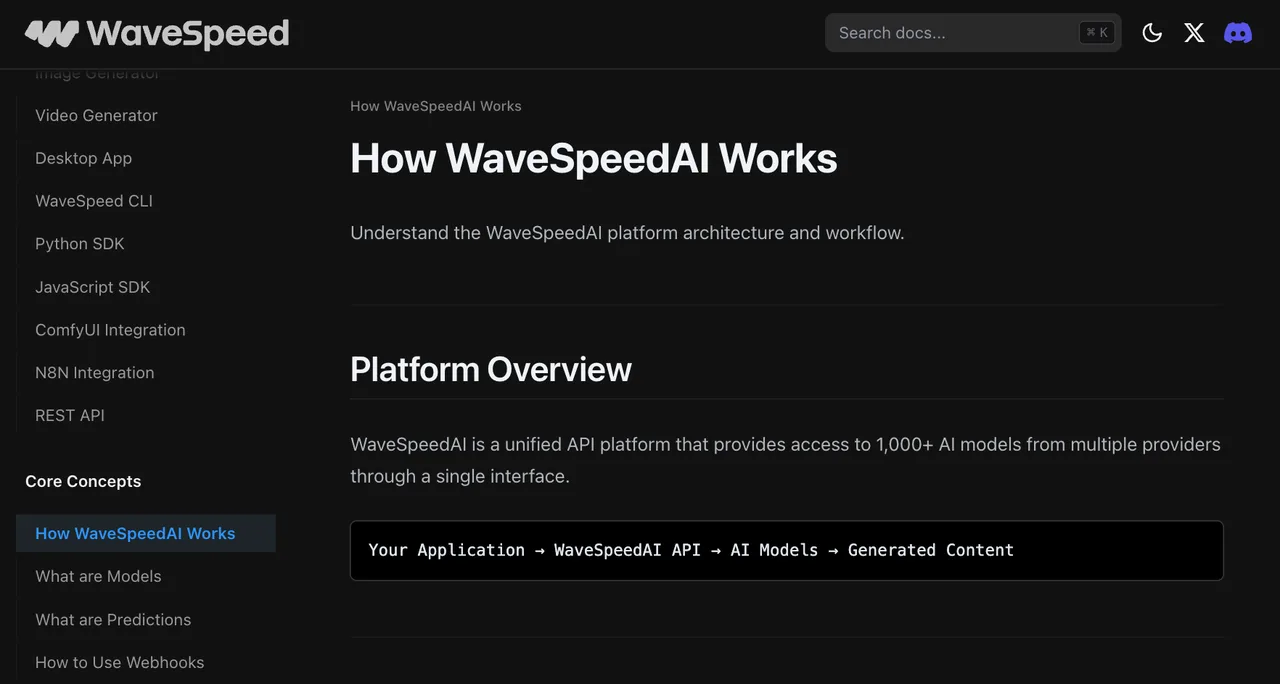
The names differ. Task ID. Prediction ID. Request ID. Operation object. Generation ID. Same family of problem.
Latency, queue time, throughput, and retry behavior
Latency has at least four parts.
- Submit latency is the time from your API request to provider acknowledgement.
- Queue time is how long the job waits before a runner starts.
- Generation time is the actual model work.
- Retrieval time covers polling, webhook delivery, output download, and storage.
Most teams only measure “request started” to “output available.” That hides the queue. For an AI video API comparison, I log these fields separately:
| Signal | What it tells you | Why it matters |
|---|---|---|
| Submit latency | API responsiveness | Detects networking or auth-side issues |
| Queue time | Capacity pressure | Shows whether jobs wait before generation |
| Generation time | Model execution duration | Helps compare workload difficulty |
| Time to first terminal state | User-visible wait | Drives product SLA and UX |
| Webhook delay | Event delivery lag | Affects async job completion logic |
| Retry count | Reliability and cost pressure | Shows whether failures are normal or rising |
| Accepted output rate | Usable completions | Better than raw success rate |
A provider can look fast in a single manual test and slow in a real workload. Queue time usually explains the gap.
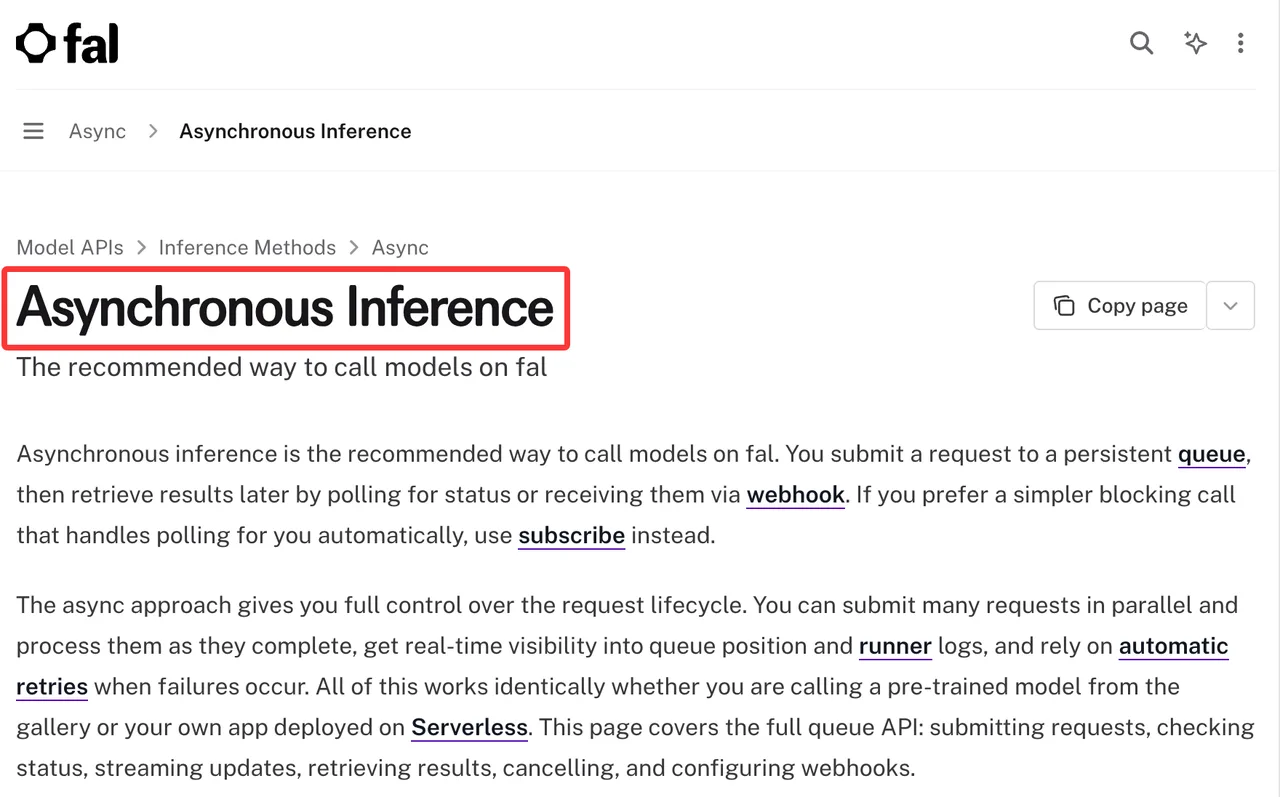
fal’s asynchronous inference docs make the queue explicit: requests move through queued, in-progress, and completed states, with queue position and logs available in the lifecycle. That kind of visibility is useful because it lets your application distinguish “not started yet” from “running slowly.”
Runway exposes another production signal: concurrency. Its usage tiers and limits describe how concurrent generations and daily generation limits affect task handling, including throttled tasks. That is not just account administration. It changes how you design queue control.
Retry behavior needs the same care. A 429, 502, 503, or 504 may be retryable. A malformed input is not. A moderation failure is not. A duplicate retry can create an extra paid job if the provider does not support idempotency or if your adapter fails to enforce it.
Found the pattern on the third try. Most “provider reliability” problems in my notes were actually retry-policy problems.
Input support, duration, resolution, and output handling
Input support decides which product flows are possible.
Text-to-video is the simplest route. Image-to-video adds input asset handling. Reference-to-video and video-to-video add more places to fail: file size, codec, aspect ratio, duration, public URL access, moderation, and expiry.
Runway’s API reference shows why field-level verification matters. Model choices, duration ranges, ratio values, prompt length, and route-specific fields vary by endpoint and model. One adapter cannot assume every video model accepts the same request shape.
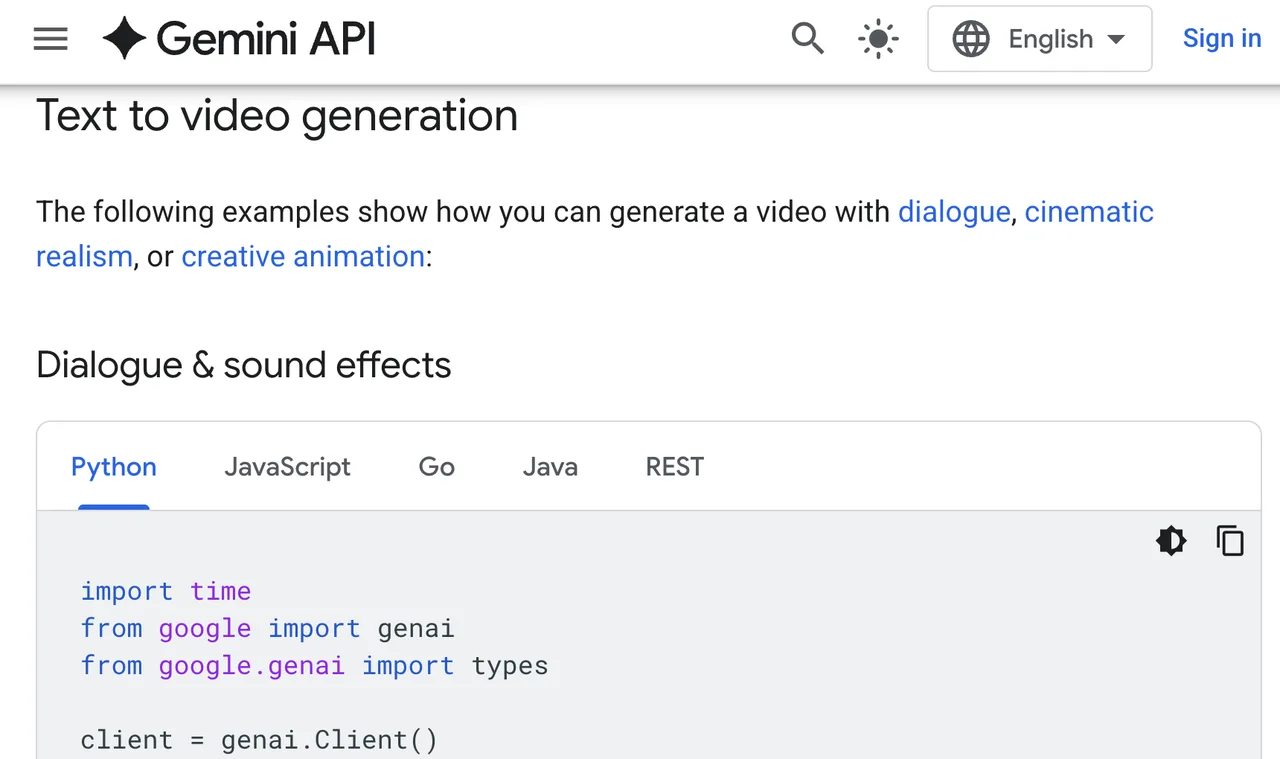
Google’s Veo documentation shows the long-running operation pattern from another angle: video generation returns an operation and the client polls until completion. That is a clean example of why video generation API work should not hold a normal web request open.
Output handling is where teams get sloppy.
Provider output URLs are often temporary. Runway’s output format docs state that API output URLs are ephemeral and should be downloaded into your own storage instead of exposed directly in the product. Replicate’s webhook docs also point out that API-created prediction files are deleted after a limited period, so teams need to persist outputs they care about.
This is the handoff I check in every integration:
- Provider output URL received
- File downloaded by backend
- File stored in durable object storage
- Content type and duration verified
- Internal asset ID attached to the user job
- Provider URL discarded or kept only for audit
- Failed download retried separately from failed generation
Do not let the frontend depend on provider CDN URLs. It works until it does not. Then support has to explain why the video existed yesterday.
Comparison Framework
A useful AI video API comparison does not crown one permanent winner. Video models change too fast for that. Provider capacity changes. Route availability changes. Safety systems change. Pricing changes. This conclusion has an expiration date, models update fast.
The better comparison asks: for this workload, under this traffic shape, with this acceptance rule, which integration fails least painfully?
Speed vs quality vs cost tradeoffs
Speed is not one metric.
For draft generation, speed means users can iterate without losing the thread. For final renders, speed means predictable delivery before a deadline. For API products, speed means the job lifecycle fits your own customer promise.
Quality is also not one metric. A product demo video cares about object stability and brand-safe framing. A social ad may care more about motion energy. A storyboard generator may accept lower polish if the model follows shot instructions. A user avatar workflow may reject outputs for identity drift that would be acceptable in a generic cinematic prompt.
Cost belongs in this article only as an operational signal, not as a full pricing model. The real unit is not “cost per generated clip.” It is cost per accepted output within a deadline.
That means rejected outputs count. Retries count. Moderator failures count if the provider charges for them. Repair time counts. Manual review counts. Queue delay counts when it causes a support ticket.
A simple scoring rule works better than a giant spreadsheet:
- Accepted on first run: full credit
- Accepted after retry: partial credit
- Accepted after manual repair: partial credit, with repair time logged
- Delivered after deadline: rejected for time-sensitive workflows
- Failed by policy, quota, timeout, or provider error: rejected with failure class
For quality tests, keep prompts fixed. Keep inputs fixed. Keep aspect ratio, duration, and output format fixed where the provider supports them. If one provider cannot support the same feature, mark it as unsupported. Do not fake parity.
I paused here because this is where many comparison posts go wrong. They compare a fast draft route against a slow high-quality route, then call it a speed result. That tells you nothing.
Reliability, provider status, quota, and SLA expectations
Reliability has three layers: documented behavior, observed behavior, and contractual promise. Documented behavior is what the API says it will do.
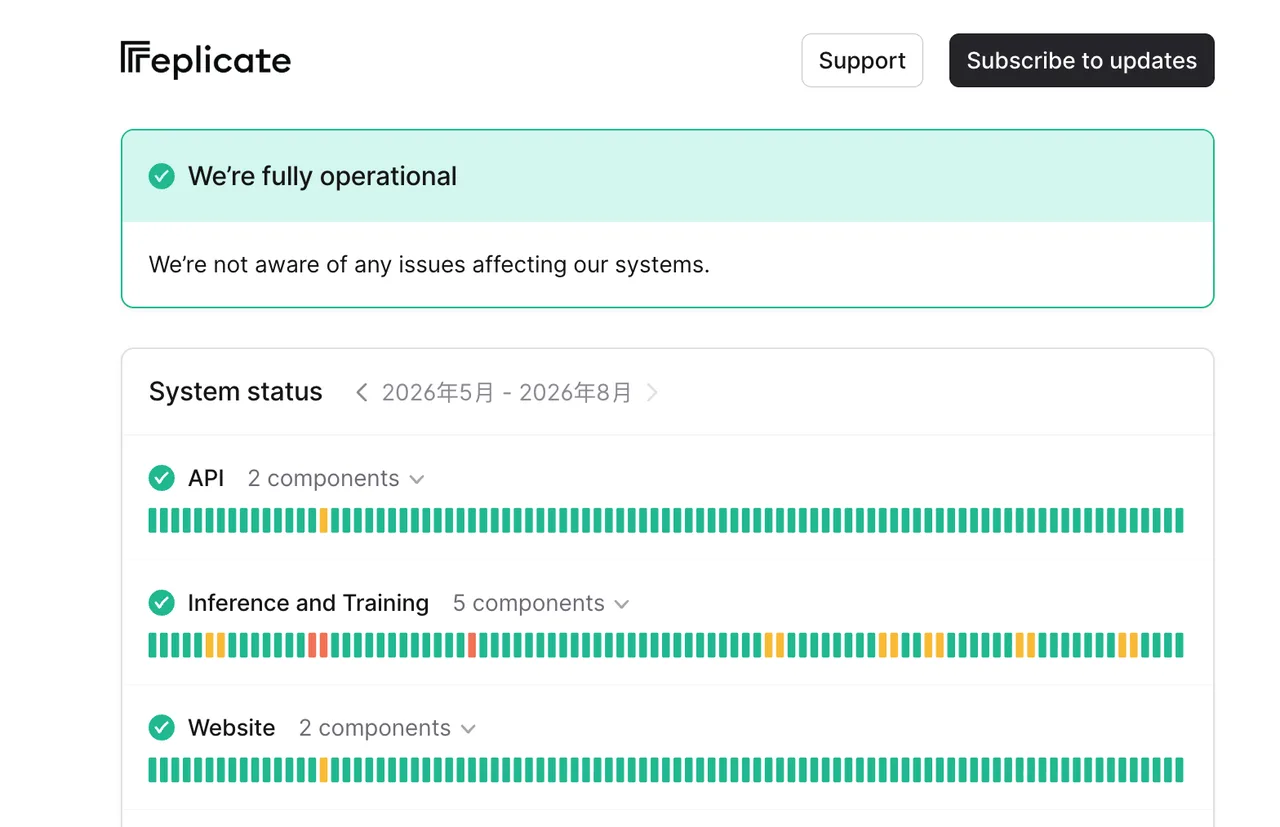
Observed behavior is what your own logs show under your traffic. A provider status page may say operational while your specific model route is slow. That is not necessarily contradiction. Shared systems can be healthy while one model, region, queue, or account tier is constrained.
Contractual promise is the commercial layer: SLA, support response, enterprise quota, guaranteed capacity, or custom concurrency. Many teams assume this exists because the product feels mature. Then an incident happens, and procurement asks where the SLA is. Awkward meeting. Avoidable.
Provider status pages still matter. Replicate’s status page separates API, inference and training, official models, and other components. fal’s status page exposes component status and incident history. Those pages do not replace your logs, but they help incident review.
For quota, treat provider limits as product constraints. If your app promises 500 videos in a launch hour and the account only supports a small number of concurrent generations, the problem is not “the provider is slow.” The problem is your product promise ignored the API contract.
The reliability checklist I use is short:
- Does the provider expose distinct pending, queued, running, completed, failed, canceled, and throttled states?
- Can the application cancel a job?
- Are retries automatic, manual, or both?
- Does the provider return machine-readable error codes?
- Are moderation failures distinguishable from infrastructure failures?
- Are output URLs temporary, authenticated, or public?
- Can webhooks be verified?
- Does the provider publish status by component?
- Are account limits visible before launch?
- Is there a written SLA for the tier being used?
If the answer is “we think so,” mark it unverified. I don’t know. Better than making something up.
Integration Strategy
The integration decision is not single provider versus many providers in the abstract. It is about how much operational control your product needs.
A creative tool with low volume may start with one provider. An ad automation product with customer deadlines may need routing. A media platform that supports many styles, durations, and inputs may need multiple providers from day one.
Both paths have real costs.
Single provider vs multi-provider routing
A single-provider integration is easier to build. One auth model. One request schema. One status lifecycle. One billing relationship. One support channel. Debugging is cleaner.
The downside is concentration risk. If the provider queue backs up, your product backs up. If the model changes behavior, your output changes. If a route is suspended, your feature may disappear until the route returns.
Multi-provider routing gives you more control, but it creates adapter work. Every provider has different identifiers, status values, retry rules, output formats, input limits, content policies, and quota behavior. The routing layer has to preserve those differences instead of flattening them into mush.
A practical router stores provider-specific records under one application-level job:
app_video_job_id
provider
provider_model_id
provider_task_id
request_schema_version
input_asset_ids
routing_reason
status
queue_started_at
generation_started_at
completed_at
failure_class
output_asset_id
retry_parent_job_id
That record matters when a customer asks what happened. “The video failed” is not enough. Was it a provider error? A moderation block? A timeout? A queue delay? A failed output download? Same customer impact. Different owner.
The adapter should normalize only what your app needs: lifecycle state, output asset references, usage evidence, error class, and retry eligibility. Keep raw provider payloads for audit. They are annoying until you need them. Then they are evidence.
Model fallback should be route-aware. Fallback works when two providers can satisfy the same job contract. Same input type. Same duration band. Same output requirements. Same policy fit. Close enough quality for the use case.
Fallback does not work when a product promise depends on a provider-specific feature. If a workflow uses a special reference system, camera control, audio support, or long-duration route that only one provider exposes, fallback may need to become degradation instead: shorter clip, lower resolution, draft mode, delayed job, or human review.
One fewer switch. Sounds small. Adds up fast. But one hidden mismatch in fallback can create more support load than the outage.
Monitoring failed jobs and delayed jobs
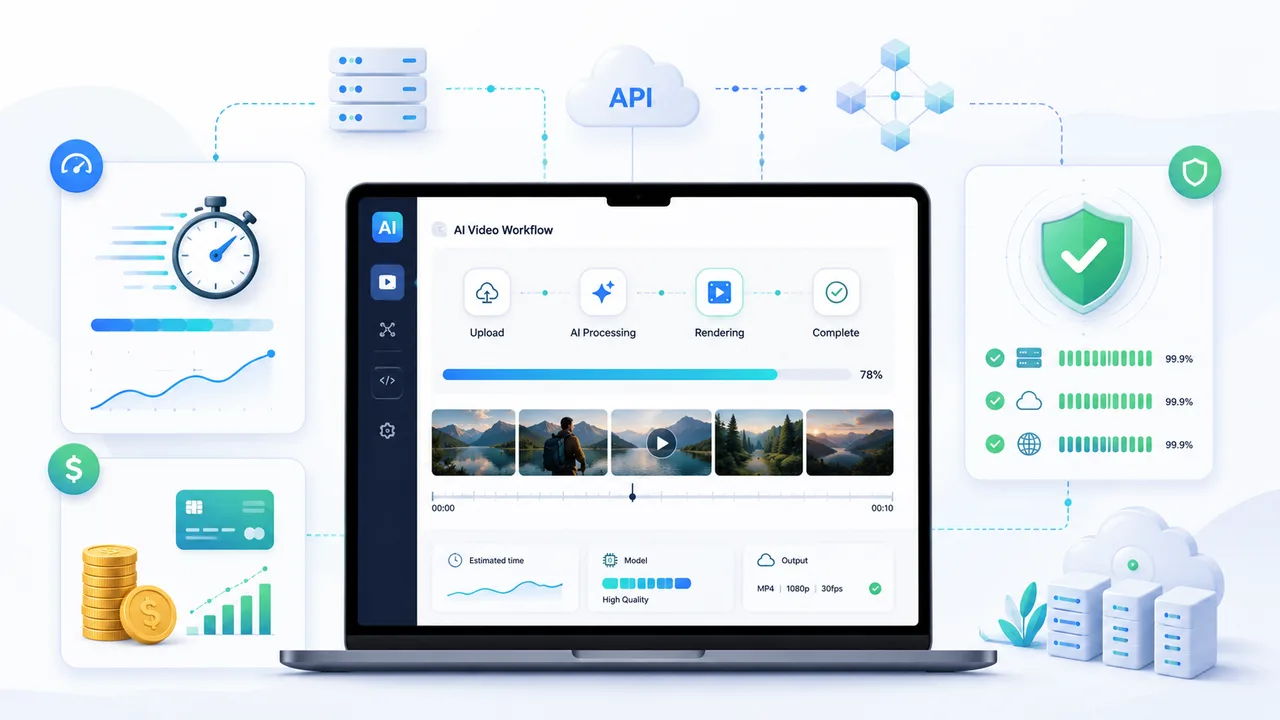
Monitoring has to be job-aware. Standard API monitoring sees HTTP codes. Video systems need lifecycle monitoring. I track delayed jobs separately from failed jobs.
A failed job reached a terminal failure state. A delayed job is still alive but has crossed an internal threshold. For customers, delayed jobs often hurt more. A failed job can be retried or refunded. A delayed job leaves them waiting with no clear answer.
For any provider, webhook handling needs idempotency. The same event may arrive twice. Events may arrive late. A webhook may fail and be retried. Your job store should treat provider events as evidence, not commands to blindly trust.
The monitoring dashboard should show:
- Jobs submitted per provider and model
- Jobs currently queued
- Jobs currently processing
- p50, p90, and p95 time to completion
- p90 queue time by provider
- Failure rate by failure class
- Retry rate by provider and model
- Fallback activation count
- Jobs delayed beyond customer promise
- Output download failures
- Webhook delivery failures
- Cost or usage proxy per accepted output
The most useful alert in my experience is not “provider failed.” It is “jobs delayed beyond product threshold.” That catches queue pressure before support volume rises.
Set separate thresholds for interactive and batch workloads. A user waiting in the UI may need a warning after 60 or 90 seconds. A background campaign batch may tolerate several minutes. A scheduled ad export may have a hard deadline.
Store incident annotations next to the metrics. If a provider status page reports degraded service, link the incident. If your own retry bug caused duplicate jobs, say that. Incident reports get worse when every note is written to protect someone.
FAQ
Who is responsible when provider queues delay customer jobs?
Product owns the customer promise. Platform owns the integration evidence. Support owns the customer communication. Procurement or vendor management owns the provider escalation path if a contract exists.
Do not make support guess. The job record should show provider, model, submit time, queue time, current state, retry history, fallback eligibility, and whether the delay crosses the published customer threshold.
If the delay comes from provider capacity, say that internally. If the delay comes from your own quota tier or queue design, say that too. “Provider issue” should not become a blanket phrase for every slow job.
What incident threshold should trigger fallback routing?
Fallback should trigger when the primary route is unlikely to meet the workload contract.
I use three trigger classes:
- Time trigger: p90 completion time exceeds the customer promise for a defined window
- Failure trigger: provider or model failure rate crosses the accepted limit
- Capacity trigger: queued or throttled jobs exceed the safe backlog for that workload
The threshold should be set before launch. Not during the incident. During an incident, people become optimistic in very specific and unhelpful ways.
Fallback should also have a stop condition. Route back only after the primary provider stays inside the threshold for a defined recovery window.
How should API reliability be reported to business teams?
Report reliability in customer terms first, technical terms second.
Useful business-facing metrics:
- Percentage of jobs delivered within promise
- Accepted output rate
- Delayed job count
- Failed job count by customer-visible reason
- Retry and fallback volume
- Provider-caused versus internal-caused incident split
- Cost per accepted output range
- Open vendor escalations
Do not report only uptime. Uptime can be green while video API latency is bad enough to miss campaign deadlines. Business teams need to know whether customers received usable videos on time.
Conclusion
An AI video API should be compared as a production job system, not as a gallery of sample clips. Speed means queue time, generation time, webhook delay, and output retrieval. Cost means accepted output, not raw generation. Reliability means provider status, quota behavior, retry rules, failure classes, and your own monitoring.
A single provider can be the right call when the workload is narrow and the promise is modest. Multi-provider routing makes sense when deadlines, volume, and customer expectations justify the adapter work.
This is where my evaluation lands: choose the API that fails clearly, not just the one that demos well. Clear failure is something engineering can route, retry, explain, and improve. Silent delay is harder. That is where production systems start to fray.
Previous posts:
Related Articles

Best AI Video Platforms for Production Teams in 2027

Best Sora 2 Alternatives for Video Teams in 2027

Lanta AI Review 2027: Best Uses, Pricing, and Limits
Sora 2 Review 2027: API Quality, Cost, and Limits

Build a GPT-6 Astra 3D Workflow With Blender Assets