AI Video Infrastructure for Production Applications
Design AI video infrastructure for model routing, async jobs, media storage, reliability, cost control, and safe production rollouts.
It’s Dora. I paused here because AI video feels like a model choice until the first user waits six minutes, refreshes twice, uploads the same image again, and opens a support ticket before the clip finishes. That is when AI video infrastructure stops being an API wrapper and becomes a production system.
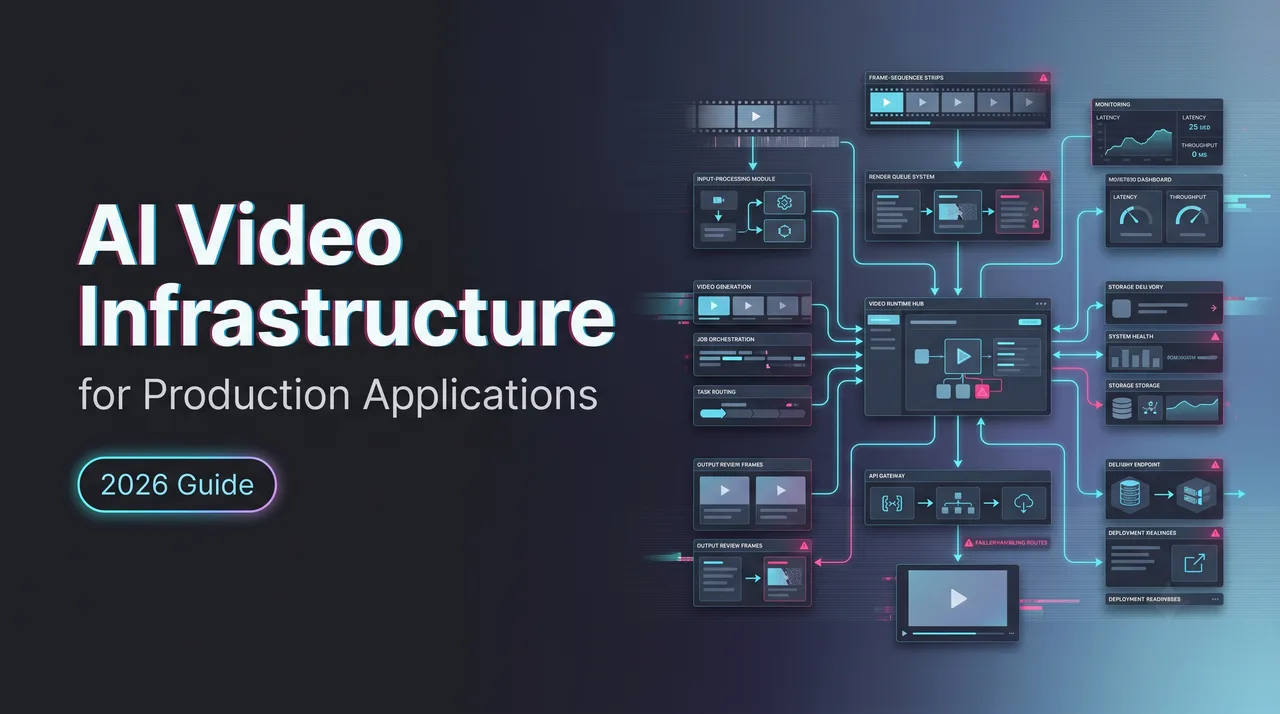
This note is for architects, platform engineers, and product technical leads building AI video SaaS. Not a model landscape. Not a tutorial for one provider. The work is the system around the models: routing, async jobs, storage, idempotency, retries, cost, observability, security, and migration.
Every live endpoint, webhook shape, media retention rule, model list, price, SLA, rate limit, and quota belongs in the vendor-specific implementation checklist. Verify those against supplier docs on the publication date. Better than making something up.
Define Production Requirements for AI Video
Map input types, output targets, latency, and quality goals
Start with inputs. Text-to-video, image-to-video, reference-to-video, avatar video, talking-head video, and video extension do not behave like one product category. They have different payloads, validation rules, moderation paths, file sizes, and user expectations.
A social ad tool may accept one product image, a short prompt, and a 9:16 output target. A media production app may need references, scene continuity, seed control, higher resolution, and editability. Same “video generation” label. Different system.
Map the product contract before choosing the model:
| Requirement | Production question |
|---|---|
| Input type | Text, image, video, reference set, audio, or mixed media |
| Output target | Preview, downloadable asset, ad creative, user post, internal draft |
| Latency class | Interactive, async wait, batch, or background |
| Quality gate | Automatic checks, human review, customer approval, or direct publish |
| Retention | Temporary provider URL, durable storage, archive, or deletion |
| Support evidence | Prompt, inputs, model ID, output hash, logs, user decision trail |
That table saves meetings. Usually.
Set workload, budget, and reliability assumptions
Do not size the system around the average request. Size it around launch day, campaign bursts, retries, and failed generations.
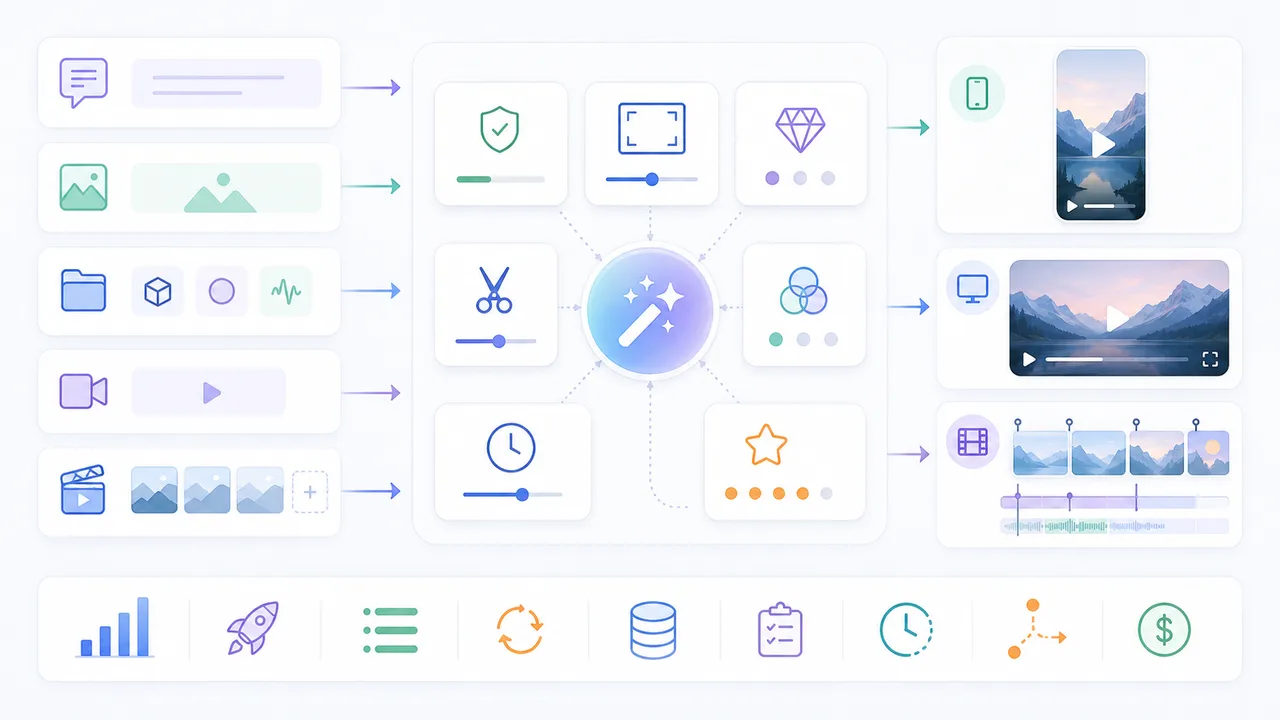
A video generation API can look fine at 20 internal tests. It behaves differently when 2,000 users submit long prompts with large images during the same hour. Queue time becomes part of the product. Retry policy becomes cost policy. Storage becomes a real line item.
Write assumptions down:
- expected clips per day
- peak jobs per minute
- accepted-output rate
- average input file size
- expected output duration
- retry budget
- manual review rate
- maximum user wait time
- fallback trigger
If the team cannot estimate those yet, treat the launch as a measured beta. Not a full release wearing a nicer shirt.
Design the Model Access Layer
Compare direct providers with an aggregation layer
Direct provider access gives tighter control over one vendor’s API surface. It can be easier to explain for procurement, support, and model-specific debugging. The cost is maintenance. Every provider brings its own model IDs, parameters, response shapes, asset URLs, lifecycle states, quota rules, and incident language.
An aggregation layer can reduce that switching cost. It can give one platform team a cleaner way to compare models, change routes, and keep application code less provider-shaped. The tradeoff is another contract to verify. The aggregation layer may normalize fields, hide details, or expose provider-specific behavior in its own schema.
Good infrastructure makes you forget it is there. Bad infrastructure makes every model update feel like a migration.
Normalize model IDs, schemas, routing, and fallback
Normalize at the application boundary. Keep provider details inside adapters.
The app should store its own video job ID. The provider can return a prediction ID, task ID, request ID, or generation ID. Do not expose those as the primary customer-facing identifier. They are support evidence, not product identity.
A clean model access layer records:
- internal model alias
- provider name
- provider model ID
- endpoint or route
- request schema version
- response schema version
- supported input types
- supported output types
- fallback route
- known unsupported fields
This is where model routing belongs. Route by workload, not by excitement. Use cheaper or faster routes for drafts, stronger routes for final output, and restricted routes for sensitive media. If a model cannot satisfy the application contract, it stays out of production no matter how good the demo looks.
Build the Asynchronous Job Pipeline
Submit, queue, poll, webhook, and retrieve results
Video is rarely a synchronous request. Treat asynchronous video jobs as the default.
The basic lifecycle is boring and non-negotiable: create job, validate input, submit provider request, store provider ID, poll or receive webhook, retrieve output, persist media, update status, notify user.
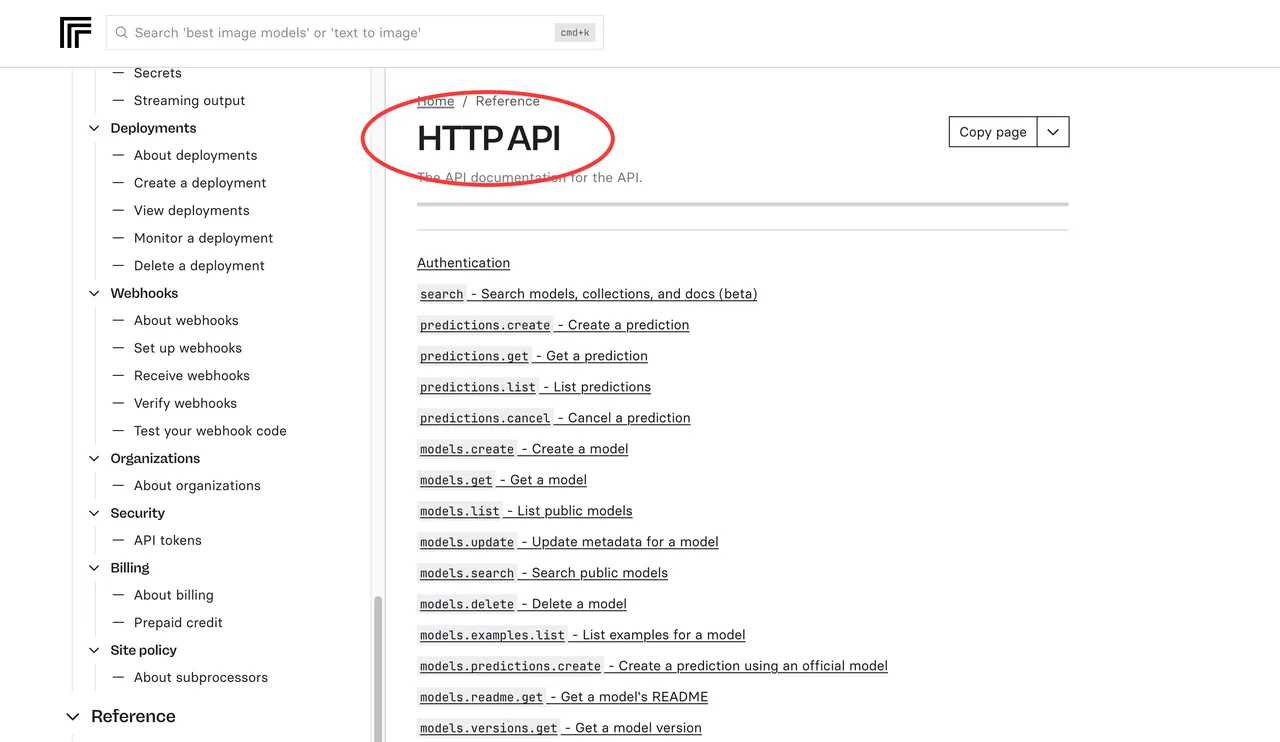
Provider docs show why this shape exists. Replicate’s HTTP prediction API uses prediction objects with states such as starting, processing, succeeded, failed, and canceled, plus URLs for get and cancel actions. fal documents asynchronous inference as a queue-based flow with submission, status checks, results, cancellation, and webhooks.
The exact states differ by vendor. The internal state machine should not.
I use a small internal set:
- created
- validating
- queued
- running
- succeeded
- failed
- cancelled
- expired
- archived
Map vendor states into that set. Keep the raw state too. Support will need it later.
Add idempotency, retry caps, cancellation, and timeouts
Retries are where video systems quietly burn money. Every submit call needs an idempotency key tied to the user request, input hash, model route, and parameter set. If the browser retries after a network failure, the platform should not create two paid generations unless the user asked for two.
Retry only classified failures. A webhook timeout is not the same as a model failure. A provider 429 is not the same as invalid input. A moderation rejection is not retryable. A cancelled job should stay cancelled.
Cancellation must be explicit. If the provider supports cancellation, call it. If not, mark the internal job cancelled and prevent delivery. Timeouts need the same split: provider timeout, queue timeout, user-visible timeout, and internal cleanup timeout.
Found the pattern on the third try: a retry policy is a billing policy with engineering clothes on.
Manage Media Inputs and Outputs
Validate uploads and use durable object storage
Never send arbitrary user files directly into a model route without validation.
Check file type, size, duration, dimensions, aspect ratio, malware risk, metadata, and access scope. For browser uploads, presigned object storage is usually cleaner than routing large files through the application server. AWS documents S3 presigned URLs as time-limited access for upload and download without sharing permanent credentials.
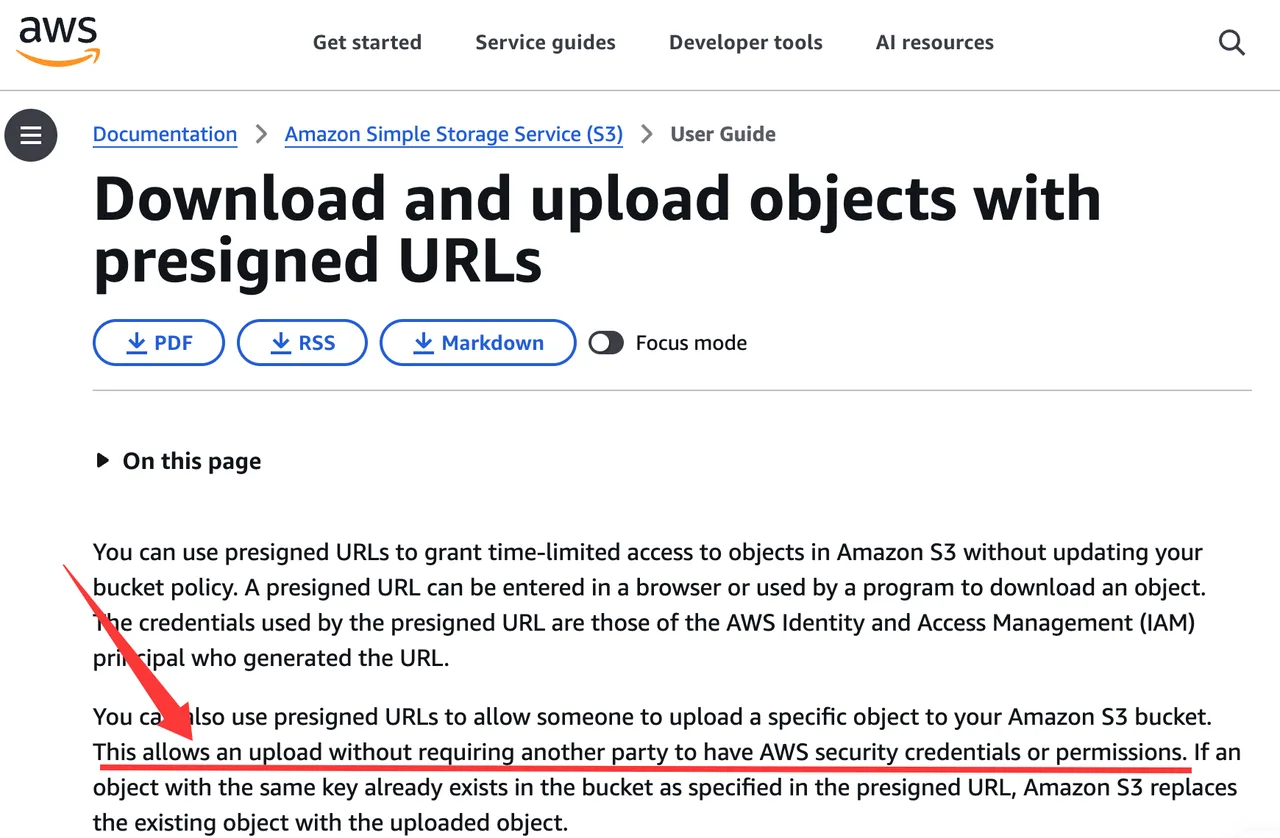
The same pattern applies across object stores. The point is not S3 specifically. The point is scoped, temporary access and a durable place to put media before and after model calls.
Track output expiry, provenance, and delivery state
Provider output URLs may expire. Some platforms delete input and output assets after a fixed retention window. Some make files accessible only with auth headers. Some expose public links. All of that must be verified per provider.
The application should copy accepted outputs to durable storage as soon as the job succeeds. Store provenance next to the media: prompt, input asset IDs, model route, provider ID, output hash, generation timestamp, policy flags, and reviewer decision.
Delivery state is separate from generation state. A job can succeed while CDN publishing fails. A video can be stored but not delivered. A user can download it before moderation completes if the workflow is sloppy. That one is painful to explain.
Measure Quality, Reliability, and Real Cost
Build a prompt-and-reference evaluation suite
Quality cannot be judged from one prompt. Build a fixed suite with the actual product workload: product shots, human motion, text overlays, camera movement, brand references, vertical ads, landscape clips, negative prompts, and known difficult inputs. Include rejected cases. They teach more.
Measure prompt adherence, temporal consistency, identity stability, artifact rate, motion quality, safety behavior, and editability. Keep accepted and rejected outputs. Do not overwrite old results when models update.
Track failure rate, percentile latency, and cost per usable output
Average latency lies. Use percentiles.
Track p50, p90, p95, and p99 from submit to usable output. Split queue time, provider run time, webhook delay, output download time, and CDN publish time. That is video API observability, not just a dashboard with green dots.
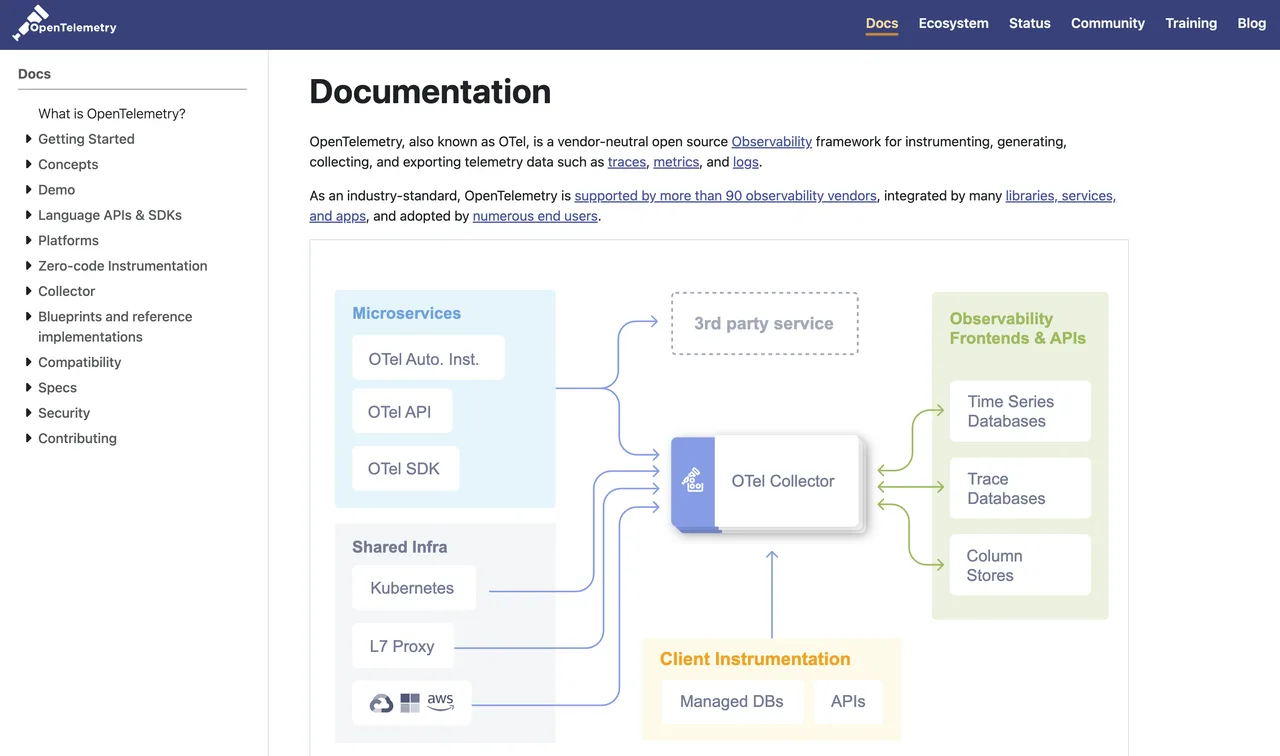
OpenTelemetry’s observability documentation is a useful anchor because traces, metrics, and logs should travel together. A video job needs trace IDs across API, queue, provider adapter, webhook handler, storage worker, and notification service.
Cost per generated clip is not enough. Track cost per usable output:
total provider cost + retry cost + storage + review labor + repair labor / accepted outputs
That number makes model comparisons less romantic.
Secure and Operate the Platform
Protect credentials and add abuse controls
Video generation attracts abuse. Expensive jobs, public upload surfaces, and webhook endpoints make the risk higher.
Keep provider credentials server-side. Use scoped secrets, rotation, environment separation, and per-route budget caps. Rate-limit by account, workspace, IP, payment state, and trust tier. Add prompt and media policy checks before submitting jobs, not after spending money.
OWASP’s API security risks are a good operating reference here: authorization failures, unrestricted resource consumption, sensitive business flows, SSRF, and unsafe consumption of APIs all show up in AI video products.
Webhook endpoints need signature verification where supported, replay protection, fast acknowledgement, and idempotent processing. Treat every inbound provider call as untrusted until verified.
Centralize observability and provider incident response
Every provider adapter should emit the same core events:
- job submitted
- provider accepted
- queued
- running
- webhook received
- output copied
- output delivered
- cancelled
- failed
- expired
Incident response needs route-level switches. Disable one model. Disable one provider. Disable one input type. Disable high-cost jobs. Keep read-only status pages for support. Do not make engineers deploy code just to stop a runaway route.
Plan for Model and API Change
Version contracts and run regression tests
Models change. APIs change. Response fields change. Limits change. This conclusion has an expiration date - models update fast.
Version every adapter contract. Keep sample requests and responses for each provider route. Run regression tests before moving traffic. Include schema checks, status mapping, webhook handling, cancellation, output download, storage copy, and cost attribution. A provider model upgrade should not quietly change user-visible behavior.
Migrate traffic with rollback paths
Migration should happen in slices. Start with internal traffic. Move to a small percentage of non-critical jobs. Compare accepted-output rate, p95 latency, failure classes, retry count, support tickets, and cost per usable output. Then expand.
Rollback must be one config change. If rollback needs code edits, the migration plan is not ready. Good enough. That is the most honest assessment I can give.
FAQ
Should products disclose the video model shown to each user?
That depends on product policy, contractual promises, and user expectations. If the model affects rights, quality, safety review, or support evidence, disclosure should be considered. At minimum, the system should retain the model route internally.
Can one request be sent to multiple vendors for evaluation?
Only with explicit authorization and data-handling review. Sending the same user input to multiple vendors can change privacy, retention, cost, and regional processing obligations. Product experiments still need consent and policy boundaries.
How long should failed-generation metadata be retained?
Long enough to resolve support, billing, abuse, and quality disputes, but not longer than the company’s data policy allows. Failed jobs often contain sensitive prompts and media references, so retention needs owner approval.
What support evidence helps resolve disputed video outputs?
Keep the internal job ID, provider job ID, model route, input asset IDs, prompt, parameters, timestamps, raw error, output hash, moderation state, reviewer action, and delivery logs. Screenshots alone are weak evidence.
When is human review required before publishing generated video?
Use human review when outputs involve regulated claims, minors, political content, paid ads, brand safety, likeness rights, medical or financial claims, or high-risk customer visibility. The exact threshold belongs in policy, not in model code.
Conclusion
AI video infrastructure is the part that decides whether generation can survive real users. The model matters. The pipeline matters more.
A production system needs a model access layer, async job control, durable media storage, cost-per-usable-output tracking, observability, abuse controls, and migration paths. Keep provider specifics verified from current docs. Keep fallback close. Run it yourself. That’ll tell you more than anything I say.
Previous posts: