H3 Max Text-to-Video: A Repeatable First Test
H3 Max text to video testing starts with one fixed prompt, stable settings, clear timing, and measurable acceptance criteria.
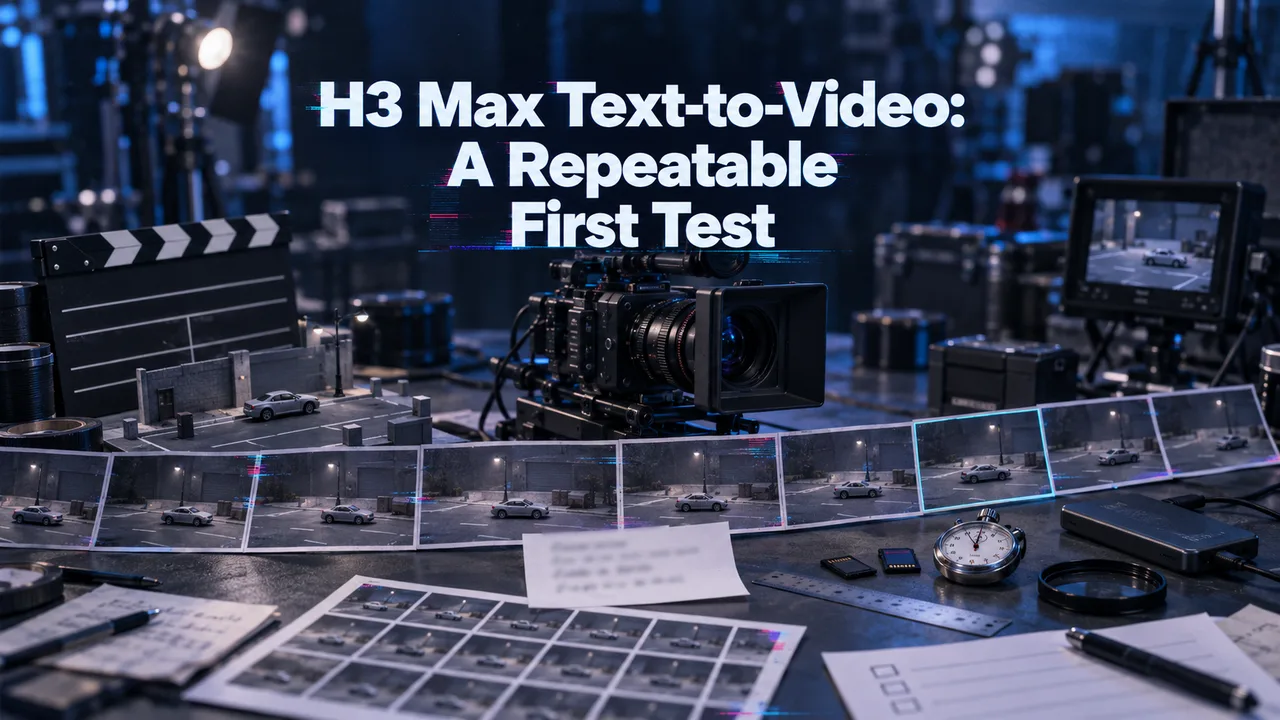
A first API call should answer one production question, not produce a showreel. For H3 Max text-to-video, I would test whether a five-second shot can preserve one object, perform one action, and synchronize one sound cue. If those variables are loose, a good-looking clip teaches you very little. This is one reproducible test—not a model review.
Define the First Text-to-Video Test

Lock one prompt and one acceptance target
Use an unbranded scene with no protected characters:
“Locked medium shot of a cobalt ceramic mug on a walnut table. A hand enters from the right, stirs once with a silver spoon, then leaves. Gentle morning window light; no text or logo. Audio: one spoon clink during the stir, soft room tone, no music.”
Before running further, I narrowed the variables. Accept only if:
- The mug remains cobalt and unbranded.
- The hand enters from the right and stirs once.
- The camera stays locked.
- One clink aligns with the stir.
- No text, logo, or music appears.
“Looks good” is not an acceptance rule. Five observable checks are.
Separate creative direction from API settings
Put subject, action, camera, light, and sound in the H3 Max text prompt. Keep duration, aspect ratio, resolution, seed, safety, and expansion in request fields.
The current H3 Max API schema identifies minimax/h3-max/text-to-video. It documents a five-second default, 480P/768P/1080P, six aspect ratios, an optional seed, and required expansion mode. fal’s guide describes a 5–15 second range, while the schema declares duration only as an integer. Use the five-second default for this test.
Submit a Reproducible Request
Prompt, duration, resolution, seed, and expansion
Send a fully specified baseline:
{
  "prompt": "[the locked prompt above]",
  "duration": 5,
  "resolution": "768P",
  "aspect_ratio": "16:9",
  "seed": 246810,
  "prompt_expansion_mode": "disabled",
  "enable_safety_checker": true
}
An omitted H3 Max seed is randomized, so create and store your own. The T2V output schema does not document a returned seed. Without the saved input, the comparison is already lost.
Current H3 Max prompt expansion modes are disabled, balanced, and quality. fal says balanced takes about a second; quality can spend roughly 30 seconds rewriting. Start disabled for literal adherence. To compare balanced later, change only that field. A fixed seed is a comparison anchor, not a guarantee of identical pixels.
Poll the job and store the returned video
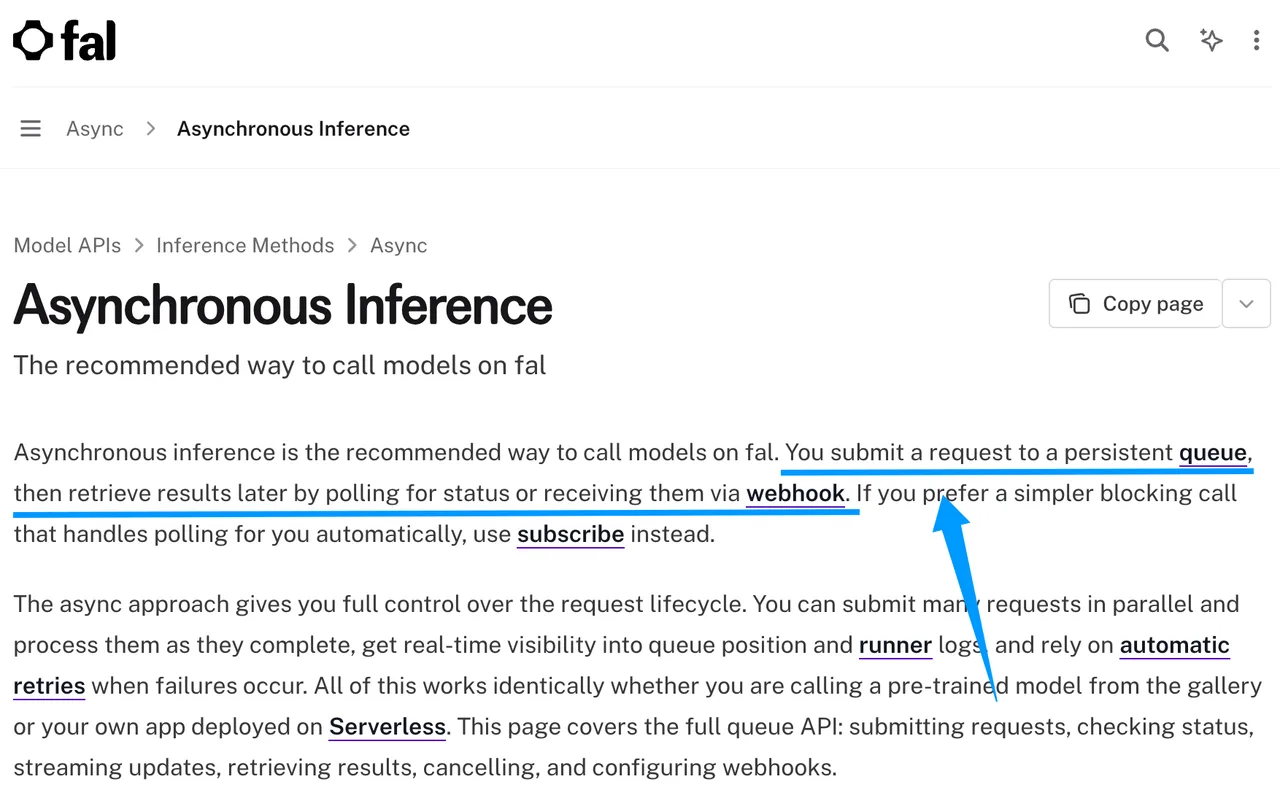
Follow the fal queue flow: submit, persist request_id, poll or use a webhook, then fetch the result. Keep FAL_KEY server-side. Save the request JSON, UTC timestamps, response metadata, and downloaded MP4.
The response contains a video file, optional expanded_prompt, and timings. Backend inference time is not end-to-end latency; expansion, queueing, transfer, and download sit outside it. Record both the returned timing and submit-to-file time.
Evaluate the Result
Prompt following, motion, and audio alignment
Watch once silently for color, entry direction, one stir, fixed camera, and unwanted text. Did the clink land during the stir? Did “no music” hold?
fal’s official H3 Max guide says audio is predicted with the frames and that sound and dialogue belong in the same brief. Treat that as a provider claim until your file passes. Score each check pass/fail. If sound needs replacement, the clip is not fully accepted.
Record failures, reruns, and usable-output cost
Keep one row per attempt:
| Attempt | Changed field | Failed check | Billed cost | Review time | Accepted |
|---|---|---|---|---|---|
| 1 | Baseline | Record after review | Actual | Minutes | Yes/No |
| 2 | One change | Record after review | Actual | Minutes | Yes/No |
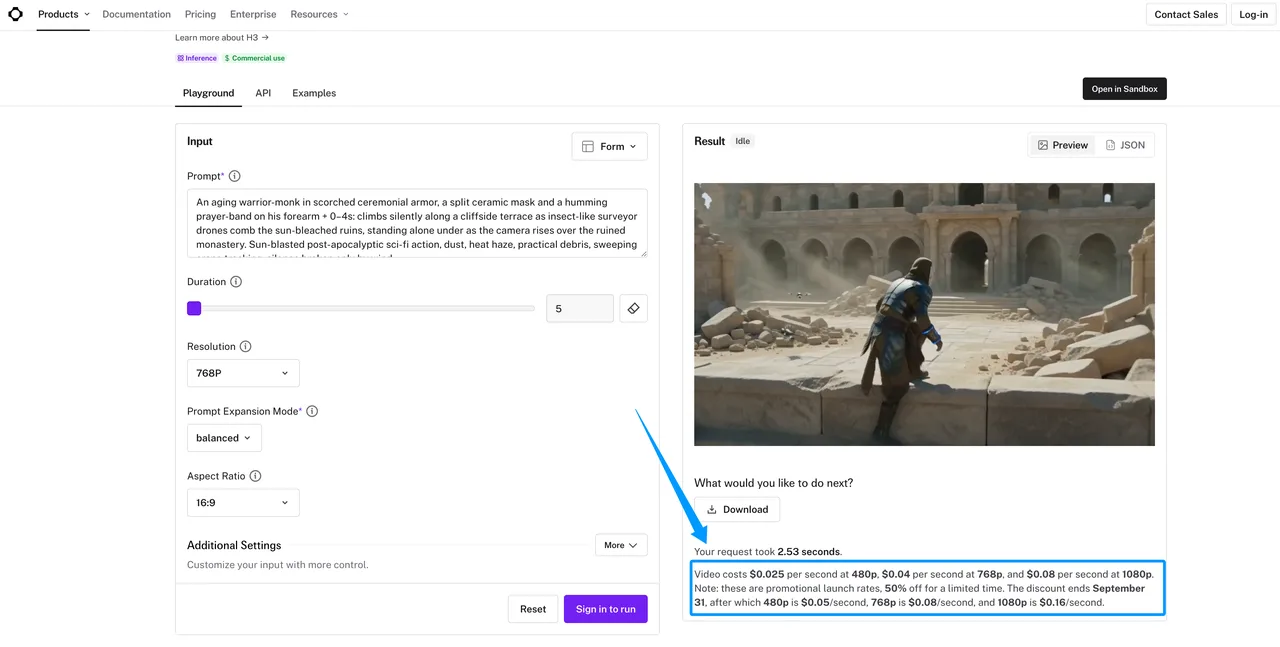
The live T2V model page displayed promotional rates of $0.025/second at 480P, $0.04 at 768P, and $0.08 at 1080P. This baseline therefore displays as $0.20. But the page gives an impossible “September 31” promotion end date. Timestamp the rate and reconcile the actual charge instead of forecasting from that note.
H3 Max video cost per usable clip equals total billed attempts divided by accepted clips. Cheap does not always mean cost-saving. Unusable generations are expensive.
Limits and Trade-Offs
One sample cannot establish model quality
This sample validates the request path. It cannot establish consistency, language coverage, refusal frequency, or production usable rate. A good single output does not mean the production workflow is ready. Repeat the locked test across several seeds before changing the scene, and report the sample size.
Prompt expansion can reduce strict control
Expansion may strengthen a thin prompt, but it adds another changing component. Compare expanded_prompt with the source. If it introduces camera motion, music, or scene details that break acceptance rules, disable it. Quality mode also adds rewriting time, so measure end-to-end latency rather than inference alone.
FAQ
What is the H3 Max prompt length limit?
No numeric maximum is published in the current schema; prompt is only a required string. Set an application limit and log rejected payloads rather than inventing a provider ceiling.
Which languages work for generated dialogue?
fal demonstrates English dialogue but publishes no complete language list. Treat English as demonstrated, not guaranteed across every voice or accent. Sample any other delivery language before client work.
Can a text request disable native audio?
No audio toggle appears in the T2V schema. “No music” is an instruction, not a guaranteed mute switch. Remove the audio track downstream when silence is required.
Does the endpoint return a content-policy reason?
fal’s model error reference defines a non-retryable 422 content_policy_violation with a type and message. It does not promise a granular policy reason, and not every endpoint has completed migration to this format. Store the error actually returned.
Can H3 Max generate transparent video backgrounds?
No transparent-background or alpha option appears in the current schema; its example is video/mp4. Plan a solid background plus keying or segmentation when alpha is required.
Conclusion
 A useful H3 Max text-to-video test stays small: one prompt, action, sound cue, seed, and pass/fail list. Store the request, job ID, output, timing, actual charge, and failure reason. Only after the baseline repeats should you test expansion, longer duration, or dialogue. This is enough for this round.
Previous posts: