Wan-Dancer API Deployment for Production Workflows
Wan-Dancer API deployment requires model serving, uploads, GPU scheduling, async jobs, storage, callbacks, retries, and production safeguards.
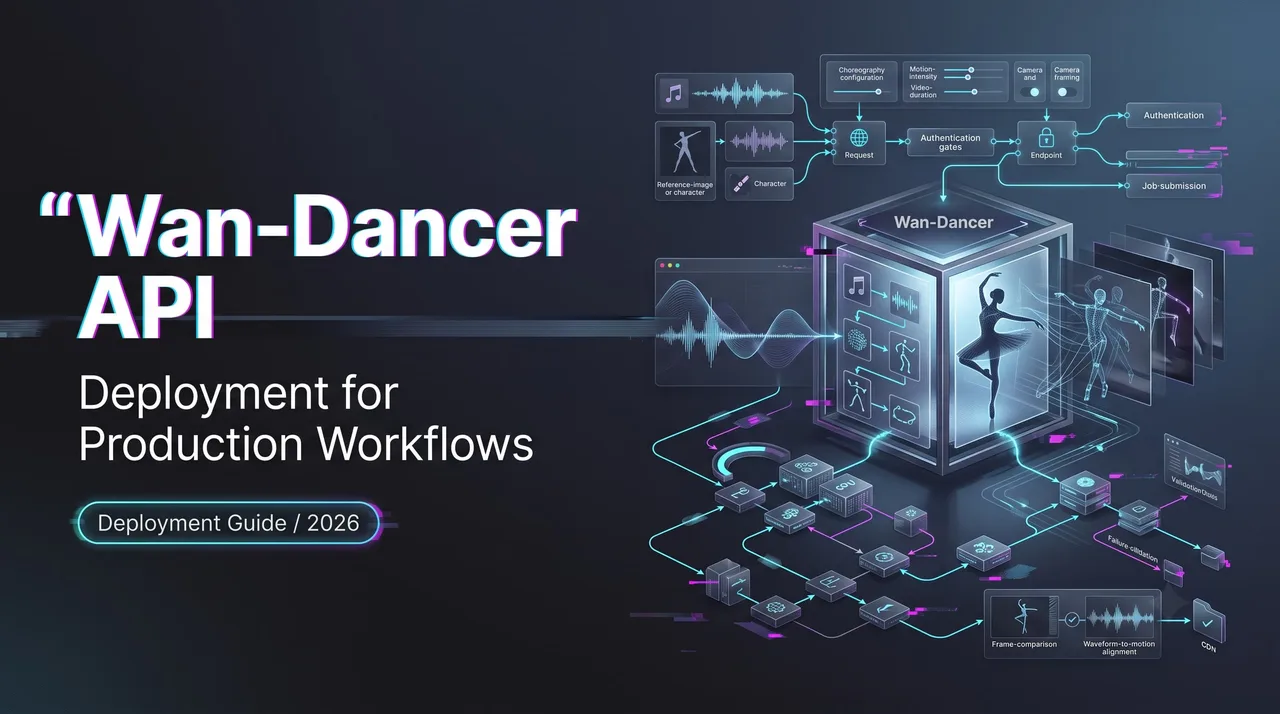
I would not start a Wan-Dancer API project by writing the endpoint. I would start with a table of assets and ownership. One row for the model weights. One row for inference code. One row for music rights. One row for reference-image retention. Boring table. Useful table.
Checked on July 21, 2026: public Wan-Dancer assets exist, but I did not find evidence that Wan-Dancer is offered as an official hosted API. The practical job is to wrap an open model into an internal or product API without pretending the open checkpoint came with production guarantees. This piece is for video inference and platform engineering teams doing that work.
Confirm the Available Wan-Dancer Assets
The first confirmed asset is the model itself. The Wan-Dancer Hugging Face model lists Wan-AI/Wan-Dancer-14B, Apache-2.0 licensing, safetensors, Diffusers tags, music-to-dance, and model download commands.
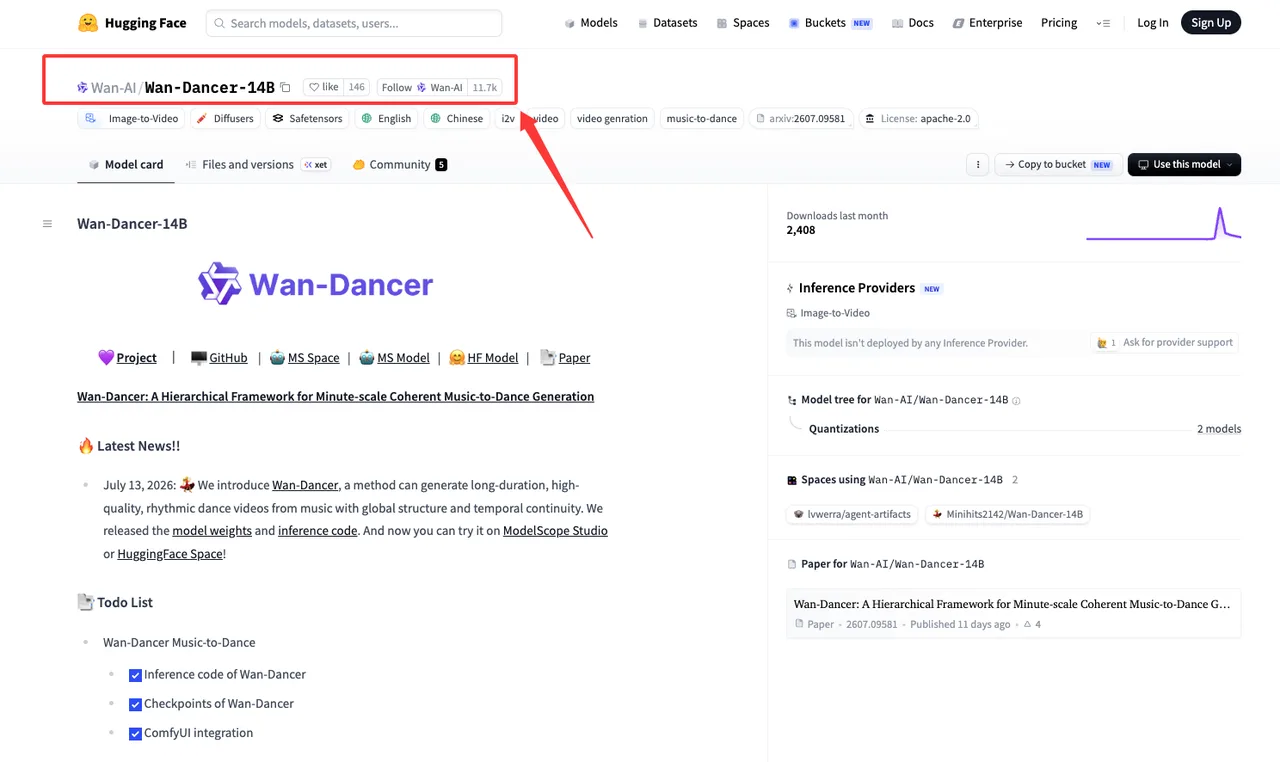
There is also an official ModelScope distribution path for the same model. I would log both download sources, but I would not let two mirrors become two product identities. The production registry should still point to one approved model ID, one revision policy, and one rollback owner.
Global and local models, code paths, dependencies, and licenses
The global/local split is not naming decoration. The Wan-Dancer paper describes a hierarchical framework: global keyframe planning first, local temporal refinement second. That design choice should shape the service architecture.
This is where I would separate evidence from assumption. The paper supports the global/local method. The model card supports the open-weight release. The repo supports the runnable path. None of those documents prove a hosted production SLA.
Apache-2.0 covers the open project license. It does not clear the music, the reference image, the likeness, or the final use case. I paused here. People skip this part because the model card looks permissive. The content pipeline is not automatically permissive.
Why an open model is not an official hosted API
An open model gives you weights and code. It does not give you auth, rate limits, callbacks, abuse handling, retention policy, cost attribution, or customer support.
That distinction matters when teams search for a Wan-Dancer endpoint. If the endpoint is yours, then the production contract is yours too. No one else owns the queue because a checkpoint exists.
Design the API Contract
I would keep the public contract small and make the internal job document larger. The public API should accept creative intent and asset references. The internal record should preserve every operational detail needed for replay, review, and abuse investigation.
Audio, reference image, prompt, keyframe, and job inputs
For an AI dance video API, the minimum input set is not just prompt plus image. It needs an audio asset, a reference image, a dance-style prompt or prompt template, keyframe material or a keyframe generation mode, and a deterministic job envelope.
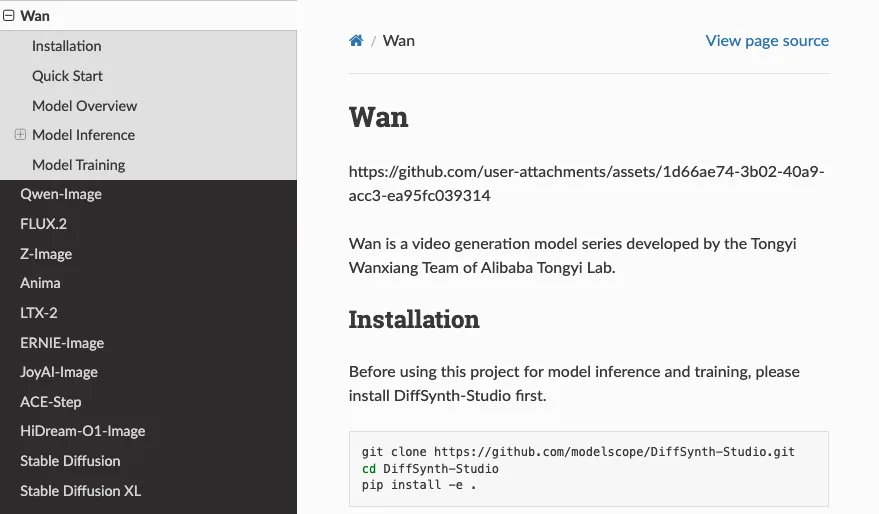
DiffSynth-Studio’s Wan documentation is useful here because it exposes Wan-Dancer-style extra inputs such as wantodance_music_path, wantodance_reference_image, wantodance_fps, wantodance_keyframes, and wantodance_keyframes_mask.
The contract I would start with: audio_url or uploaded audio ID, reference_image_id, prompt, dance_style, seed, global_stage_config, local_stage_config, keyframes, keyframe_mask, callback_url, idempotency_key, retention_policy, and content_rights_attestation.
The validation rules should be explicit. Audio duration has to match the requested frame duration. Reference-image dimensions need to fit the model path. Keyframes and masks need to agree. Long jobs need segment-aware input handling. Found the pattern on the third try.
Async submission, job state, callbacks, and output metadata
This should be async from day one. Dance generation is a long-running video job, and pretending it fits a synchronous request is how clients start retrying the wrong layer.
My states would be accepted, validating, queued, assets_downloading, running_global, running_local, postprocessing, succeeded, failed, canceling, canceled, and expired. Each callback should include job_id, state, stage, progress_hint, retryable, output_asset_id, error_code, and trace_id.
Output metadata needs more than a video URL. Store model revision, code commit, stage config, audio hash, reference-image hash, prompt template version, moderation decision, seed, output duration, file format, retention expiry, and reviewer notes when a human touched the job.
Build the Inference Pipeline
The pipeline has two queues, even if the first version lives in one worker. Global planning and local refinement are different stages. Treating them as separate tasks gives you checkpointing, partial recovery, and clearer debugging.
GPU scheduling, staged generation, queues, and concurrency
The Wan-Dancer GitHub repo is the source I would use for reproducible inference code, dependency pins, and the global/local script structure. I would not turn those examples into production throughput claims.
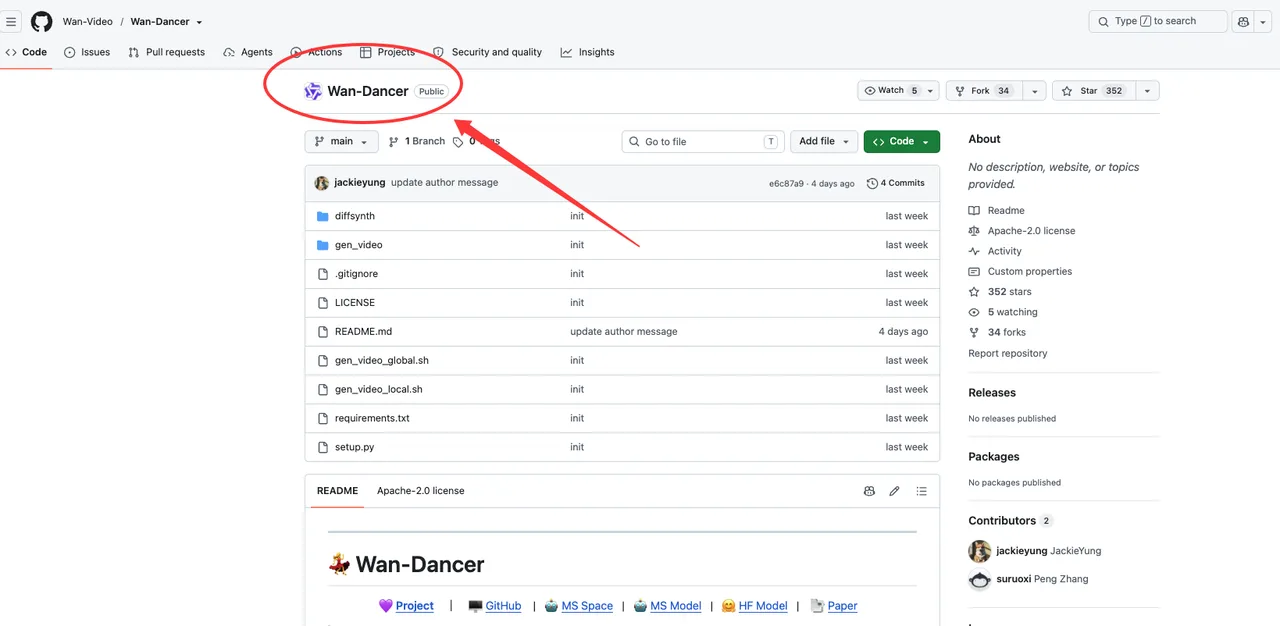
Do not invent concurrency numbers from someone else’s demo. I would benchmark three things inside the target environment: global-stage runtime, local-stage runtime, and post-processing time. Then I would set a video generation queue policy from observed data.
The queue needs admission control before GPU scheduling. Validate asset existence, rights flags, audio length, file type, image dimensions, and user quota before the job touches an accelerator. GPU workers should pull only validated jobs. One fewer expensive failure. Sounds small. Adds up fast.
For platform use, I would separate queues by stage and priority: global planning, local refinement, post-processing, retry, and abuse-review hold. If the local stage fails, the global output should remain addressable until retention rules delete it.
Asset storage, expiration, and result delivery
Store user uploads separately from generated intermediates and final results. The access rules are different. Audio and reference images are sensitive inputs. Global keyframes are intermediate artifacts. Final outputs may be customer-visible assets.
Use signed upload URLs, immutable asset IDs, malware scanning, media normalization, and per-tenant storage prefixes. Result delivery should return signed URLs with expiration, not permanent public links. If the product needs a gallery later, make publication a separate action.
Handle Failures and Long Jobs
Long jobs fail in boring ways: invalid audio, mismatched duration, image size errors, missing keyframe masks, worker eviction, partial output corruption, callback timeout, and a user canceling after the expensive part already started.
Validation, retries, checkpoints, cancellation, and recovery
Validation should reject jobs before GPU work starts. Check media headers, duration, dimensions, MIME type, file size policy, prompt template ID, rights attestation, and whether the requested style is supported by your approved prompt set.
Retries need stage awareness. Network download failure is retryable. A deterministic validation failure is not. Global-stage failure and local-stage failure should have different error codes. If local refinement fails after global planning succeeds, the recovery path can restart local refinement from the stored global artifact.
Cancellation needs a state machine. If the job is still queued, cancel it directly. If it is running, mark cancel requested and let the worker stop at the next safe checkpoint. I would not promise instant cancellation unless the worker has actually been built that way.
Add Production Controls
The production wrapper is where this stops being a research demo. Good infrastructure makes you forget it is there. Bad infrastructure turns every generated video into a support ticket.
Authentication, moderation, observability, and cost attribution
Authentication should be scoped by tenant, app, user, and environment. A staging API key should not submit public jobs. A production key should not bypass moderation just because it came from a trusted service.
Moderation should run before and after generation. Pre-check the prompt, audio metadata, and reference image. Post-check the output for policy issues, identity misuse, sexualized or exploitative dance contexts, minors, public-figure risk, and watermark needs. This is where my data ends: the exact classifier stack depends on your policy team.
Observability needs traces across submission, asset fetch, global stage, local stage, post-processing, storage, callback, and deletion. Cost attribution should record compute time, stage retries, storage duration, egress, and failed-job class. Not prices. Internal cost units.
Reference-image privacy, music rights, and retention boundaries
Reference images can contain faces, likeness, private spaces, or minors. Music can carry copyright, sync rights, and platform-specific restrictions. A rights checkbox is not a rights program. It is a signal.
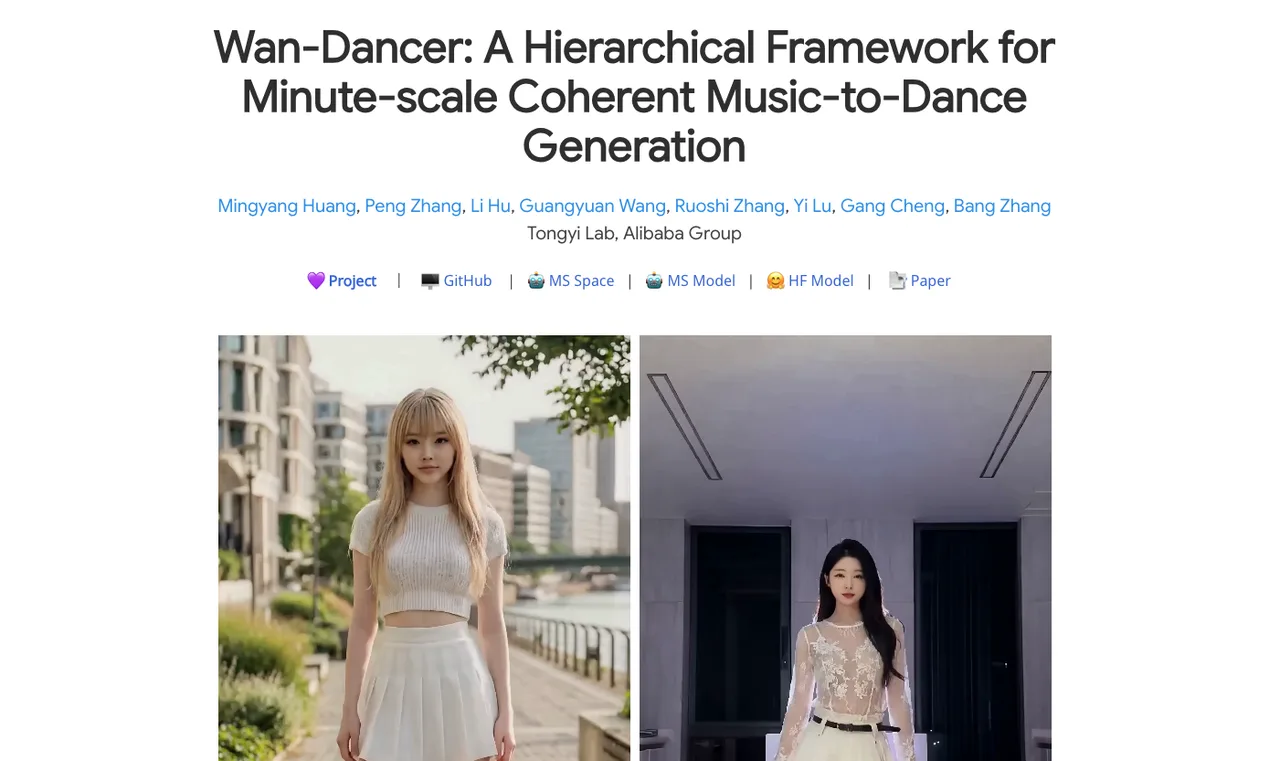
The Wan-Dancer project page includes an ethics note saying demo images and music came from public sources or AI models and can be removed on copyright concerns. Production systems need stronger boundaries than that.
Retention should be explicit at the job level: input retention, intermediate retention, output retention, abuse-hold retention, and deletion proof. If a content-abuse case is opened, deletion should pause only under a documented hold policy.
Decide Whether to Self-Host
Self-hosting makes sense only if the team is ready to own model updates, worker reliability, storage privacy, abuse handling, and customer-facing incidents. Otherwise the model may be open, but the operating surface is still too large.
Testing scope, fallback strategy, and operational readiness
Before launch, I would run tests for supported dance styles, music length ranges, reference-image types, stage-level failure recovery, cancellation, callback idempotency, deletion, and abuse escalation. No borrowed success rate. Run your own.
Fallback should be boring. Disable new submissions. Keep status endpoints alive. Preserve already-generated artifacts until the retention policy says otherwise. Route high-value customer jobs to manual review or a previously approved generation path if one exists.
Operational readiness means one named owner for upstream model changes, one owner for queue health, one owner for abuse review, and one owner for customer communications. If those names are blank, do not launch publicly.
FAQ
Who signs off before launching dance generation publicly?
Product, platform engineering, safety policy, legal, privacy, and support all sign off. If the product accepts user music or human reference images, rights and likeness review cannot be skipped. The launch decision is not only a model-quality decision.
What evidence belongs in a content-abuse escalation?
Keep the job ID, tenant ID, submitter account, timestamps, prompt, prompt template, audio hash, reference-image hash, output hash, moderation logs, model revision, callback history, reviewer notes, and retention state. Do not pass around raw private assets unless the escalation policy allows it.
Which team owns upstream model changes after launch?
The inference platform team owns dependency tracking. The product team owns user-visible behavior changes. Safety owns policy revalidation. If upstream Wan-Dancer 14B weights, code, or prompt templates change, the change should go through staging before production traffic sees it.
Conclusion
The safe way to deploy Wan-Dancer API infrastructure is to treat the open model as one component, not the product. Confirm the weights, code path, license, dependency pins, global/local stages, and input constraints first. Then design the queue, callbacks, storage, moderation, and ownership model around the long-running video job.
The model can dance. The service still needs to stand up straight.
Previous posts:
Related Articles
Best AI Video Platforms for Production Teams in 2027
Best Sora 2 Alternatives for Video Teams in 2027
Lanta AI Review 2027: Best Uses, Pricing, and Limits
Sora 2 Review 2027: API Quality, Cost, and Limits
Build a GPT-6 Astra 3D Workflow With Blender Assets