
ModelsLab Review 2027: One API for Media Models?
ModelsLab review for builders: assess model discovery, integration effort, output control, and unit economics across media endpoints.
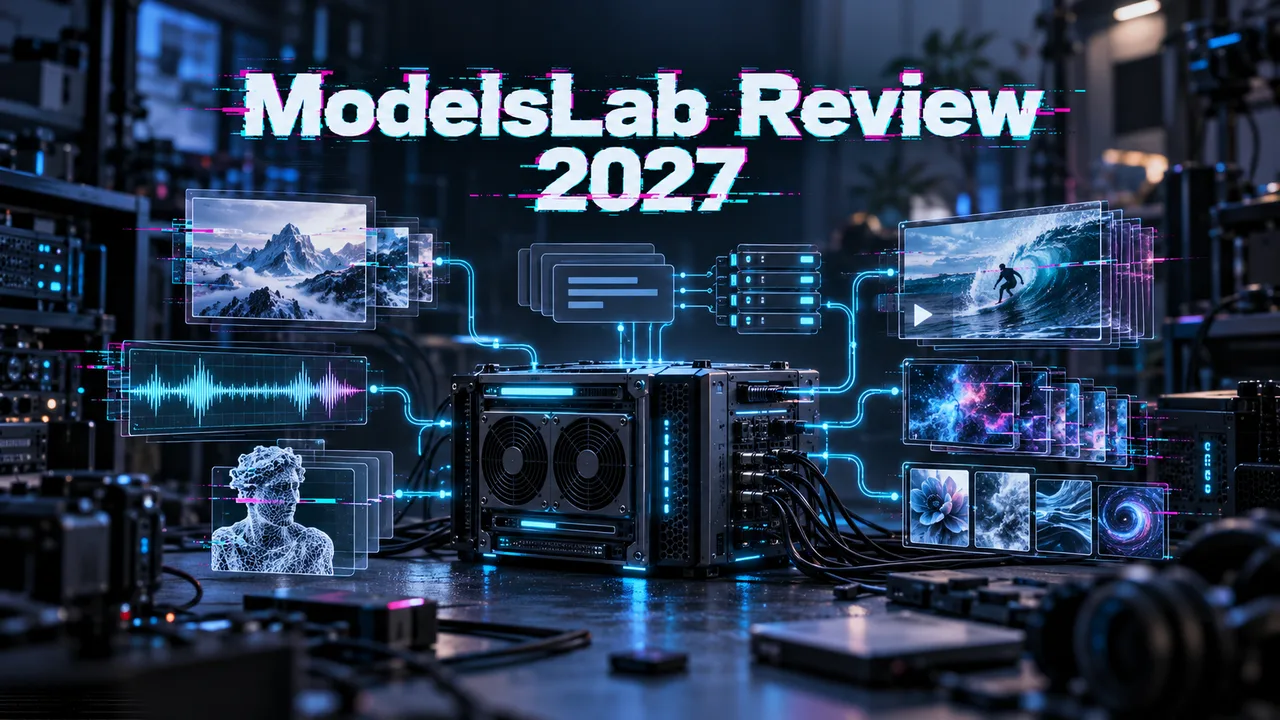
Dora here. I started this ModelsLab review with one question: when an application switches from image generation to video, does “one API” remove integration work, or move that work into model_id, job-state, and billing logic?
The second answer is closer. ModelsLab does put a large media catalog behind one account and related API families. For developers comparing several models, that removes account and provider setup. It does not make those models behave alike. Inputs, supported controls, execution time, moderation, licensing, and failure modes still vary.
The practical test below uses one authorized image-to-video task and records what a production decision actually needs.
What Does ModelsLab Put Behind One API?
ModelsLab covers image generation and editing, video, audio, 3D, model training, and language models. Its current developer resources publish an OpenAPI contract, model feed, CLI, SDK references, rate-limit information, and API lifecycle policy.
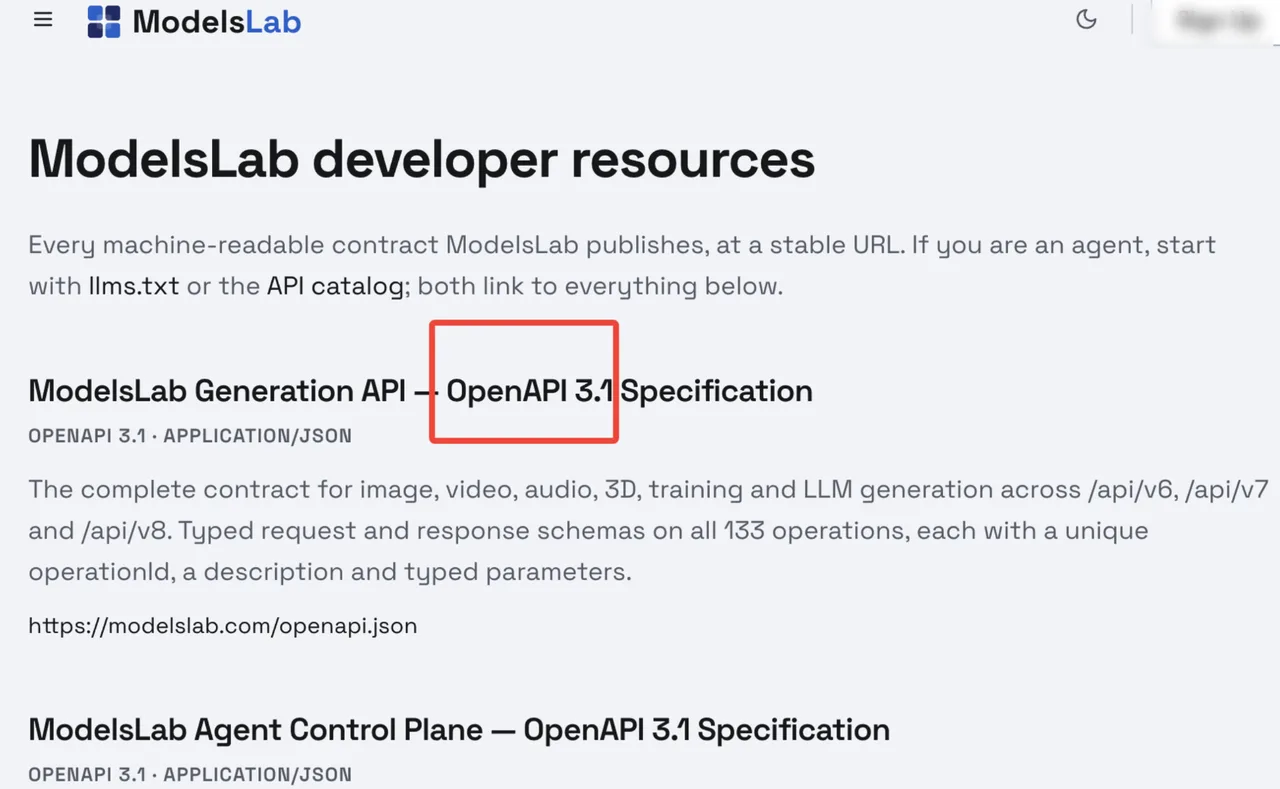
“One API” needs a small correction. There is one API key and one provider relationship, but several versioned endpoint groups: /api/v6, /api/v7, and /api/v8. Image, video, training, and LLM requests do not all use one literal endpoint or one identical schema.
Select One Image or Video Task Before Expanding
Start with one image-to-video request:
- One product image owned by the team
- One five-second motion brief
- One fixed aspect ratio and resolution
- One current
model_id - Five repeated requests
- One written acceptance rule
An accepted result might require the product silhouette to remain intact, the label to stay readable, and the camera movement to finish without a visible identity change. Record the original file hash, request JSON, API version, model ID, request ID, response body, completion time, output URL, retry reason, charge, and reviewer decision.
This task exercises the ModelsLab video API without turning the review into a tour of every modality. If it cannot be repeated reliably, adding ModelsLab image generation, audio, and 3D endpoints only creates a larger debugging surface.
Distinguish Endpoint Breadth From Model Suitability
The machine-readable ModelsLab model catalog lists public model IDs, categories, billing units, prices, and plan coverage. That is useful for discovery and automated catalog checks.
It does not prove that two video models accept the same meaningful controls. A field may be legal at the endpoint level but unsupported, interpreted differently, or restricted by one upstream provider. Resolution, duration, reference-image handling, seed behavior, safety filters, and audio support still require model-level validation.
The catalog answers “what can I call?” Suitability starts with “does this model accept the contract my product needs?” Those are different questions. Large catalogs make this distinction more important, not less.
How Hard Is a Reproducible Integration?

The request itself is conventional JSON over HTTP. The harder part is preserving enough state to explain a result later.
ModelsLab’s current OpenAPI contract defines more than a hundred operations across its versioned surfaces. It also documents a shared response pattern: a job can return success, processing, or error.
That gives an integration a usable foundation. Model-specific parameters remain dynamic, and the contract directs clients to discover them through the model-search route.
Capture Inputs, Model IDs, and Responses
Store the complete resolved request rather than the prompt alone. At minimum, that record needs:
| Field | Why It Matters |
|---|---|
| API path and version | Separates contract changes from model changes |
| Exact model_id | Identifies the selected catalog entry |
| Input asset hash | Proves which source file was used |
| Prompt and negative prompt | Preserves generation instructions |
| Duration, resolution, and seed | Captures major output controls |
| Request and track_id | Connects submission, callback, and review |
| Raw response | Preserves undocumented or added fields |
| Output checksum | Detects replaced or corrupted files |
| Billing event | Connects cost to the job |
| Review result | Separates completed output from usable output |
I paused at the model field. ModelsLab publishes lifecycle guarantees for API versions, but I did not find an equivalent public guarantee for keeping an individual community or provider model ID unchanged. That makes a local catalog snapshot part of the audit record.
A model name is not enough. Store the provider, model ID, catalog metadata, retrieval date, and any revision information the model page exposes.
Review Job Status and Error Handling
Long jobs may return processing, an ID, an estimated time, and a fetch URL. Completion returns an output array. The client needs bounded polling, a timeout, duplicate protection, and a terminal failure state.
One detail is easy to miss: generation failures can arrive with HTTP 200. The response body contains status: "error" and a machine-readable code. Checking only response.ok will classify some failed jobs as successful. That is the sort of bug that waits quietly until a batch run.
The documented codes distinguish validation problems, missing subscriptions, insufficient balance, rate limiting, provider failures, moderation, unavailable infrastructure, and internal errors. Retry policy should follow that classification. A moderated prompt is not fixed by sending it six more times.
ModelsLab’s webhook guide says generation delivery is best effort and may be duplicated. The fetch endpoint remains the recovery path. Store callbacks idempotently by request ID, acknowledge quickly, then process the asset outside the HTTP handler.
What Does a Usable Generation Cost?
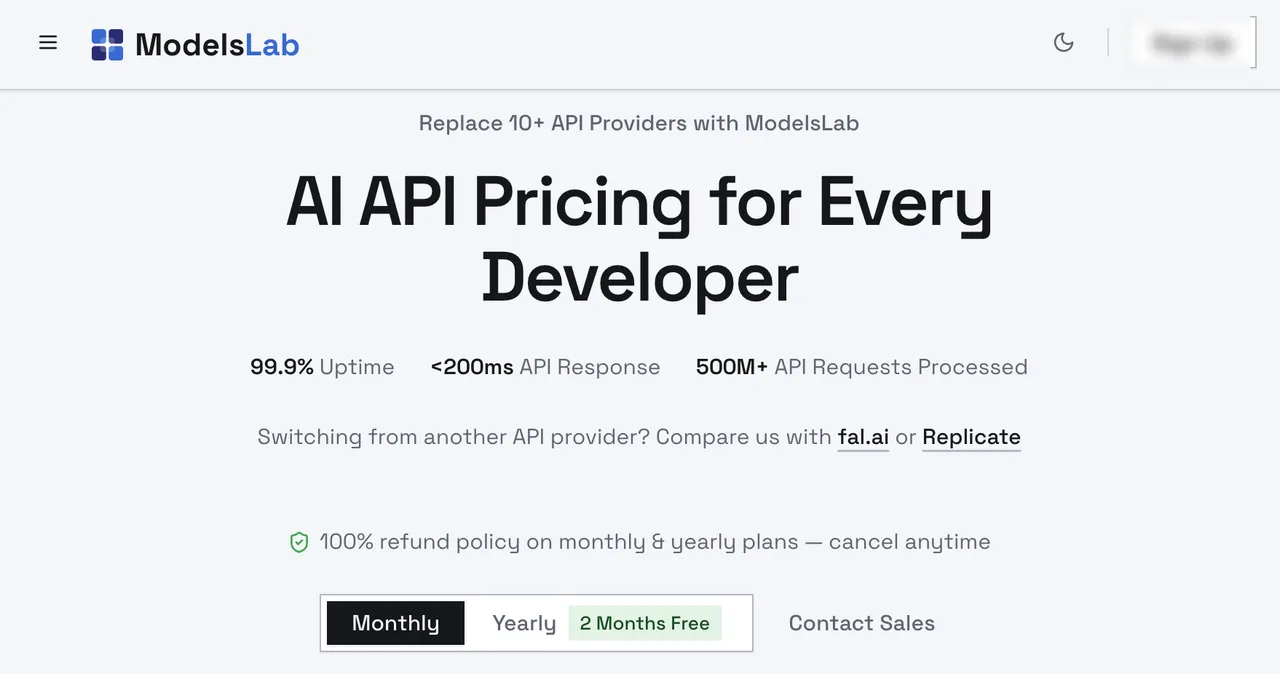
ModelsLab pricing combines subscription allowances, model-specific billing, wallet charges, and different billing units. A broad catalog therefore does not produce one meaningful “cost per generation.”
Cost has to follow the selected task. For the five-run image-to-video test, record every charge beside its request ID. Separate platform failures, moderation blocks, operator cancellations, technically completed clips, and accepted clips.
Include Retries and Human Approval
Use this calculation:
usable cost = (generation charges + billed retries + storage + review labor) / accepted outputs
Suppose a batch submits 20 clips. Seventeen complete, but only 12 meet the acceptance rule. If metered usage totals $8 and review labor costs $12, the usable cost is $1.67 per accepted clip. The number is an arithmetic example, not a quoted ModelsLab rate.
The denominator matters more than the catalog price. A low-priced model that needs three attempts and four minutes of inspection can cost more per accepted asset than a higher-priced route with fewer rejects.
Keep technical failure rate and creative rejection rate separate. The first evaluates infrastructure. The second evaluates model fit. Combining them hides the actual bottleneck.
Compare Per-Task Cost Against Running a Dedicated Endpoint
A dedicated endpoint carries deployment, GPU, monitoring, scaling, and idle-capacity costs. It can also provide tighter revision control, private weights, direct logs, and fewer upstream dependencies.
ModelsLab removes much of that setup for early comparison. Its value is strongest when traffic is split across several models or changes frequently. The calculation changes when one model receives steady volume and requires a pinned environment.
Compare both routes over the same accepted-output count:
- Hosted catalog charges and subscription allocation
- Rejected and retried jobs
- Review labor
- Storage and delivery
- Engineering maintenance
- Idle GPU cost for a dedicated route
- Cost of a provider or model change
This is where ModelsLab pricing can mislead if read as a single unit price. The relevant number is cost per approved task under the expected workload.
Who Benefits From ModelsLab’s Breadth?
The broad catalog solves a real problem for teams still deciding what their media feature should run on. It solves less for teams that already know the exact model, revision, region, and deployment controls they require.
Prototype Teams Testing Several Modalities
ModelsLab fits an application team comparing image models this week and adding video next week. One account, common authentication, model discovery, related response envelopes, and a shared usage layer reduce initial provider work.
It also suits internal prototypes where model replacement is expected. Switching a model_id is easier than establishing another commercial relationship, secret-management path, billing integration, and provider client.
The useful part is not the catalog size by itself. It is the ability to test several plausible routes with the same logging and approval system. One fewer integration. Adds up fast.
Limits for Tightly Governed Production Work
Governed production needs more than an endpoint that returns media. It may require fixed revisions, model retirement notice, regional processing, signed callbacks, immutable logs, explicit retention, private fine-tunes, and model-specific licensing records.
The public API lifecycle policy is a good signal. It promises at least 90 days between API-version deprecation and sunset, delivered through standard headers. The policy also uses the IETF’s Sunset header for machine-readable notice.
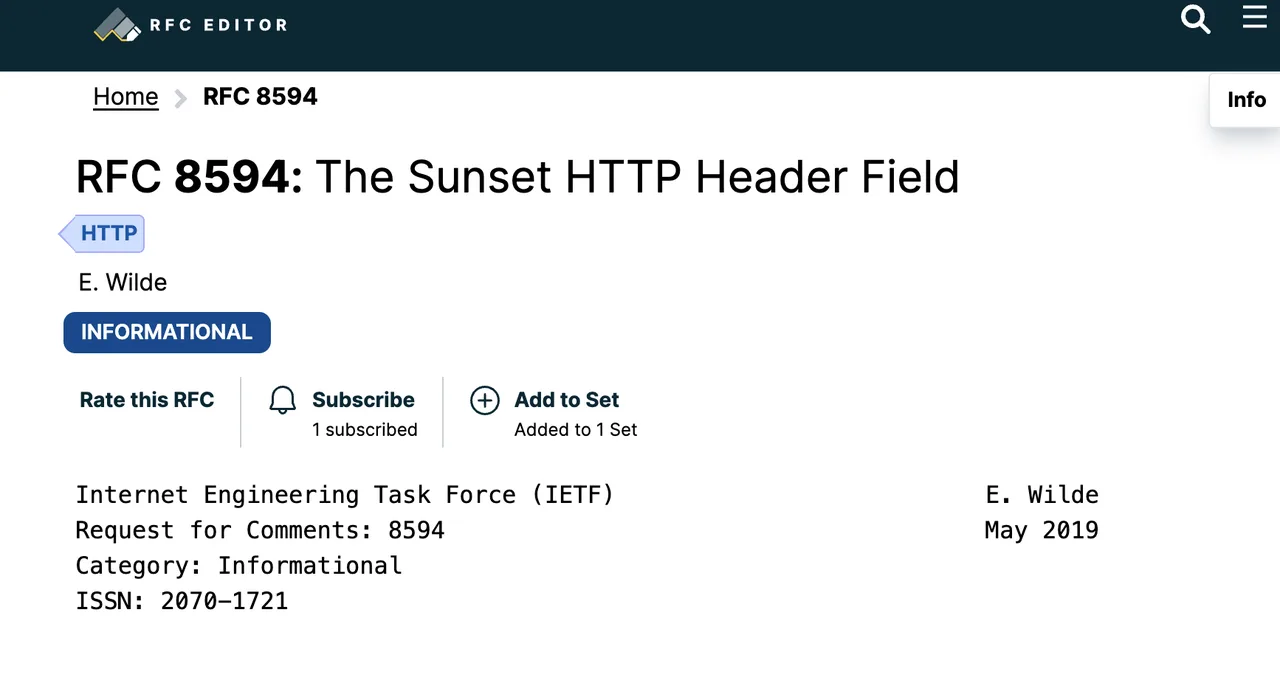
That protection applies to API versions. Public materials do not establish the same notice period for every model ID. Upstream provider changes introduce another dependency. A production integration therefore needs a fallback model, catalog monitoring, stored outputs, and acceptance tests that can run before traffic moves.
Good enough for model trials. Production approval needs a narrower contract.
FAQ
How does ModelsLab announce a model ID’s retirement?
ModelsLab documents API-version retirement through lifecycle, Deprecation, and Sunset headers under its deprecation policy. It commits to at least 90 days between API deprecation and shutdown.
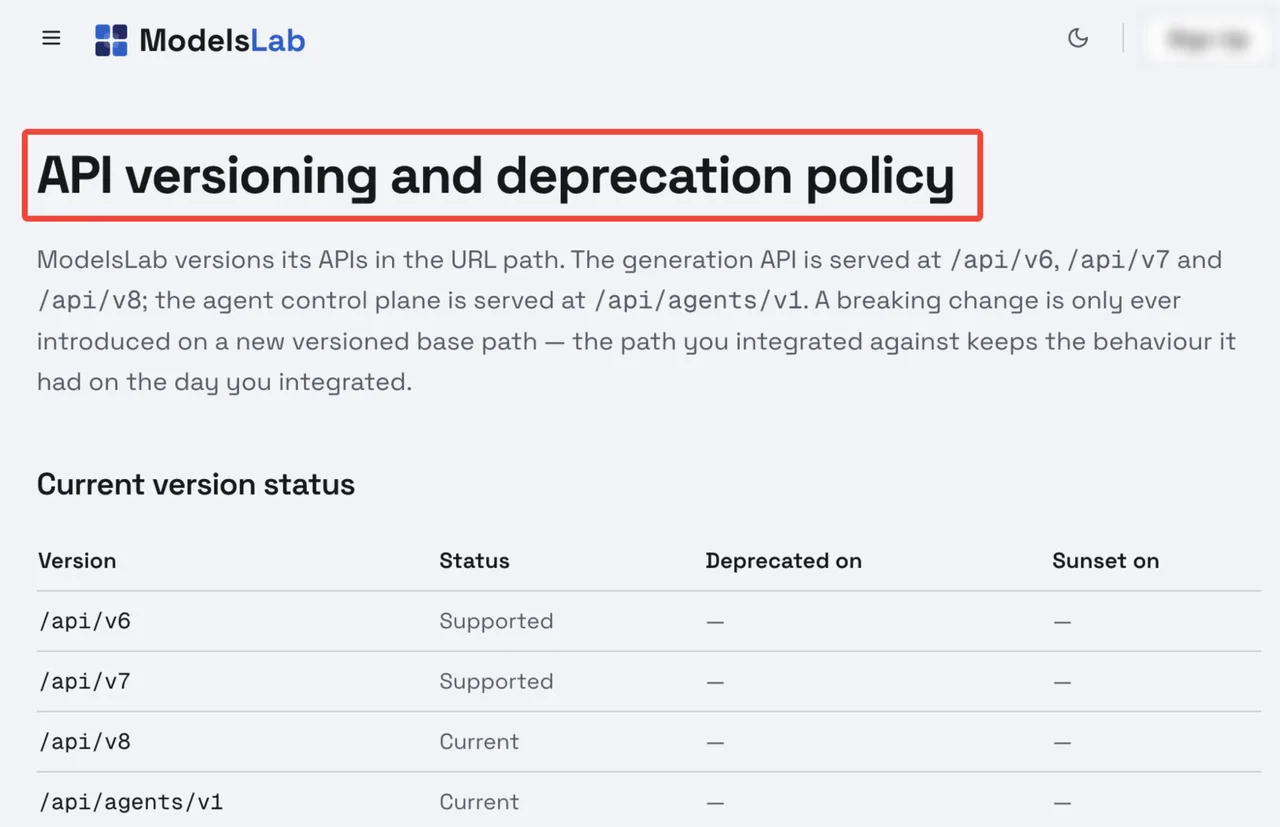
I did not find a matching public policy for individual model IDs. The model feed and changelog can reveal catalog changes, but they are not a stated model-retirement notice guarantee. Production teams need written confirmation for critical IDs and an automated catalog-diff check.
Can a fine-tuned model be hidden from other ModelsLab accounts?
The public training API identifies fine-tunes by training and model IDs, and ModelsLab offers private uploaded models on dedicated enterprise infrastructure. Current public documentation does not clearly state the account-isolation rules for every shared-plan fine-tune.
Treat shared-plan privacy as unconfirmed until ModelsLab supplies a written visibility, access-control, deletion, and training-data commitment. An authenticated model ID alone does not prove tenant isolation.
How long do ModelsLab output URLs remain available?
No universal lifetime is disclosed for every standard image and video output URL. Some enterprise endpoint documentation says generated files are deleted after 24 hours when customer S3 storage is not configured, but that statement should not be extended to every endpoint.
Download accepted outputs immediately, verify their checksums, and move them into controlled storage. Provider URLs are delivery mechanisms, not an archive.
Does ModelsLab sign callbacks from asynchronous jobs?
The current webhook documentation requires HTTPS, recommends id or track_id for duplicate handling, and describes retry behavior. It does not document an HMAC signature, signing secret, timestamp header, or public-key verification flow.
Treat callback payloads as untrusted. Match them to an existing request, verify completion through the fetch endpoint, restrict accepted fields, and prevent the callback from authorizing spending or publishing by itself.
Who licenses output from a community fine-tune on ModelsLab?
ModelsLab’s terms state that users retain rights in generated images. That does not automatically clear a community checkpoint, LoRA, training dataset, trademark, or uploaded reference.
The underlying model license and contributor terms still matter. If a community model page does not identify its source and license, the output is not ready for commercial approval. This is general information, not legal advice.
Conclusion
This ModelsLab review finds a credible catalog and integration layer, not one uniform media runtime. The ModelsLab API reduces account setup and gives developers shared discovery, authentication, job tracking, and billing surfaces across several modalities.
Its best fit is controlled experimentation across image and video models. Production use depends on a smaller approved catalog, saved request records, fetch-based recovery, independent asset storage, model-license checks, and a fallback for disappearing IDs.
One API reduces provider work. It does not remove model governance. That is the line I would keep.
Previous posts:
Related Articles
/filters:quality(82)/media/images/1791451065663755033_qNqAKS1a.webp)
Best AI Video Background Removal Tools in 2027
/filters:quality(82)/media/images/1791359984291066138_tW5eOX6f.webp)
Best Comfy Cloud Alternatives in 2027
/filters:quality(82)/media/images/1773962750383987480_n3hqzHRZ.webp)
Qwen Image 2.1 vs Qwen Image 3.0: What Changes and When to Upgrade
What's Next for Wan Video Generation, and What It Means for Creators
/filters:quality(82)/media/images/1791271002496939282_TBLU3cmv.webp)
Best AI Texture Generators for 3D Assets in 2027
/filters:quality(82)/media/images/1791192288445452271_ToxGQZ8i.webp)