
Qwen 3.7 Plus OpenRouter Review: Access and Routing
Learn how Qwen 3.7 Plus is exposed through OpenRouter, which provider and routing limits apply, and how builders should test the access path.
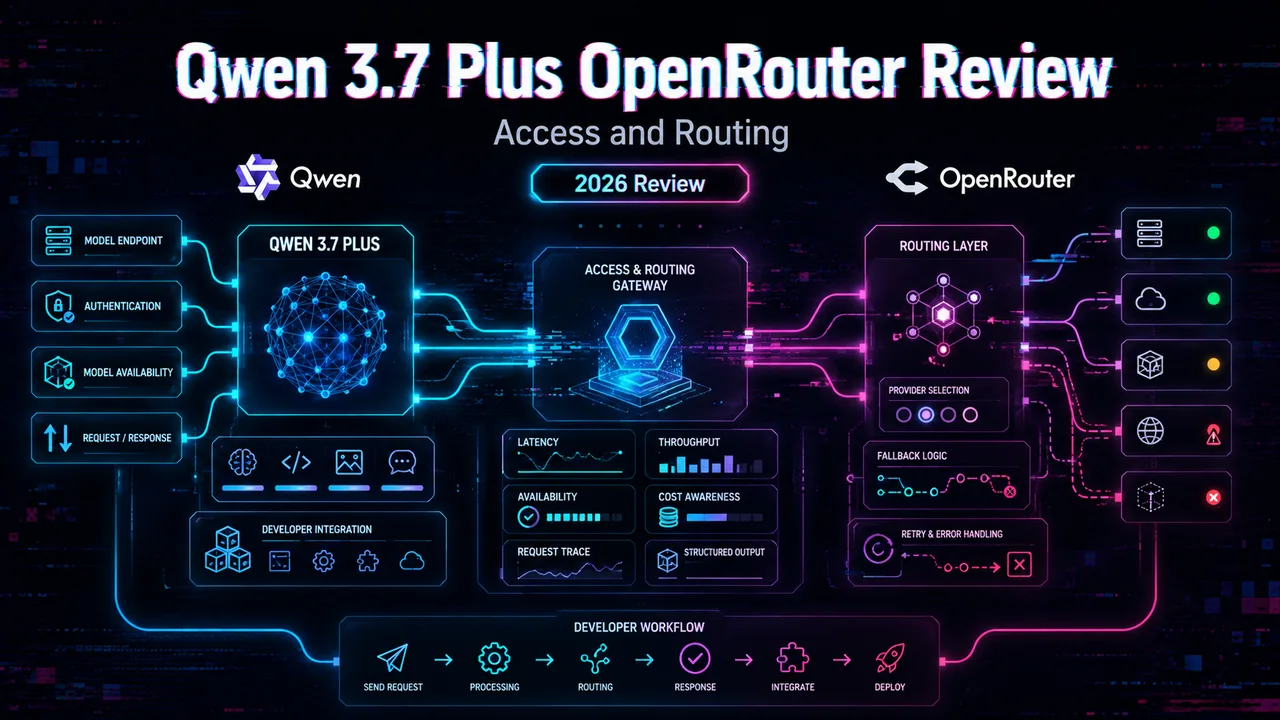
I have seen this mistake before: a team plugs qwen/qwen3.7-plus into OpenRouter, gets one clean answer, and calls the integration done. Then the first production run exposes the part nobody checked: which provider actually handled the request, whether routing can fail over, and whether the cost report still makes sense after retries.
That is why this Qwen 3.7 Plus OpenRouter review starts at the route, not the response. Fetched on August 18, 2026, the OpenRouter model entry listed one provider for this model, Alibaba Cloud Int., with direct forwarding rather than multi-provider routing. The model may be strong, but the integration is only ready when the route, logs, costs, and fallback behavior are visible.
Verify the OpenRouter Model Entry
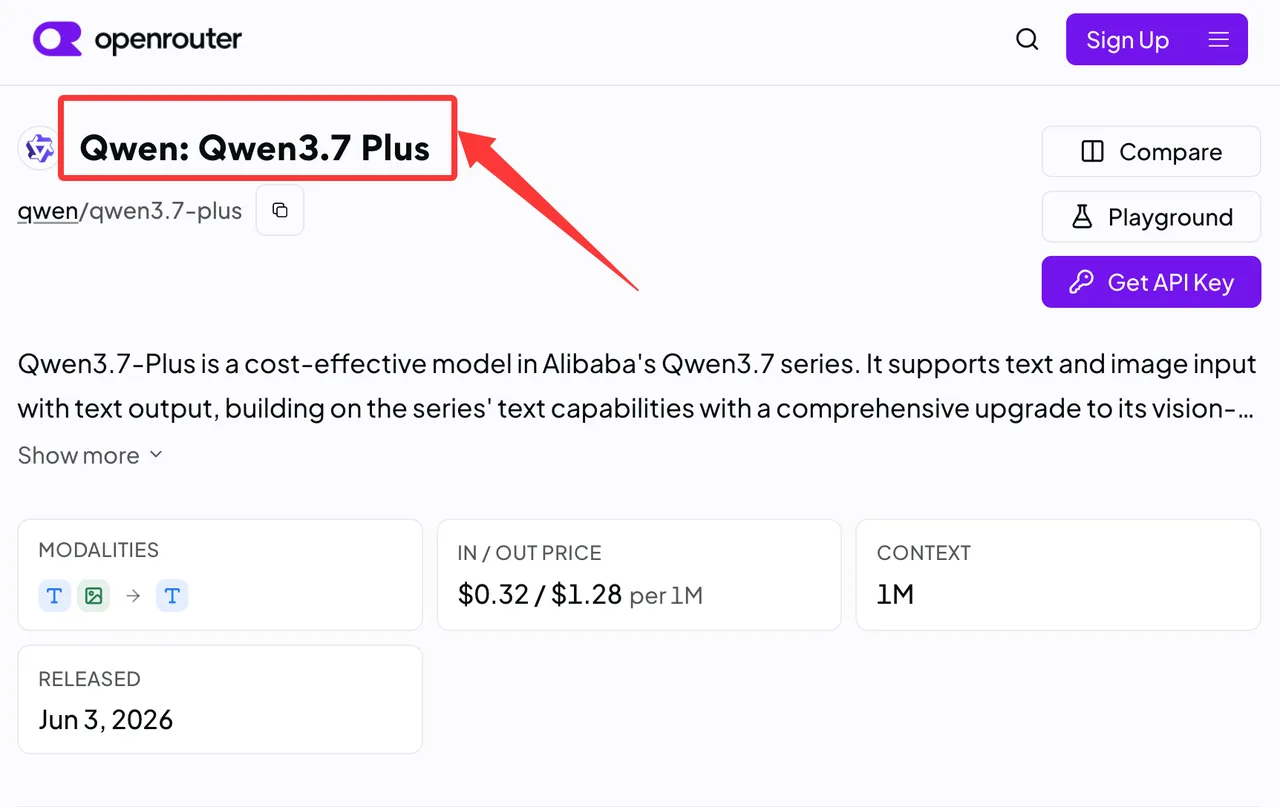
Model Slug, Provider, Release Date, and Modalities
The exact model slug matters: qwen/qwen3.7-plus.
That is the value I would put in code, logs, dashboards, alerts, and cost reports. Not qwen3.7-plus, not qwen/qwen-3.7-plus, not the upstream Alibaba model ID. One character off and the request either fails or goes somewhere the team did not intend.
OpenRouter lists text and image input with text output. Alibaba Cloud’s upstream model page lists image, text, and video input with text output, but I would not assume video input through OpenRouter unless the OpenRouter entry and a live request both confirm it.
One person can remember parameters. A team cannot.
Current Price, Context, Uptime, and Activity Data
The page showed these live facts when I checked:
| Field | Current OpenRouter entry |
|---|---|
| Model slug | qwen/qwen3.7-plus |
| Provider count | 1 provider |
| Routing | Direct forwarding to Alibaba Cloud Int. |
| Price | $0.32 input / $1.28 output per 1M tokens |
| Context | 1M tokens |
| Modalities | Text/image input, text output |
| Uptime shown | 99.99% provider uptime |
| Throughput shown | 13 tokens/sec |
| Latency shown | 1.59s p50 |
I would treat those as a snapshot, not a contract. Aggregator pages move. Prices, provider availability, uptime, and rolling performance metrics can change between two deployment reviews.
Send a Controlled Test Request
Authenticate and Use the Exact Model Slug
For the first OpenRouter Qwen API test, keep the request small. Do not test long context, tool calls, and images in the first call. Prove the route first.
curl https://openrouter.ai/api/v1/chat/completions \
  -H "Authorization: Bearer $OPENROUTER_API_KEY" \
  -H "Content-Type: application/json" \
  -d '{
    "model": "qwen/qwen3.7-plus",
    "messages": [
      {
        "role": "user",
        "content": "Return one sentence explaining what this route is testing."
      }
    ],
    "max_tokens": 80
  }'
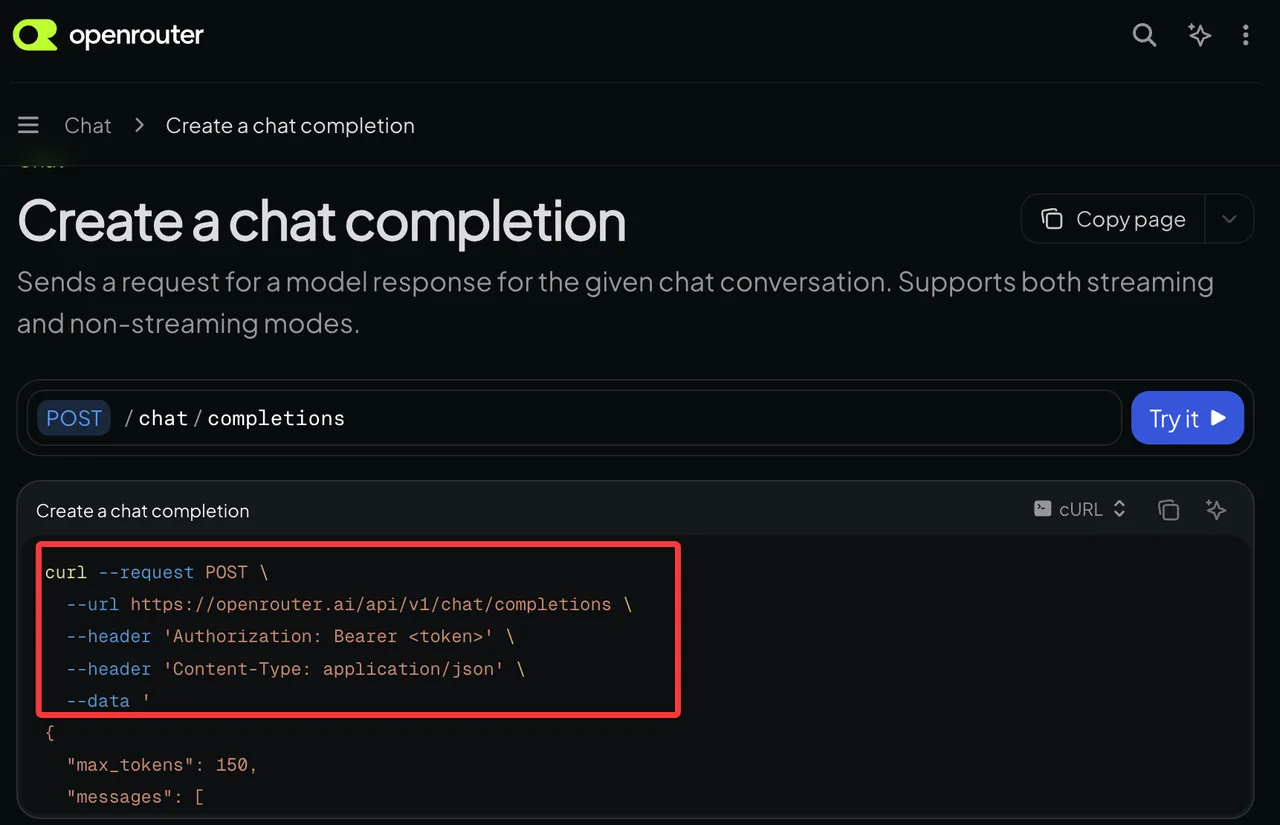
The OpenRouter chat completion API uses Authorization: Bearer <token>, sends requests to /api/v1/chat/completions, and supports streaming and non-streaming modes. Use an environment variable. Do not paste a real key into docs, tickets, or screenshots. That is how a small model test becomes a security cleanup.
Test Messages, Responses, Tools, and Streaming
After the smoke test, I would run four controlled checks:
- plain text response
- image input response
- streaming response
- tool-call or structured-output request
Do not combine them. If the image test fails, you need to know whether the failure came from input formatting, provider support, content handling, or the model route. If everything is tested at once, debugging turns into a guessing game.
This cannot be judged by feel. It needs a sample run.
Understand the Routing Path
Direct Provider Access Versus Multi-Provider Routing
OpenRouter is an aggregator, but this model entry currently behaves like direct forwarding because only one provider is listed. That changes the operational meaning of Qwen3.7 Plus routing.
With one provider, there is no same-model provider race to choose from. No automatic provider switch inside this model route. If Alibaba Cloud Int. has an issue, your recovery plan needs to be explicit: retry, fallback to another model, or fail closed.
Provider Availability, Fallbacks, and Region Constraints
The OpenRouter provider routing docs explain provider sorting, provider order, allowed providers, ignored providers, and fallback behavior. For this specific model, I would still log the provider name because the current page says every request is forwarded to Alibaba Cloud Int.
If OpenRouter later adds a second provider, the production notes need updating. A provider change can affect latency, caching, tool behavior, data handling, and error shape. Same slug does not always mean same operational behavior.
Evaluate Builder Workloads
Coding, Visual Inputs, Tool Calls, and Long Context
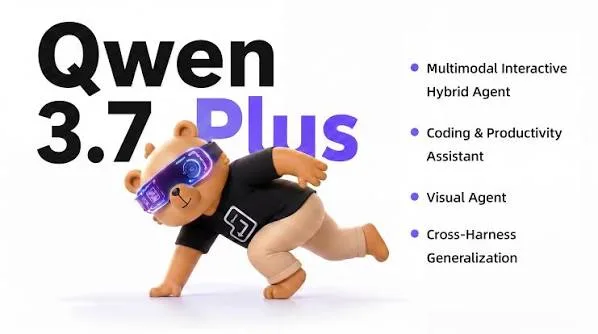
Alibaba’s qwen3.7-plus model page lists function calling, structured outputs, web search, prefix completion, context caching, and batch inference support. It also lists a 1,000,000-token context window, 991,808 max input length, and 65,536 max output length.
That is the upstream capability surface. I would still test what survives OpenRouter. In my run sheet, I would separate:
- upstream model capability
- OpenRouter model entry
- actual request behavior
- application acceptance result
For coding, I would use one repo-reading task, one patch task, and one tool-assisted debugging task. For vision, I would test a UI screenshot and a code screenshot. Do not start with a polished demo image. Production inputs are usually messier.
Error Handling, Structured Output, and Retry Behavior
Structured output needs external validation. I do not care if the answer “looks like JSON.” I care whether the parser accepts it, whether required fields exist, and whether the app can recover when they do not.
For retry behavior, I would record status code, provider metadata, request ID, prompt tokens, completion tokens, latency, and final failure category. A retry that produces a valid answer after three attempts is not the same as a clean first pass. The longer the rework path, the worse the cost looks.
Prepare the Integration for Production
Pin Model IDs and Monitor Provider Changes
Pin qwen/qwen3.7-plus in config. Also record the fetch date, OpenRouter provider name, upstream Alibaba model ID, and current provider count. If the OpenRouter page later changes from one provider to several, rerun the canary.
I would also store a small “route record” beside the integration:
OpenRouter model: qwen/qwen3.7-plus
Checked: 2026-08-18
Provider count: 1
Provider: Alibaba Cloud Int.
Routing: direct forwarding
Context: 1M
Input: text/image
Output: text
Demos show the ceiling. Production shows the floor.
Track Usage, Cost, Reliability, and Data Policies
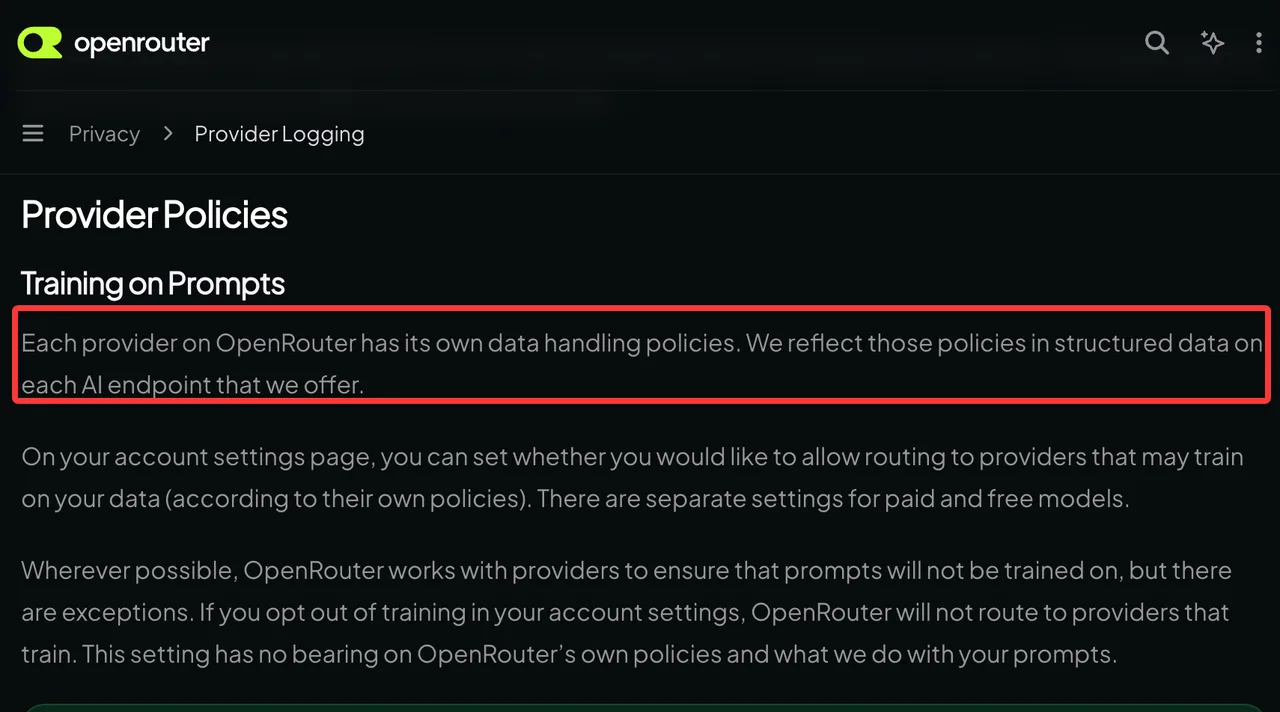
OpenRouter’s provider logging page makes the data-policy point plain: providers have their own logging and retention rules, and routing can be constrained by provider data policy. That belongs in the production checklist, not in a legal review after launch.
Track cost per completed task, not only cost per request. Include retries, failed structured outputs, image-input failures, and user-visible timeouts. Cheap does not always mean cost-saving. Unusable generations are expensive.
Limits and Trade-Offs
Aggregator Metrics Change Over Time
OpenRouter’s pricing, throughput, latency, uptime, and cache-hit metrics are rolling signals. They help decide what to test, but they do not replace your own workload data.
If the page says 13 tokens/sec today and 20 tokens/sec next week, I would not rewrite the production SLA from that number alone. I would rerun the same canary and compare the actual app path.
OpenRouter Access Does Not Guarantee Identical Provider Behavior
Calling Qwen3.7 Plus through OpenRouter is not the same as calling Alibaba Cloud Model Studio directly. The model may be the same family, but headers, routing, logging, retries, supported parameters, and usage exports can differ.
A platform does not need to be everything. It needs not to break the critical path.
FAQ
Can OpenRouter budgets be separated by application or team?
Yes, teams can separate budgets by workspace or API key design. For production, I would give each app its own key and spending limit, then map usage back to team ownership.
How should OpenRouter keys be separated by environment?
Use different keys for development, staging, and production. Do not share one key across environments. If staging burns budget or leaks a key, production should not be touched.
Can usage metadata be exported for internal cost allocation?
Yes, but confirm the exact OpenRouter analytics fields available to your account. At minimum, I would retain model, provider, key hash, request count, prompt tokens, completion tokens, and spend.
What customer notice is appropriate after an upstream provider change?
If output behavior, latency, data handling, or availability can change, notify affected customers before broad rollout when possible. If the change is internal and behavior is unchanged, keep an internal audit note.
Who owns incidents caused by an aggregator-provider mismatch?
The platform owner owns the incident response. The vendor may help, but your team owns routing config, fallback design, observability, and customer communication.
Conclusion
My take on Qwen 3.7 Plus OpenRouter is simple: the access path looks practical, but the current route is not a generic multi-provider safety net. It is qwen/qwen3.7-plus on OpenRouter, currently forwarded to Alibaba Cloud Int., with dynamic pricing and performance metrics that must be checked at release time.
I would approve a limited evaluation after a smoke test, an image test, a structured-output test, and one real coding workflow. Wider production can wait until the team has route logs, cost records, provider-change monitoring, and a fallback plan. That is enough for this round.
Previous posts:
/filters:quality(82)/media/images/c347367a-a007-4466-b8f7-d37f5fb52819.webp)
/filters:quality(82)/media/images/cd4db796-7728-45fb-8267-6813ed28e173.webp)
/filters:quality(82)/media/images/1791535252286714222_v4jvJT2a.webp)
/filters:quality(82)/media/images/1791451065663755033_qNqAKS1a.webp)
/filters:quality(82)/media/images/1791359984291066138_tW5eOX6f.webp)
/filters:quality(82)/media/images/1773962750383987480_n3hqzHRZ.webp)