
Qwen 3.7 Plus Benchmark Review: What Scores Mean
Review Qwen 3.7 Plus benchmark scores, test conditions, limitations, and workload relevance before using rankings for model selection.
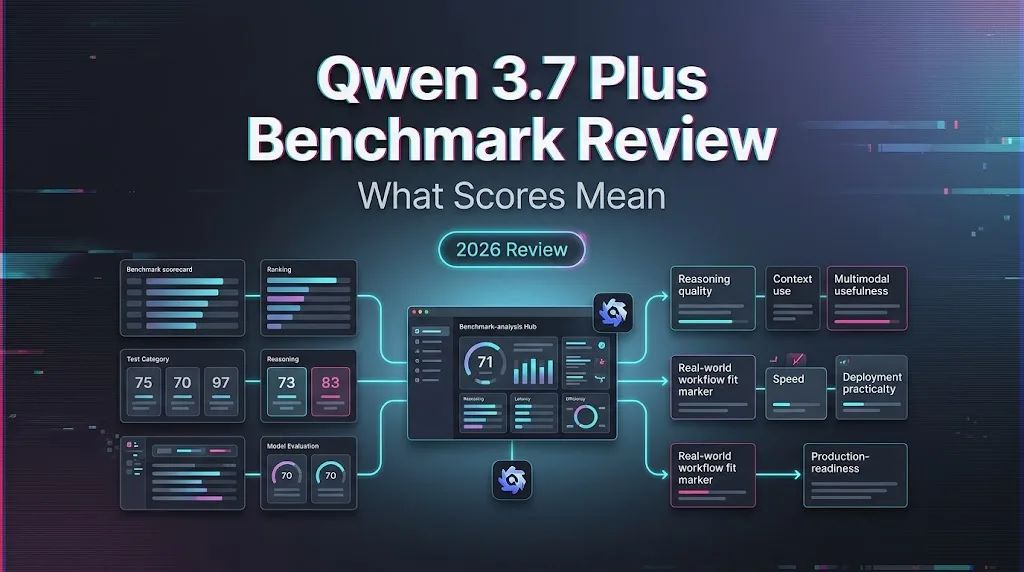
I paused before writing this Qwen 3.7 Plus benchmark review because benchmark pages make bad habits easy. A single number appears. Someone screenshots it. Two meetings later, it becomes “the model is better.”
That is not how evaluation works.
This note is for AI builders, evaluation engineers, and platform teams who need to read Qwen3.7 Plus scores without turning them into folklore. It explains how to build the evidence table, how to separate benchmark sources, and how to decide which scores are usable for a model decision.
Build a Benchmark Evidence Table
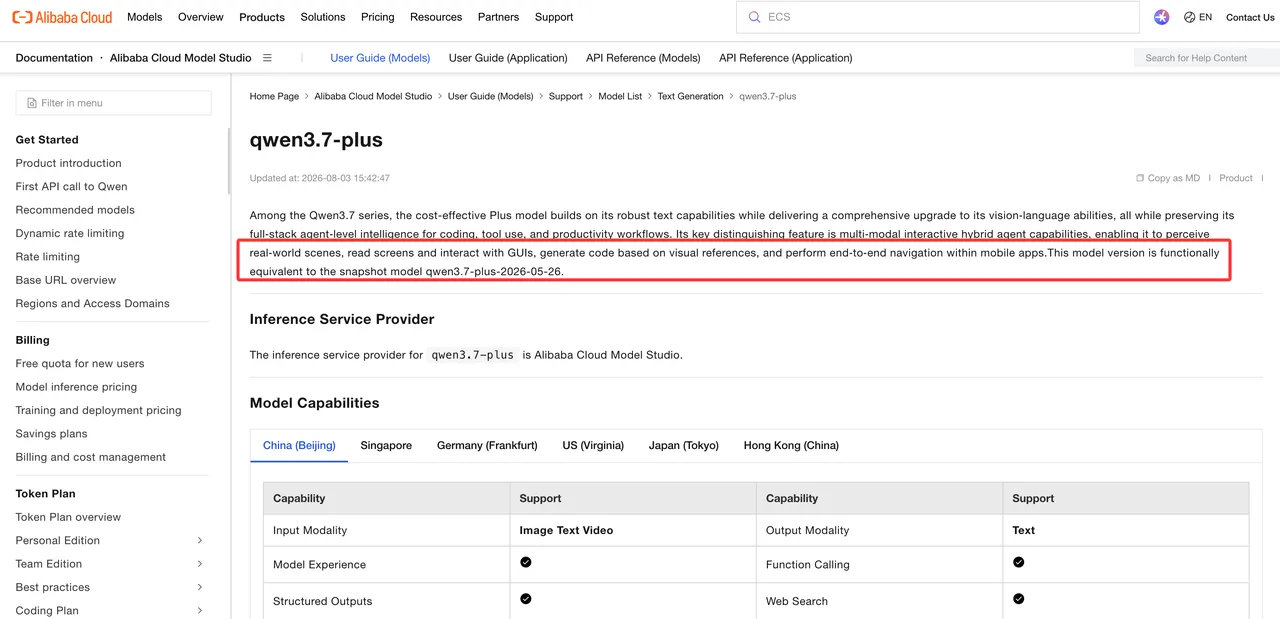
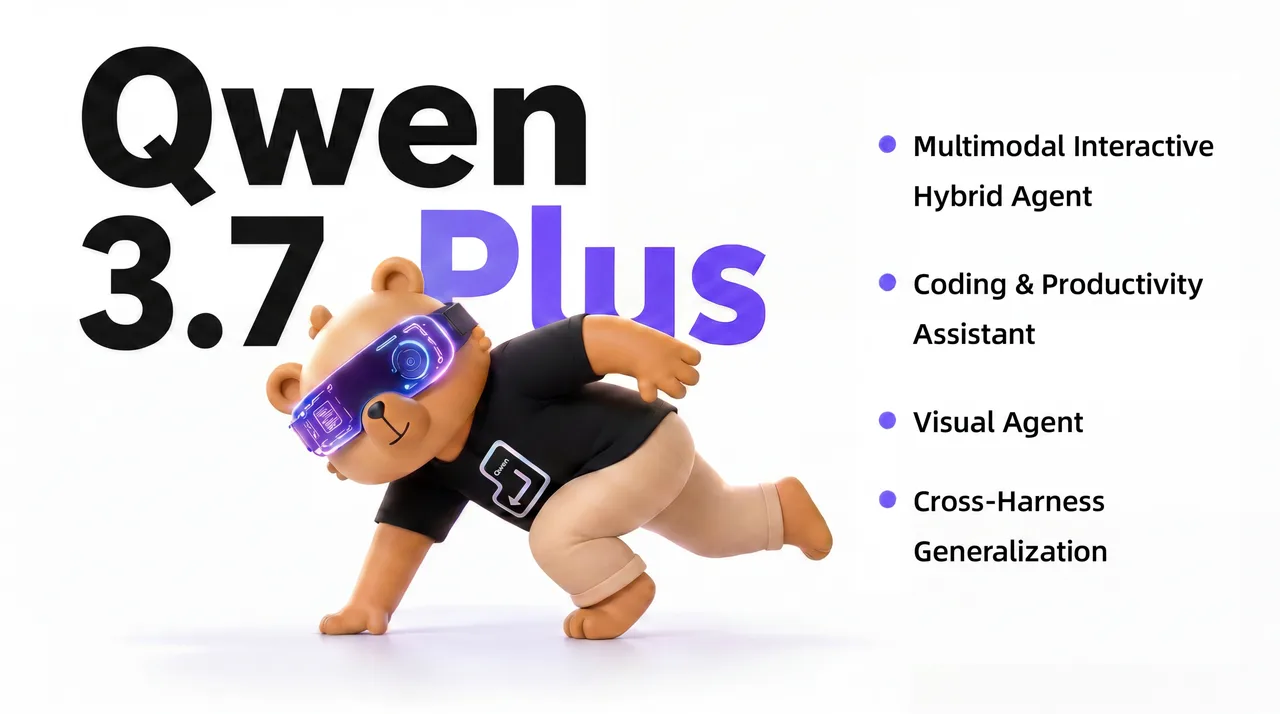
Start with the model identity. Alibaba Cloud’s qwen3.7-plus model page lists qwen3.7-plus as functionally equivalent to qwen3.7-plus-2026-05-26, with text, image, and video input, text output, 1M context, function calling, structured outputs, web search, context caching, and batch inference.
That is the spec. Not the score.
Record Source, Model Version, Date, and Test Settings
My evidence table for a Qwen3.7 Plus benchmark starts with these columns:
| Field | Why it matters |
|---|---|
| Source | Vendor, third party, or internal run |
| Access path | Alibaba Cloud, aggregator, or private proxy |
| Model ID | qwen3.7-plus is not the same row as an unnamed wrapper |
| Snapshot | Example: qwen3.7-plus-2026-05-26 |
| Date checked | Scores and prices move |
| Mode | Thinking, non-thinking, tool-enabled, or unknown |
| Sample size | Missing sample size means weak evidence |
| Scoring rule | Exact match, judge model, pass@1, Elo, unit tests |
| Failures | Timeouts, refusals, invalid formats, missing runs |
I paused here. If the table cannot hold this metadata, the table is not ready for a decision.
Separate Vendor, Third-Party, and Reproduced Results
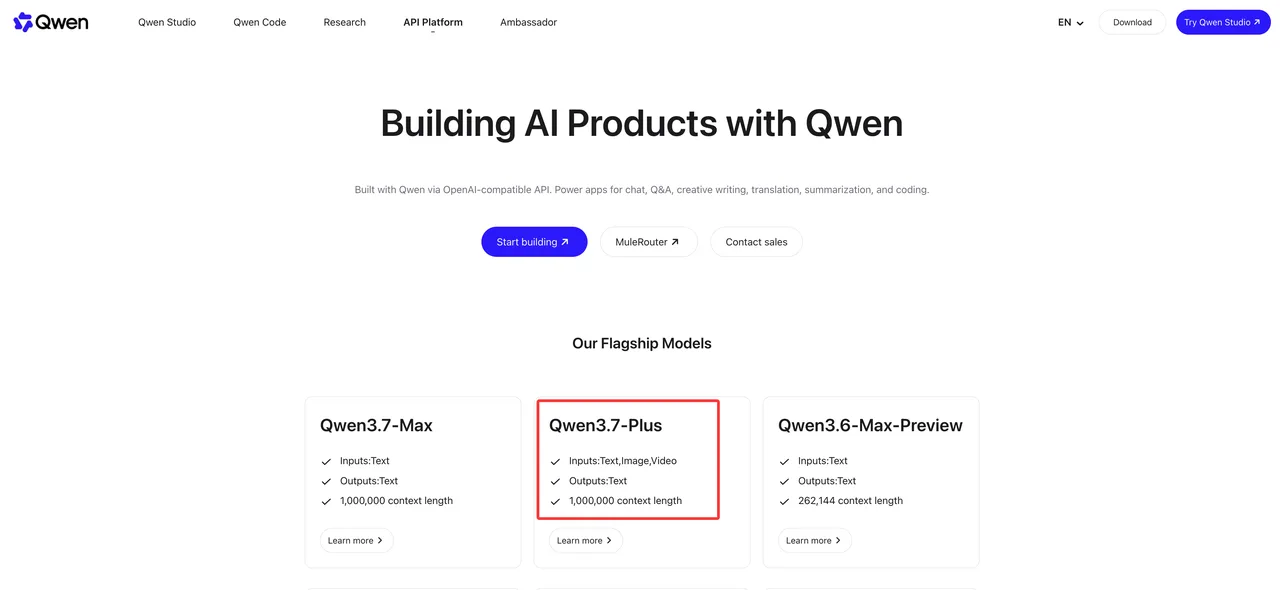
The official Qwen documentation tells me what the model is supposed to support. The Qwen API platform also positions Qwen3.7 Plus as a 1M-context text-image-video input model— verify against the live Qwen API Platform page.
Third-party benchmark sites answer a different question: how the model behaved under their harness. Artificial Analysis, OpenRouter, and smaller benchmark mirrors are useful, but only when each row keeps provider, date, model ID, and settings attached.
Internal reproduced runs are the third layer. Do not mix them with public leaderboard scores unless the prompts, tools, sampling, and scoring match.
Read the Major Benchmark Categories
The useful move is not asking “what rank?” The useful move is asking “what ability did this test actually measure?”
Reasoning, Coding, Knowledge, and Instruction Following
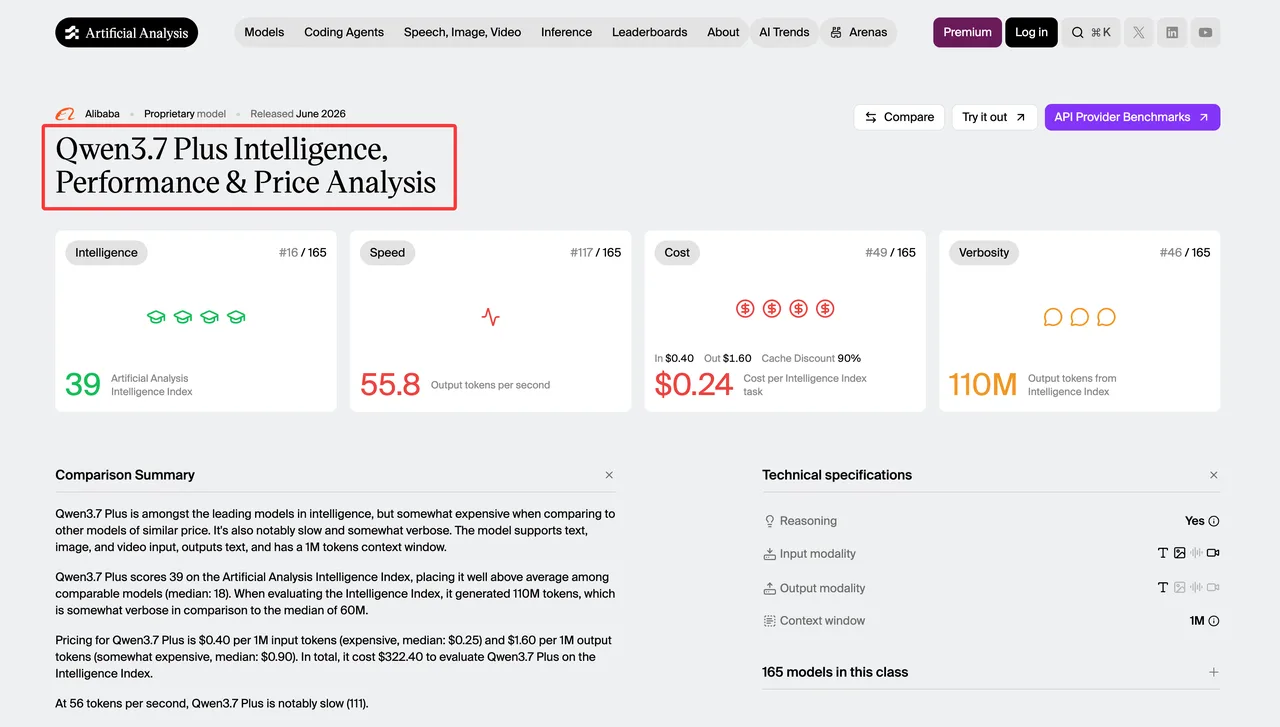
Artificial Analysis currently lists Qwen3.7 Plus at 39 on its Intelligence Index, with 110M output tokens generated during that evaluation. Its Qwen3.7 Plus model page also reports 56.2 output tokens per second, $0.40 per 1M input tokens, and $1.60 per 1M output tokens based on Alibaba’s API.
The benchmark components matter more than the headline. The Artificial Analysis methodology says its Intelligence Index v4.1.1 combines nine evaluations across agents, coding, general ability, and scientific reasoning. It lists examples like GPQA Diamond, HLE, SciCode, Terminal-Bench v2.1, AA-LCR, and AA-Omniscience.
That is already enough to slow down. A Qwen3.7 Plus coding benchmark score is not the same as a support-agent score. Same model. Different failure surface.
Agent, Tool-Use, and Long-Context Evaluations
Agent scores are especially easy to misread. A tool-use benchmark measures planning, tool arguments, environment handling, and recovery. It does not only measure “reasoning.”
OpenRouter’s Qwen3.7 Plus benchmark page shows a third-party snapshot under qwen/qwen3.7-plus, with Artificial Analysis-sourced values such as 39.0 Intelligence Index, 55.9 Coding Index, and 20.8 Agentic Index. It also shows benchmark rows like GPQA Diamond 90.0%, HLE 33.4%, SciCode 45.5%, Terminal-Bench Hard 47.0%, and AA-LCR 65.0%.
Those are not vendor claims. They are third-party reported scores, checked through an aggregator page. Put them in the table that way.
Check Whether Scores Are Cmparable
This is where most benchmark reviews go off the rails.
Prompting, Sampling, Tooling, and Scoring Differences
Artificial Analysis says it uses temperature 0 for non-reasoning models and 0.6 for reasoning models unless the model lab recommends another setting. It also uses pass@1 scoring across many evaluations and allows retries for API failures.
That makes its numbers internally meaningful. It does not make them automatically comparable to your harness.
Compare these before treating two rows as equivalent:
| Dimension | Comparison question |
|---|---|
| Prompt | Same instruction, same examples, same formatting? |
| Sampling | Same temperature, max tokens, reasoning budget? |
| Tools | Disabled, custom tools, web tools, terminal tools? |
| Scoring | Exact match, unit test, judge model, human rubric? |
| Failures | Counted, retried, excluded, or manually reviewed? |
Found the pattern on the third try. Usually the “better model” had a different tool budget.
Contamination, Missing Runs, and Selective Reporting
Do not score missing results as zero. Mark them missing.
Do not merge Qwen3.7 Plus scores from different snapshots without noting the snapshot. Do not compare a tool-enabled run against a tool-disabled run and call it model quality. Do not average a public multiple-choice benchmark with an internal customer-support rubric unless the weighting is explicit.
A single neat average can hide a broken production behavior. It often does.
Reproduce the Most Relevant Tasks
For this article, I did not run live Qwen3.7 Plus API calls. No API logs, no claim of reproduced model output. This is where my data ends.
For a publishable internal decision, I would require at least these reproduced tasks:
| Task | Runs | Acceptance rule | Failure labels |
|---|---|---|---|
| Product support retrieval | 5 | Correct policy span, no invented clause | wrong span, hallucination, over-answer |
| Coding patch | 5 | Tests pass, patch is minimal | compile fail, wrong file, brittle patch |
| Tool-use workflow | 5 | Valid tool args, completes within retry budget | bad args, loop, unsafe action |
Choose Workloads That Match the Product
If the product is a coding assistant, reproduce coding tasks. If it is a document QA layer, reproduce long-context retrieval. If it is an agent, reproduce tool calls and recovery.
Do not borrow a complete public benchmark suite just because it looks formal. Use public scores to choose hypotheses. Use your own tasks to make decisions.
Report Variance, Failures, and Incomplete Runs
A clean reproduced table includes average score, run count, variance, timeout count, invalid-output count, and examples of failures.
Report failures in plain language. “2/5 runs called the wrong tool after a partial database result” is more useful than “agent score: 60.”
Translate Scores Into a Model Decision
A benchmark score becomes useful only after weighting.
Weight Quality Against Latency, Cost, and Reliability
Artificial Analysis reports Qwen3.7 Plus as relatively strong on intelligence but slower and verbose compared with its comparison group. That matters if your workflow pays for long reasoning traces or waits for multi-step answers.
A model with a better Qwen3.7 Plus score profile may still lose in production if latency breaks UX, output length raises cost, or tool-call errors require human review.
Define a Canary Test Before Production Adoption
Before switching production traffic, run a canary:
| Canary rule | Example threshold |
|---|---|
| Quality | No regression on top 20 production tasks |
| Latency | p95 stays within product budget |
| Cost | Cost per successful task stays inside limit |
| Reliability | No new failure class above agreed rate |
| Rollback | Old model path remains callable |
Good enough. That’s the most honest assessment I can give.
Limits and Trade-Offs
Leaderboard Rank Does Not Predict Every Application
A leaderboard rank is a summary. Your application is not a summary.
A support bot, coding agent, search assistant, and multimodal document reviewer can all read the same Qwen3.7 Plus evaluation and make different choices. That is normal.
A Single Aggregate Score Can Hide Critical Weaknesses
Aggregate scores compress reality. Compression loses detail.
If a model is strong on GPQA and weak on tool recovery, the aggregate may still look fine. If your product depends on tool recovery, the aggregate is noise.
FAQ
How often should a benchmark evidence table be refreshed?
Refresh it on model snapshot changes, pricing changes, harness changes, or before major release decisions. For active model families, monthly is a reasonable default.
Can teams use customer prompts in an internal benchmark suite?
Yes, but only after privacy review, redaction, and access control. Keep raw customer data out unless policy explicitly allows it. This is general information, not legal advice.
What should happen when two evaluators disagree on a result?
Record both labels, add a tie-break rule, and preserve the original output. Disagreement is data. Deleting it makes the benchmark weaker.
Can benchmark artifacts be shared with external auditors?
Usually yes if contracts, data policy, and confidentiality rules allow it. Share prompts, outputs, scoring rubrics, and environment notes. Remove secrets and customer identifiers first.
Who approves changes to benchmark weights?
The owner should be named before testing starts. I prefer platform plus product sign-off. Evaluation weights are product priorities in disguise.
Conclusion
A Qwen 3.7 Plus benchmark review should not crown a model. It should explain what each score measured, where it came from, and whether it maps to the workload in front of you.
Use public Qwen3.7 Plus scores as evidence, not instructions. Keep vendor specs, third-party results, and reproduced internal runs in separate rows. Then decide, with the boring parts included: failures, variance, latency, cost, and rollback.
Previous posts:
/filters:quality(82)/media/images/c347367a-a007-4466-b8f7-d37f5fb52819.webp)
/filters:quality(82)/media/images/cd4db796-7728-45fb-8267-6813ed28e173.webp)
/filters:quality(82)/media/images/1791535252286714222_v4jvJT2a.webp)
/filters:quality(82)/media/images/1791451065663755033_qNqAKS1a.webp)
/filters:quality(82)/media/images/1791359984291066138_tW5eOX6f.webp)
/filters:quality(82)/media/images/1773962750383987480_n3hqzHRZ.webp)