
MAI-Image-2.6 Benchmark: Why It Ranks No. 2
MAI-Image-2.6 benchmark results place it No. 2 on Arena. Learn what the ranking measures, what Microsoft reported, and how builders should validate it.
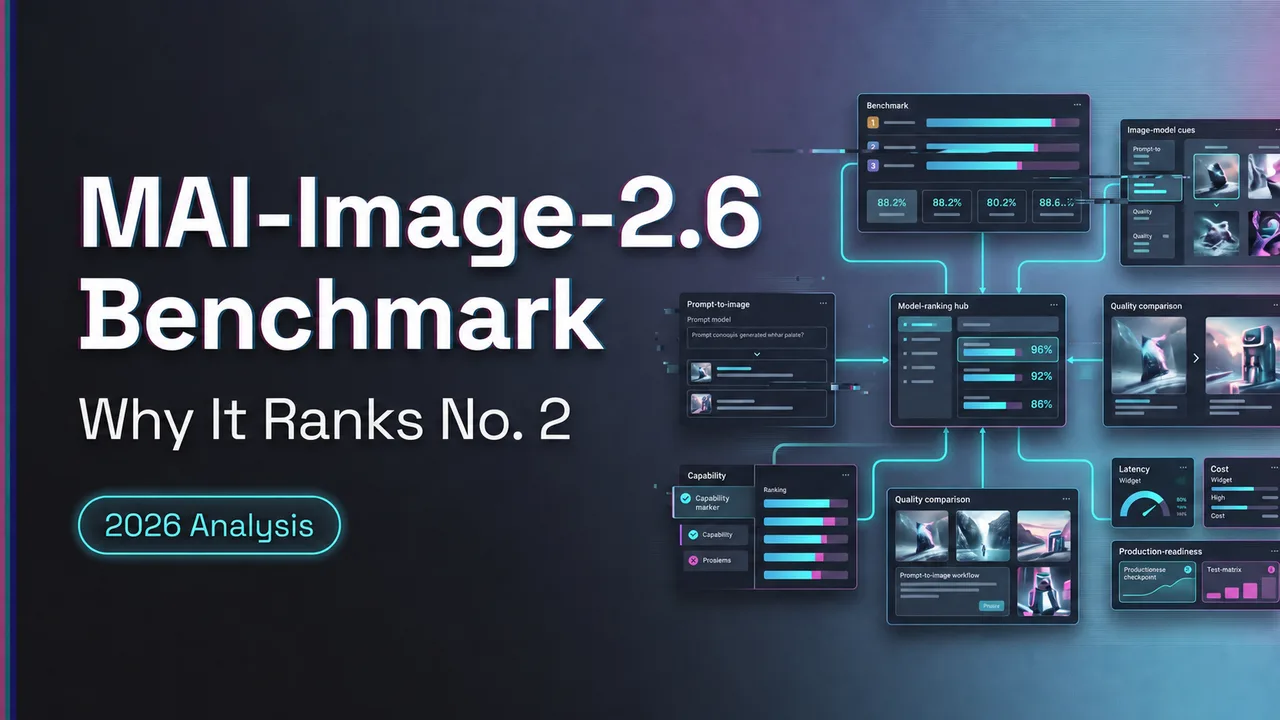
The MAI-Image-2.6 benchmark headline is easy to overread. No. 2 sounds like a product decision. It is not. It is an Arena result, based on human preference voting inside a specific text-to-image leaderboard.
For image API builders, eval engineers, and product owners, the useful question is narrower: what does this ranking show, what does it not show, and how should a team turn the result into an internal test plan?
Short version: Microsoft reports MAI-Image-2.6 launched at No. 2 on Arena, with +79 Elo over MAI-Image-2.5 overall and +91 Elo in text rendering. Good signal. Not production proof. Different job.
Why MAI-Image-2.6 Ranks No. 2 on Arena

The Reported Overall and Category Gains
Microsoft’s MAI-Image-2.6 launch post says the model ranked second on Arena’s text-to-image leaderboard as of August 10, 2026. The same post reports a +79 Elo gain over MAI-Image-2.5 overall, with gains across every measured Arena text-to-image category.
That wording matters. This is a Microsoft-reported launch claim tied to Arena results. It does not mean MAI-Image-2.6 is the second-best image model for every prompt type, API workload, customer vertical, latency target, or budget.
The live Arena text-to-image leaderboard gives the public snapshot: rank, score, rank spread, votes, model provider, and category filters. At the time checked for this article, MAI-Image-2.6-preview appears in the No. 2 position overall.
I paused here. “No. 2” is precise only inside that leaderboard view.
What the Text Rendering Gain Means
Microsoft also reports +91 Elo in text rendering. That is probably the most interesting claim for builders.
Text inside generated images is still one of the places image models fail in visible, customer-hostile ways. Product packaging, signage, posters, UI mockups, menus, ad creatives, and brand assets all expose spelling, spacing, and typography errors quickly. A model that improves text rendering may reduce review load for commercial design workflows.
May. Not will.
Your internal MAI Image benchmark should test your own typography cases: short brand names, long labels, small disclaimers, curved text, multilingual text, low-contrast text, repeated words, and text placed on objects. A leaderboard category cannot replace that.
How Arena’s Text-to-Image Ranking Works
Preference Scores, Elo Movement, and Category Results
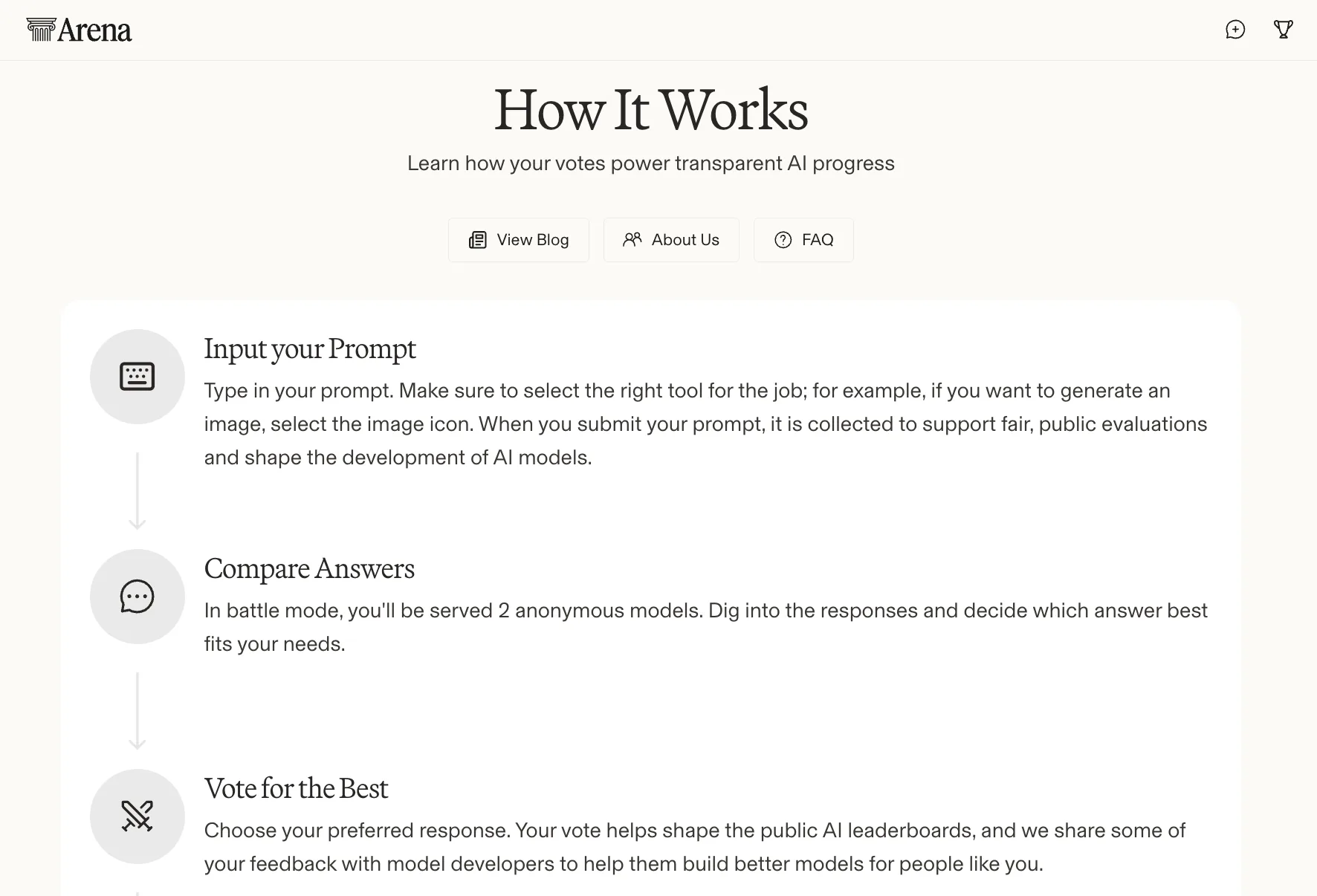
Arena’s How It Works page describes the basic loop: users enter a prompt, compare two anonymous model outputs, vote for the better response, then see the model identities after voting. Those preference votes feed public leaderboards.
For text-to-image evaluation, this produces a preference-based ranking. It is not a pixel-level metric. It is not a latency benchmark. It is not a brand-safety review. It reflects which output users preferred in side-by-side battles under Arena’s conditions.
The Arena Elo score movement is useful because it compresses many human comparisons into a ranking signal. The category views are useful because they split broad image quality into narrower buckets such as portraits, photorealistic imagery, commercial design, art, and text rendering.
The distance between choice freedom and choice fatigue is short. Category scores help reduce it.
What a Leaderboard Cannot Prove
A leaderboard cannot prove production fit.
It cannot tell you whether the model is available through your preferred API. It cannot tell you whether your region is supported. It cannot tell you whether throughput is enough for batch campaigns. It cannot tell you whether output rights, retention, content filters, or pricing match your customer contract.
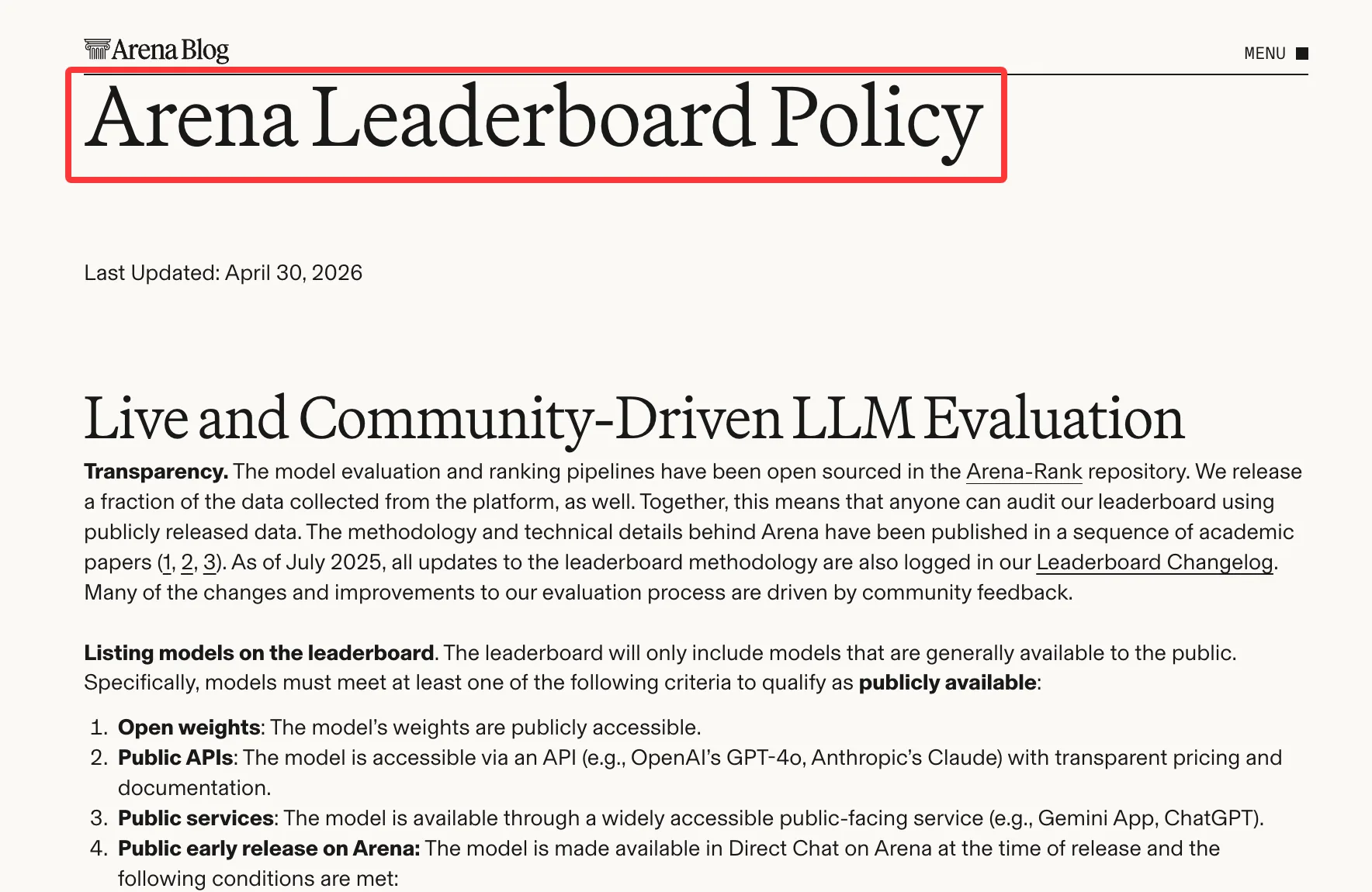
Arena’s Leaderboard Policy is useful reading because it explains public availability requirements, preliminary scores, minimum voting expectations, and how unreleased or early-release models are handled. That policy helps interpret the MAI-Image-2.6 Arena result. It does not turn the leaderboard into a procurement checklist.
Turn the Ranking Into a Builder Test Plan
Freeze Prompts, Formats, and Review Criteria
Start with a frozen prompt set. Not a vibe test. A real one.
Use 30 to 100 prompts from your product backlog. Include your normal aspect ratios, image sizes, reference-image patterns, brand constraints, forbidden content cases, and failure examples from prior models. Keep the exact prompts unchanged across models.
Score each output on fixed criteria:
| Review Area | What to Check |
|---|---|
| Prompt fidelity | Did the output follow the requested objects, setting, style, and constraints? |
| Text rendering | Are words correct, legible, placed correctly, and visually integrated? |
| Commercial design | Would this survive packaging, ad, or product review? |
| Consistency | Do repeated generations stay within the acceptable range? |
| Safety review | Does the output violate policy, rights, or customer standards? |
| Operational fit | Is generation time, format, and retry behavior workable? |
Found the pattern on the third try: most image model evals fail because review criteria are loose, not because the model comparison is hard.
Separate Vendor Claims From Independent Results
Use three evidence buckets.
- Vendor claims: Microsoft’s reported No. 2 ranking, +79 Elo overall gain, and +91 Elo text rendering gain.
- Independent public signal: Arena’s live leaderboard position, score range, vote count, and category results.
- Internal evidence: your frozen prompt set, reviewer notes, failure rate, retry rate, cost estimate, and production constraints.
Do not mix the buckets. A sales slide can cite Microsoft and Arena if the wording is exact. A launch decision needs your own eval artifacts.
Production Evidence the Ranking Does Not Provide
Availability, Pricing, Throughput, and Version Stability
Microsoft’s launch post says MAI-Image-2.6 can be tried on Arena, is coming later that week to MAI Playground, and is rolling out soon across Microsoft Foundry and other products. That is not the same as saying broad API access is already available.
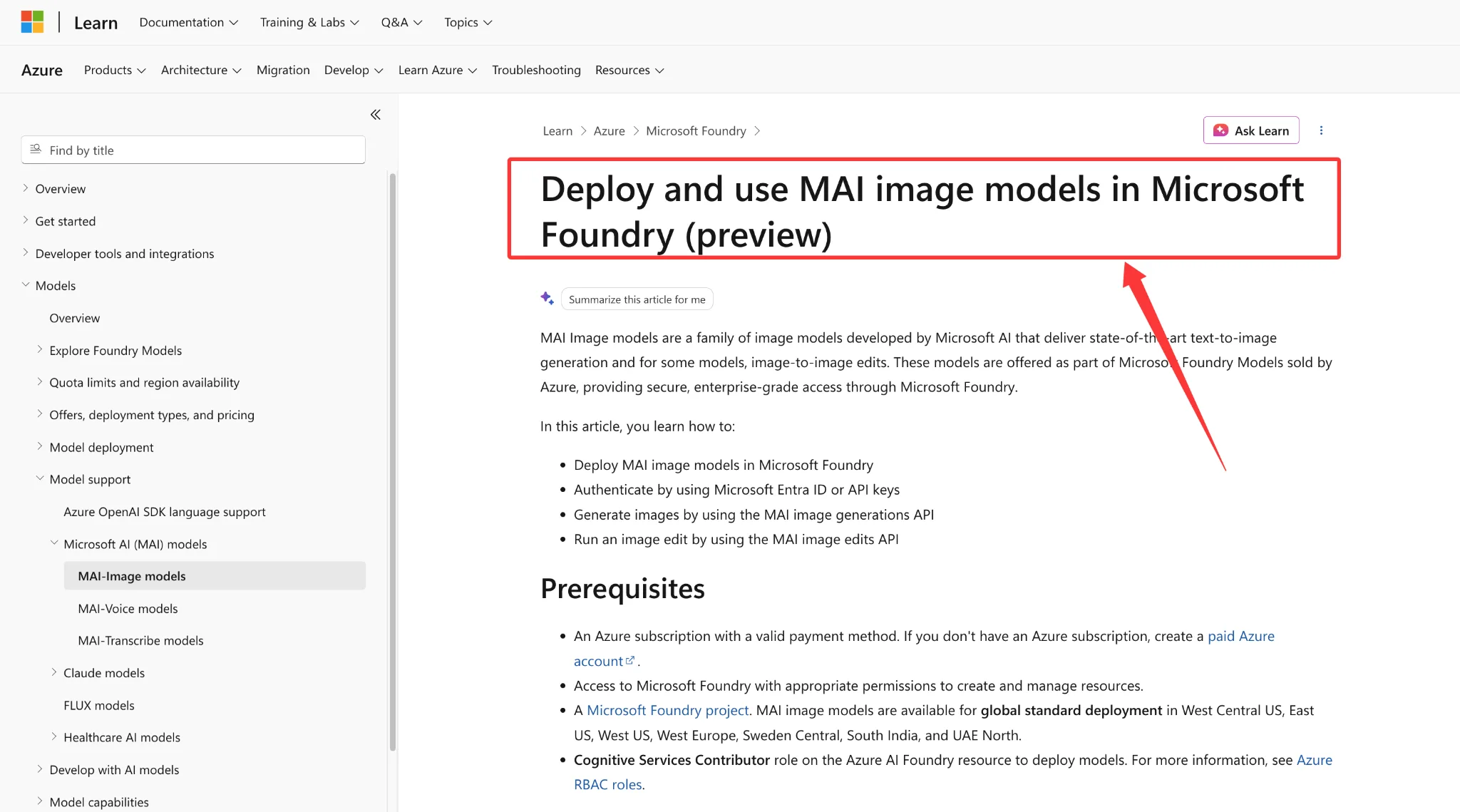
For current deployable MAI image models, the official Microsoft Foundry MAI image docs list supported model names, deployment regions, endpoints, authentication, request parameters, and RPM limits. As of this check, that page documents MAI-Image-2.5 and earlier image models, not universal MAI-Image-2.6 availability.
That is where my data ends.
Before production, verify:
- model name and version
- region support
- API surface
- image dimensions and output format
- RPM limits
- price
- content filters
- rollback path
Licensing, Data Handling, and Output Review
The MAI-Image-2.6 ranking says nothing by itself about licensing, customer data handling, or output review obligations.
For any customer-facing image product, assign owners for legal review, data review, policy review, and human QA. Store prompts, outputs, reviewer notes, selected model versions, and decision records where your policy allows.
If the output enters regulated advertising, healthcare, finance, education, or political workflows, the benchmark is just an input. Not approval.
FAQ
Who owns disputes between human reviewers and automated scores?
The evaluation owner should own the dispute process. Automated scores can flag candidates, but final disagreement handling needs a named human reviewer group, escalation rules, and documented tie-break criteria.
Can Arena results appear in customer-facing sales materials?
Yes, if wording is exact and scoped. Say Microsoft reported MAI-Image-2.6 ranked No. 2 on Arena’s text-to-image leaderboard. Do not say it is the absolute No. 2 model for all image tasks or production workloads.
Who should own access to raw evaluator comments?
Limit access to the evaluation lead, product owner, legal or policy reviewers, and the engineering owner. Raw comments can contain sensitive customer context, reviewer bias, or unapproved claims.
How should teams preserve evaluation artifacts for audits?
Store prompt sets, model versions, timestamps, outputs, reviewer rubrics, scores, comments, and final decisions in a controlled repository. Keep the same retention policy you use for other product risk evidence.
What changes should trigger a complete benchmark rerun?
Rerun the full benchmark when the model version changes, prompts change, review criteria change, safety policy changes, API settings change, or your product adds a new image category. Small config change, small retest. Model change, full rerun.
Conclusion
The MAI-Image-2.6 benchmark is a strong launch signal because it combines a high Arena rank with reported gains over MAI-Image-2.5, especially in text rendering. It is not a production guarantee.
The clean next step is not to argue with the leaderboard. Freeze your prompts. Define your review rubric. Separate Microsoft claims, Arena results, and internal evidence. Then decide whether the MAI-Image-2.6 ranking matters for your actual product.
Previous posts:
Related Articles
/filters:quality(82)/media/images/1791535252286714222_v4jvJT2a.webp)
ModelsLab Review 2027: One API for Media Models?
/filters:quality(82)/media/images/1791451065663755033_qNqAKS1a.webp)
Best AI Video Background Removal Tools in 2027
/filters:quality(82)/media/images/1791359984291066138_tW5eOX6f.webp)
Best Comfy Cloud Alternatives in 2027
/filters:quality(82)/media/images/1773962750383987480_n3hqzHRZ.webp)
Qwen Image 2.1 vs Qwen Image 3.0: What Changes and When to Upgrade
What's Next for Wan Video Generation, and What It Means for Creators
/filters:quality(82)/media/images/1791271002496939282_TBLU3cmv.webp)