GLM-5.2 Benchmark Framework for AI Builders
GLM-5.2 benchmark framework helps builders compare GLM, Kimi K3, and Claude across coding, agents, context, and cost.
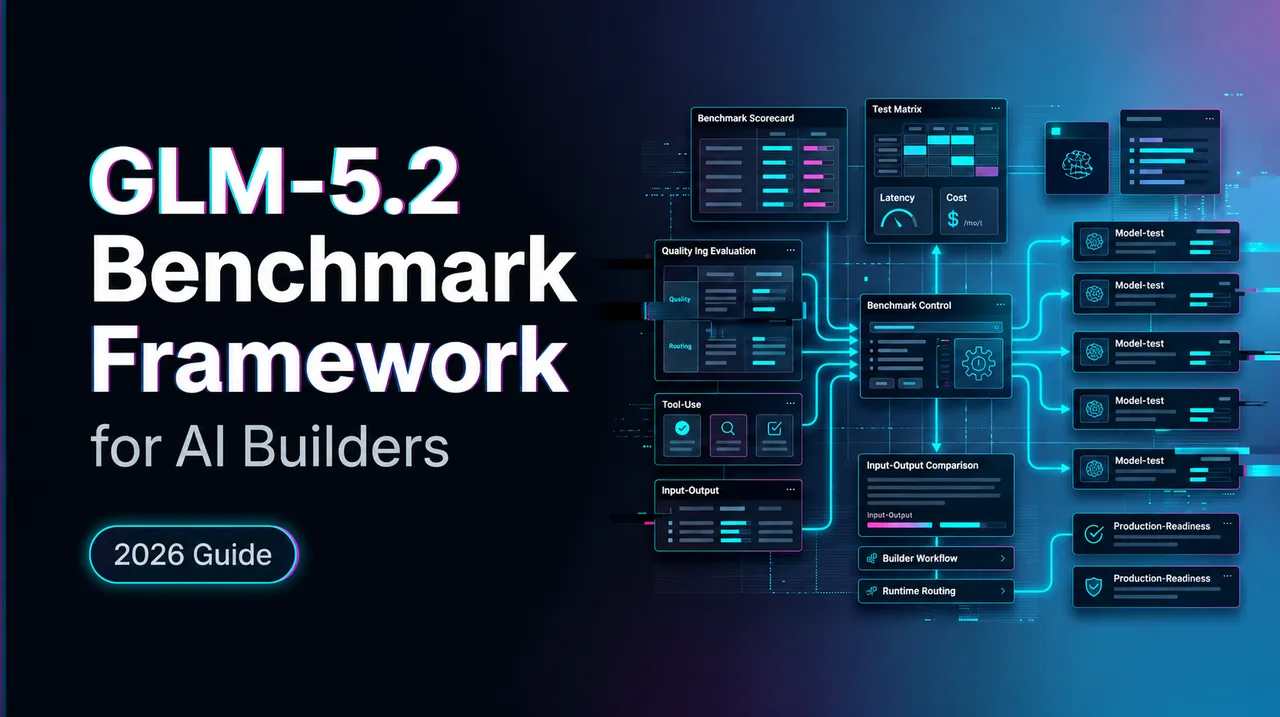
I do not start model selection with a leaderboard anymore. I still read the scores. I just do not let them make the decision. A GLM-5.2 benchmark only becomes useful when it is tied to the work your team actually routes to models: coding agents, long context review, tool calls, retries, fallback, and human repair.
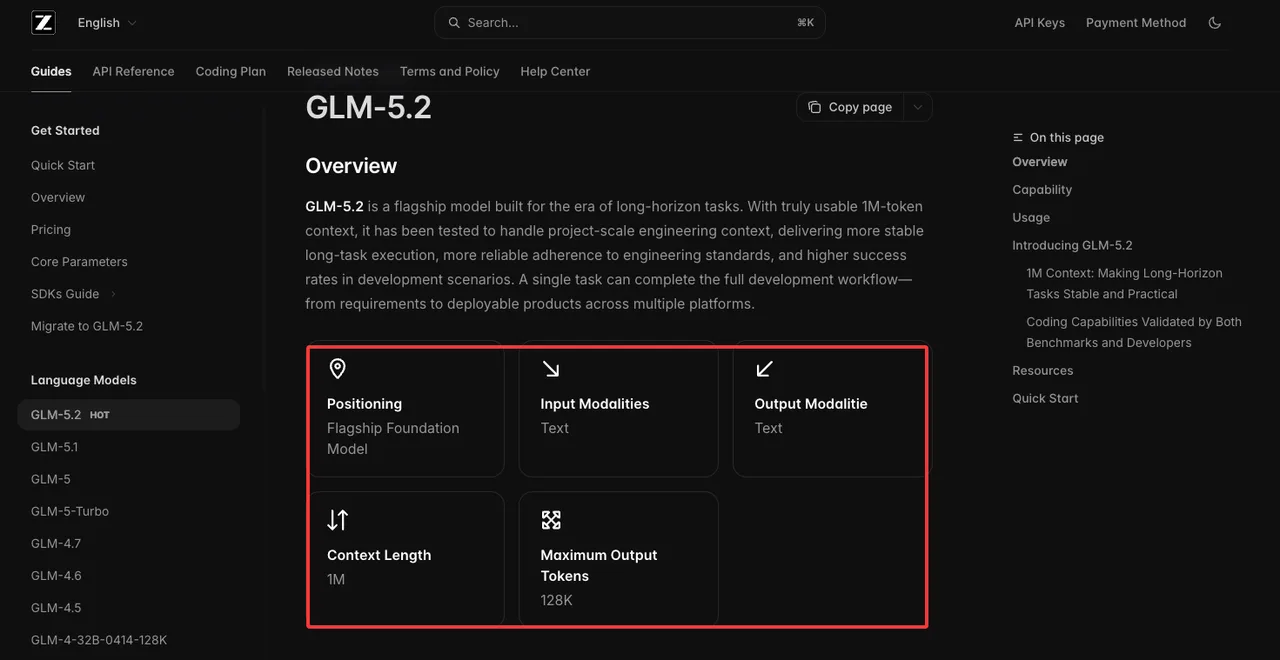
Dora here, and I checked Z.ai’s current GLM-5.2 documentation on August 3, 2026. The official name is GLM-5.2, and Z.ai lists it as a flagship text model with 1M context and 128K maximum output tokens. That is the fact layer. This piece is the evaluation layer.
What GLM-5.2 Benchmarks Should Prove
A benchmark should prove one thing first: the model reduces production work. Not “looks smart.” Not “wins a table.” Reduces work.
For model selection teams and AI platform owners, the expensive part is rarely the first answer. It is the gap between model output and accepted result. A PR that almost passes still needs an engineer. A tool call with one wrong argument still breaks the workflow. A long context answer that forgets one early constraint still needs review.
So I would not ask, “Is GLM-5.2 good?”
I would ask, “Which failure does it reduce?”
For GLM-5.2, the relevant failure classes are long-horizon engineering drift, weak codebase recall, fragile tool use, expensive retry loops, and context instability. A GLM benchmark that does not test those things is too generic.
Why public scores are not enough for production selection
Public scores are useful for screening. They are not enough for adoption.
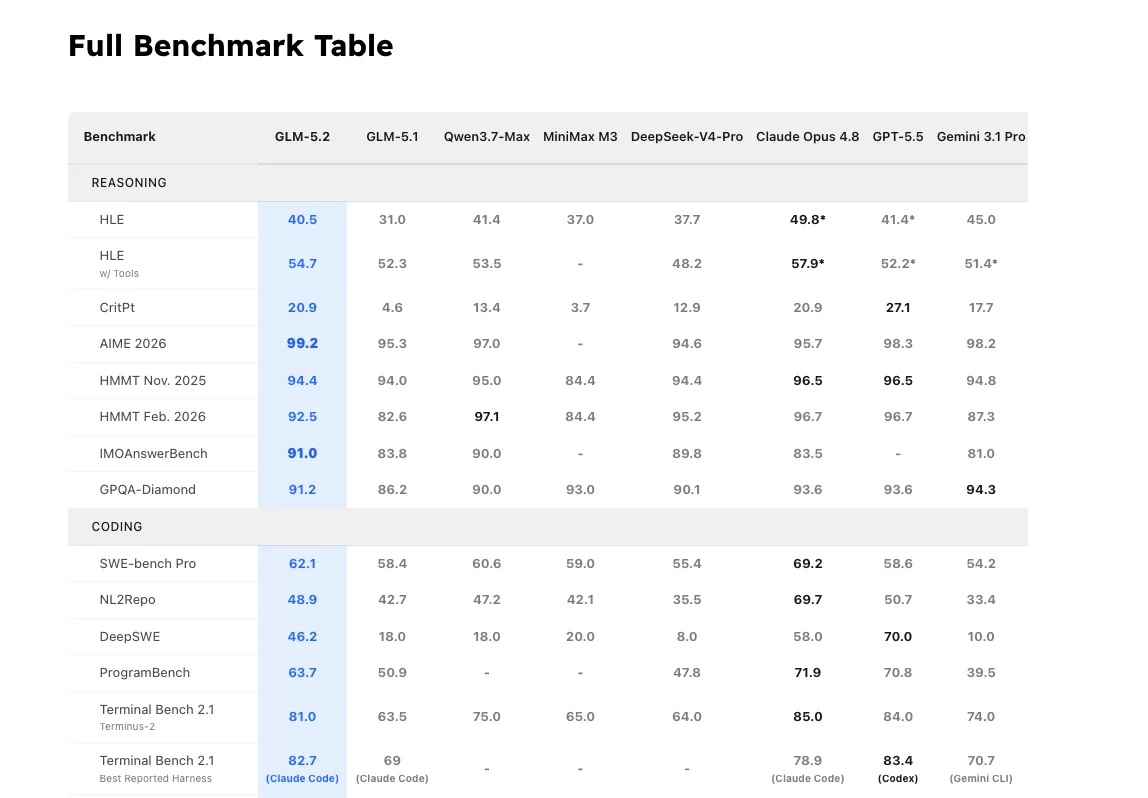
Z.ai’s GLM-5.2 release blog reports reasoning, coding, and agentic benchmark results, with details about harnesses, context windows, sampling settings, and judge models. I read those details. The footnotes matter.
A public score cannot tell me whether GLM-5.2 will follow your repository rules, respect your dependency policy, recover from your tool errors, or preserve your internal standards after 40 turns. That is where production selection starts.
I paused here. Most benchmark debates skip the harness. That is usually where the useful information is.
Reasoning, coding, agent work, long context, and tool use
I split evaluation into five lanes.
- Reasoning tests should include ambiguity. Missing requirements. Conflicting policies. Incomplete product specs. The model should state assumptions instead of inventing missing facts.
- Coding tests should use real repositories. Toy prompts are too clean. Real repos have stale comments, partial migrations, build scripts, test gaps, and old naming patterns.
- Agent work requires tools. No tools, no agent model evaluation. I track tool-call validity, argument correctness, retry behavior, and whether the model changes its plan after tool output contradicts it.
- Long context AI tests need buried constraints. Put a hard rule early, a tempting contradiction in the middle, and the task near the end. Then check what survives.
- Tool-use tests need failure conditions. Timeouts. Empty responses. Permission errors. Partial data. If the model only works when tools behave perfectly, the test is too polite.
Build a Fair Comparison Set
A bad comparison set gives everyone confidence in the wrong answer.
I have seen this happen quietly. One model gets a polished prompt. Another gets a copied transcript. One gets full tool schemas. Another gets prose descriptions. One gets retries. Another gets scored on the first run. The table still looks objective. It is not.
For GLM-5.2, Kimi K3, and Claude, I would compare by workload type. Not by one winner column. The goal is routing, not theatre.
Same prompts, same tools, same context, and same success criteria
Freeze the evaluation packet before running the test.
That packet should include prompts, files, tool schemas, system rules, context order, timeout, retry budget, scoring rubric, and reviewer instructions. If one provider needs a special adapter, log it as integration cost.
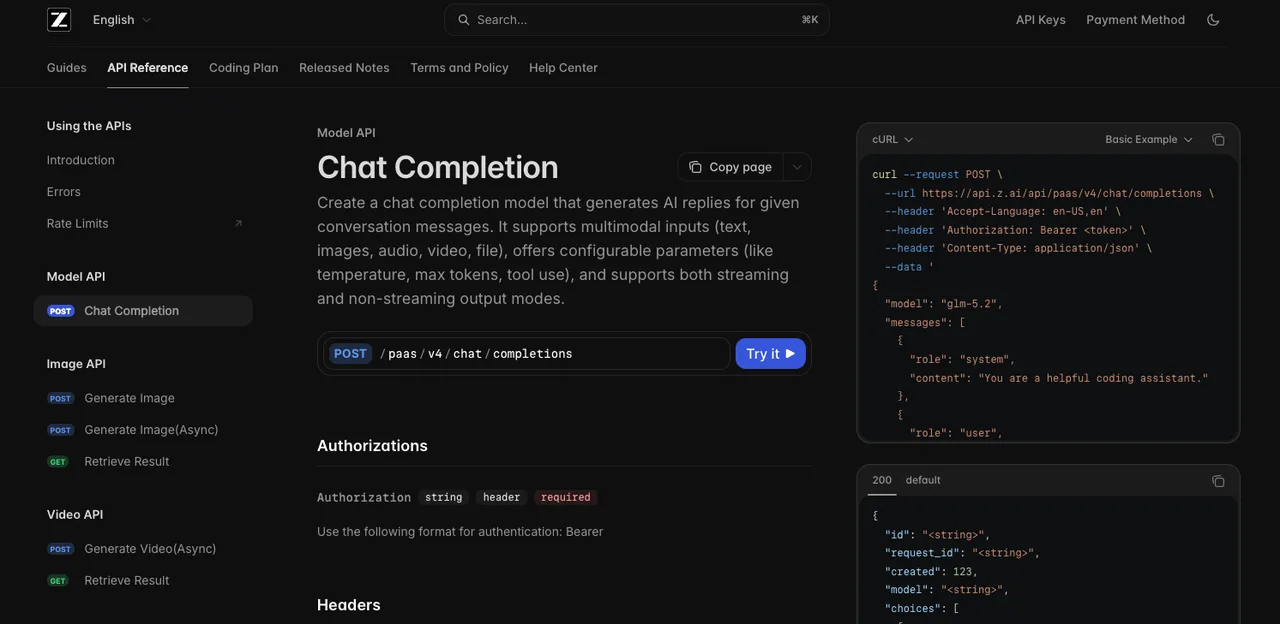
The glm-5.2 model code appears in Z.ai’s Chat Completion API, which matters because model identifiers, request fields, streaming behavior, and endpoint assumptions need to be fixed before comparison.
| Test Area | Same For Every Model | Production Signal |
|---|---|---|
| Reasoning | Prompt, assumptions, rubric | Handles ambiguity without inventing facts |
| Coding | Repo, task, tests, tools | Finishes within scope |
| Agent work | Tool schemas, permissions | Calls tools correctly |
| Long context | Document order, buried rules | Retains early constraints |
| Production simulation | Retry and fallback rules | Fails cleanly or completes |
The success criteria must be written before the run. After-the-fact scoring turns into preference scoring. Someone likes concise output. Someone else likes a longer plan. Someone trusts the provider they already use.
Found the pattern on the third try.
Compare GLM-5.2, Kimi K3, and Claude by workload type
- A Kimi K3 comparison belongs in the matrix if your team cares about open-weight control, long context, multimodal agent work, or provider independence.
- A Claude comparison belongs in the matrix if your workflow already depends on Claude Code, Claude tool behavior, or Anthropic as a high-reliability fallback.
- GLM-5.2 belongs in the matrix when the task is long-horizon engineering, codebase takeover, large-context reasoning, or agent workflows that need sustained constraint retention.
Do not force these into one ranking.
Use a routing map:
Full codebase audit goes to the model with the best context stability. Multi-file refactoring goes to the model with the lowest repair time. Tool-heavy workflows go to the model with the cleanest tool discipline. High-volume support tasks go to the model with the best latency, retry, and cost profile.
The useful artifact is not “GLM-5.2 beats X.” The useful artifact is “GLM-5.2 handles these workloads under these limits, and falls back under these triggers.”
Measure Production Signals
Benchmarks usually stop too early. Production starts after the answer appears. That is where the costs show up: retries, repairs, fallback calls, human review, incident notes, and support explanations.
A model that completes 82% of tasks with low repair time may beat a model that completes 88% but creates confusing failures. The prettier model wins the demo. The quieter model wins week two.
Still using it in week two. That counts.
Completion rate, latency, retry rate, token cost, and repair time
Completion rate is the first number. It is not the final number. Track first-pass success separately. A task that passes after four retries is not the same as a task that passes once. Track latency as median and p95. Average latency hides the tail.
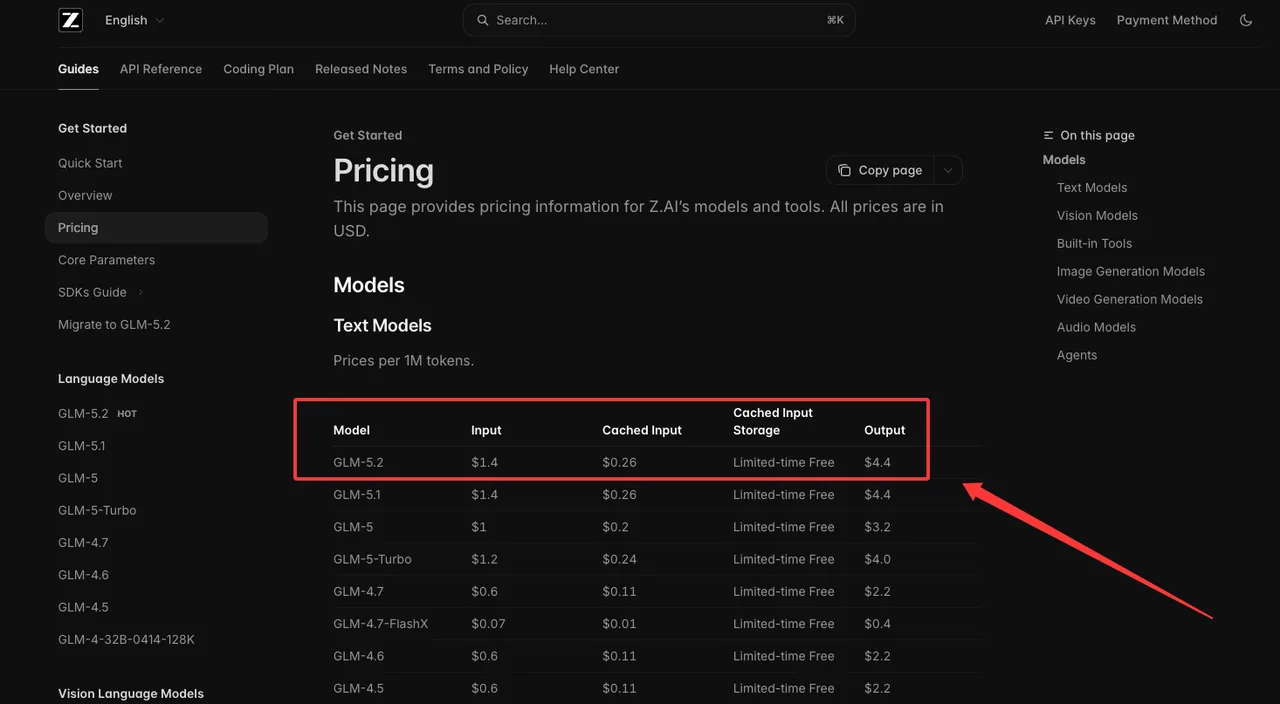
For GLM-5.2, token cost should be checked against the current Z.ai pricing page at the time of evaluation. Do not paste a number into an evergreen model report and forget it. Prices change. Cached-token treatment changes. Billing categories change.
Repair time is the metric I trust most.
If a model fails, how long does it take a human to fix the result? Five minutes is different from forty. A cheap failure can still be expensive. I would track completion rate, first-pass success, median latency, p95 latency, retry rate, accepted-task cost, repair time, escalation rate, scope violations, fallback rate, and regression risk.
This conclusion has an expiration date - models update fast.
Fallback behavior, context stability, and provider maturity
Fallback behavior should be designed before launch.
If GLM-5.2 fails, what happens next? Retry with a narrower prompt? Route to Claude? Route to Kimi K3? Ask a human? Shorten context and run a verification pass?
Write the trigger rules before production.
I would trigger fallback on unsafe tool calls, repeated invalid JSON, context drift, missed hard constraints, timeout, policy uncertainty, or low-confidence verification.
Context stability needs its own test. A 1M context window is not the same as reliable recall. Test at 250K, 500K, 750K, and near-limit context. Add tool results. Add multi-turn revisions. Add conflicting instructions. Then check whether the model still follows the rule that mattered.
Provider maturity is less exciting. It decides how tired your platform team gets. Look at rate limits, error formats, SDK quality, status reporting, model alias stability, deprecation policy, usage fields, caching visibility, support channels, and incident reconstruction.
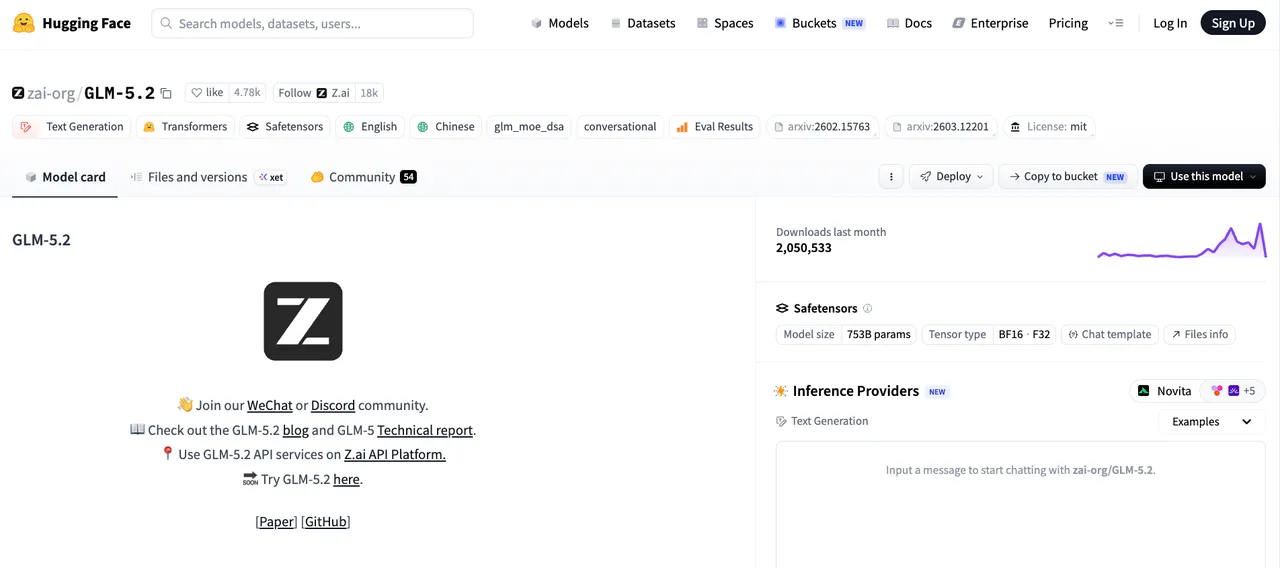
Open-weight status also belongs in the maturity discussion. The zai-org GLM-5.2 model card lists the license as MIT. That gives teams another governance path to evaluate. It does not remove serving cost or operational burden.
Good infrastructure makes you forget it is there. Bad infrastructure becomes a weekly meeting.
FAQ
Who owns the archived evaluation report after launch?
The AI platform owner owns it. Not marketing. Not procurement. Not the engineer who ran the first test set.
The archive should include model names, provider versions, evaluation dates, prompts, files, tool schemas, scoring rubrics, raw outputs, reviewer notes, retry logs, cost assumptions, fallback rules, and source links.
For a GLM-5.2 benchmark, it should also store dated verification for official naming, API availability, context length, pricing, benchmark claims, and open-weight status.
How should teams resolve conflicting model evaluation results?
Split the conflict by workload. If GLM-5.2 wins long-context refactoring, Kimi K3 wins open-weight deployment control, and Claude wins support-agent recovery, there is no contradiction. That is routing data.
Only rerun the test when two models compete for the same production lane. Same prompt. Same tools. Same context. Same retry budget. Same reviewer rubric. If the tie remains, use repair time and provider maturity as the tiebreakers.
Who updates public claims when external benchmarks change?
The publishing team owns the page. The AI platform team owns fact verification. Marketing can keep the article readable. Platform verifies model names, API status, pricing, context window, benchmark source, open-weight state, and routing claims.
For external benchmark changes, use a dated review cycle. Monthly is reasonable for comparison pages. Faster after major model releases. Immediate review if a provider changes a claim that appears in the article.
Better than making something up.
Conclusion
A good model selection process does not ask which model is best. It asks which model handles which workload, under which constraints, with which fallback, at what repair cost.
That is the frame I would use for a GLM-5.2 benchmark. Public scores decide what enters the test set. Internal workloads decide what enters production. Compare GLM-5.2, Kimi K3, and Claude only long enough to build a routing map.
Measure completion rate. Measure latency. Measure retry rate. Measure token cost. Measure repair time. Test long context under pressure. Test tools when they fail. Archive every claim with dates. Run it yourself. That will tell you more than the leaderboard row.
Previous posts:
Related Articles

Best AI Video Platforms for Production Teams in 2027

Best Sora 2 Alternatives for Video Teams in 2027

Lanta AI Review 2027: Best Uses, Pricing, and Limits
Sora 2 Review 2027: API Quality, Cost, and Limits

Build a GPT-6 Astra 3D Workflow With Blender Assets