DeepSeek Codex Cost: Real Provider Economics
DeepSeek Codex cost depends on tokens, protocol conversion, context replay, retries, tool failures, and human repair time.
I had to stop pricing coding-agent runs by the model invoice alone. It made the cheap route look cleaner than it was. DeepSeek Codex cost is the phrase teams use when they mean “run Codex-style repository work through DeepSeek or a DeepSeek-backed provider,” but that phrase hides the expensive parts: failed edits, repeated context, tool-call retries, and human repair.
This is not a benchmark note. It is a cost note for FinOps, platform owners, and coding-agent product teams deciding whether DeepSeek should receive more agent traffic.
The short version: count cost per accepted change. Token price is only the first row.
Why Token Price Is Only the Starting Point
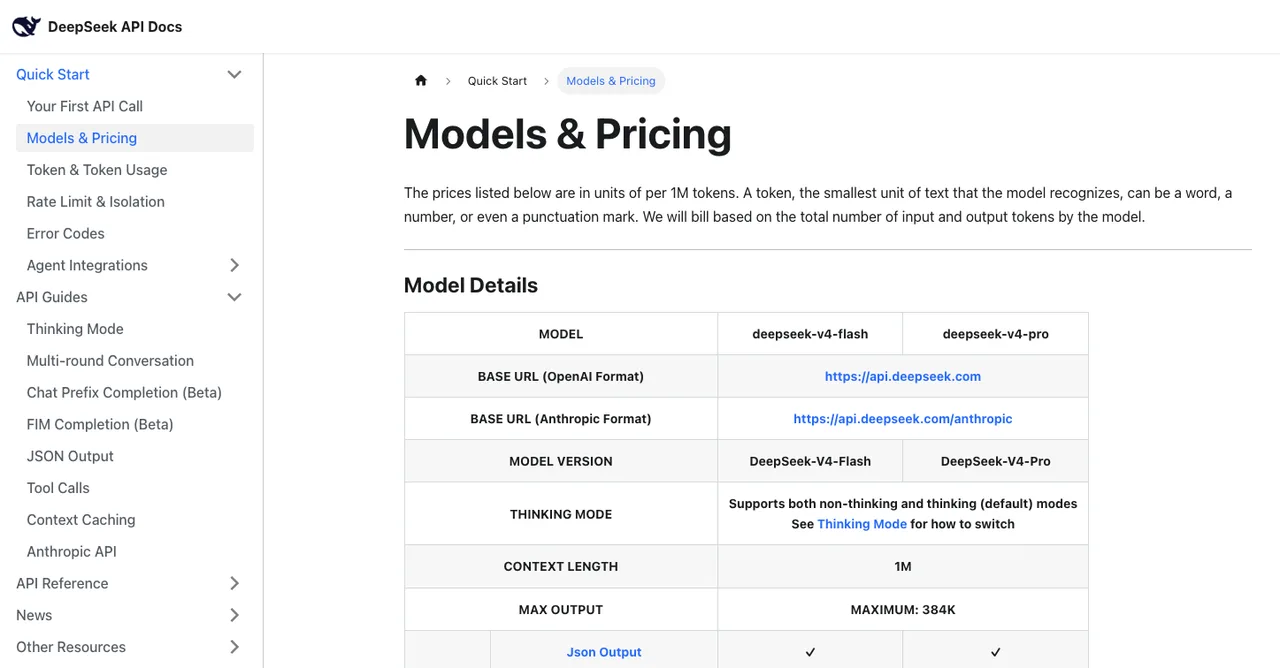
As of July 28, 2026, DeepSeek’s official Models & Pricing page currently lists V4 Flash and V4 Pro in USD per 1M tokens. Flash is listed at $0.0028 cache-hit input, $0.14 cache-miss input, and $0.28 output. Pro is listed at $0.003625 cache-hit input, $0.435 cache-miss input, and $0.87 output.
Those numbers are real enough to start a spreadsheet. They are not enough to approve routing.
Input/output price versus accepted change cost
A coding agent does not sell tokens to the engineering team. It sells an accepted diff.
That means the working unit is not “one request.” It is one task that reaches a mergeable state: files changed, tests run or reasonably skipped, reviewer comments handled, and no manual cleanup beyond normal review.
For a DeepSeek coding agent pilot, I would track five numbers from the first day:
- model token cost per run
- provider or gateway overhead per run
- cost per completed task
- cost per accepted diff
- manual repair time after the agent stops
The last two are the numbers that decide routing. I paused here on purpose. Cheap tokens can still produce expensive engineering work.
Why cheaper tokens can still produce expensive tasks
A model that saves $0.20 on tokens but needs 20 minutes of engineer repair is not cheaper. It only moved the cost out of the API invoice.
This is where Codex third-party model cost gets awkward. Repository tasks include file reads, command output, patch generation, tool decisions, recovery after failed tests, and sometimes a second model route. Every extra turn can replay context. Every malformed tool call can force retry. Every retry can create a larger transcript.
The invoice looks small. The task got bigger.
Count Conversion and Context Costs
Provider economics start at the protocol boundary.
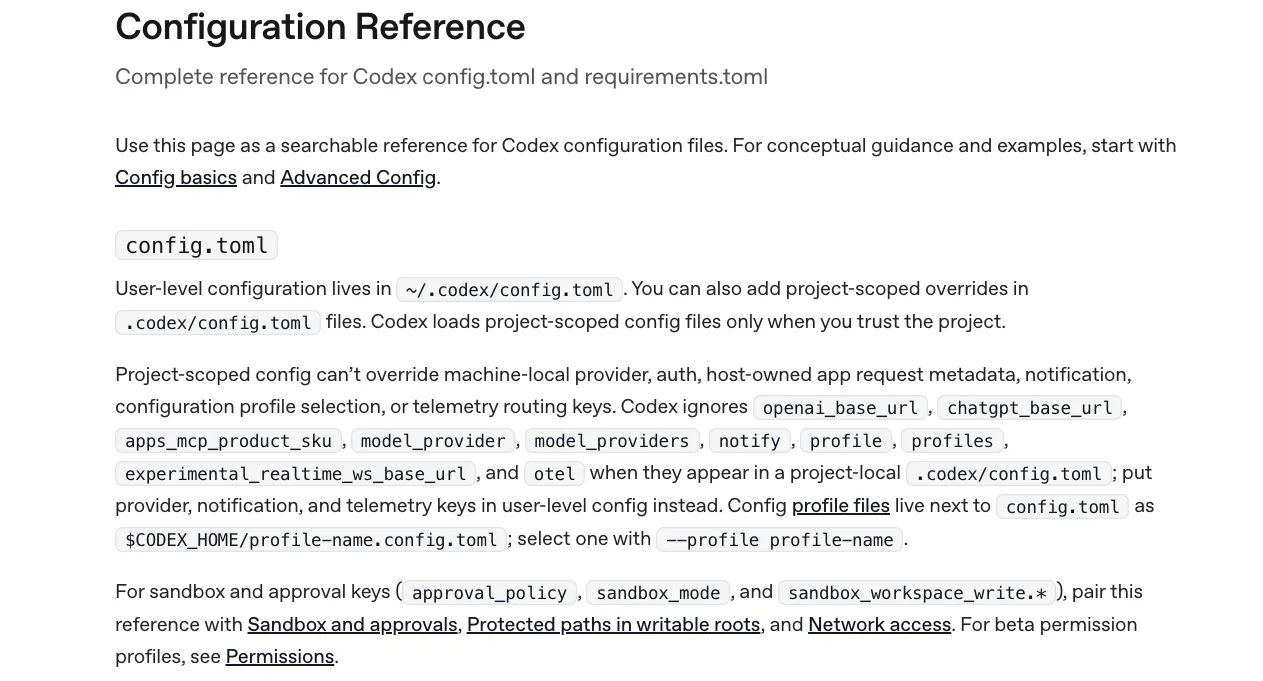
DeepSeek’s Models & Pricing page lists both OpenAI-format and Anthropic-format base URLs, while OpenAI’s Codex config reference says custom providers are defined under model_providers, and wire_api supports responses as the only value.
So if the provider is not natively speaking the exact Responses shape Codex expects, the platform has to translate. That translation is not automatically bad. It just has to be measured.
Responses-to-Chat translation, context replay, and cache loss
Responses conversion overhead usually appears in quiet places: rewritten tool calls, remapped reasoning fields, flattened message history, transformed patches, or duplicated file context.
The clean test is simple. Run the same task through the direct route and the converted route. Capture provider request bodies, response bodies, usage fields, retry count, latency, and final diff status. Then compare how many tokens were added by conversion.
Context replay is the part that can undo the headline price. Codex-style tasks often carry repository instructions, previous command output, partial diffs, and failure logs. If the provider layer re-sends that state on every turn instead of preserving state efficiently, input tokens climb fast.
Tool-call retry, malformed output, and long-task restart costs
Tool-call compatibility is a cost feature. Not a nice-to-have.
A provider that returns a patch in the wrong structure, drops a tool-call ID, streams partial JSON, or mishandles cancellation can make the agent repeat work. One retry is annoying. A long-task restart is a new bill wearing the old task’s clothes.
DeepSeek’s Context Caching page says caching is enabled by default and reports prompt_cache_hit_tokens and prompt_cache_miss_tokens. It also says cache hits depend on persisted matching prefixes and are best effort, not guaranteed.
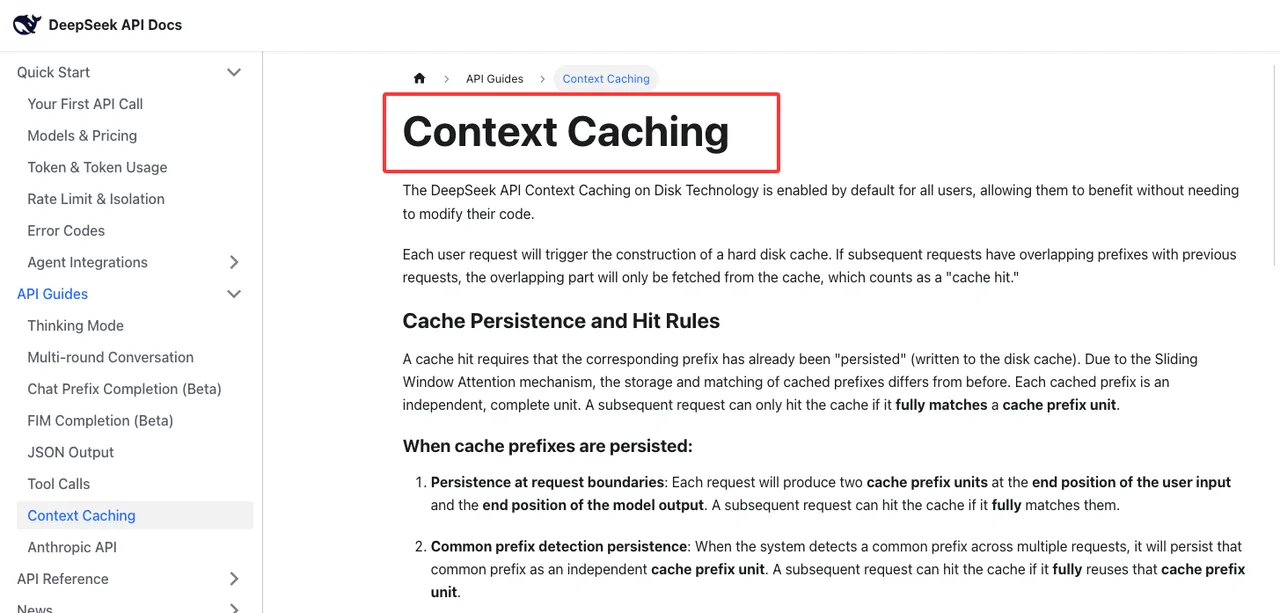
That matters for conversion overhead. If conversion changes prefixes between turns, cache hit rate can fall even when the human sees “the same context.” Found the pattern on the third try: cache savings belong to stable prefixes, not good intentions.
Measure Real Coding-Agent Spend
I would not use one blended number here. It hides the failure class.
Use a small scorecard and keep it per task type. A dependency bump, flaky-test diagnosis, API migration, and architectural refactor do not belong in the same average.
| Metric | What to count | Why it matters |
|---|---|---|
| Completed task cost | All model, provider, retry, and fallback cost | Shows invoice-level economics |
| Accepted diff cost | Total cost of all attempted tasks—including failed, duplicate, retry, and fallback runs—divided by the number of accepted diffs | Ties spend to engineering value |
| Repair time | Human minutes after agent completion | Exposes hidden labor cost |
| Failure class | Tool error, bad reasoning, timeout, unsafe diff, test failure | Shows whether routing can improve |
Cost per completed task, cost per accepted diff, and repair time
For each run, store the task ID, repository, model, provider, prompt size, output tokens, cache-hit tokens, cache-miss tokens, tool calls, shell commands, retries, cancellation events, and final status.
Then add two human fields: reviewer repair minutes and whether the diff was accepted. This is where coding agent API cost becomes finance-readable. Nobody needs to argue whether one provider “felt better.” The task either landed or it did not.
Manual repair time should be priced using an internal engineering rate. I know that makes the spreadsheet less pretty. Good. Pretty spreadsheets are how pilots become expensive.
Failed tasks, rollback, duplicate runs, and provider fallback
A failed task still consumed budget. A duplicate run consumed more. A rollback consumed engineering time and maybe CI minutes.
Provider fallback must be counted as part of the original task, not as a separate success story for the second model. If DeepSeek fails and the task completes on another route, the accepted diff cost includes both attempts.
This is the only honest way to measure provider retry cost.
Decide When DeepSeek Is Actually Cheaper
DeepSeek is actually cheaper when the accepted-diff cost is lower at the same quality floor.
Not when cache-hit tokens look cheap. Not when output price is lower. Not when a demo task passes once.
Low-risk repetitive work versus high-value architectural tasks
Low-risk repetitive work is the first place I would test: small dependency updates, typo fixes, lint cleanup, basic test additions, repetitive API rename tasks, and narrow documentation updates.
High-value architectural work is different. It has more context, more judgment, more tool use, and higher review cost. A cheaper model route can still be useful there, but it needs a higher bar. For those tasks, route only after it proves lower repair time or lower fallback rate.
DeepSeek’s Rate Limit & Isolation page lists account-level concurrency limits of 500 for V4 Pro and 2500 for V4 Flash, with HTTP 429 when limits are exceeded. That is useful for scaling plans, but it does not answer quality economics. Capacity is not completion.
Pilot thresholds before routing more Codex work
I would set routing gates before the pilot starts.
For example: DeepSeek receives more Codex work only if accepted-diff cost is at least 20% lower than the current default route, repair time does not rise by more than 10%, fallback rate stays below a fixed threshold, and no high-severity unsafe diff appears in the sample.
Use your own numbers. The structure matters more than mine.
Also split Flash and Pro. Flash may win high-volume repetitive tasks. Pro may win harder reasoning if it prevents reruns. Blending them hides the routing decision.
FAQ
Who owns the budget for failed third-party model runs?
The platform budget should carry failed third-party runs during a controlled pilot. Product or engineering teams should not inherit surprise spend from an unapproved route. The owner can change later, but only after the failure classes and escalation rules are visible.
What evidence should finance require before expanding DeepSeek routing?
Finance should ask for accepted-diff cost, manual repair time, cache-hit and cache-miss usage, fallback rate, duplicate-run count, and failure classes. Raw token price is not enough evidence for expanding a DeepSeek route.
How should teams handle customer commitments based on cost assumptions?
Do not promise customer pricing from early model rates alone. Commitments should include a buffer for provider retry cost, routing changes, cache miss behavior, and manual repair. If the customer contract assumes a stable cost floor, the pilot data has to prove that floor first.
Conclusion
DeepSeek Codex cost is not a token-price comparison. It is a repository economics problem.
Start with official DeepSeek pricing. Then add conversion, context replay, cache loss, malformed tool calls, retries, failed tasks, rollback, fallback, and repair time. If the accepted-diff cost still falls, route more work. If it only looks cheaper on the provider invoice, leave it in the pilot lane.
This conclusion has an expiration date. Models update fast.
Previous posts:
- Codex Model Gateway for Third-Party Providers and Custom Routing
- Responses API vs Chat Completions for Codex Provider Compatibility
- Production AI Cost Tracking Across Multi-Model Provider Routes
- Benchmark Inkling for Production Coding Agent Evaluation
- Managed Agent Stack with Multica, Composio, and Multiple Providers
Related Articles

Best AI Video Platforms for Production Teams in 2027

Best Sora 2 Alternatives for Video Teams in 2027

Lanta AI Review 2027: Best Uses, Pricing, and Limits

Sora 2 Review 2027: API Quality, Cost, and Limits

Build a GPT-6 Astra 3D Workflow With Blender Assets