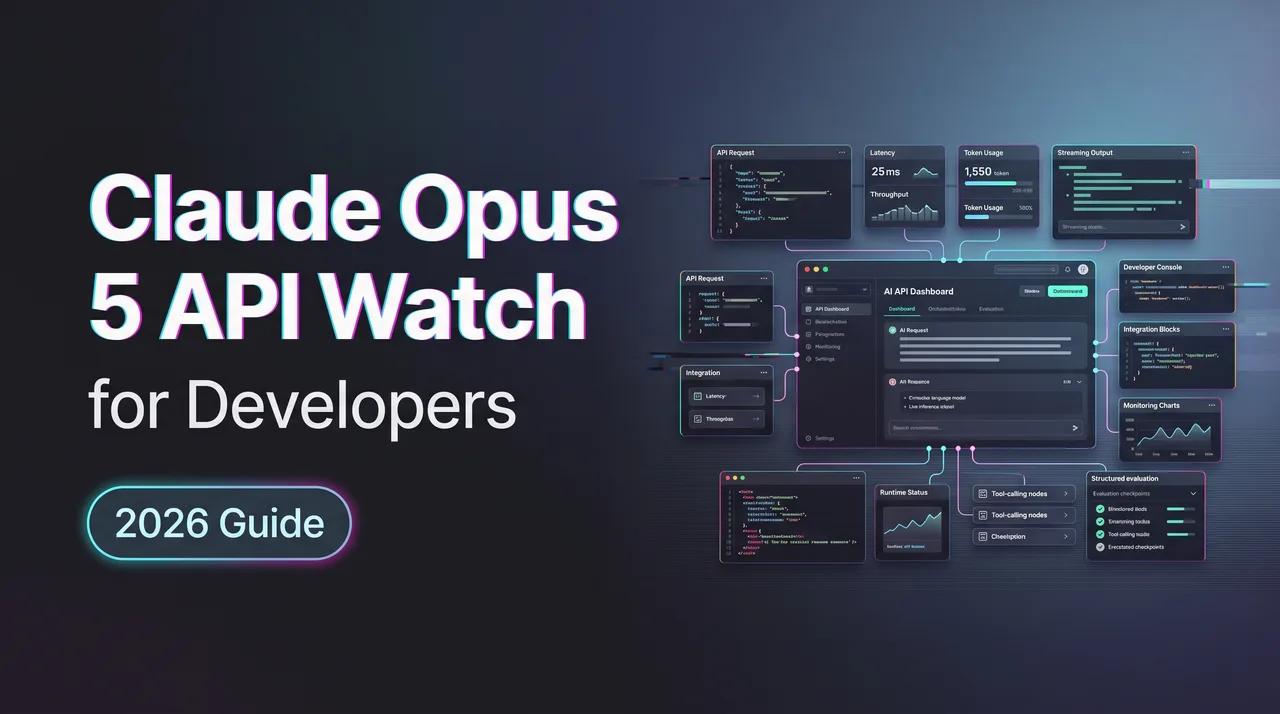
Claude Opus 5 API Watch for Developers
Claude Opus 5 API watch helps developers track access, pricing, model IDs, limits, and integration readiness.
Hey, I’m Dora. I checked the official docs before writing this because model names move faster than internal tickets. As of July 30, 2026, the Claude Opus 5 API is not just a screenshot rumor: Anthropic lists claude-opus-5 as available for API customers. That still does not make it an automatic production default.
This is a watch note for API builders preparing to route work to Anthropic’s newest Opus model. The job is not to repeat launch copy. The job is to know what evidence is strong enough to move from “interesting” to “approved route.”
Short answer: official docs, console visibility, and a working test call. Not a third-party model list. Not a cropped screenshot. Not a Slack message with five fire reactions.
Claude Opus 5 API Availability Status
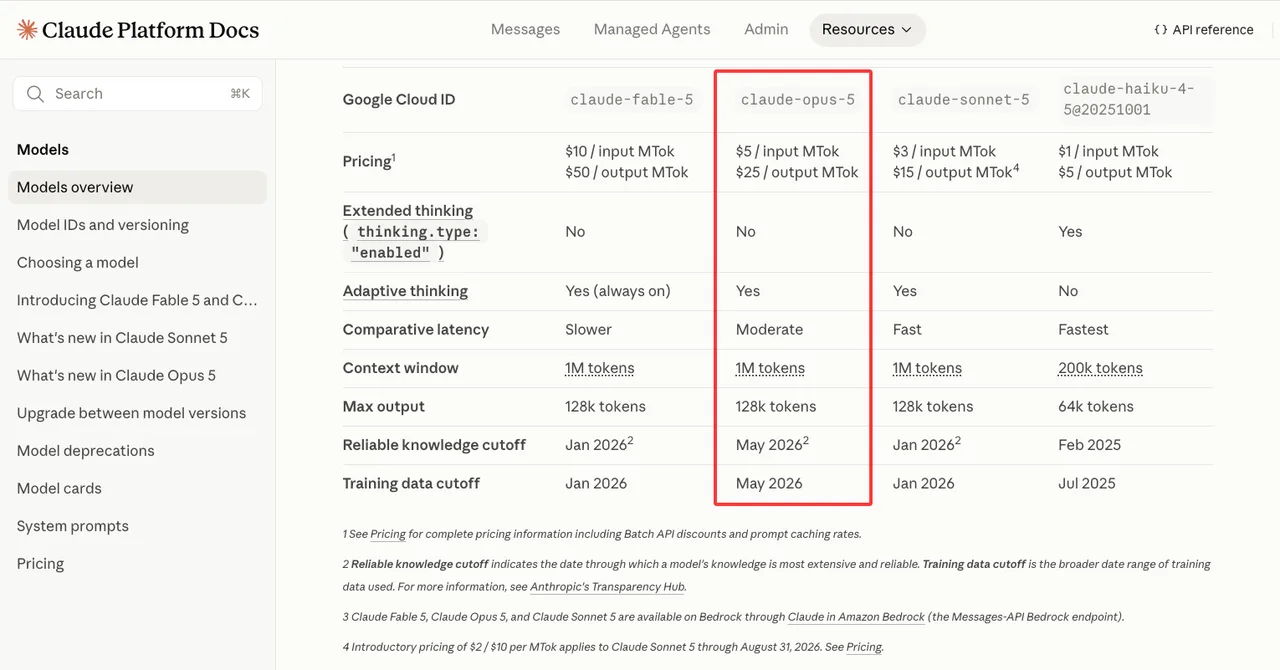
Anthropic’s models overview currently lists Claude Opus 5 for complex agentic coding and enterprise work, with API ID claude-opus-5. The same page lists a 1M token context window, 128k max output, text and image input, text output, multilingual capability, and vision support across current Claude models.
That is the first availability signal I would accept.
Anthropic’s Opus 5 update page says Opus 5 is available to all Claude API customers as claude-opus-5, and is also available through AWS, Google Cloud, and Microsoft Foundry. It also says Opus 4.8 remains available.
So the status is available. The production question is narrower: is it available for your account, route, workload, and budget.
What official evidence is needed before calling it available
I need four pieces of evidence before I call a model available inside a team:
- the model appears in Anthropic documentation with a model ID
- the model appears in the team’s console or model list
- a test call succeeds against the intended endpoint
- pricing, limits, and feature behavior are documented for that same route
The last phrase matters: same route. Claude model access through the first-party API is not always identical to cloud marketplace access. Billing, endpoint geography, account limits, and support ownership can differ.
Why model names in screenshots or third-party lists are not enough
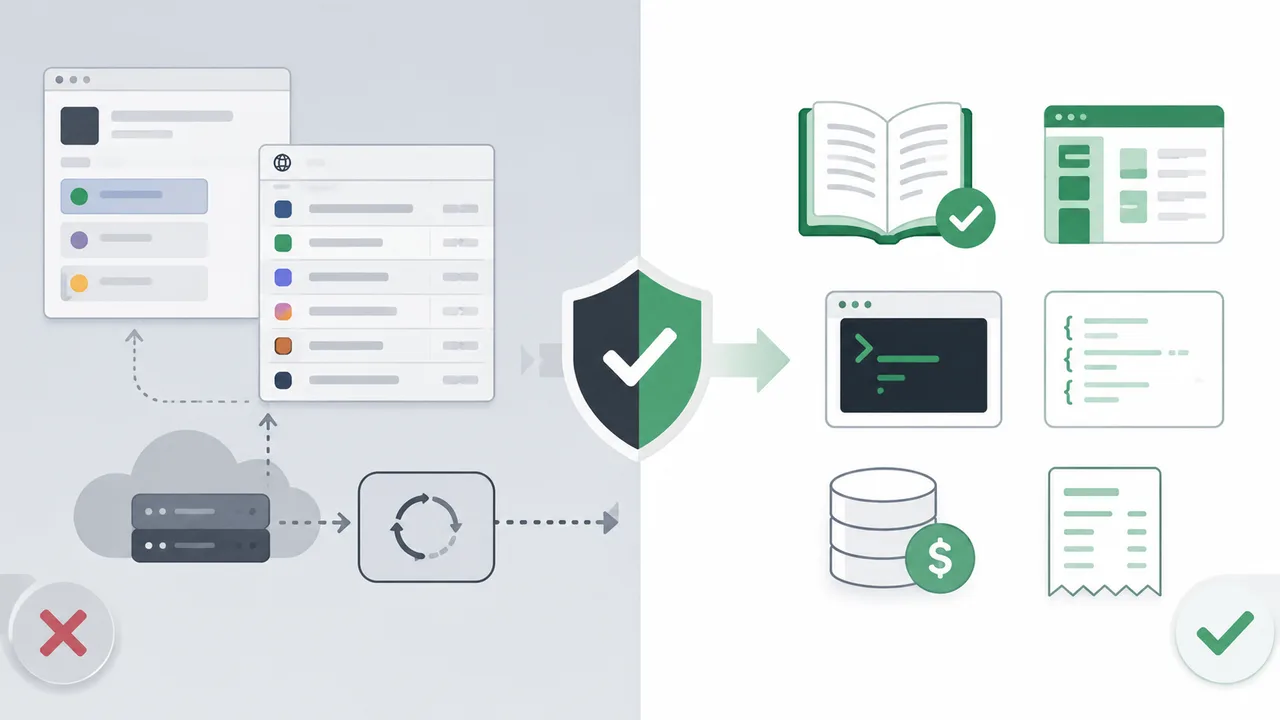
Screenshots are weak evidence. They hide account tier, region, preview flags, provider layers, and fallback behavior.
Third-party lists are useful for discovery, not approval. A provider can expose a friendly alias before your organization can call the official model. A gateway can also make a failed route look successful by falling back silently.
For readiness claims, the source of truth is boring: docs, console access, request logs, response IDs, and billing records. Boring wins.
What Developers Should Verify
The verification list should fit on one page. If it takes more than that, people stop using it.
Model ID, endpoint, authentication, pricing, context, and rate limits
Start with the model ID. For first-party API work, the confirmed ID is claude-opus-5. Then test the endpoint your application actually uses. A staging service calling a gateway is not the same as a developer laptop calling Anthropic directly.
Authentication comes next. Which workspace owns the key? Which service account can rotate it? Which environment variables are allowed in CI? I know this sounds dull. It is exactly where production incidents like to start.
For Opus API pricing, Anthropic’s pricing documentation lists Claude Opus 5 pricing at $5 per million input tokens and $25 per million output tokens. It also lists cache writes, 1-hour cache writes, cache hits, batch pricing, data residency multipliers, and fast mode pricing. One number is not enough.
Context also needs a real test. The docs list 1M input tokens and 128k max output for synchronous Messages API use. Long context does not remove the need for compaction, caching strategy, or budget controls. It just gives the agent a larger room to make expensive decisions.
Anthropic’s rate limits page says Messages API limits are measured in RPM, input tokens per minute, and output tokens per minute. It lists Opus 5 separately from the combined Opus 4.x bucket. That separate bucket helps migration tests, but it is still an org-level limit.
Tool use, structured output, files, vision, and streaming support
Feature support matters as much as the model name.
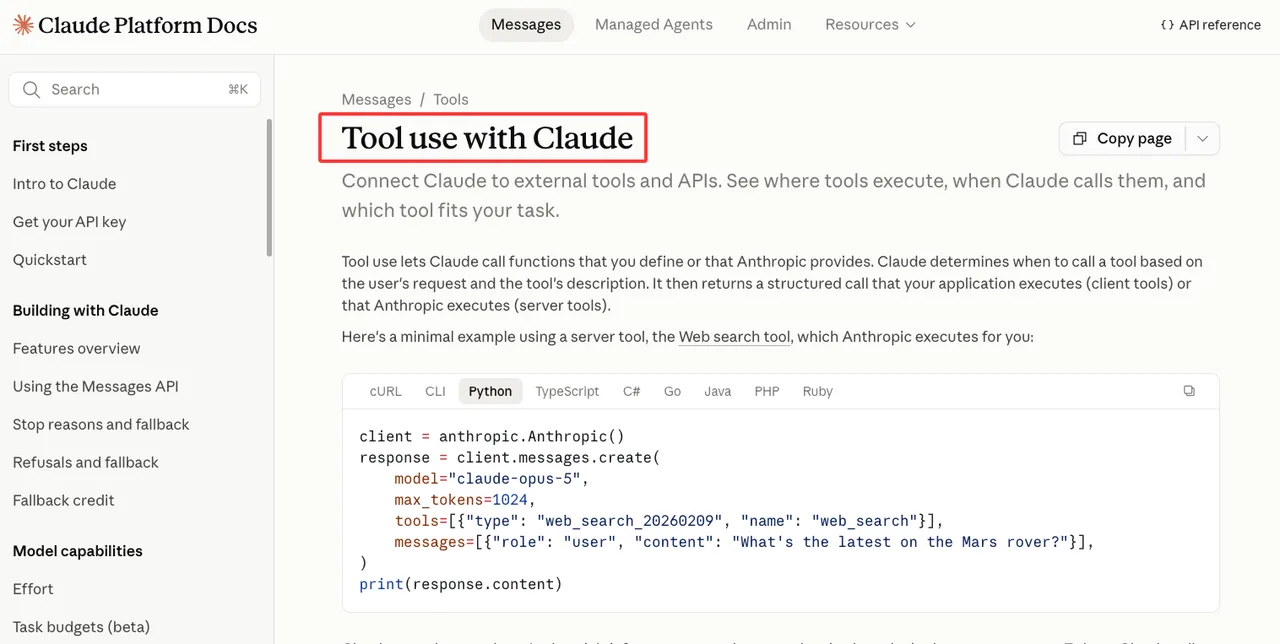
The tool use docs describe Claude returning tool_use blocks, client code executing the tool, and a later tool_result block feeding the result back. That round trip is the part I would test before routing real work. If tool calls arrive in a shape your orchestrator mishandles, the model can be smart and still fail the job.
Structured output, files, vision, and streaming should be tested with your actual payloads. A document-heavy research app, a coding agent reading screenshots, and a support assistant streaming partial answers do not exercise the same path. Do not mark them green because one demo worked.
Found the pattern on the third try: model availability is easy to check. Integration fit is not.
Integration Planning Before Release
Even with official availability, I would plan the rollout like a release.
The model changed. Effort behavior changed. Cost surfaces changed. Failure classes may change too.
Test harness, fallback model, logging, and rollout guardrails
Build the test harness before switching defaults. It should cover short chat, long context, tool-heavy tasks, structured output, streaming, file input, vision input, refusal behavior, and cancellation.
For each run, log model ID, endpoint, workspace, request ID, latency, input tokens, output tokens, cache reads, cache writes, effort setting, tool calls, stop reason, fallback route, and user-visible failure.
Fallback should be explicit. If Opus 5 is unavailable, over budget, rate-limited, or mismatched for the task, the application needs a known route: Opus 4.8, Sonnet 5, a cloud-hosted deployment, or a lower-cost route. Silent fallback is a support problem wearing a product hat.
Rollout guardrails should include daily spend caps, workspace limits, eval thresholds, and a kill switch. Start with internal traffic. Then route a narrow production slice. Then expand by workload class, not by enthusiasm.
When to wait instead of building around an unconfirmed model
Wait when official documentation is missing, the model is not visible in your account, the provider only exposes a vague alias, pricing is not documented for your route, or your app depends on a beta feature your legal or security team has not approved.
Wait when the workload needs stable customer pricing and the billing shape is still moving.
Wait when support cannot answer a basic question: which upstream returned this error?
Speed isn’t the goal. Not breaking flow is.
FAQ

Who should approve Opus 5 readiness claims?
The platform owner should approve technical readiness. Finance should review Anthropic API spend assumptions, especially Opus API pricing, cache usage, and fast mode exposure. Security should review data handling, cloud route, and workspace access before customer data moves through the route.
What evidence should support keep for availability disputes?
Support should keep the model ID, endpoint, workspace, timestamp, request ID, response or error body, rate-limit headers, fallback decision, and console screenshot if needed. For a Claude API issue, the evidence should show whether the failure came from Anthropic, a cloud provider, or an internal gateway.
How should teams document pre-release integration assumptions?
Assumptions should be written as temporary. Note the expected model ID, planned endpoint, pricing source, context window, supported features, fallback model, and the date each fact was checked. If a claim relies on unofficial access, mark it as unconfirmed.
Conclusion
The Claude Opus 5 API is officially listed as available, with claude-opus-5 as the first-party model ID. That answers the availability question. It does not finish the integration work.
Before switching production traffic, verify the model in your account, confirm pricing and limits, test tools and streaming, log the route, and keep fallback visible. That is the difference between adopting a new frontier model and inheriting a new failure mode.
This conclusion has an expiration date. Models update fast.
Previous posts:
Related Articles

Best AI Video Platforms for Production Teams in 2027

Best Sora 2 Alternatives for Video Teams in 2027

Lanta AI Review 2027: Best Uses, Pricing, and Limits
Sora 2 Review 2027: API Quality, Cost, and Limits

Build a GPT-6 Astra 3D Workflow With Blender Assets