Claude Fable 5 vs Opus 4.8 for Agent Workloads
Compare Claude Fable 5 and Opus 4.8 for agent workloads, pricing, fallback, latency, and production routing decisions.
I had a routing table open when I started this. Not a model leaderboard. A routing table. The real question behind Claude Fable 5 vs Opus 4.8 is not “which one is smarter.” It is which model gets the hard, expensive, messy work, and which one stays as the stable route for high-capability production traffic.
Small date note: as of July 28, 2026, Anthropic’s public pages also reference Opus 5. This article keeps Opus 4.8 as the pinned comparison baseline because API teams with existing pinned routes may still use it as a comparison baseline. New default decisions should include newer models in evals. Different problem.
This piece is about agent workloads, long-running tasks, cost, latency, routing, and migration testing. Not vibes. Those age badly.
Fable 5 vs Opus 4.8 in one sentence
Fable 5 is the premium route for the hardest long-running work; Opus 4.8 is the steadier high-capability route for complex production tasks where cost, latency, and predictability still matter.
That is the whole routing decision in plain form.
Fable for hardest long-running tasks
Fable 5 is the model I would reserve for tasks where the agent has to plan, check its own work, carry context across stages, and keep going when the path is not obvious.
Anthropic describes Fable 5 as built for ambitious coding, professional work, multi-day autonomous sessions, vision-heavy review, and long-running agent harnesses on the Claude Fable 5 product page. That positioning matters because it points to workload class, not just benchmark score.
So that route needs a reason.
The reason is not “better answer.” The reason is fewer broken handoffs on tasks where the model has to decide what to do next. Large migrations. Multi-repo code changes. Research synthesis with source conflicts. Complex document analysis. UI implementation where the model must inspect output against a visual goal.
Opus 4.8 for stable high-capability routing
Opus 4.8 is the route I would keep for difficult work that is still known-shaped.
The Opus 4.8 announcement positioned it around coding, agentic skills, reasoning, practical knowledge work, effort controls, and more reliable long-running collaboration. That matters because most production agent traffic is not frontier research. It is “do this complicated thing correctly, repeatedly, at a cost we can explain.”
Opus 4.8 is not the cheap route. It is the controlled expensive route.
Good enough. That is the most honest assessment I can give.
Capability differences that matter in production
Capability only matters when it changes routing.
A model can be stronger in a demo and still be the wrong default. Production systems care about task completion, retry count, latency shape, failure class, refusal behavior, and token cost. The spreadsheet with those columns is less exciting than a launch chart. It is also where the decision gets made.
Long-horizon agentic work
For long-horizon agentic work, Fable 5 gets the harder class of tasks.
I would route to Fable when the task has at least three signals: ambiguous goal, multi-stage execution, expensive failure, tool-heavy loop, or long context. Those are the places where a model has to keep the plan alive, not just produce the next plausible answer.
Opus 4.8 still belongs in long-running tasks when the workflow is structured. A test repair loop. A known codebase migration pattern. A document review with a fixed rubric. A browser agent with a narrow target.
Fable is for the unclear parts. Opus is for the hard but repeatable parts.
Coding and tool-use reliability
Coding agents fail in boring ways.
They edit the wrong file. They ignore a failing command. They over-rewrite. They call the same tool again because they forgot the last result. They produce a clean final summary over a dirty repo.
I paused here.
The Fable route should be tested against the failures you already see in Opus 4.8. If Opus fails because it cannot sustain long planning, Fable may help. If Opus fails because your tool schema is unclear, Fable may only fail more expensively.
A production coding eval should include one multi-file edit, one failing test repair, one tool timeout, one instruction conflict, one long session with a resume point, and one visual or design check if your agent builds UI.
The model score is not enough. Track manual repair time.
Vision and complex reasoning tasks
Both models sit in the serious-work category. Anthropic’s Claude models overview describes Fable 5 as the highest-available capability route and currently recommends Opus 5 for complex agentic coding and enterprise work. The Opus 4.8 announcement separately describes multimodal strength over PDFs, diagrams, and other unstructured content. It also lists broad multimodal support across current Anthropic Claude models.
That means vision alone is not a Fable trigger.
Fable gets vision-heavy tasks when the image or PDF is part of a long reasoning chain: charts inside a due diligence packet, UI screenshots checked against implementation goals, architecture diagrams tied to code changes. Opus 4.8 can still be the route for ordinary visual extraction, document QA, or structured comparison.
The difference is not “can see.” The difference is how long the model has to reason after seeing.
Cost and latency tradeoffs
Sticker price is only the first bill.
Agent workloads multiply cost through retries, tool outputs, long context, prompt caching, generated tests, intermediate summaries, and user-visible latency. A model that costs twice as much per token can still be cheaper for one narrow class of tasks if it avoids three failed loops.
Do not assume that. Measure it.
Pricing comparison from official docs
For claude API pricing, the current public Claude pricing page lists Fable 5 at $10 per million input tokens and $50 per million output tokens. It also lists Opus 4.8 under legacy models at $5 per million input tokens and $25 per million output tokens.
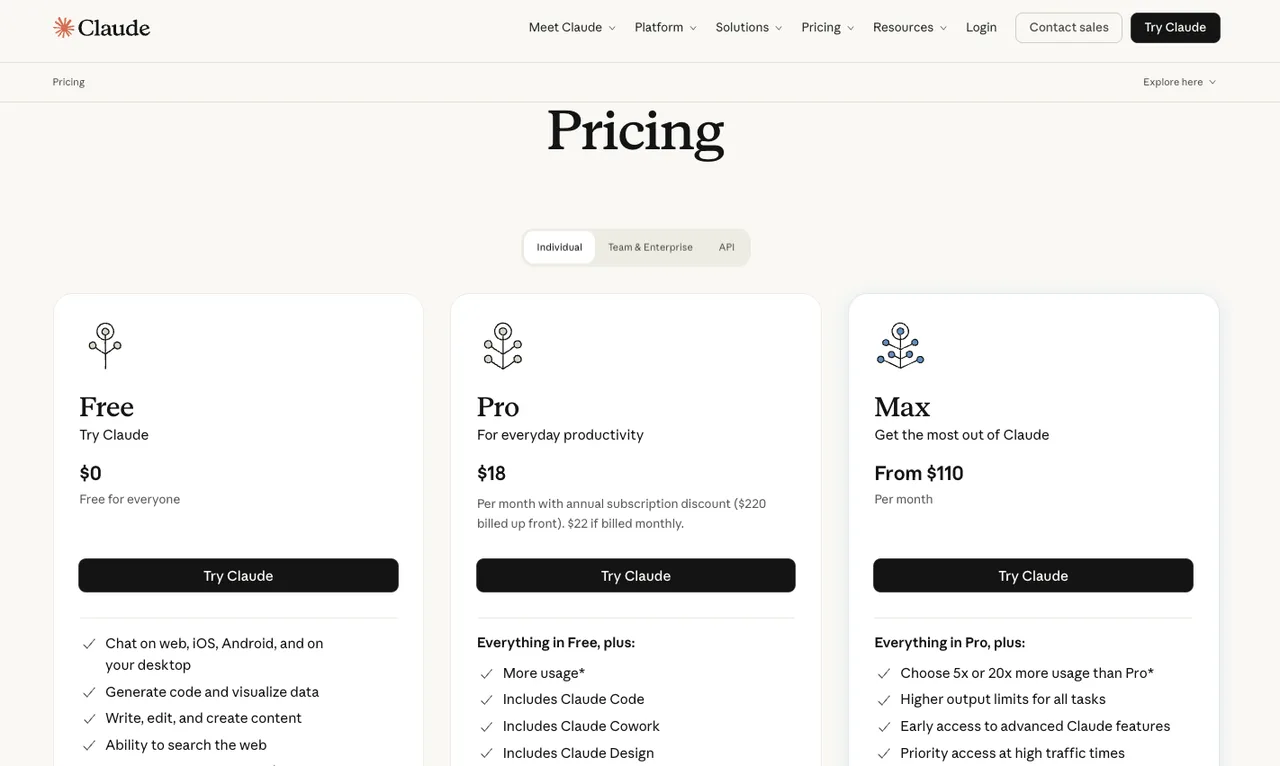
| Model | Official listed price | Production read |
|---|---|---|
| Fable 5 | $10 input / $50 output per million tokens | Premium route for hard, high-value tasks |
| Opus 4.8 | $5 input / $25 output per million tokens | Stable baseline for complex repeatable work |
Also note the current pricing page lists Opus 5 above Opus 4.8. If this is a live migration decision, I would not freeze the eval at Opus 4.8 without adding newer available models. This conclusion has an expiration date. Models update fast.
Why sticker price is not the same as workload cost
Agent workload cost has four layers.
- First, model token price. Easy to see.
- Second, tool and context cost. Tool schemas, tool results, bash output, browser state, retrieved files, and intermediate artifacts all expand the prompt.
- Third, retry cost. A cheap failed run followed by a premium repair is not cheap.
- Fourth, review cost. If a model produces code that takes 40 minutes to inspect, the invoice is hiding the real spend.
For this comparison, I would track cost per accepted task, not cost per request.
Reported token-efficiency claims and why they need validation
Anthropic’s Fable page includes early customer reports around fewer turns, faster completion, stronger long-horizon behavior, and lower reasoning-token use in specific tests.
I would treat those as useful signals. Not proof.
Single-customer claims are not your workload. A spreadsheet workflow, a physics task, a codebase migration, and a browser agent do not share the same cost curve. The right move is to reproduce the shape of the claim internally: same task class, same acceptance criteria, same budget ceiling.
If Fable completes a task in one pass that Opus 4.8 needs three passes for, the premium may pay for itself.
If it produces a better-looking but harder-to-review result, it may not.
When lower-cost routing wins
Lower-cost routing wins when the task shape is known.
Use Opus 4.8 when the agent has a clear rubric, bounded files, predictable tools, and a reviewable output format. The model is capable enough for serious work, and the lower price gives it room to handle volume.
Use Fable 5 when the agent has to discover the plan.
That is the line I would test first.
Routing framework for API teams
A good router is boring.
It does not ask “which model is best.” It asks what the task needs, what failure costs, what the budget allows, and what safety policy applies. Then it chooses.
Default route, premium route, fallback route
I would define three routes.
Default route: Opus 4.8 for known-shaped complex work.
Premium route: Fable 5 for hard long-running tasks with high failure cost.
Fallback route: a lower-cost or policy-safe model when budget, availability, latency, or domain constraints make the premium route wrong.
Fallback here is only a selection dimension. I am not unpacking implementation details. That belongs in a separate fallback article.
The main point: fallback is not only for outages. It also handles budget ceilings, safety constraints, latency pressure, and task downgrades.
Budget-aware model selection
Budget-aware routing starts before the API call.
Ask five questions before routing. Is the task ambiguous and high-value? Is the output long or tool-heavy? Is the task batchable? Is the task repeatable? Is reviewer time the real bottleneck?
If the answers point to ambiguity, high failure cost, and heavy review drag, Fable gets a stronger case. If the answers point to repeatable execution and predictable output, Opus 4.8 stays attractive.
The useful metric is not “Fable cost more.” Of course it did. The useful metric is whether accepted task cost went down.
One fewer failed loop. Sounds small. Adds up fast.
Safety-aware routing for sensitive domains
Fable 5 has special safety behavior.
The Fable 5 and Mythos 5 launch note describes conservative safeguards and fallback behavior for sensitive domains such as cybersecurity, biology, chemistry, and distillation. The current Fable product page also indicates fallback behavior has changed over time, including different Opus routes for flagged areas.
So I would not hard-code assumptions from a blog post.
For sensitive domains, the router needs a policy layer before capability routing. Domain flags, user authorization, allowed tools, logging, and model eligibility come first. Then cost. Then latency.
That order is annoying. Still the right order.
Migration and testing plan
Do not switch defaults because the premium model looks better in launch examples.
Build evals. Shadow traffic. Compare accepted outputs. Track refusal deltas. Watch cost. Then decide.
Build evals before switching defaults
The eval set should come from real workload logs.
For API teams, I would sample normal complex tasks for the Opus route, known hard failures from the current route, long-running tasks with many tool turns, high-cost tasks with large context, and sensitive-domain tasks that test routing policy.
Score pass/fail, but do not stop there.
Track tool-call count, latency, retry count, total tokens, refusal rate, reviewer edits, and whether the final answer overclaims. The last one matters. Models that sound finished before they are finished create cleanup work.
Test long-running agent workloads separately
Long-running tasks need a separate test lane.
Short evals do not expose late drift. They also do not expose resume behavior, context decay, tool-result confusion, or cost expansion after multiple turns.
For long-running tasks, run Fable 5 and Opus 4.8 against the same harness: multi-file coding, research synthesis, tool loops, resume tests, and budget-capped runs. Then inspect diff size, source handling, timeout recovery, repeated work, and accepted-task cost.
Fable should win where planning and self-checking matter. Opus 4.8 should still win where predictability and throughput matter.
Monitor cost, refusals, and user-visible quality
After migration, dashboards need model-level visibility.
At minimum, track cost per accepted task, first-token latency, end-to-end latency, refusal rate, fallback rate, retry count, manual repair time, and route override rate.
This is where my data ends.
Production traffic will find cases your evals missed. The question is whether the router gives you enough visibility to adjust without guessing.
FAQ

Is Fable 5 better than Opus 4.8 for coding agents?
For the hardest coding agents, likely yes. For all coding agents, no.
The definition matters. If the coding agent is doing multi-day migrations, ambiguous architecture work, visual UI verification, or deep self-checking, Fable 5 is the premium candidate. If the agent is doing structured edits, test repairs, code review, or known workflows, Opus 4.8 may be the better route.
How should teams test Fable 5 before migration?
Run shadow evals against real tasks.
Use the same prompts, tools, files, and acceptance criteria as the current Opus 4.8 route. Measure accepted-task cost, not single-call price. Track long-running tasks separately. Keep examples where Fable fails, because those are the cases that teach the router where not to use it.
Why might Opus 4.8 still be the better default?
Opus 4.8 can be cheaper, steadier, and easier to budget for high-volume complex work.
It is also a known baseline for teams already using pinned model IDs. If the task is hard but repeatable, the premium route may not earn its cost. The default route should be boring. That is the job.
Previous posts:
Related Articles

Best AI Video Platforms for Production Teams in 2027

Best Sora 2 Alternatives for Video Teams in 2027

Lanta AI Review 2027: Best Uses, Pricing, and Limits

Sora 2 Review 2027: API Quality, Cost, and Limits

Build a GPT-6 Astra 3D Workflow With Blender Assets