
Qwen3.8 Pricing Explained for AI Builders 2026
Qwen3.8 pricing helps builders evaluate Token Plan credits, preview discounts, quota limits, and effective cost before production planning.
Qwen3.8 pricing is easy to misread if you only look at the headline subscription price. The number on the plan page is only the beginning. What matters for builders is the route from credits to accepted work: how many useful coding, analysis, or agent tasks you finish before quota, latency, retries, review, and preview changes start eating the budget.
I’m John. I care about the final cost, not the loudest discount. For Qwen3.8-Max-Preview, that means checking the Qwen Token Plan, Model Studio credits, quota reset rules, and current official notes before putting any price claim into a roadmap, proposal, or customer-facing estimate.
One boundary first: this is not an API setup guide. This piece is only about pricing, credits, effective cost, and production planning risk.
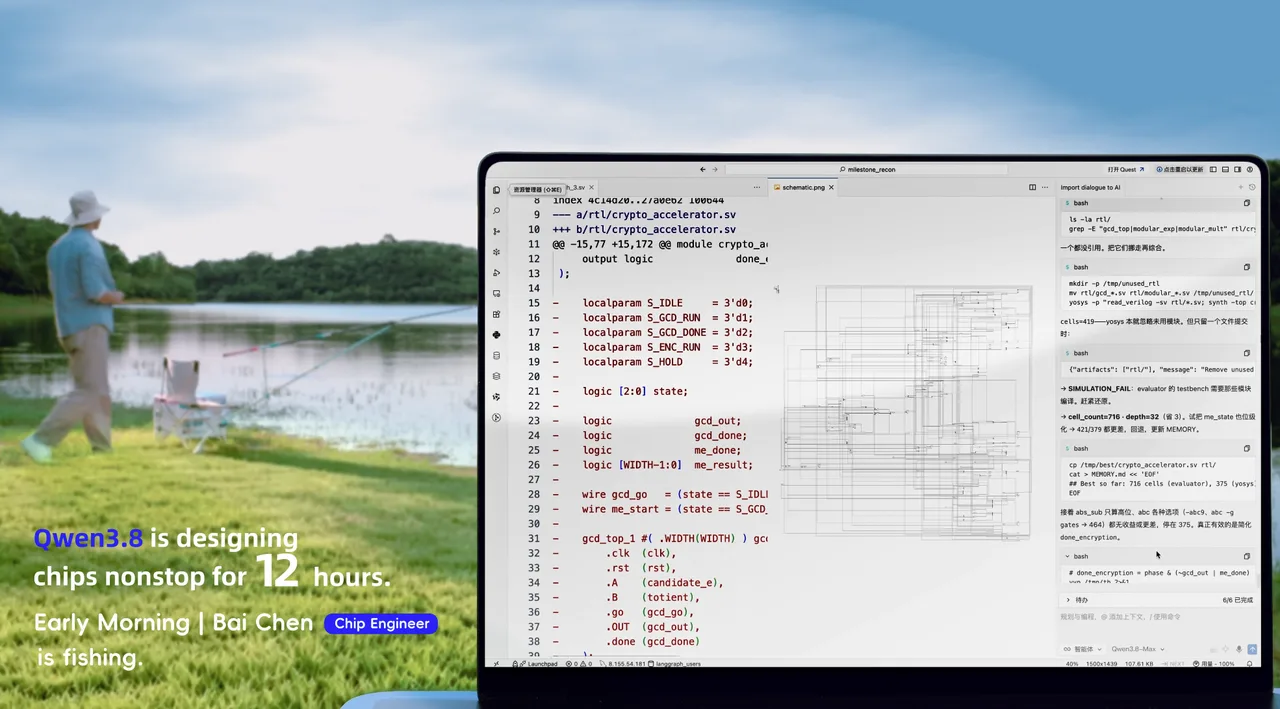
Qwen3.8 Pricing at a Glance
Token Plan Editions, Credits, and Quotas
As of review on August 13, 2026, QwenCloud documents Token Plan as a Credits-based subscription across text, image, video, speech, and Harness tools. The official QwenCloud Token Plan overview lists Personal Edition and Team Edition separately, which is the first pricing distinction teams should preserve.
Personal Edition is built around Lite, Standard, and Pro tiers, with 5-hour and 7-day quota windows. QwenCloud’s Token Plan docs say unused quota does not carry over, and calls pause when quota is reached until reset, additional credits, or an upgrade path restores capacity. That means a monthly price is not the same thing as a flat monthly pool.
Team Edition works differently. It uses seat-based monthly quotas, admin assignment, member usage analytics, and shared Credit Packs. For team budget planning, that matters more than the sticker price. A solo developer can tolerate a paused session. A shared platform team usually cannot.
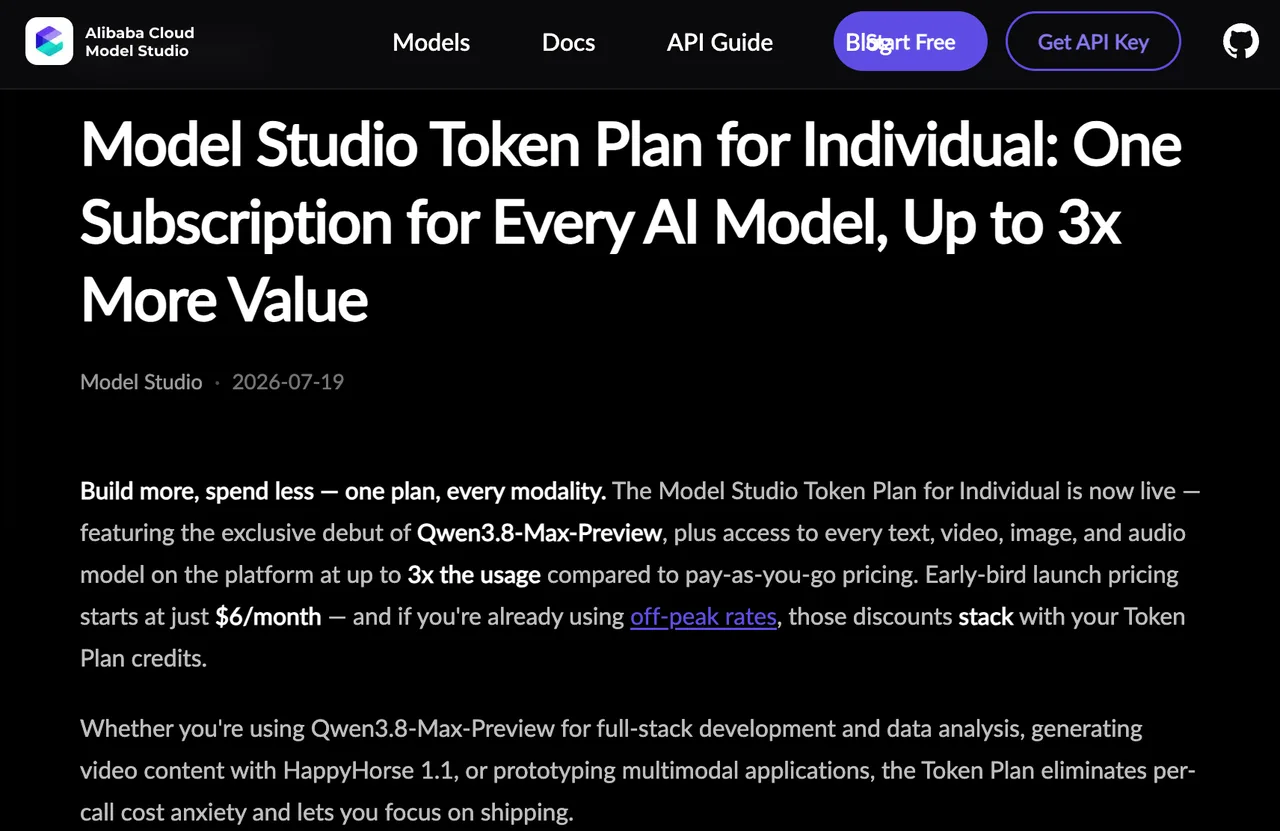
The official Model Studio blog announced the Token Plan Individual launch with qwen3.8-max-preview pricing context, including early-bird launch pricing and credit allocations. The Model Studio Token Plan blog is useful as launch evidence, but I would not treat a launch post as the only finance source. Pricing pages, docs, and console-visible usage records should all be preserved together.
Preview Discounts and Expiration Risk
Preview pricing has a short half-life. That is not a criticism. It is just how preview access works.
The awkward detail: current QwenCloud docs state that qwen3.8-max-preview has ended its preview period and is officially retired, while calls to the old ID are routed to qwen3.8-max. So any document still calling it a current preview model needs review before publication. Use the exact model ID in your evidence record, but do not describe preview access as GA, SLA-backed, or ordinary pay-as-you-go production API unless the current official source says so.
This is where many cost sheets get messy. Someone screenshots a preview model cost, someone else builds a monthly estimate, and two weeks later the model ID, discount, or deduction coefficient changes. The price is not real until it survives the workload and the current docs.
Turn Credits Into Effective Cost
Personal and Team Plan Capacity
The Qwen Token Plan should be evaluated as capacity, not only as price.
- For Personal Edition, ask: does the 5-hour window match the developer’s actual work pattern? Does the 7-day ceiling interrupt weekly build cycles? Is the 5-hour limit currently enforced or temporarily lifted? Does the developer need Credit Packs after a heavy evaluation run?
- For Team Edition, ask a different set of questions. How many seats need independent API keys? Which users need a higher monthly quota? Who owns shared Credit Packs? What happens when one seat burns through quota faster than expected?
QwenCloud’s Personal Edition docs also say actual Credits consumed per request are dynamically determined by model type, token usage, thinking mode, and tool calls. That is the part I would underline for FinOps. A credit is not a token. A credit is a billing abstraction.
Cost per Accepted Developer Task
Cost per token is not enough. For builders, the better number is cost per accepted developer task.
Use this calculation:
accepted-task cost = total credits consumed / accepted tasks completed
An accepted task might be a merged code change, a reviewed SQL analysis, a passed debugging session, or a customer-ready workflow. Failed runs still count in the budget if they consumed credits, time, or review effort.
This is where Model Studio credits can look better or worse depending on behavior. If Qwen3.8 solves a multi-file refactor in one clean session, the effective cost may be strong. If the same task requires repeated reasoning runs, tool calls, manual review, and prompt repair, the accepted-task cost moves fast.
Worth checking, not worth assuming.
Compare Preview Pricing With Production Needs
Token Plan Use Versus Pay-as-You-Go API Use
Token Plan and pay-as-you-go API use should not be blended into one estimate.
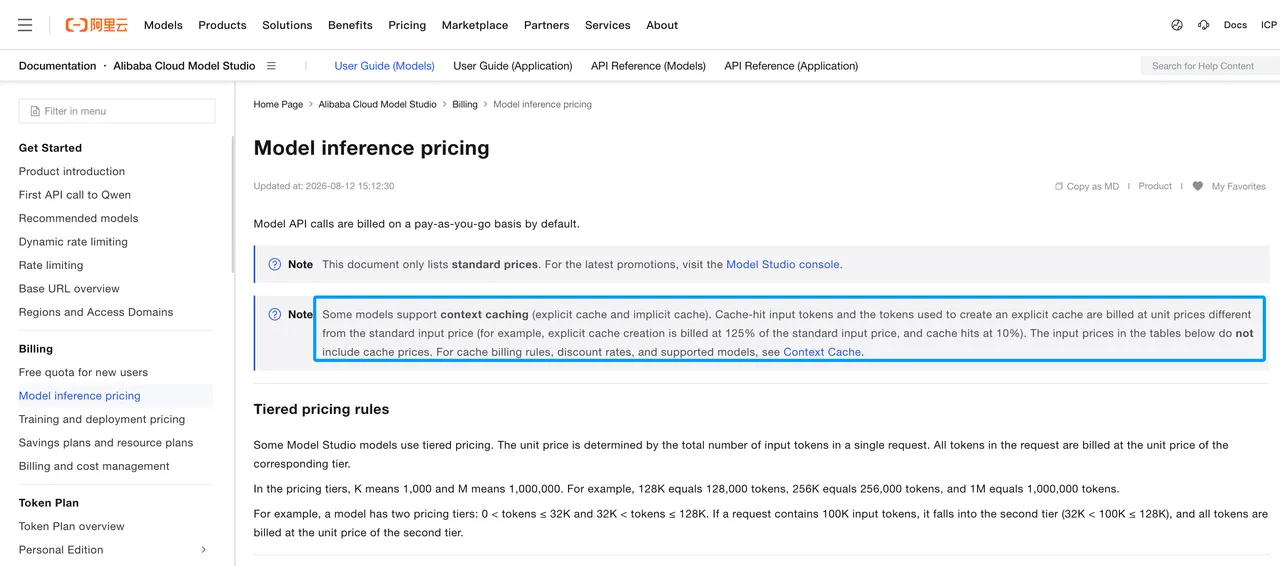
Alibaba Cloud Model Studio’s official model pricing page shows token-based billing by model, deployment scope, and context tier for listed Model Studio models. QwenCloud’s own developer pricing documentation also says billing varies by model type, with text billed per token, image generation per image, video per second, and speech by character or audio duration.
That tells you the main budget rule: compare units before comparing prices. Token Plan credits, pay-as-you-go token rates, batch discounts, context cache behavior, and off-peak discounts are not interchangeable.
For customer-facing planning, keep two sheets. One for Token Plan evaluation. One for production API economics. Do not let preview model cost become the proxy for launch cost.
What Changes When Preview Access Ends
When preview access ends, four things can change: model ID, routing behavior, deduction rate, and support expectations.
QwenCloud’s model deprecation policy explains that model retirement can involve notices, rate-limit changes, and replacement testing before switching. Even when an old preview ID still routes, teams should update configuration to the supported production ID when official docs recommend it.
For finance, that means preview records should be archived, not reused silently. Keep the launch blog, Token Plan page, pricing page, console usage screenshot, and date checked. If the estimate later changes, you can explain why.
Add Performance and Reliability Costs
Latency, Retries, and Manual Review
A cheaper plan is not cheaper if developers wait, rerun, and manually repair outputs.
Latency affects cost because it changes how teams work. Long wait times break coding flow. Retries consume quota or at least review time. Manual inspection matters when the model produces code, data analysis, or customer-impacting recommendations that still need human approval.
I would track three things during evaluation: credits consumed, wall-clock time, and accepted-task rate. If one task uses few credits but takes three manual review passes, the budget is incomplete.
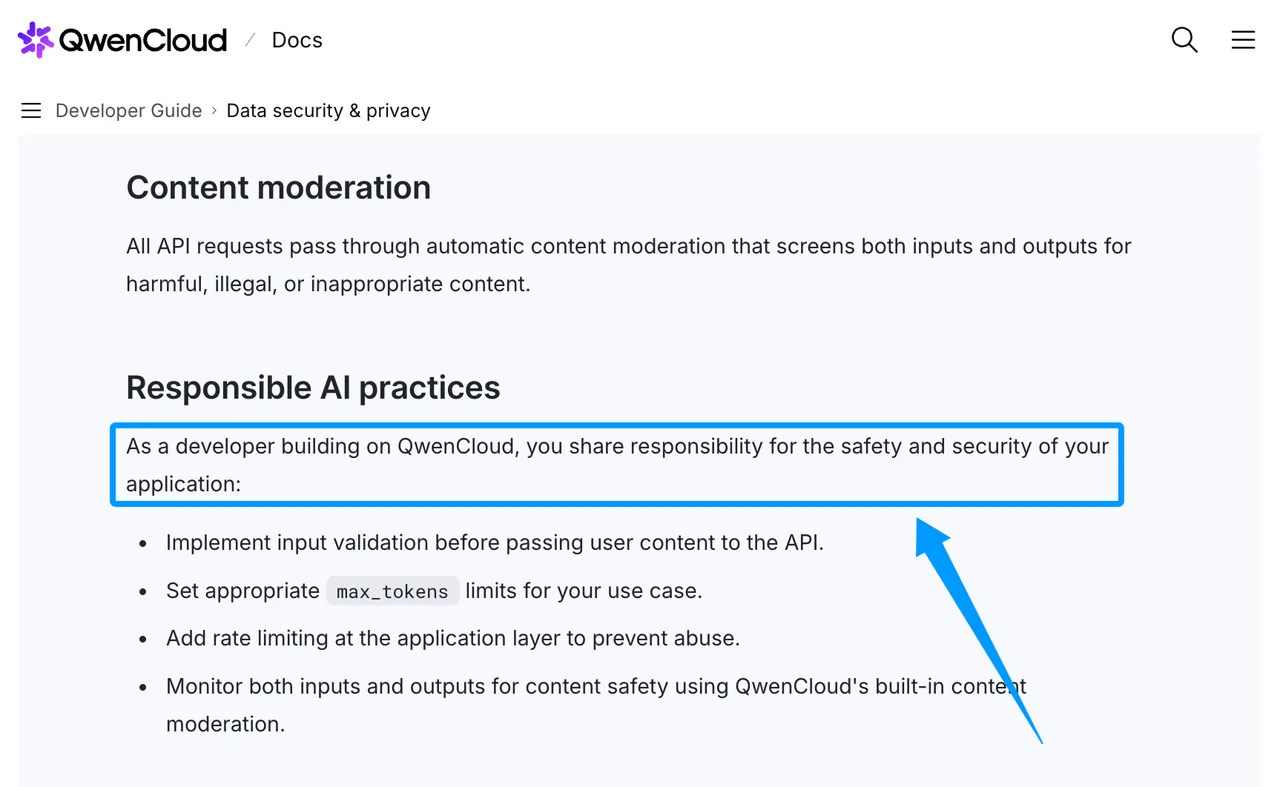
QwenCloud’s data security documentation also notes content moderation and developer responsibility for input validation, output monitoring, rate limiting, and safe application behavior. Those controls are not free. Someone has to build and operate them.
Model Replacement, Version Drift, and Migration Work
The real risk is not that a preview model disappears overnight. The more common risk is quieter: the model changes shape, and your evaluation no longer predicts production behavior.
Version drift creates migration work. Prompts may need adjustment. Benchmarks may need reruns. Tool behavior may change. A workflow that looked good in preview may still be good later, but it needs fresh evidence.
If a proposal mentions QwenCloud pricing, attach the exact model ID, plan type, billing source, and checked date. Without that, the number is just a memory with formatting.
Budget for Team Evaluation
Individual Smoke Tests and Shared Workloads
Start with individual smoke tests. Let one or two developers run controlled tasks: code repair, data analysis, documentation drafting, and agent tool use. Capture credits, time, accepted output, and rejection reason.
Then move to shared workloads. This is where team cost appears. Multiple people use different prompts, tools, and review standards. One developer’s “works well” does not automatically become a team budget.
For each evaluation, record:
- Model ID and route used
- Plan type and account owner
- Credits consumed
- Task type
- Accepted or rejected result
- Review time
- Retry count
- Notes on latency or quota interruption
No need to make this beautiful. It just has to be consistent.
Approval Gates Before Customer-Facing Use
Before customer-facing use, add gates for product, engineering, finance, legal, and security.
Finance approves the cost model. Engineering approves performance and integration boundaries. Product approves task fit. Legal reviews commercial terms, data transfer, output use, and customer statements. Security reviews keys, logging, and access.
QwenCloud’s Customer Agreement includes terms on fees, updates, suspension, customer content, output use, and responsibility—verify against the current agreement text before publication. I would route those terms before any customer proposal quotes savings, uptime, data handling, or ownership language.
FAQ
Who approves Qwen3.8 cost claims in customer proposals?
Finance should approve the numbers, product should approve the use case, and legal should approve external wording. Engineering should confirm the model ID, plan type, and current official evidence. A customer proposal should not rely on old qwen3.8-max-preview pricing screenshots.
How long should finance retain preview pricing records?
Retain preview pricing records for the life of the evaluation and the full customer proposal cycle that used them. For material customer commitments, keep them with the contract evidence file. Include URLs, screenshots, console usage exports where available, dates, and reviewer names.
Can procurement negotiate terms outside published plans?
Possibly, but do not assume it. Procurement can ask about enterprise terms, seat volume, support, data handling, and custom purchasing arrangements. Until signed terms exist, published QwenCloud pricing and official console-visible usage should remain the budget source.
Which team communicates preview price changes to customers?
Product owns the customer message. Finance validates the cost impact. Legal approves wording. Engineering confirms whether model IDs, routing, or performance changed. If preview pricing affects a customer quote, notify before the next invoice or renewal discussion.
May benchmark results be shared with external partners?
Only after legal, security, and product approve the disclosure. Remove confidential prompts, customer data, internal code, and non-public pricing unless sharing is contractually allowed. State the model ID, plan type, date, and whether results came from preview or production access.
Conclusion
Qwen3.8 pricing is not just the plan price. It is credits, quotas, reset windows, preview status, accepted-task rate, manual review, latency, migration work, and the risk that old preview evidence stops matching current access.
My rule is simple: do not budget from the loudest discount. Budget from the task that actually gets accepted. For Qwen3.8, that means keeping Token Plan records, Model Studio pricing evidence, console usage details, and preview-change notes in the same file before the model enters customer-facing planning.
Previous posts:
Related Articles
/filters:quality(82)/media/images/1790589731632080935_0wwFPY8h.webp)
Google Veo 3 Pricing 2026: API Costs and Access
/filters:quality(82)/media/images/1790590062795265714_fANXfpxI.webp)
Luma AI Pricing 2026: App and API Costs Explained
/filters:quality(82)/media/images/1790589262955077611_p3tThHZg.webp)
Veo Automation Guide 2026: Batch Video Workflows
/filters:quality(82)/media/images/1773962750383987480_n3hqzHRZ.webp)
Kling 4.0 vs Kling 3.0: What Is Expected to Change and How to Upgrade
Kling 4.0 vs Seedance 2.5: How to Choose for Commercial Video