
Qwen 3.7 Plus Review: Context, Multimodality, and Agents
This Qwen 3.7 Plus review examines context, multimodality, agent behavior, cost signals, and production fit for AI builders.
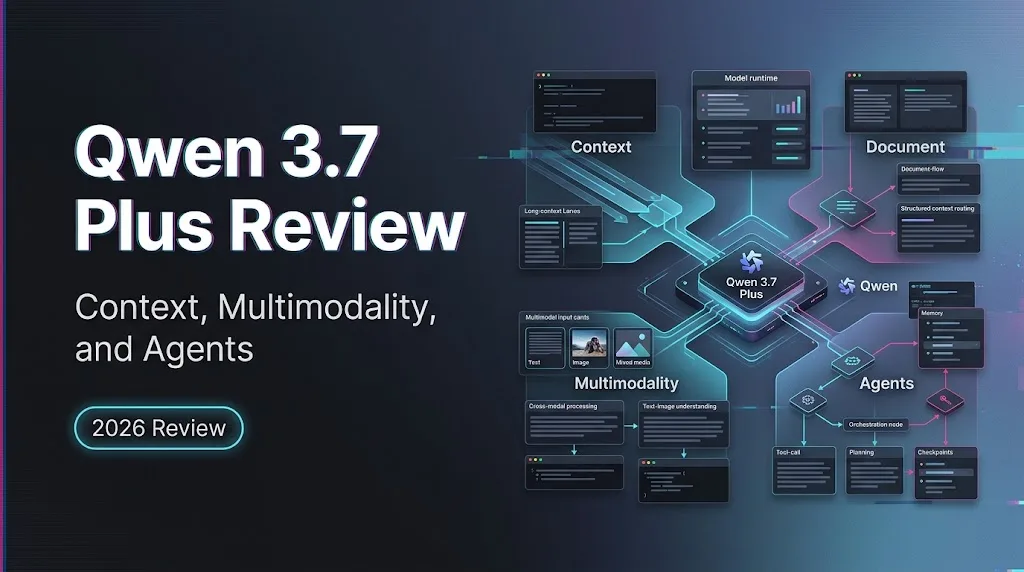
Hey, I’m Dora. I paused before calling this a Qwen 3.7 Plus review. The model page has clean specs. The production question is messier. If a product engineer is deciding whether to put it behind customer traffic, vendor descriptions are input data, not conclusions.
This note uses official documentation checked on August 17, 2026. I did not run a private benchmark set for this article. This is a production-fit review framework: what the docs say, what a team still needs to test, and where third-party access should be treated separately.
Review Method and Evidence
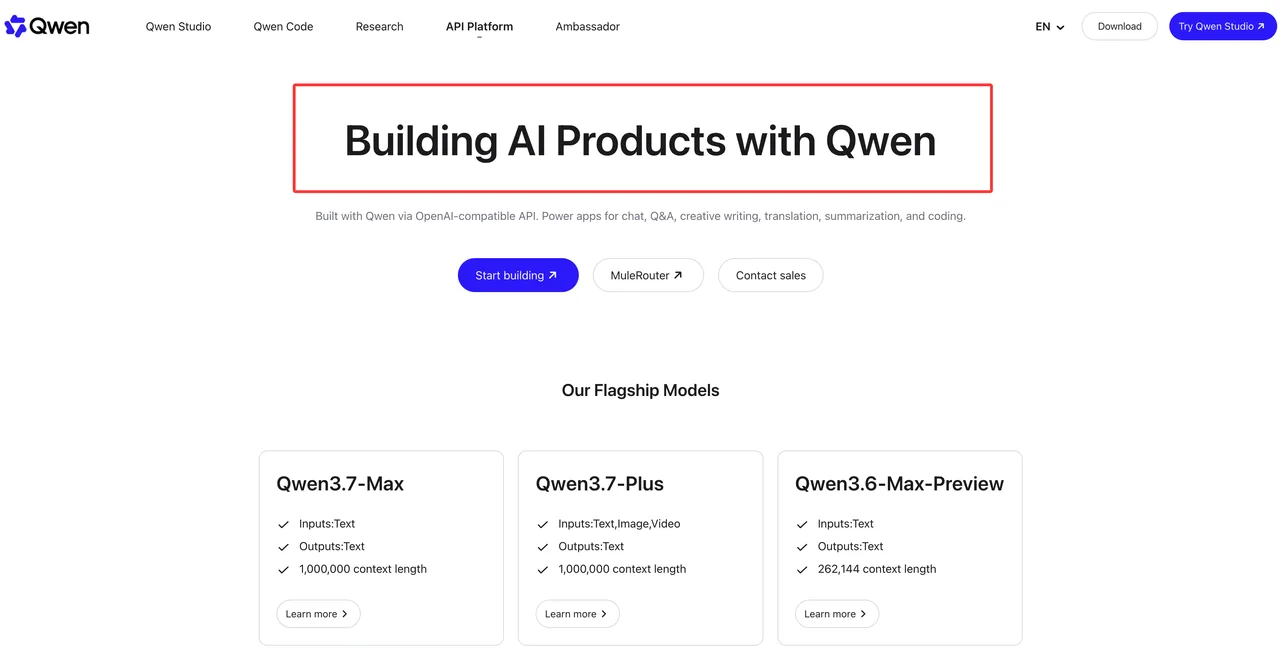
The primary source is Alibaba Cloud’s qwen3.7-plus model page. I also checked official pricing, visual understanding, and batch inference documentation. For broader model positioning, I cross-checked the Qwen API platform.
Model ID, Region, Access Path, and Test Date
The official model ID is qwen3.7-plus. Alibaba says it is functionally equivalent to the snapshot qwen3.7-plus-2026-05-26.
Official docs show availability across Beijing, Hong Kong, Singapore, Tokyo, Frankfurt, and US (Virginia). Access paths include OpenAI-compatible, Anthropic-compatible, and DashScope endpoints. For OpenAI-compatible calls, the base URL varies by region. US (Virginia) uses https://dashscope-us.aliyuncs.com/compatible-mode/v1.
I paused here. Region is not just a label. It affects endpoint, API key scope, deployment scope, pricing, latency, and sometimes model ID variants.
Workloads, Baselines, and Acceptance Criteria
For a real evaluation, I would freeze four workload groups before testing:
| Workload | Acceptance rule |
|---|---|
| Reasoning and coding | Correct answer, reproducible format, no hidden tool dependency |
| Long context | Cites the right span, refuses missing facts, avoids position bias |
| Multimodal | Correct extraction from images, documents, and video frames |
| Agents | Tool call accuracy, recovery after failure, bounded retries |
Baselines should be models already available in your stack. If your app runs through an aggregator, compare against that same path. Provider-native and aggregator-native results are not automatically interchangeable.
What Qwen 3.7 Plus Offers
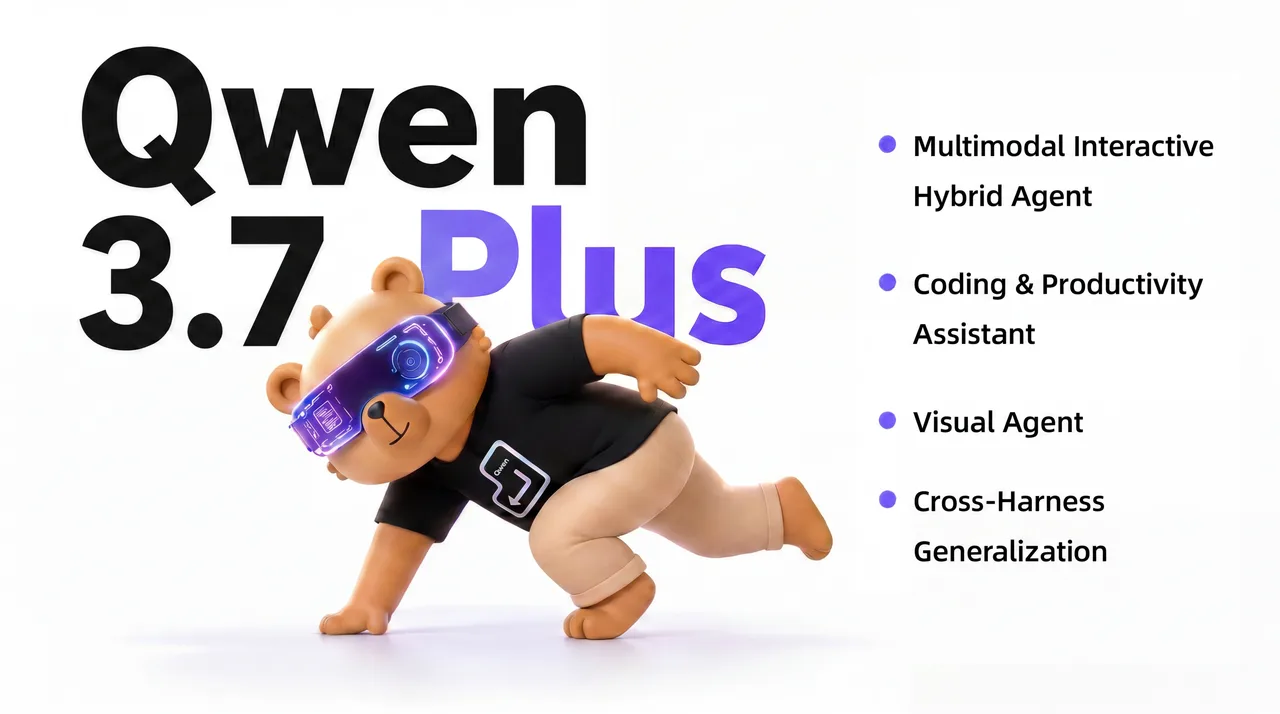
The official specs are broad. That does not mean every workload benefits.
Context, Input Modalities, Tools, and Output
The current Qwen3.7 Plus model page lists text, image, and video input, with text output. It supports function calling, structured outputs, web search, prefix completion, context caching, and batch inference. Fine-tuning is listed as unsupported.
The context window is 1,000,000 tokens. Max input length is 991,808 tokens. In thinking mode, max input is 983,616 tokens. Max output is 65,536 tokens, and max chain-of-thought length is 262,144 tokens.
For Qwen3.7 Plus context work, that 1M number is useful. It is not a guarantee that retrieval stays stable across a full million-token prompt.
Availability Across Model Studio and Aggregators
Model Studio is the official Alibaba Cloud access path. Third-party aggregators may expose the model through different IDs, prices, request formats, or region routing. That is access data, not model-source evidence.
If an aggregator lists a Qwen3.7 Plus API, record four things separately: provider model ID, wrapper model ID, snapshot mapping, and billing rule. Having many tools is not the problem. Having to manage your tools is.
Evaluate Core Model Behavior
The model is positioned as a Plus-tier option with agent and multimodal capability. I would not convert that sentence into a production claim without tests.
Reasoning, Coding, and Instruction Following
For reasoning, test both thinking and non-thinking mode. Alibaba’s batch docs say the Qwen3.7, Qwen3.6, and Qwen3.5 series have thinking mode enabled by default in batch inference, and enable_thinking must be set explicitly.
For coding, keep tasks boring: patch a failing unit test, generate a SQL migration, explain a stack trace, write a parser, and reject a bad requirement. Track compile rate and human repair time. “Looks good” is not a metric.
Long-Context Retrieval and Failure Patterns
Long-context tests need adversarial cases. Put similar facts in different locations. Add outdated policy text before the correct policy. Ask for a citation. Ask a question with no answer.
The failure labels matter:
| Failure pattern | What it tells you |
|---|---|
| Missed span | Retrieval weakness |
| Wrong span | Attention or ranking issue |
| Fabricated citation | Trust problem |
| Early-text bias | Position sensitivity |
| Overlong answer | Instruction drift |
Found the pattern on the third try is normal. That is why one demo prompt tells almost nothing.
Evaluate Multimodal and Agent Workloads
Qwen3.7 Plus multimodal claims need task-specific testing. A screenshot agent and a document extractor fail in different ways.
Image, Document, and Video-Input Tasks
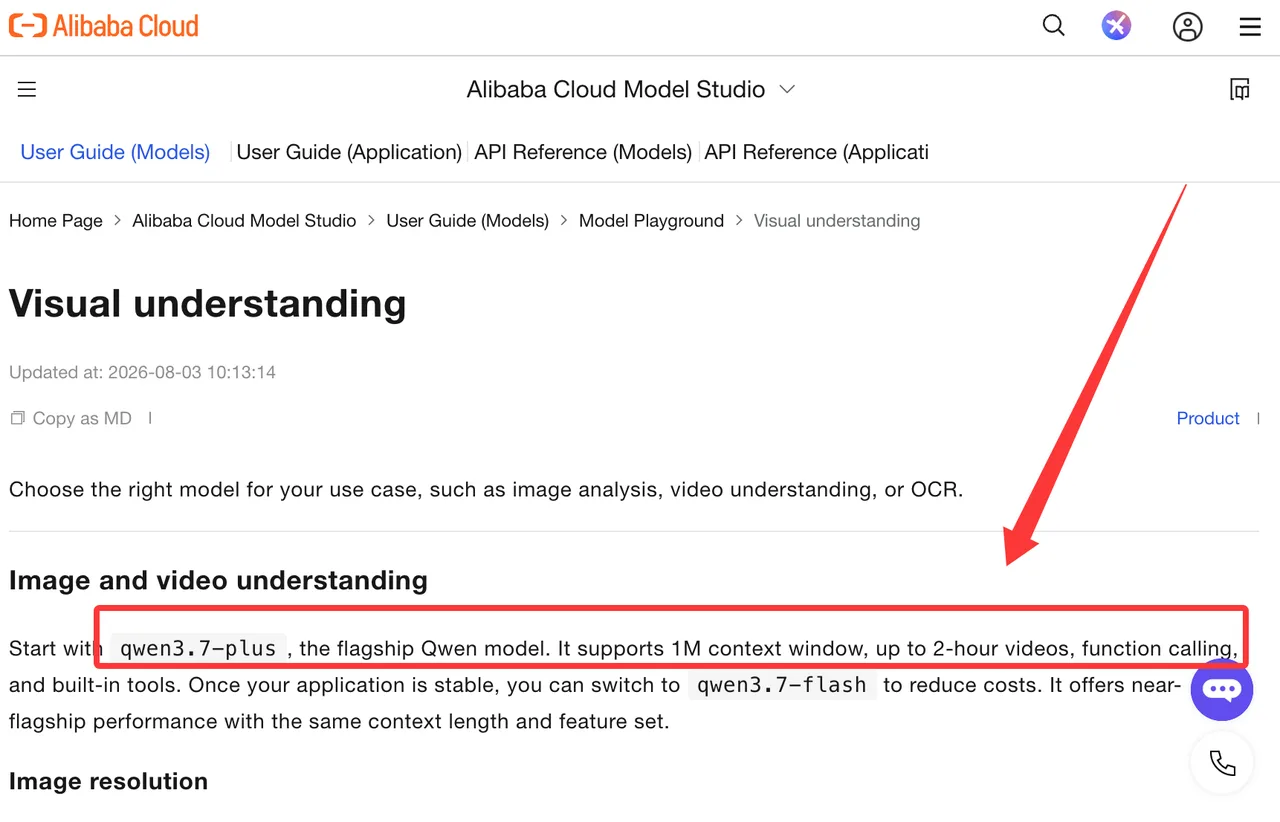
Alibaba’s visual understanding docs list Qwen3.7 Plus with 1M context, up to 16M pixels per image, up to 2-hour / 2GB videos, 2,048 max images, and 64 max videos.
For image tasks, test charts, UI screenshots, receipts, product photos, and document tables. For video tasks, test temporal questions: “what changed after step three?” and “which warning appeared before the user clicked submit?”
Do not reuse a pure benchmark set here. The historical boundary matters. This article is the production-fit pass, not the full multimodal deep dive.
Tool Calls, GUI Tasks, and Multi-Step Recovery
Function calling support is official. Agent performance is not proved by support flags.
I would test tool selection, argument validity, retry behavior, and recovery after a tool returns partial data. GUI tasks need separate labels: wrong element, correct element wrong timing, action loop, and missed screen state.
For security review, I would also map failures against the OWASP GenAI LLM Top 10. Prompt injection, excessive agency, insecure output handling, and sensitive information disclosure are not theoretical once a model can call tools.
Assess Production Fit
Specs answer “can I call it?” Production tests answer “can I depend on it?”
Latency, Throughput, Usage Cost, and Reliability
The model page lists rate limits for qwen3.7-plus: 30,000 RPM and 5,000,000 TPM. The snapshot section lists lower limits: 600 RPM and 1,000,000 TPM. Account-level quotas may still differ.
The standard price table on the model page lists:
| Input size | Input price | Output price |
|---|---|---|
| Up to 256K tokens | $0.276 / 1M tokens | $1.101 / 1M tokens |
| 256K to 1M tokens | $0.826 / 1M tokens | $3.301 / 1M tokens |
The broader model pricing docs add an important billing rule: tiered price is determined by total input tokens in a single request, and all tokens in that request use the tier’s unit price.
Workloads That Benefit and Workloads That Do Not
Good candidates: multimodal support triage, document QA with citations, UI-screen analysis, coding assistance with visual references, and offline evaluation batches.
Bad candidates: ultra-low-latency autocomplete, fixed-schema extraction where a smaller model is enough, audio-native tasks, and workflows needing fine-tuned weights.
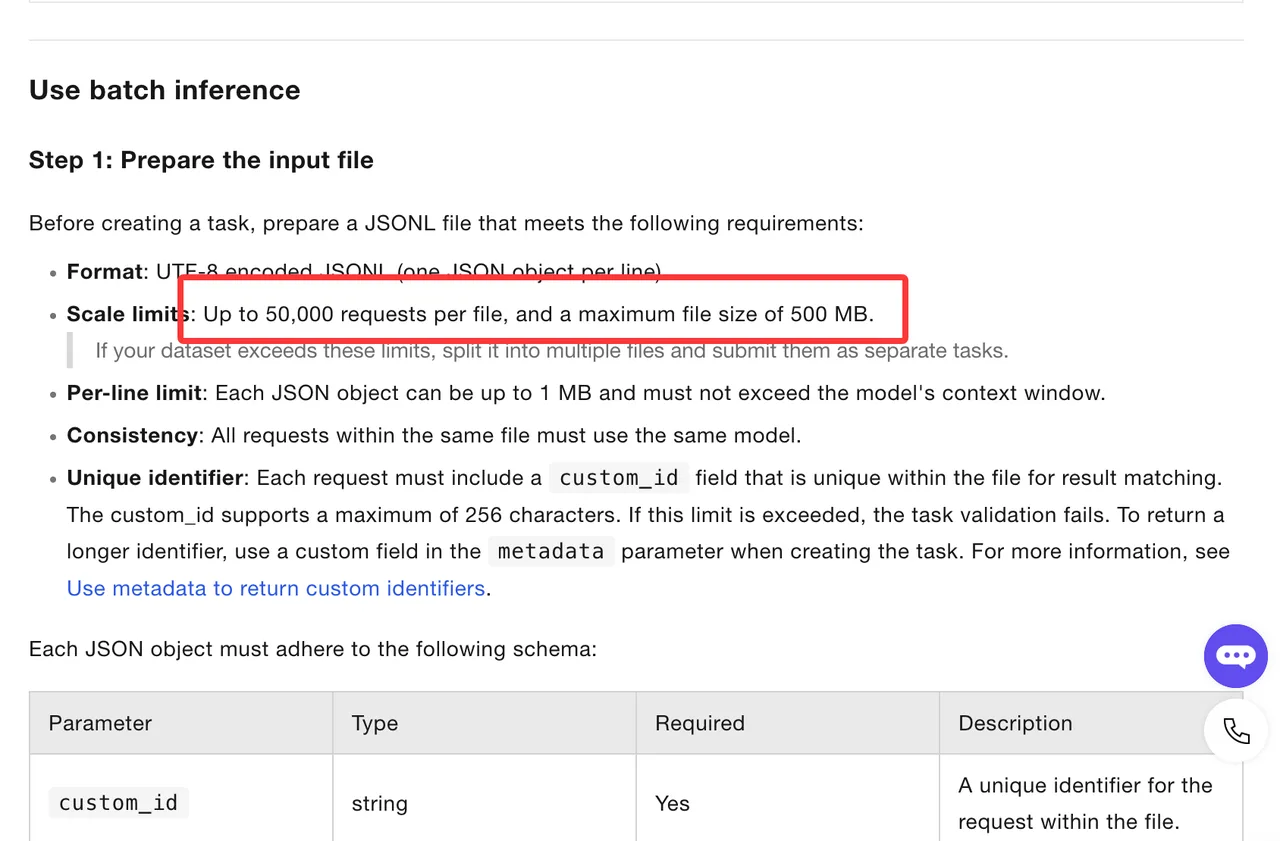
Batch evaluation deserves its own note. Alibaba’s batch inference docs say batch is for non-real-time jobs, uses JSONL files, and can process up to 50,000 requests per file. For qwen3.7-plus, batch context is capped at 256K per request.
Limits and Trade-Offs
This is where my data ends.
Provider Metrics Are Not a Substitute for Workload Tests
Official capabilities are necessary. They are not acceptance tests. Long context, multimodal, and agent behavior all need frozen prompts, frozen media, repeat runs, and failure labels.
For model-change approval, I would attach examples of wins and failures. Screenshots help. Raw logs help more.
Dynamic Prices and Access Terms Can Change
Prices, discounts, region availability, and access terms can move. Alibaba’s model page says it shows original pricing and excludes limited-time promotions.
Any Qwen3.7 Plus model review has an expiration date. This one is no different.
FAQ
Can teams separate Qwen 3.7 Plus usage by project?
Yes, if the platform setup supports separate workspaces, API keys, tags, or billing exports. The evaluation record should capture project, environment, model ID, endpoint region, and owner.
How should prompt templates be versioned across model updates?
Version prompts like code. Store template text, variables, decoding settings, model ID, snapshot ID, evaluator version, and approval date. Prompt drift is still drift.
Can production traffic be replayed safely in a staging evaluation?
Only after privacy review and data minimization. Redact customer data, secrets, credentials, and regulated content. This is general information, not legal advice.
What evidence should accompany a model-change approval?
Include benchmark deltas, workload test results, latency samples, cost estimates, known failure cases, rollback plan, and owner sign-off. One chart is not enough.
Who owns incident response when an upstream model changes?
The platform team owns detection and rollback mechanics. The product team owns customer impact. Vendor management owns escalation. Write that down before launch.
Conclusion
This Qwen 3.7 Plus review lands in a practical place. The official specs are strong: 1M context, text-image-video input, tool support, structured output, web search, context cache, and broad regional access.
The production decision is still yours. Test the Qwen3.7 Plus model against your own prompts, media, agents, latency budget, and cost ceiling. Good enough on a model card is not the same as good enough in your product.
Previous posts:
/filters:quality(82)/media/images/c347367a-a007-4466-b8f7-d37f5fb52819.webp)
/filters:quality(82)/media/images/cd4db796-7728-45fb-8267-6813ed28e173.webp)
/filters:quality(82)/media/images/1791535252286714222_v4jvJT2a.webp)
/filters:quality(82)/media/images/1791451065663755033_qNqAKS1a.webp)
/filters:quality(82)/media/images/1791359984291066138_tW5eOX6f.webp)
/filters:quality(82)/media/images/1773962750383987480_n3hqzHRZ.webp)