
Wan 3.0 Audio API: Test Sync and Production Fit
Test Wan 3.0 audio generation and reference inputs for timing, dialogue, sound events, failure handling, and fit in a production video workflow.
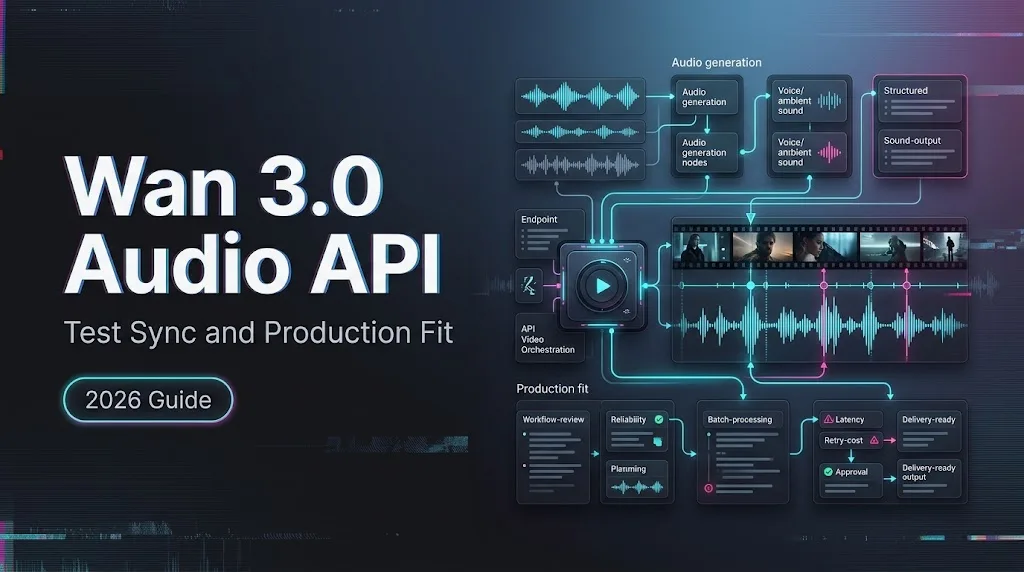
Dora here. I would not start a Wan 3.0 audio test by asking whether the sound is “good.” Too early. The useful question is narrower: does native audio stay attached to the visual event the product needs?
This note is for AI video teams deciding whether native sound belongs in a product or media pipeline. Not a general Wan 3.0 overview. Not a quality ranking. I have no real sample set here, so I’m not making claims about voice quality, music quality, or sync performance.
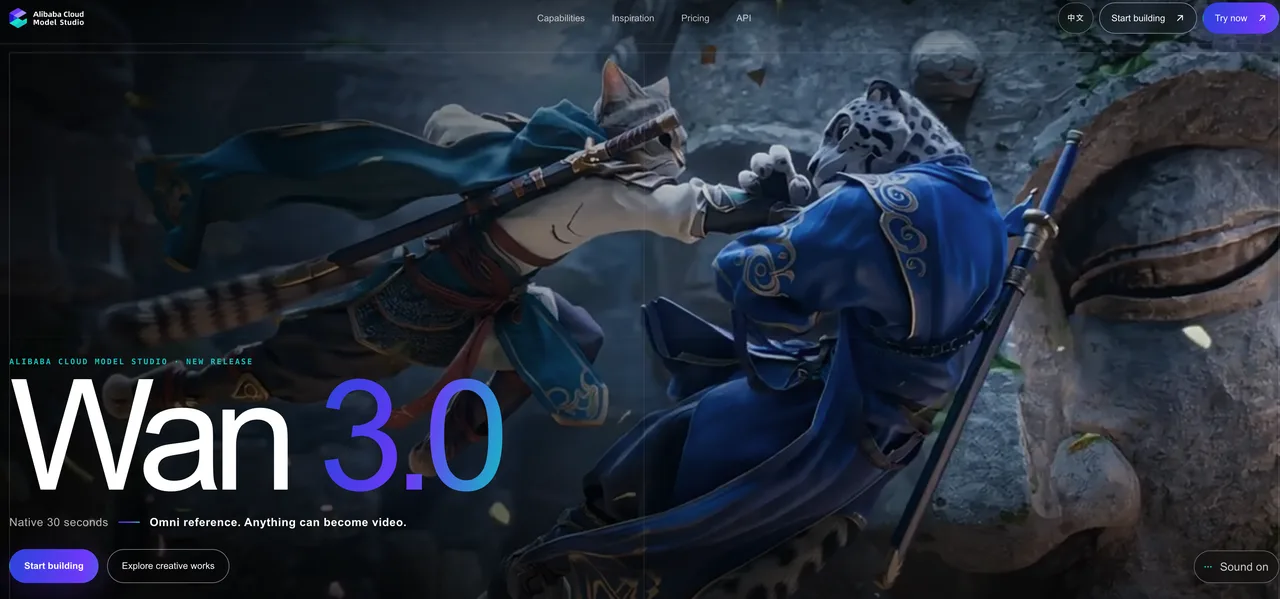
Alibaba Cloud’s Wan 3.0 release page presents Wan 3.0 as a 30-second video model with native audio-visual generation. The workflow question is not only “does Wan 3.0 have audio.” It is: which surface produces audio, which surface accepts audio references, and what evidence survives after the job finishes.
Short answer: test audio as part of the clip, not as decoration.
Map the Wan 3.0 Audio Surfaces
Generated audio and uploaded audio references
The easy mistake is mixing up enable_audio with reference audio. They are not the same capability.
Text-to-video can generate a video with audio when enable_audio is on. In the checked T2V schema, I found fields such as prompt, resolution, aspect_ratio, duration, thinking_mode, enable_audio, and seed. I did not find an audio upload field on that surface.
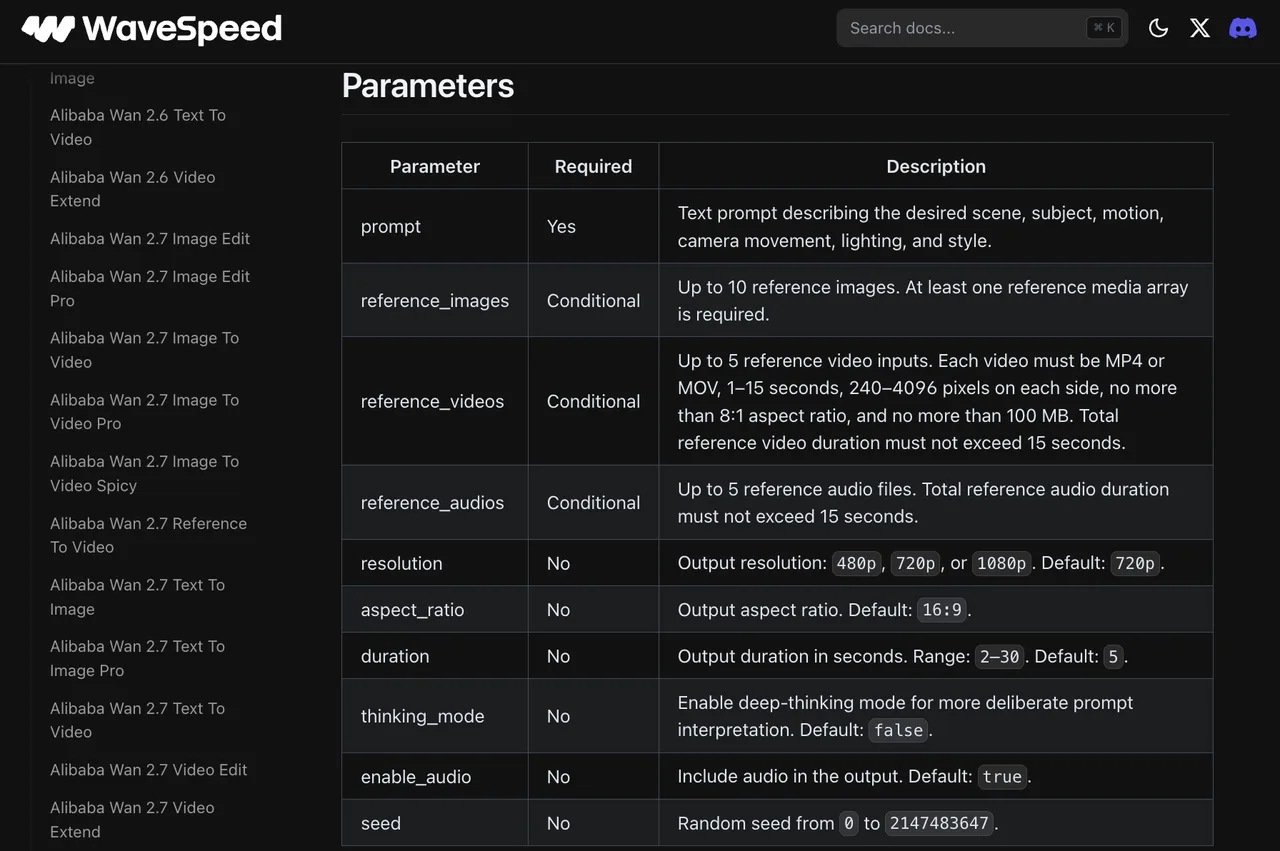
Image-to-video changes the visual input. It does not turn generated sound into audio-reference control.
Reference-to-video is different. R2V is where uploaded reference audio belongs. The checked Wan 3.0 R2V schema lists reference_audios separately from enable_audio. I paused here. That separation is the whole test.
Audio controls across T2V, I2V, and R2V
My first test sheet separates the three surfaces:
| Surface | Audio Generation | Audio Reference Input | Test Focus |
|---|---|---|---|
| T2V | enable_audio | Not listed | Prompt-driven speech, ambience, event cues |
| I2V | enable_audio | Not listed | First-frame motion plus generated sound |
| R2V | enable_audio | reference_audios | Audio-guided rhythm, voice, or mood |
The checked I2V schema also lists image, optional last_image, duration from 2 to 30 seconds, resolution, aspect ratio, thinking_mode, enable_audio, and seed. Pricing is based on output resolution and billed duration.
So that’s where the bottleneck was. Surface choice controls what “audio test” even means.
Build a Synchronized Audio Test
Choose dialogue, ambience, music, and sound events
For wan3 audio generation, I split sound into four categories: dialogue, ambience, music, and event sounds.
I do not test all four in the first pass. That creates a clip no one can debug. One speech line plus one visible action is enough. Example: a presenter says a six-word sentence, then places a glass on a table. The glass contact gives a clear sync point.
A useful Wan 3.0 audio sync test has fewer creative ideas and more timestamp targets. Boring again. Useful again.
Lock prompt, duration, visuals, and review criteria
For Wan 3.0 audio, I lock the brief before running jobs:
| Field | Locked Value |
|---|---|
| Duration | 6 or 8 seconds for first tests |
| Resolution | 480p for draft cost, then 720p or 1080p |
| Aspect ratio | One target only |
| Visual input | One approved image or reference set |
| Audio target | One speech line or one event cue |
| Review pass | Timing, intelligibility, drift, artifacts |
If the team is also tuning visual prompts, keep wan-3-0-prompt-guide separate from this test. This pass is not about the most cinematic clip. It is about proving whether sound and picture can be reviewed together.
Evaluate Audio and Video Together
Event timing, intelligibility, and audiovisual drift
I score sync by observable moments.
The hand touches the object. The sound lands. The mouth closes. The syllable ends. The camera cuts. The ambience changes. If those events drift, I mark the timestamp.
For dialogue, intelligibility comes before character. If reviewers can’t understand the sentence, the clip fails the pipeline even if the mood is close. “Sounds kind of right” is not a pass condition. It is a note.
Artifacts, silence, and failed-generation evidence
A failed audio run still belongs in the record. Silence when audio was enabled. Garbled speech. Music that appears late. Sudden volume jumps. A sound event with no visual cause.
I keep the output URL, request body, response body, reviewer notes, and failed timestamp. If the output file expires later, the record should still say what happened.
Deleted evidence is how teams re-test the same mistake next week.
Decide Where Native Audio Fits
Finished drafts versus post-production sound design
Native audio fits best when a draft needs to communicate timing, mood, or rough editorial intent. It can make a reviewable video feel closer to the intended scene.
That does not make it final sound design.
For finished media, I still expect a post-production route: dialogue cleanup, music licensing, loudness control, stem replacement, final mix. If the native track survives that process, fine. If it gets replaced, also fine.
Human review, replacement audio, and fallback routes
I use a fallback route in the brief. Native audio first. Replacement audio second. Silent export third.
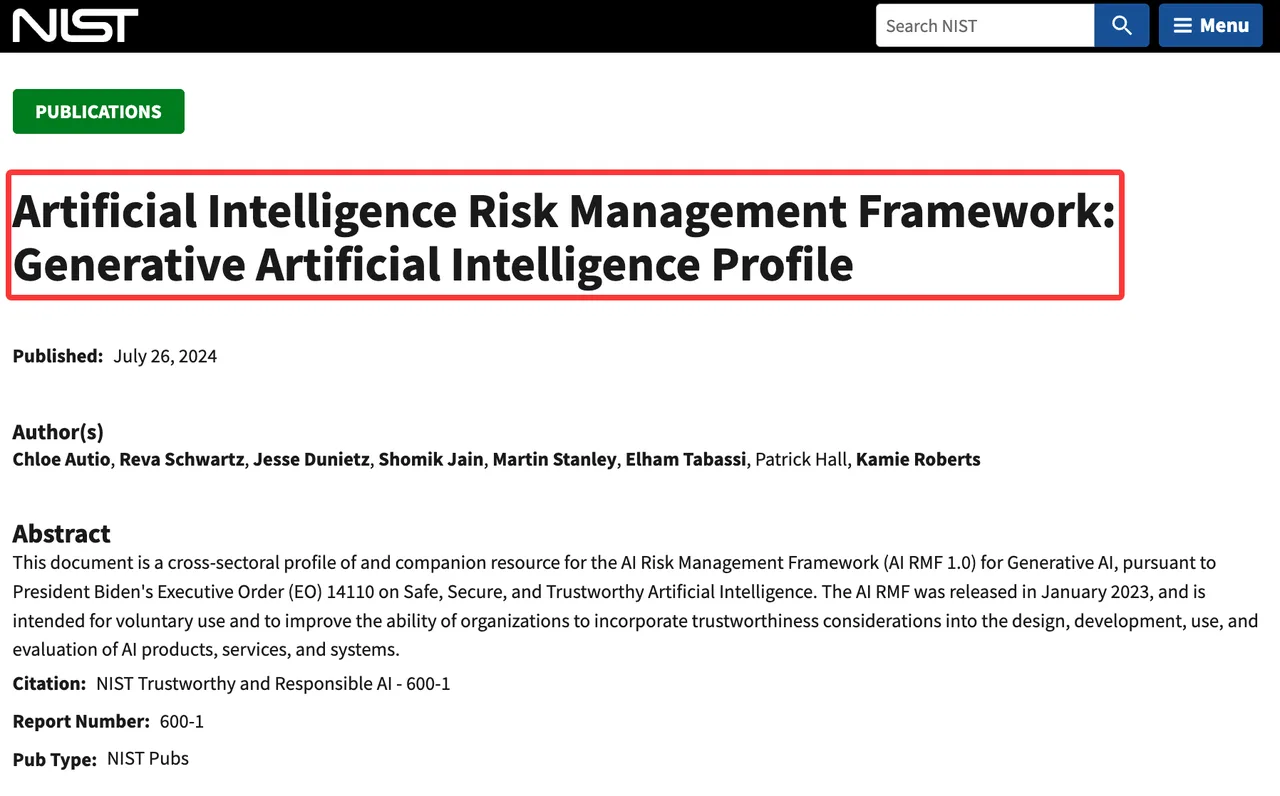
This matters for customer-facing workflows. If generated sound fails, the system should know whether to regenerate, mute, replace, or send to human review. NIST’s Generative AI Profile is a useful governance reference here because it treats evaluation, documentation, and human oversight as part of AI system risk management.
This is general information, not legal advice. Music rights, voice rights, privacy, and customer uploads need review under the applicable platform terms, customer contract, and actual license. I don’t know. Better than making something up.
Integrate Audio Into the API Workflow
Verify request fields and asynchronous job states
The API workflow starts with the exact endpoint. T2V for text-only scene creation. I2V when the first frame or final frame matters. R2V when references guide identity, motion, or audio.
For R2V, the checked schema lists up to 10 reference images, 5 reference videos, and 5 reference audio files. Total reference audio duration is capped at 15 seconds. enable_audio remains separate.
The response needs the task ID, status, model, outputs, error field, and timing data. For production fit, I care about created, processing, completed, and failed. Silent failure is still failure.
Store source references, outputs, and review evidence
The output field is not a sound-stem contract. I would inspect the returned file before promising container behavior.
Store request JSON, uploaded references, output URL, downloaded file, MIME type, audio flag, reviewer timestamps, task status, and failure reason. For provenance and handoff records, the C2PA specifications are a useful reference point, especially when generated media moves through several tools.
Related internal notes to pair with this test: wan-3-api, wan-3-0-prompt-guide, and wan-3-0-first-last-frame-workflow.
Limits and Trade-Offs
Generated audio may not meet final-edit requirements
A generated track can help a draft feel complete. It may still fail final edit.
Final media often needs clean stems, explicit music rights, language review, platform loudness targets, and edit handles. If the API returns one mixed video file, the sound team has less control. Maybe that is fine for internal drafts. For ads, client delivery, or localized media, I would assume review work remains.
Works for my frequency. Yours might differ.
Provider controls and policies can change
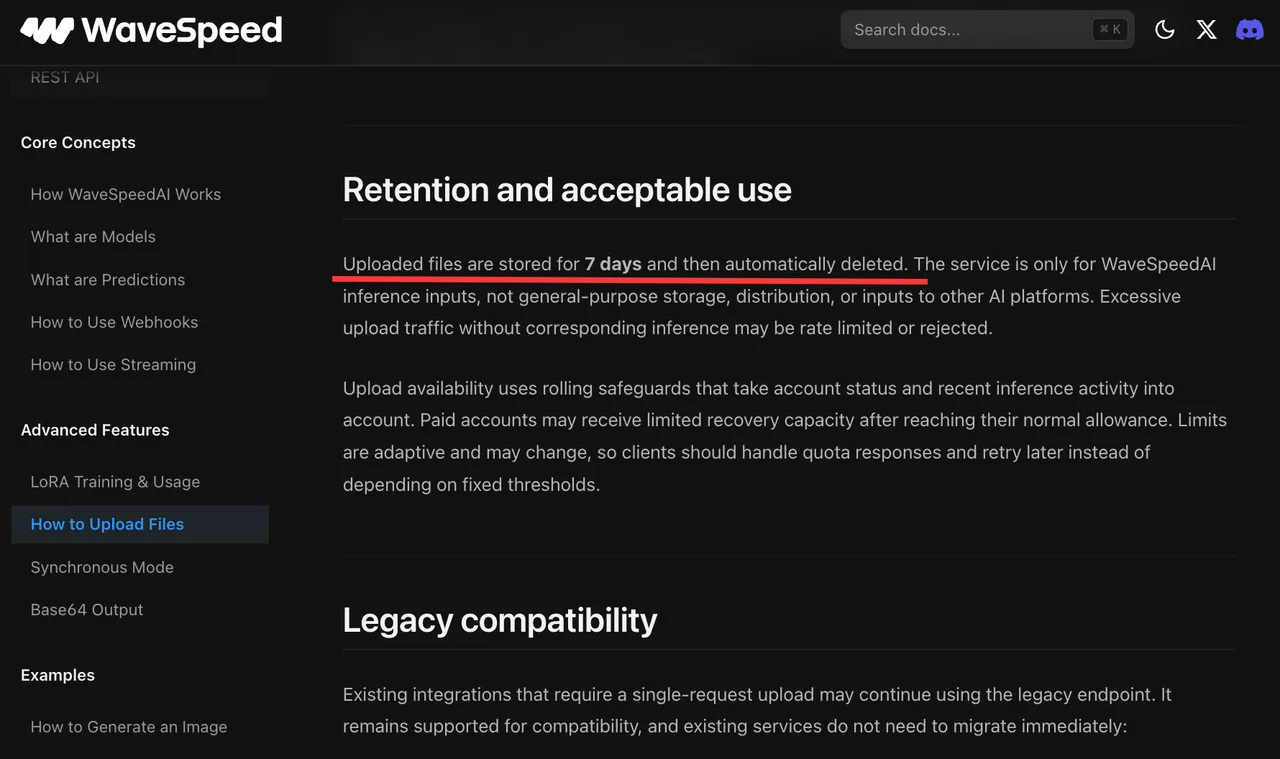
Schema, pricing, reference limits, and retention policies can move. I timestamp the test and copy the schema fields into the evaluation record.
The checked upload file docs say common audio formats are supported for upload and uploaded files are stored for 7 days, then automatically deleted. That answers part of the workflow question. It does not replace privacy review.
This conclusion has an expiration date. Models update fast.
FAQ
Does disabling audio reduce Wan 3.0 generation cost?
As of August 26, 2026, the checked Wan 3.0 docs price T2V, I2V, and R2V by output resolution and billed duration. I did not find a published discount for setting enable_audio to false. Verify with the live estimate or billing record before making cost rules.
Can Wan 3.0 return a separate audio stem?
I did not find a separate audio-stem response field in the checked T2V, I2V, or R2V schemas. Treat separate stem delivery as unconfirmed unless the current endpoint response shows it.
Which languages are officially supported for generated speech?
The checked schemas do not list an official generated-speech language matrix. Alibaba’s release materials show multilingual examples, but examples are not a support table. For production, log the requested language, script, result, and reviewer.
Can reference audio safely contain licensed commercial music?
Not by default. A license to use music in an edit may not include uploading it to an AI service or using it as model input. This is general information, not legal advice. Review the music license, platform terms, privacy policy, and customer contract.
How long are uploaded audio references securely retained?
The checked upload docs say uploaded files are stored for 7 days and then automatically deleted. Generated media retention and account metadata can follow different rules. For sensitive customer audio, get the applicable privacy and enterprise terms reviewed before upload.
Conclusion
A Wan 3.0 audio evaluation should answer one operational question: can the team trust native audio enough to place it inside the product or media workflow.
That means separating generated audio from reference audio, locking a sync test, logging failures, checking returned output behavior, and keeping a fallback path for replacement sound. I would not call it production-fit until those records exist. Run it yourself. That’ll tell you more than anything I say.
Previous posts:
/filters:quality(82)/media/images/b73c2438-6bdd-4b80-a229-8d71d8f819cf.webp)
/filters:quality(82)/media/images/427fd9f2-347d-4f86-a2d5-aee110cda01d.webp)
/filters:quality(82)/media/images/1773962750383987480_n3hqzHRZ.webp)
/filters:quality(82)/media/images/43fa0e7f-a0db-48d7-9bab-921d1225db30.webp)
/filters:quality(82)/media/images/5799ff56-3a73-40ca-a666-e4965d878496.webp)
/filters:quality(82)/media/images/7a8850fc-caf6-482f-ac4d-5ddbe64ec47c.webp)