
Wan 3.0 vs HunyuanVideo 1.5 for Production Teams
Compare Wan 3.0 vs HunyuanVideo 1.5 across hosted access, local deployment, video controls, operating cost, and production workflow fit.
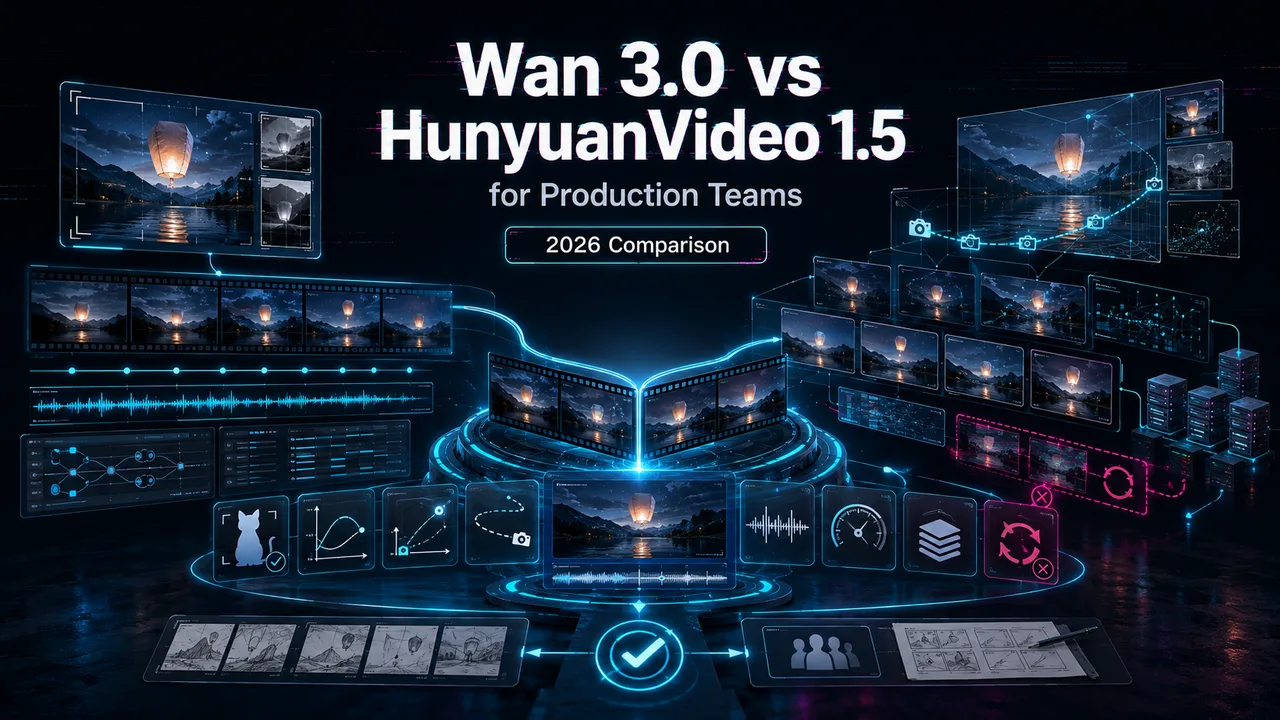
The wrong way to run a Wan 3.0 vs HunyuanVideo review is to put two nice clips in Slack and ask which one “looks better.” That tells you almost nothing about production. The real question is harsher: does your team need fast hosted access, or does it need open-weight control with local infrastructure attached?
I’m John, and I wrote this article, which compares Wan 3.0 hosted access against HunyuanVideo 1.5 open deployment evidence. I did not run a fresh side-by-side generation test for this article, so this is a decision workflow, not a universal quality ranking.
Quick Verdict by Deployment Need
Hosted multimodal generation with Wan 3.0
Choose Wan 3.0 when the team needs hosted video generation now, especially for fast T2V/I2V testing, audio-enabled requests, reference-guided video, and per-job API integration. Alibaba’s Wan3.0 release post frames it around 30-second generation, multimodal inputs, reference consistency, and audio-video capability.
That makes Wan 3.0 a better first stop for product teams that do not Want to own GPUs, model serving, runtime tuning, or checkpoint storage. The trade-off is provider dependency. You get speed to pilot. You give up weight-level control.
Open-weight control with HunyuanVideo 1.5
Choose HunyuanVideo 1.5 when the team needs local deployment, checkpoint access, runtime ownership, or LoRA work. The official HunyuanVideo 1.5 repository states that Tencent released inference code and model weights on November 20, 2025, and later released training code and LoRA tuning scripts.
For Wan3 vs Hunyuan, that is the first clean split. Wan 3.0 is the hosted path. HunyuanVideo 1.5 is the open-weight path. Demos show the ceiling. Production shows the floor.
Define a Fair Comparison
Match text-to-video and image-to-video tasks
Do not compare a Wan 3.0 reference-heavy I2V clip against a HunyuanVideo 1.5 T2V run and call it a model result. Match task type first.
Use the same two tracks: 10 text-to-video prompts and 10 image-to-video inputs. Keep the subject categories similar: product shot, character motion, environment pan, transition shot, and short dialogue-adjacent scene if the route supports audio. If one model surface exposes native audio and the other does not, log that as a workflow difference, not a visual-quality win.
Lock prompts, inputs, duration, and review criteria
Before running the comparison, lock prompt text, source images, duration, aspect ratio, resolution, seed policy, number of variants, and pass-fail criteria. A fair HunyuanVideo vs Wan 3.0 test needs the same unit of work.
I would use this review unit: 20 tasks total, 6 seconds each, 720p where available, 3 variants per task, no cherry-picking before review. Score usable outputs, not favorite outputs.
| Decision Area | Wan 3.0 Hosted | HunyuanVideo 1.5 Open |
|---|---|---|
| Access | Hosted API/provider platform | Local repo, weights, runtime |
| Main fit | Fast product testing | Infrastructure-owned deployment |
| T2V/I2V | Supported through hosted routes | Supported through released code/weights |
| Cost center | Per-generation charges and retries | GPU, storage, engineering, maintenance |
| Control | Provider-managed | Team-managed |
| Risk | API limits, terms, model updates | Ops burden, license scope, hardware fit |
Compare Access and Deployment
Hosted API integration and provider dependency
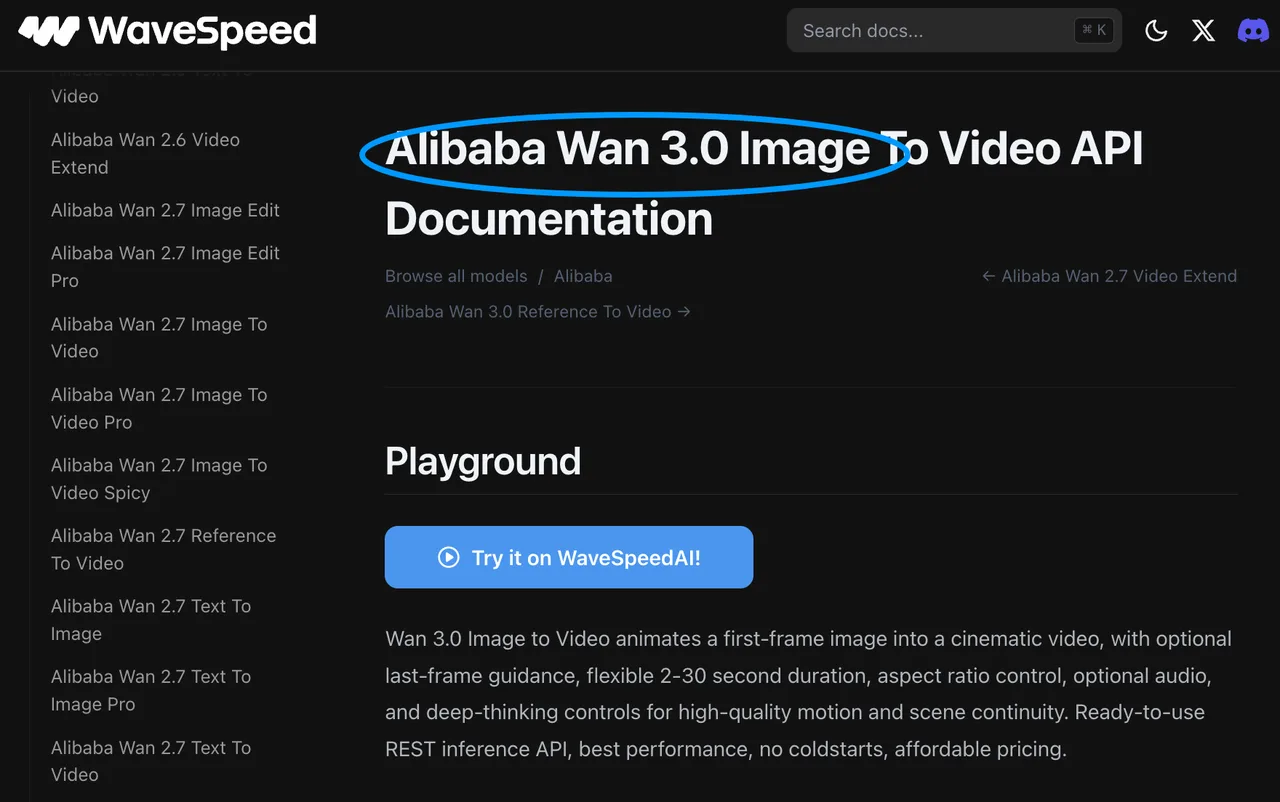
Wan 3.0 is easier to put into a product prototype because the provider owns the serving layer. Current WaveSpeed documentation for Wan 3.0 image-to-video lists image, optional last_image, prompt, resolution, aspect_ratio, duration, thinking_mode, enable_audio, and seed. It also lists 2-30 second duration and 480p, 720p, and 1080p outputs.
That is useful for teams testing hosted video generation. It is not the same as self-hosting. You still depend on endpoint availability, provider policy, pricing changes, rate limits, and backend version behavior.
Local infrastructure, checkpoints, and runtime ownership
HunyuanVideo 1.5 shifts the burden to your team. The official docs list Linux, Python 3.10+, CUDA-compatible PyTorch, NVIDIA GPU support, and a minimum GPU memory statement of 14 GB with model offloading enabled. The model is 8.3B parameters, and the repo includes T2V/I2V checkpoints across 480p and 720p variants, with super-resolution components.
That sounds attractive until someone has to maintain it. Local control means owning dependency drift, queue behavior, OOM failures, patching, artifact storage, and monitoring. One person can remember parameters. A team cannot.
Compare Video Workflow Controls
Reference inputs, prompting, and output scope
Wan 3.0’s hosted surface is stronger when the comparison includes provider-exposed reference controls, optional audio, and managed async jobs. It is useful when the product team Wants to ship a test endpoint without building a video inference stack.
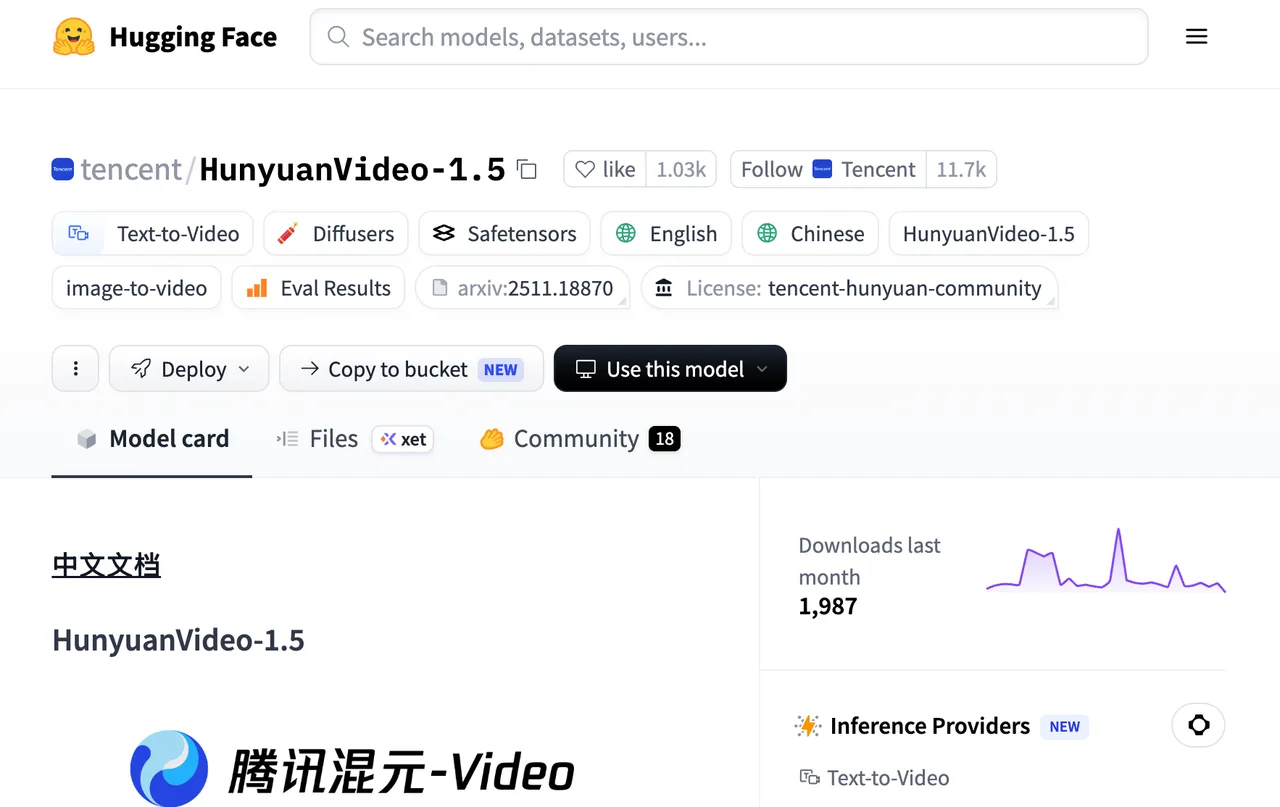
HunyuanVideo 1.5 gives the team source-level and checkpoint-level access. The HunyuanVideo 1.5 model card lists text-to-video, image-to-video, Diffusers support, safetensors, and downloadable model assets. That matters when the team Wants to inspect, pin, run, and adapt the stack.
The comparison is not “which model is more serious.” It is “which controls are exposed where.”
Repeatability, review effort, and usable outputs
Repeatability has two meanings. Hosted Wan can use request logs, model IDs, seeds, durations, and returned prediction metadata. HunyuanVideo 1.5 can go deeper: checkpoint hash, commit hash, CUDA stack, attention backend, inference steps, seed, and output file.
Neither path removes review work. A good single output does not mean the production workflow is ready. Count usable outputs after human review, then calculate the cost per accepted clip.
Compare Real Operating Cost
Per-generation charges and failed-output cost
For Wan 3.0, hosted cost starts with endpoint pricing. The checked WaveSpeed I2V page lists pricing by resolution and billed duration, with 720p at $0.12 per second for that endpoint at the time of checking. If your test uses 60 total 6-second I2V generations, the raw hosted generation math is 360 billed seconds times the current rate, before failed-output economics.
But the real number is accepted-output cost. If 60 runs produce 24 accepted clips, divide the total spend by 24, not 60. Cheap does not always mean cost-saving. Unusable generations are expensive.
GPU, engineering, maintenance, and utilization costs
HunyuanVideo 1.5 does not charge per hosted generation if you run it yourself, but it is not free. You pay through GPUs, storage, setup time, monitoring, failures, upgrades, and staff attention. If your GPU sits idle, local cost looks worse. If you keep it busy and need customization, local cost can make sense.
For a fair hosted vs open video model comparison, use the same output target: accepted 6-second clips at the same review bar. Hosted cost is billable seconds plus retries. Local cost is GPU time plus engineering and maintenance over the same task window.
Choose the Better Fit by Team
Product teams prioritizing fast API access
Pick Wan 3.0 if the team is trying to validate a feature, compare customer demand, build a workflow demo, or avoid infra work during the first pilot. It is usually the cleaner answer when speed to test matters more than owning the runtime.
This is the “Wan 3 or Hunyuan” answer for many product teams: start hosted when you do not yet know whether the video feature deserves infrastructure.
Teams prioritizing local control and customization
Pick HunyuanVideo 1.5 if your team needs to run inside your own environment, tune around internal assets, build LoRA workflows, pin versions, or control the serving stack. The official repo includes training code and LoRA tuning scripts, which gives local teams a path that hosted Wan 3.0 does not publicly expose in the checked docs.
That choice comes with chores. You need someone to own the service. Not “someone technical.” A named owner.
Limitations and Trade-Offs
Hosted services and open deployments expose different risks
Hosted Wan 3.0 exposes API dependency, provider limits, data handling questions, and version drift. HunyuanVideo 1.5 exposes license territory limits, hardware constraints, ops burden, and local safety responsibility.
The Tencent Hunyuan license limits the licensed territory by excluding the European Union, United Kingdom, and South Korea. It also says Tencent claims no rights in outputs, while users remain responsible for outputs and use. This is general information, not legal advice.
Results depend on workload, settings, and current versions
Do not publish a universal winner from one prompt set. Compare by workload: product video, character animation, storyboard motion, image-to-video transitions, or social clips. Then rerun after major model, endpoint, license, price, or runtime updates.
This conclusion only fits the task volume you test.

FAQ
Are HunyuanVideo 1.5 safety filters included in the open repository?
I did not find a documented turnkey safety-filter layer in the checked README or model card. The license includes an Acceptable Use Policy and refers to safety guardrails, but an open deployment should still add its own prompt, input, and output review controls.
Can either model be fine-tuned through a hosted endpoint?
I did not find public hosted fine-tuning controls for Wan 3.0 in the checked Wan/WaveSpeed docs. HunyuanVideo 1.5 provides local training and LoRA scripts in the official repo, subject to its license. Hosted fine-tuning should be treated as unavailable unless the provider documents it.
Which license regions apply to HunyuanVideo 1.5 deployments?
The Tencent Hunyuan Community License defines the licensed territory as worldwide excluding the European Union, United Kingdom, and South Korea. Teams operating across regions should get legal review before deployment.
Can teams publish side-by-side outputs in customer materials?
Only after checking provider terms, customer asset rights, model license duties, and disclosure rules. Hunyuan’s AUP includes public machine-generated content disclosure language. Customer materials add another layer: brand assets, talent likeness, product IP, and client approval.
How often should teams rerun this model comparison?
Rerun after any major endpoint update, checkpoint update, license change, price change, runtime change, or new production use case. For active teams, I would schedule a light rerun every 4-6 weeks and a full rerun before high-volume campaigns.
Conclusion
The practical Wan 3.0 vs HunyuanVideo decision is not a beauty contest. Wan 3.0 fits teams that need hosted multimodal generation and fast API access. HunyuanVideo 1.5 fits teams that need open-weight control, local customization, and runtime ownership. Test both on the same T2V/I2V workload, count accepted outputs, and price the work by usable clips. Then choose the model path that does not break the production floor.
Previous posts:
Related Articles
/filters:quality(82)/media/images/1791535252286714222_v4jvJT2a.webp)
ModelsLab Review 2027: One API for Media Models?
/filters:quality(82)/media/images/1791451065663755033_qNqAKS1a.webp)
Best AI Video Background Removal Tools in 2027
/filters:quality(82)/media/images/1791359984291066138_tW5eOX6f.webp)
Best Comfy Cloud Alternatives in 2027
/filters:quality(82)/media/images/1773962750383987480_n3hqzHRZ.webp)
Qwen Image 2.1 vs Qwen Image 3.0: What Changes and When to Upgrade
What's Next for Wan Video Generation, and What It Means for Creators
/filters:quality(82)/media/images/1791271002496939282_TBLU3cmv.webp)