
Wan 3.0 First and Last Frame With Native Audio
Test Wan 3.0 first and last frame controls with native audio to validate visual arrival, audiovisual timing, and production-ready I2V handling.
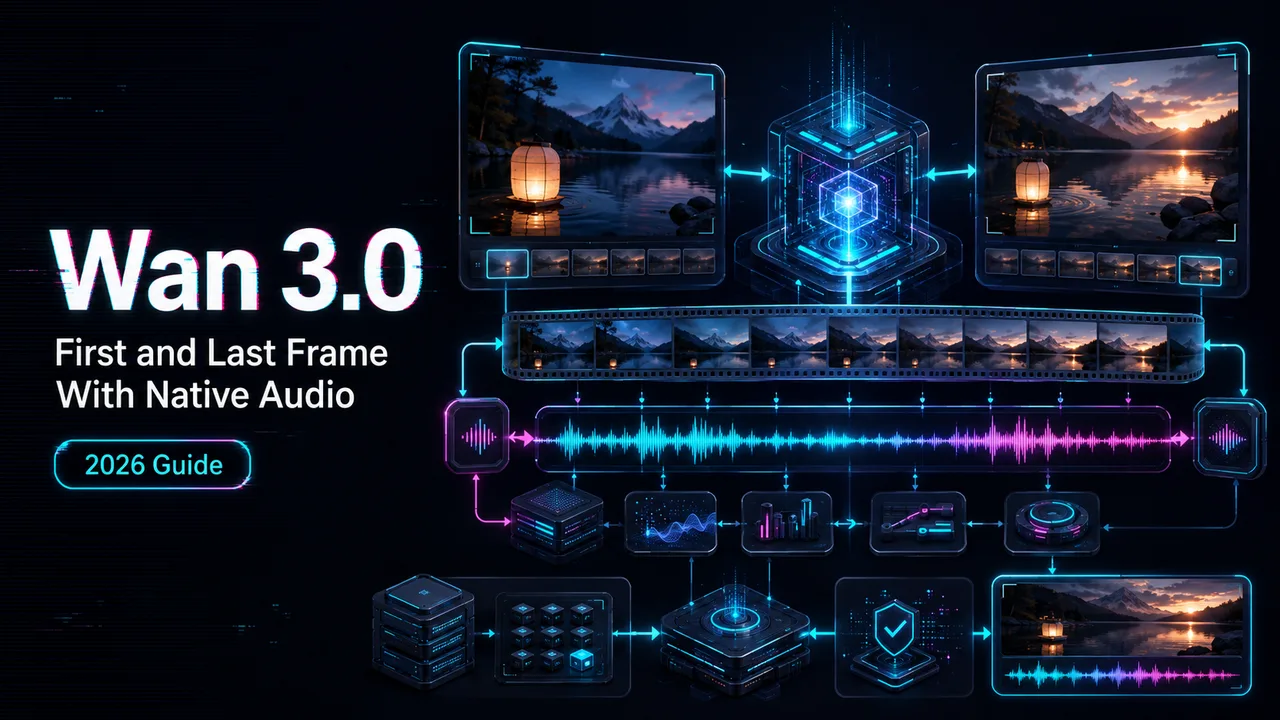
The risky part of a transition shot is not the first approved image. It is the middle, where motion wanders, and the end, where the product arrives one beat late. For Wan 3.0 first last frame work, I would start with two approved boundary frames, one audio cue, and a pass-fail sheet.
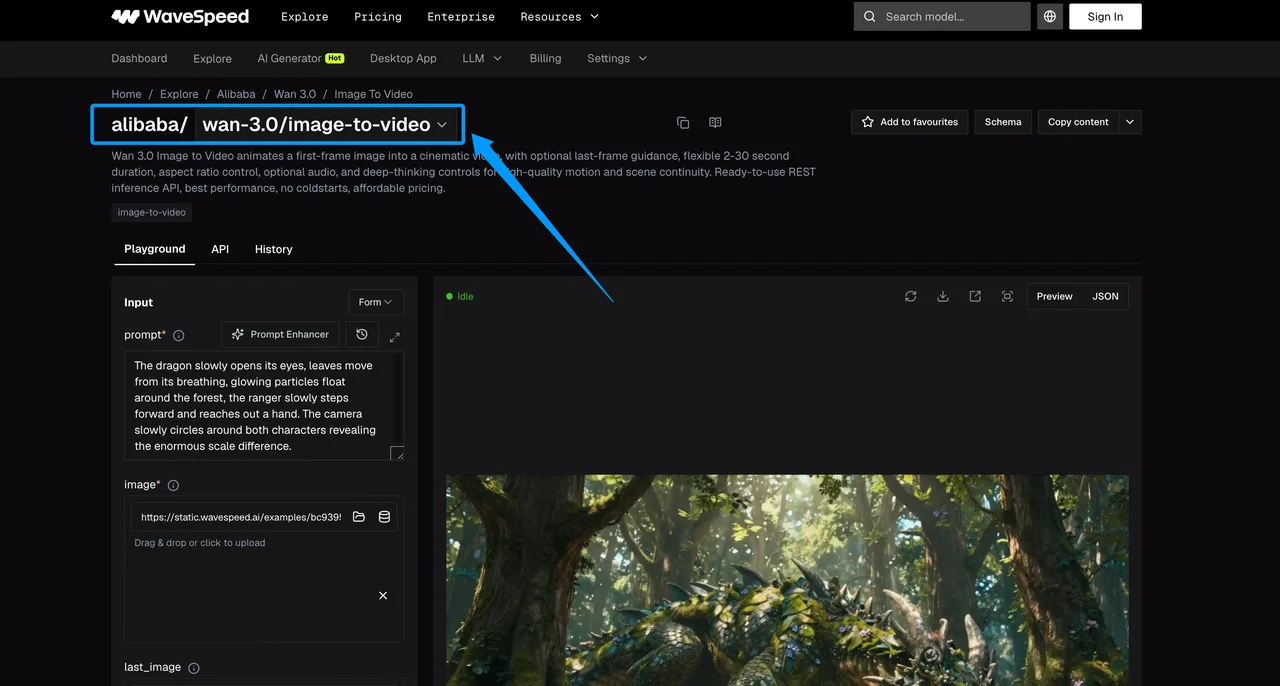
Verification note: checked on August 25, 2026. This article uses WaveSpeedAI’s current alibaba/wan-3.0/image-to-video surface as the access route. I did not run a live generation, so this is a reproducible test method, not a claimed benchmark result.
Confirm the Wan 3.0 Boundary-Frame and Audio Surface
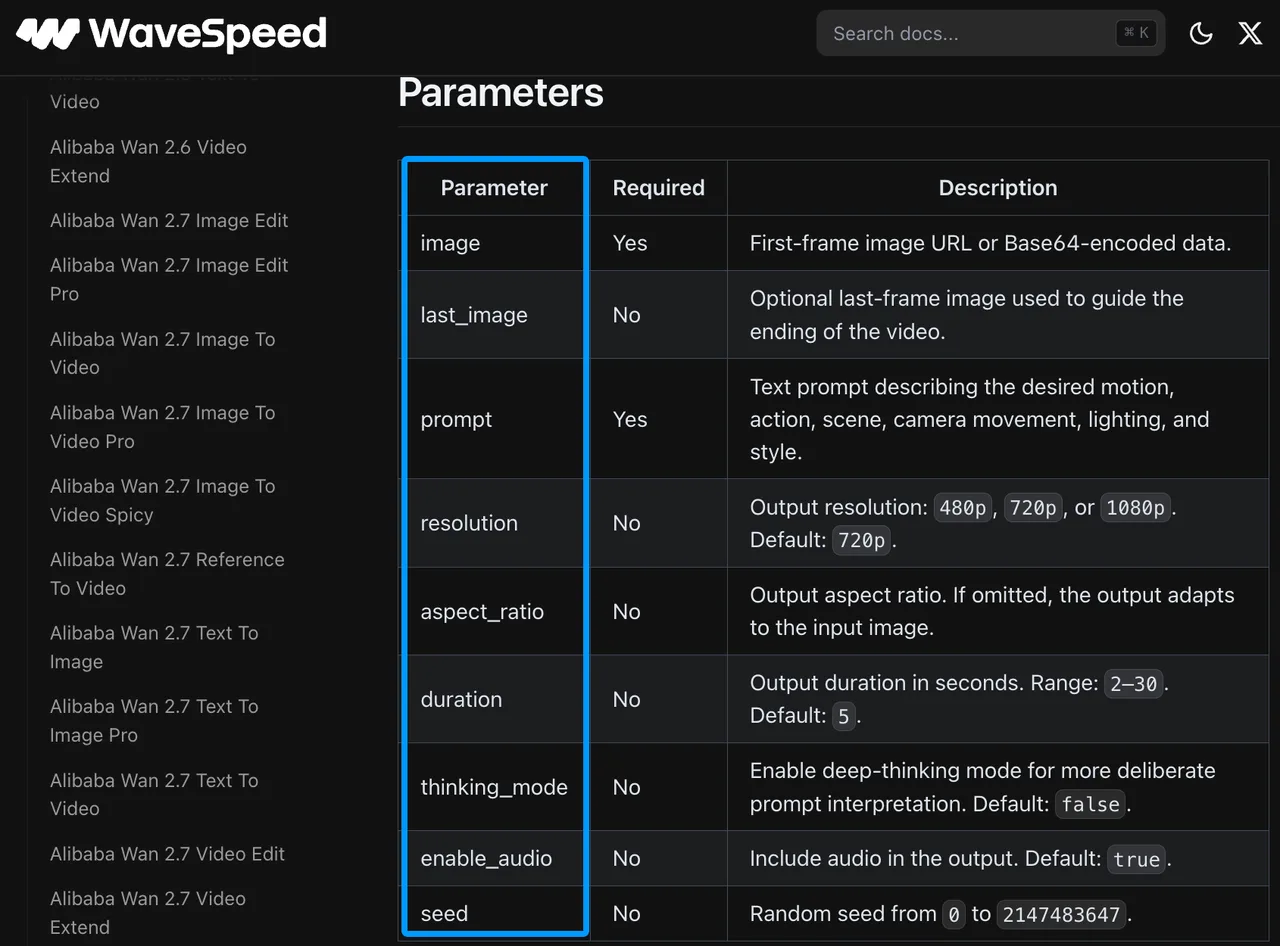
Optional last-frame guidance in the current I2V endpoint
The current WaveSpeedAI Wan 3.0 I2V docs list image as required and last_image as optional. Both accept an image URL or Base64 data. The same schema lists prompt, resolution, aspect_ratio, duration, thinking_mode, enable_audio, and seed.
That is the working surface for a wan3 first last frame test. last_image guides the ending frame. It does not define every reflection, camera path, object position, or timing choice between the two images.
Native audio controls in the same generation request
In this I2V endpoint, audio appears as enable_audio, a boolean field. The default is true. I did not find a field for uploading a separate audio file into this endpoint.
So native audio here means generated audio inside the same request, steered by prompt language and the audio toggle. If your team needs an exact voice track, licensed music bed, or audio reference file, plan for post-production or another workflow.
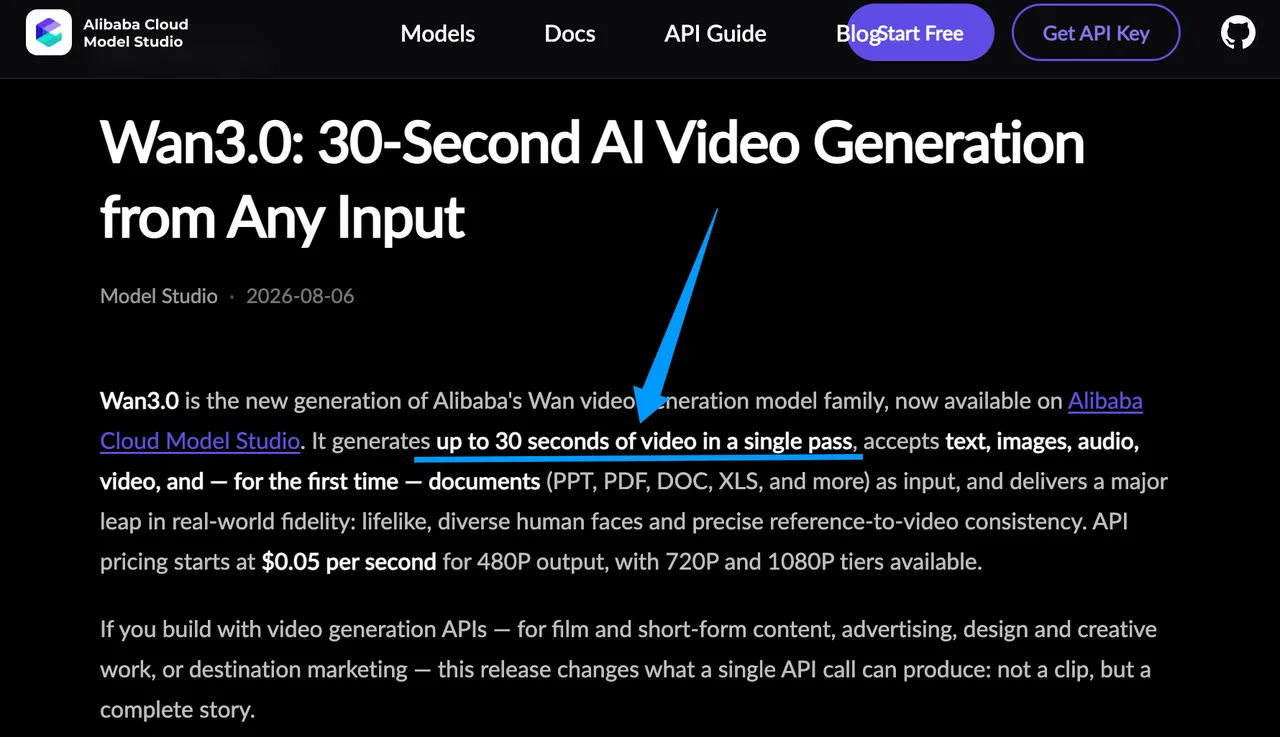
Alibaba’s Wan3.0 release post frames the model around 30-second generation, multimodal input, reference consistency, and editing. Useful context, but this article stays narrower: first frame, optional last frame, and generated audio in one I2V request.
Design One Synchronized Transition Test
Prepare boundary frames around a specific audio beat
Use one controlled shot. Not a full ad. One transition.
Example input pack: a team-owned product render as the first frame, showing a closed device on a table. The last frame shows the same device opened at a 45-degree angle, with the same crop, background, and lighting direction. The audio goal is a soft mechanical click near 4.2 seconds, followed by a short low product tone.
This is a Wan 3.0 start end frame test, so keep the frames boring in a good way. Same subject. Same aspect ratio. Same visual world. If frame A and frame B fight each other, the model has to solve your art direction conflict first.
Define visual arrival and audio timing criteria
Before running, write the pass-fail rules. This cannot be judged by feel. It needs a sample run.
Use five checks: opening fidelity, final-frame arrival, audio beat timing, identity continuity, and artifact control. If the video looks good but misses the final pose, it fails this test. If the pose lands but the click sounds random, it also fails.
Configure the Wan 3.0 I2V Request
Map first image, last image, prompt, and audio controls
For the first controlled pass, keep the request small enough to audit:
{
  "image": "https://your-cdn.example.com/frame_A_start.png",
  "last_image": "https://your-cdn.example.com/frame_B_end.png",
  "prompt": "A clean product transition shot. The device slowly opens from the starting frame and reaches the final frame composition at the end. Camera stays locked on a tripod. A soft mechanical click lands just before the final position, followed by a low polished product tone. No text overlays, no extra objects, no logo changes.",
  "resolution": "720p",
  "aspect_ratio": "16:9",
  "duration": 6,
  "thinking_mode": true,
  "enable_audio": true,
  "seed": 18440291
}
The field to watch is last_image. That is where Wan 3.0 last frame control becomes testable. If the final frame misses the target, log it as a workflow finding. If the field is omitted, you are no longer testing boundary-frame control.
Lock duration, resolution, and thinking mode
Do not change five variables at once. For the first pass, lock duration at 6 seconds, resolution at 720p, thinking_mode at true, enable_audio at true, and use a fixed seed.
WaveSpeed’s current I2V table prices this endpoint by resolution and billed duration: 480p at $0.06/s, 720p at $0.12/s, and 1080p at $0.24/s. A 6-second 720p pass calculates to $0.72 before any live estimate or final task charge.
| Control | Test setting | Why |
|---|---|---|
| image | Start frame URL/Base64 | Locks opening composition |
| last_image | End frame URL/Base64 | Guides final composition |
| duration | 6 seconds | Leaves room for motion and audio |
| thinking_mode | TRUE | Fits a more complex transition |
| enable_audio | TRUE | Tests generated audio |
Direct the Visual and Audio Transition
Describe motion and camera behavior between boundary frames
The prompt should describe the path between frames, not drown the request in mood words.
Weak prompt: “Make it cinematic, premium, smooth, dramatic.”
Better prompt: “The device opens in one continuous hinge motion. The camera remains locked. Reflections move across the metal surface as the lid reaches the final angle. The final half-second holds the ending composition.”
That is the real Wan 3.0 boundary frames test. The two images define the endpoints. The prompt defines the route.
Cue dialogue and sound events without prompt conflicts
For native audio, keep the cue small. I would start with: “Soft mechanical click at 4.2 seconds, then a short low product tone. No music. No spoken dialogue.”
Do not ask for narration, music, room tone, clicks, and product chimes in one six-second test. If unwanted music appears, log it as an audio failure. Do not replace the sound in post and mark the endpoint as passed.
Evaluate the Combined Output
Opening fidelity and last-frame arrival accuracy
Export review stills at 0.0s, 0.5s, the intended beat point, 5.5s, and the final frame. Compare them with the input frames.
The review question is not “does it look nice?” It is: did the clip start where we told it to start, and did it arrive where we told it to arrive?
A good single output does not mean the production workflow is ready. Run at least three variants with the same input pack before writing a team recommendation.
Audiovisual sync, identity continuity, and artifacts
Keep one review log. This is enough:
| Item | What to record |
|---|---|
| Input evidence | First image, last image, prompt version, parameter JSON |
| Output evidence | Prediction ID, output URL, downloaded file, final charge |
| Failure samples | Late arrival, early arrival, identity drift, audio mismatch, unwanted music |
| Review call | Pass, rerun, post-fix, or reject |
The failed samples matter more than the best clip. Cheap does not always mean cost-saving. Unusable generations are expensive.
Move the Synchronized Workflow Into Production
Handle asynchronous jobs, retries, and silent fallbacks
The endpoint uses an asynchronous prediction flow: submit the request, receive a prediction ID, then poll until the job reaches a terminal status. Store request JSON, status, timestamps, output URL, error payload, and reviewer notes.
Silent fallback is the failure that hides in plain sight. If enable_audio is true but the returned video is silent, mark it as an audio failure. If last_image is present but the ending frame is ignored, mark it as a boundary-frame failure.
Preserve frames, audio settings, outputs, and review evidence
Production needs evidence, not memory. Store the two boundary frames, the prompt, exact parameters, generated output, price record, and review result. One person can remember parameters. A team cannot.
Limits and Trade-Offs
Boundary frames do not define every intermediate motion
First and last frames are control points, not a full animation curve. If the product must hit exact hinge angles at 2.0s, 3.0s, and 4.2s, this two-frame setup may not be enough.
Alibaba’s broader video generation docs separate first-frame I2V, first-and-last-frame I2V, reference-to-video, video editing, and other Wan tasks. That split matters. If the job needs exact motion transfer or uploaded reference audio, do not force everything through one I2V request.
Native audio may still require post-production replacement
Native generated audio is useful for judging rhythm quickly. It is not a final sound design pass. If a brand has fixed sonic assets, legal voice requirements, music licensing, or strict mix standards, rebuild the audio in post.
For commercial review, Alibaba’s Product Terms place responsibility on users to have the necessary rights, licenses, approvals, and consents for inputs and use. This is general information, not legal advice.
FAQ
Does last-frame guidance change current per-second API pricing?
Not according to the WaveSpeed I2V pricing table I checked. Pricing is shown by resolution and billed duration, not by whether last_image is present. Still record the live estimate and final task charge for each run.
Can boundary frames include transparency and alpha channels?
The schema says image and last_image accept URL or Base64 image data. I did not find a disclosed alpha-channel guarantee. For production tests, flatten transparent inputs onto an approved background before upload.
How long does WaveSpeed retain uploaded boundary frames?
I found a 7-day general retention statement for generated media files, but not a separate public retention period for uploaded boundary frames. Ask support before sending unreleased products, confidential packaging, talent likenesses, or client material.
Can teams reuse one last frame across concurrent requests?
The schema does not prohibit reusing the same last_image URL. The practical limits are account rate limits, file availability, rights to the asset, and whether the URL remains reachable during generation. Reuse is fine for testing, but log each request separately.
Do branded frame inputs change commercial-use licensing obligations?
Yes. Branded inputs add rights checks. You need permission for logos, packaging, product renders, talent likenesses, background assets, and any third-party marks in the frames. The model output does not erase those obligations.
Conclusion
For Wan 3.0 first last frame testing, keep the job narrow: one first image, one optional last image, one motion route, one native audio cue, and one review log. The current I2V endpoint gives teams enough surface to test synchronized visual arrival and generated audio in the same request. It does not remove the need for post audio replacement, asset rights review, or evidence tracking. The next useful test is three controlled reruns with the same boundary frames.
Previous posts:
Related Articles
/filters:quality(82)/media/images/1791535252286714222_v4jvJT2a.webp)
ModelsLab Review 2027: One API for Media Models?
/filters:quality(82)/media/images/1791451065663755033_qNqAKS1a.webp)
Best AI Video Background Removal Tools in 2027
/filters:quality(82)/media/images/1791359984291066138_tW5eOX6f.webp)
Best Comfy Cloud Alternatives in 2027
/filters:quality(82)/media/images/1773962750383987480_n3hqzHRZ.webp)
Qwen Image 2.1 vs Qwen Image 3.0: What Changes and When to Upgrade
What's Next for Wan Video Generation, and What It Means for Creators
/filters:quality(82)/media/images/1791271002496939282_TBLU3cmv.webp)