
Grok AI for Developers: Models, Use Cases, and Alternatives
Understand Grok AI models, developer use cases, and alternatives. See where Grok fits before adding it to an AI product or multi-model stack.
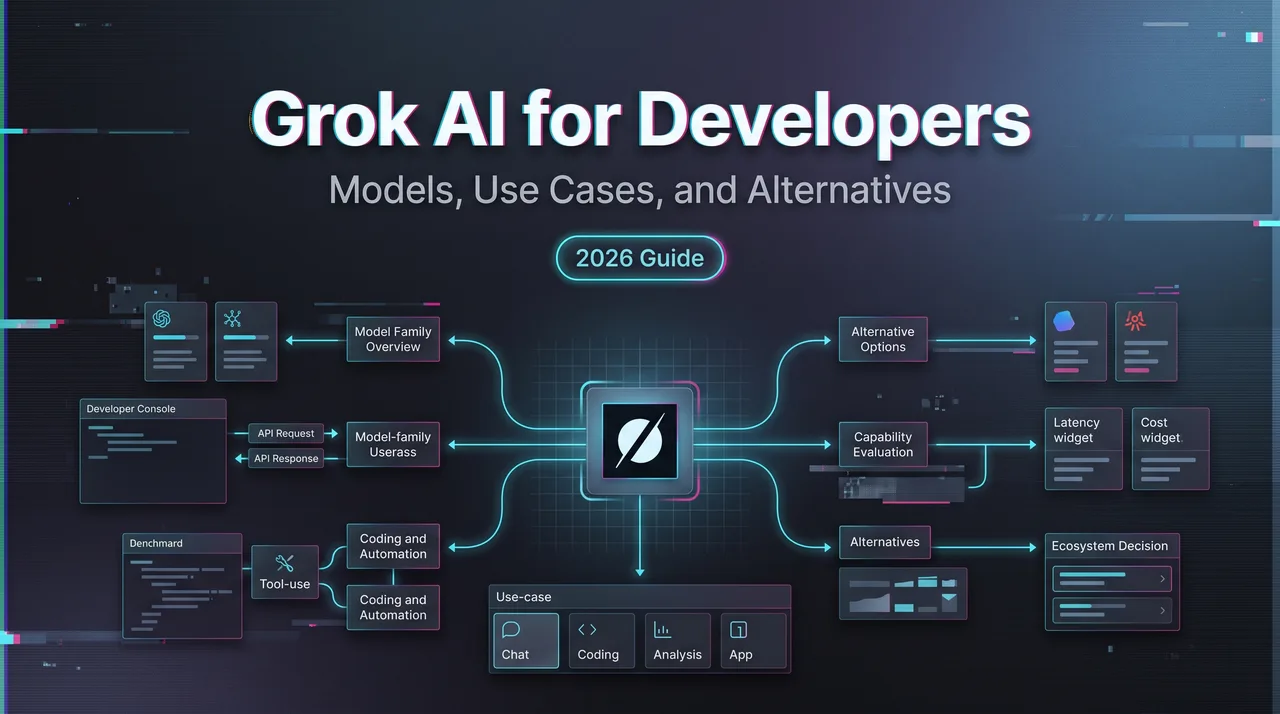
If your team is evaluating Grok AI for the first time, start with the unglamorous question: what workload would actually improve if you added one more model provider?
Not “is the model impressive.” Not “did the launch chart look strong.” One more provider means another security review, another fallback path, another policy surface, another set of evals. That is fine when the workload earns it. It is noise when it does not.
This piece maps what Grok gives API builders, AI product leads, and platform engineers: capability areas, practical use cases, integration patterns, gaps to verify, and a short list of alternatives. Model IDs, pricing, access status, and version migration belong in separate tracking notes.
What Grok AI Offers Product Teams
Reasoning, Coding, Vision, and Agent-Oriented Workloads
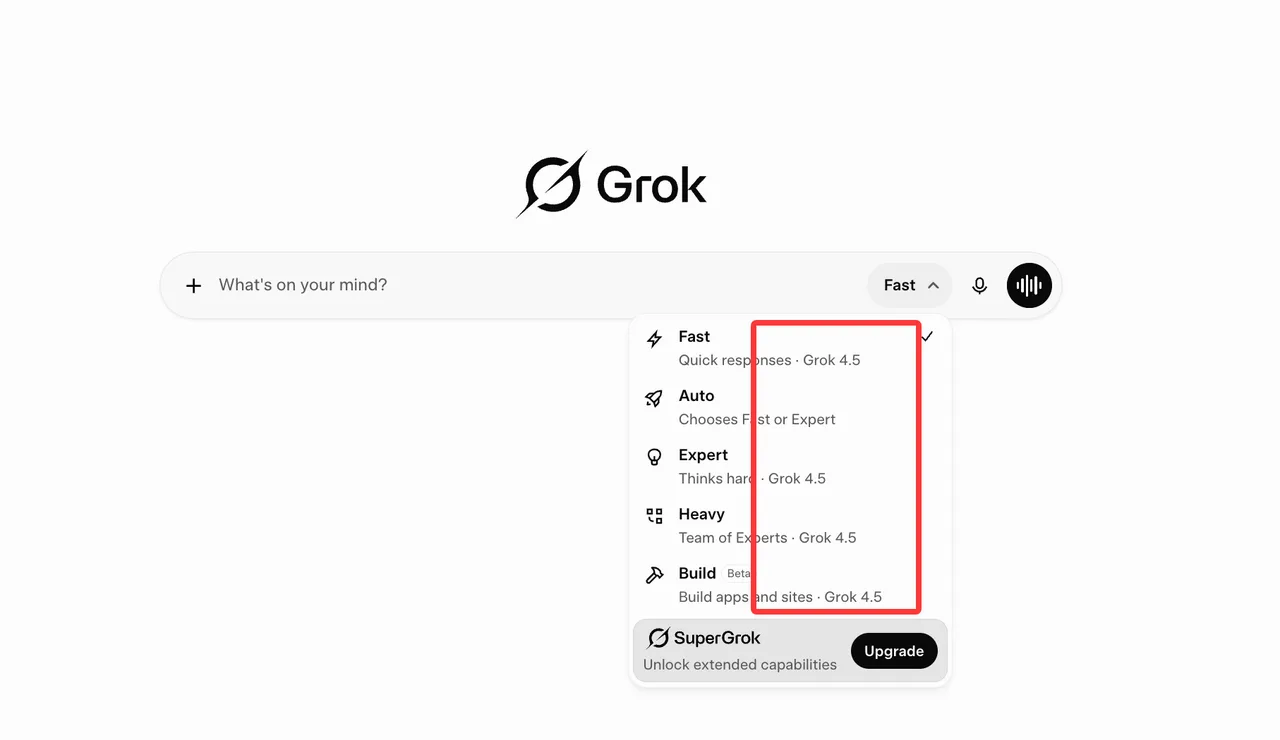
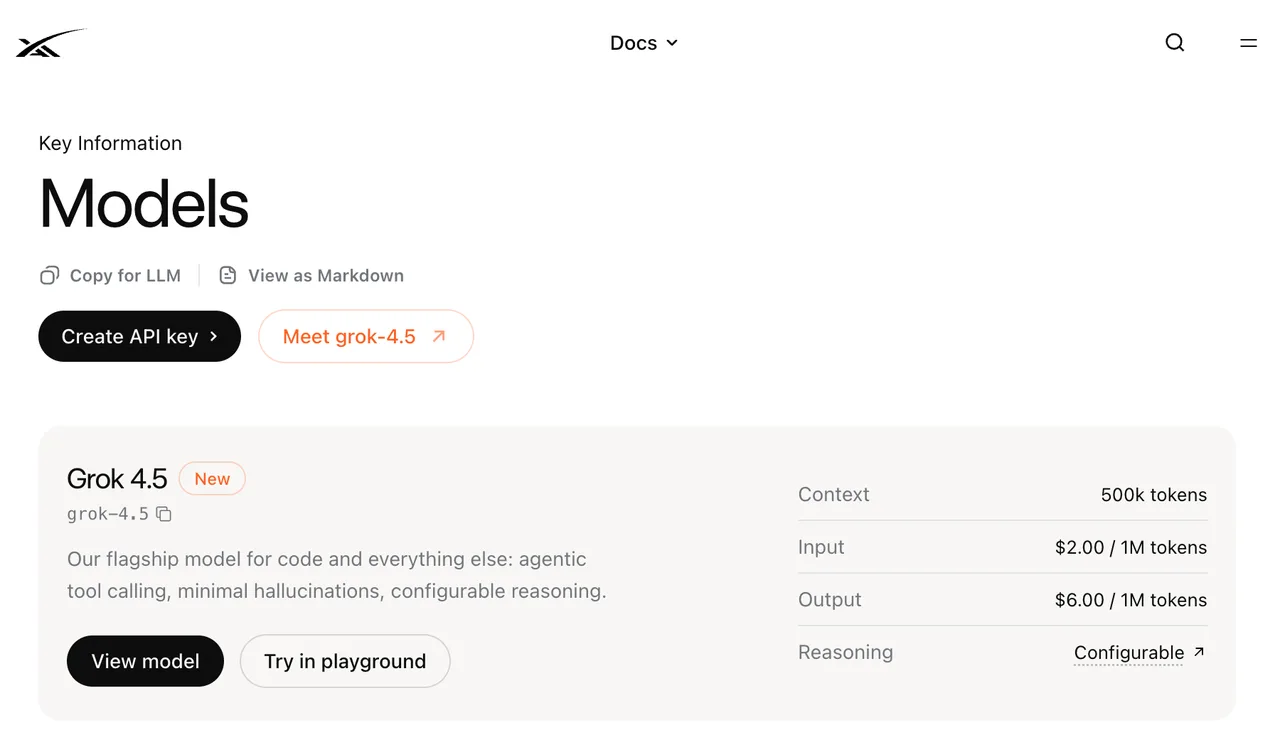
xAI positions Grok 4.5 as its strongest model for coding, agentic tasks, and knowledge work in the official Grok 4.5 announcement. Treat that as vendor-reported evidence. Useful signal. Not your production conclusion.
The current capability map is broader than chat. Grok covers text generation, reasoning, coding, structured output, search tools, voice, image, and video. For developers, the important question is not “what can the model do?” It is “which parts are stable enough for my product surface?”
A first evaluation should separate workloads like this:
| Workload | What to Test | Why It Matters |
|---|---|---|
| Coding | bug fixes, repo Q&A, test generation, code review | Engineering agents fail in small details first |
| Reasoning | multi-step planning, constrained decisions, calculations | General benchmark strength may not match your task |
| Structured output | extraction, classification, JSON response contracts | Product systems need parseable output |
| Search-backed answers | freshness, citations, source selection | Current-information products need evidence |
| Agents | tool calls, retries, failure recovery | Tool use is where demos get expensive |
| Media | image, video, voice generation or understanding | Latency, storage, and moderation requirements differ |
The official xAI models documentation is the source of truth for current model families and capability boundaries. I would check it before every serious evaluation cycle. This conclusion has an expiration date. Models update fast.
Where Grok Sits Between a Model and a Product Experience
Grok is not only a model endpoint. It also appears through Grok.com, Grok on X, Grok Build, Imagine, Voice, and the developer console. That makes evaluation slightly awkward.
If you are building a Grok-centered product, that surrounding product identity may help. Users may already understand what “Grok” implies. X-aware research or Grok-branded coding flows may be part of the value. If you are building a neutral model layer, the same product identity can create lock-in. Provider-specific tools are useful until they become assumptions in your UX, prompts, logs, and support scripts.
Good infrastructure makes you forget it is there. Branded model experiences do not. Sometimes that is the point.
Developer Use Cases Worth Evaluating
Coding Assistants and Engineering Agents
Coding is the cleanest first test. Give Grok a real repo task, not a toy prompt.
Use a small bug with local conventions. Include failing tests. Add one hidden edge case. Ask for a minimal patch. Then score whether the model found the right files, preserved style, avoided unrelated refactors, and explained the change without inventing context.
For engineering agents, the eval needs tool behavior. Can it call functions with valid arguments? Can it recover from a tool error? Does it ask for destructive permissions when needed? Does it stop when it lacks evidence?
A practical coding eval set should include:
- one bug fix with tests
- one dependency or API change
- one code review with severity ranking
- one documentation update from code
- one task where the model should refuse or escalate
The Grok API may perform well in vendor-reported coding tasks. Your repo decides whether that matters.
Research, Knowledge, and Current-Information Products
Grok’s current-information story is strongest when search tools are part of the product. Without search, the model still has a training cutoff. With search, you can evaluate source retrieval, citations, freshness, and synthesis.
This is especially relevant for products that monitor market chatter, public sentiment, breaking events, creator activity, or X-native discussions. In those cases, Grok is not just another reasoning model. It may offer a different data path.
The test should be strict. Ask questions with recent facts, conflicting sources, and weak social signals. Score whether the model cites sources, distinguishes fact from interpretation, and refuses to overstate.
I paused here because this is where many “research agent” demos cheat. They look good when the answer is easy. They get expensive when the source quality is messy.
Choose a Grok Integration Pattern
Direct xAI Integration for Grok-Centered Products
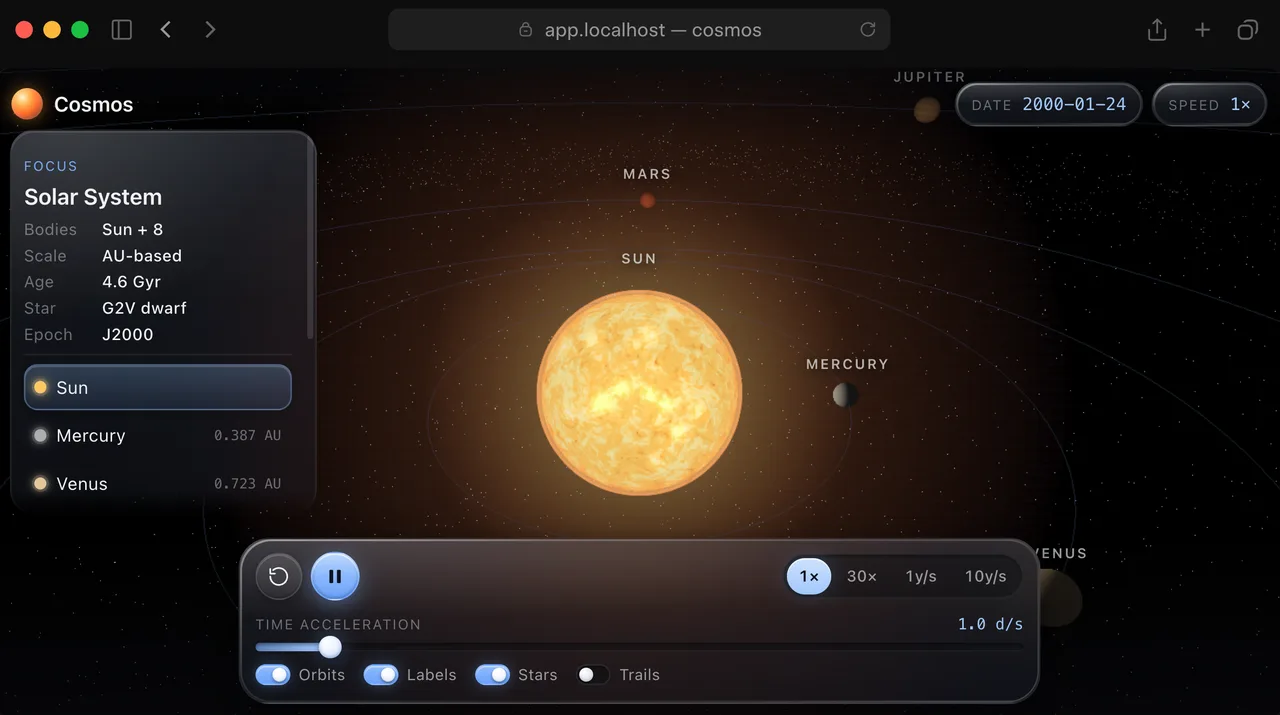
Direct xAI integration makes sense when Grok-specific behavior is part of the product promise. That might mean X-aware search, Grok Build-style coding, first-party access to new xAI features, or a customer-facing experience that explicitly names Grok.
The direct path gives you the sharpest access to provider features. It also gives you provider-specific work: auth, retries, observability, safety handling, cost tracking, policy review, and contract tests.
Use direct integration when:
- Grok is visible to users
- xAI-specific tools are core to the feature
- latency and feature access matter more than portability
- your team can maintain provider-specific behavior
For live availability, model IDs, and access notes, keep that in the dedicated Grok 4.5 API Watch article. For version behavior, keep migration testing in Grok 4.5 vs Grok 4.3. For OpenRouter routing, keep OpenRouter status in the Grok 4.5 on OpenRouter article. Different notes. Different jobs.
Unified Model Access for Workload Portability
Unified access fits teams that expect model churn. The value is not making all models identical. They are not. The value is keeping routing, evals, logging, secrets, budgets, and fallback behavior in one place.
This pattern is better when Grok is one candidate among several. You can test Grok models beside OpenAI, Claude, Gemini, Mistral, DeepSeek, Qwen, and open models without rebuilding your product each time.
The tradeoff is feature depth. Unified access may lag behind first-party APIs for new tools. Direct access gives sharper control. Unified access gives cleaner operations. Pick direct xAI integration when Grok is the product. Pick unified access when Grok is a workload candidate.
Identify the Gaps Grok Must Fill
Workload Value That Justifies Another Provider
Adding Grok should pass a value test.
- The first gate is workload relevance. Does it improve coding, research, media generation, agent execution, freshness, latency, or cost for something your product already needs?
- The second gate is operational cost. Another provider means another failure mode. Someone has to own it.
- The third gate is uniqueness. Does Grok give you something your current stack cannot cleanly reproduce? X-aware research may qualify. A Grok-branded coding flow may qualify. “It is also smart” does not qualify by itself.
- The fourth gate is governance. Can your team explain data handling, retention, review, and customer disclosure?
If the real reason is optionality, write that down. Optionality is valid. It is not the same as workload proof.
Limits of Vendor Evidence and General-Purpose Claims
Every frontier provider publishes selective evidence. xAI does it. OpenAI does it. Anthropic does it. Google does it.
Benchmarks help you decide what to test first. They should not decide what you ship. A model can score well on coding tasks and still fail your repo. A model can answer research questions well and still cite weak sources. A model can produce valid JSON in examples and still break your downstream parser.
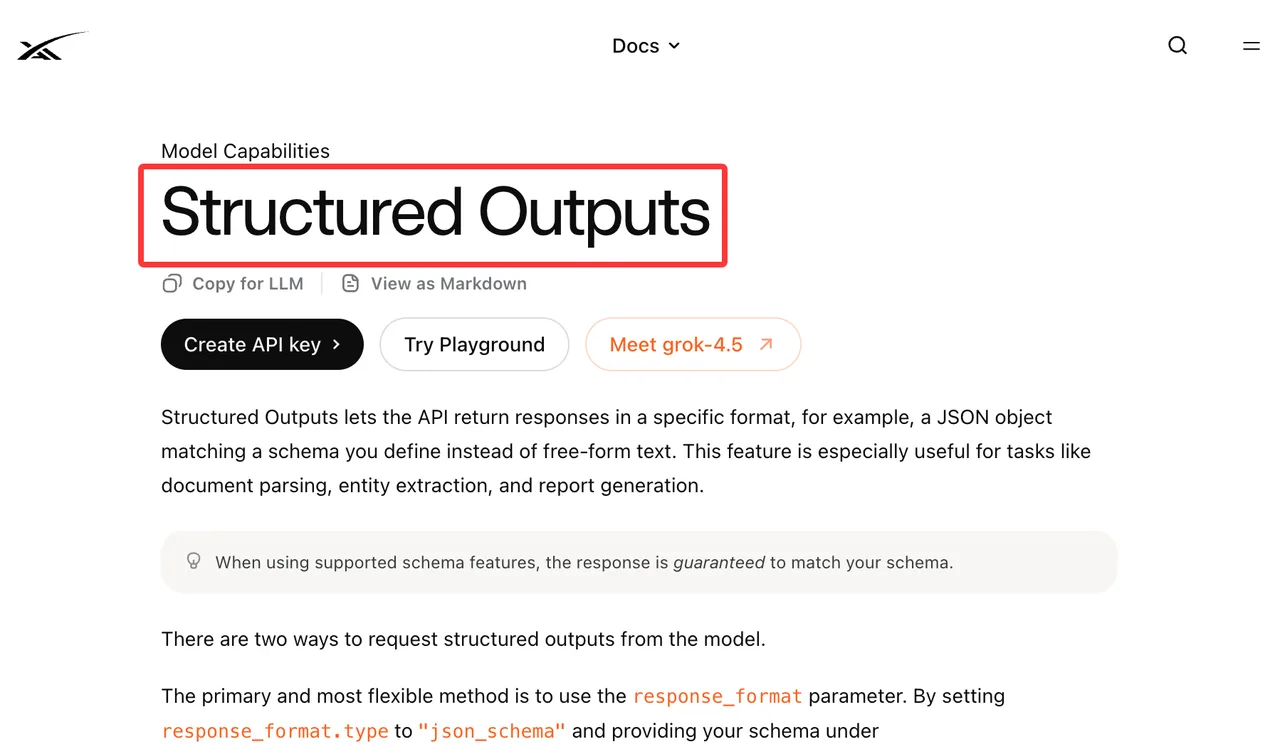
For structured application workflows, read xAI’s structured outputs documentation before designing response contracts. Then test with your own schemas, optional fields, malformed input, and long-tail cases.
Hypothesis confirmed only after the workload passes.
Shortlist Alternatives by Product Need
Other Hosted APIs for Different Workload Strengths
Grok alternatives should be shortlisted by product need, not brand ranking.
- OpenAI belongs in the shortlist for broad platform coverage, strong general reasoning, realtime/audio workflows, embeddings, and agent tooling.
- Anthropic is often evaluated for long-form reasoning, coding assistants, tool use, and enterprise-friendly safety posture.
- Google Gemini is relevant for multimodal products, Google Cloud alignment, long-context workflows, and teams that care about model cards and cloud procurement.
- Mistral fits teams that want hosted APIs plus open model options, especially where European supplier diversity matters.
- DeepSeek and Qwen may enter the shortlist for long-context, cost-sensitive, multilingual, or regional deployment considerations.
The point is not to crown one winner. The point is to avoid testing twelve models against one vague prompt and calling that strategy.
Open Models for Deployment and Control Requirements
Open and open-weight models solve a different problem. They are not automatically cheaper. They move cost from API billing into infrastructure, serving, evaluation, security, and maintenance.
They make sense when your team needs:
- self-hosting
- stricter data locality
- custom inference economics
- deeper observability
- model availability independent of one hosted vendor
- fine-tuning or deployment control
For many product teams, hosted APIs are still faster. For some regulated, high-scale, or privacy-sensitive systems, open models are the cleaner long-term path. Good enough. That is the most honest assessment I can give.
FAQ
Can enterprise customers opt out of Grok-backed features?
It depends on the product surface and contract. For API customers, xAI’s API security FAQ says API inputs and outputs are not used for training without explicit permission, and it describes default retention plus Zero Data Retention options. Enterprise admins should still verify the current agreement, admin controls, and feature-specific settings before rollout.
Who reviews intellectual property risks in Grok-generated code?
The customer’s engineering, security, and legal owners should review generated code before production use. Model output should go through normal code review, license scanning, tests, and provenance checks. Do not treat generated code as exempt from your usual process because it came from an AI system.
Can Grok outputs be used in regulated customer workflows?
Only with controls. xAI’s Acceptable Use Policy restricts certain high-stakes automated decisions and unlawful uses. Regulated workflows need human review, audit trails, disclosure, retention planning, and legal approval. For health, finance, employment, insurance, legal, or similar domains, verify the latest official terms before using outputs in customer-facing decisions.
How should teams disclose third-party model use to customers?
Disclose it where customers make trust decisions: product terms, privacy notices, enterprise documentation, and in-product UI when appropriate. The disclosure should explain what data is sent, why a third-party model is used, what review exists, and how customers can escalate concerns.
Who handles takedown requests involving Grok-generated content?
Your product should own the first response. Route copyright, privacy, safety, and impersonation reports through your own abuse or legal process. Escalate to xAI only when provider action is required. Keep records where legally allowed. If Zero Data Retention is enabled, remember that provider-side recovery may be limited or unavailable.
Conclusion
Grok AI is worth evaluating when it fills a real workload gap: coding agents, X-aware research, current-information products, structured reasoning, or Grok-centered user experiences. It is not worth adding just because the market is talking about it.
The clean path is simple. Pick the workload. Run your own eval. Decide whether direct xAI access or unified model routing fits the product. Keep vendor claims labeled as vendor-reported. Check the official docs before launch.
That is where my data ends.
Previous posts:
/filters:quality(82)/media/images/c347367a-a007-4466-b8f7-d37f5fb52819.webp)
/filters:quality(82)/media/images/cd4db796-7728-45fb-8267-6813ed28e173.webp)
/filters:quality(82)/media/images/1791535252286714222_v4jvJT2a.webp)
/filters:quality(82)/media/images/1791451065663755033_qNqAKS1a.webp)
/filters:quality(82)/media/images/1791359984291066138_tW5eOX6f.webp)
/filters:quality(82)/media/images/1773962750383987480_n3hqzHRZ.webp)