
HUMAIN M3 Open Weights: Status and Release Checklist
HUMAIN M3 open weights status tracker separating the confirmed plan from missing license, files, hardware, and deployment details.
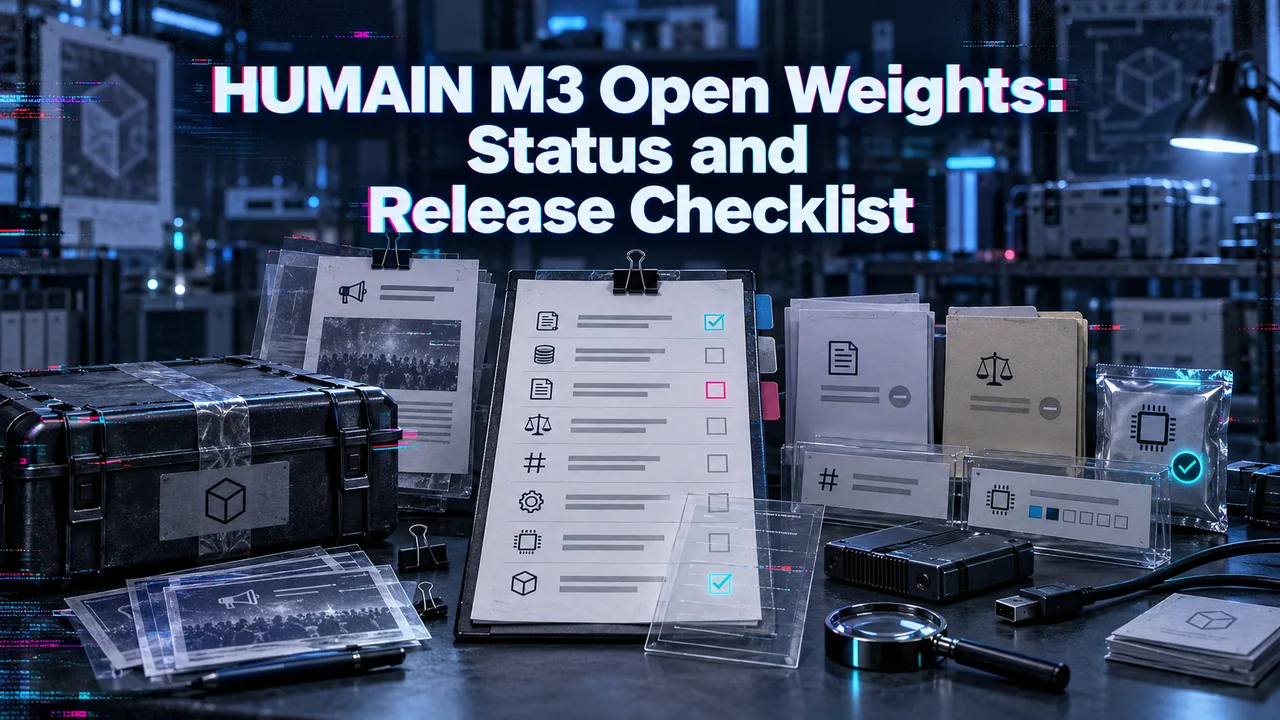
As of September 8, 2026, HUMAIN M3 open weights have not been publicly released.
HUMAIN says they are “coming soon,” but the official entry points provide no downloadable checkpoint, model license, runtime package, or local deployment guide. This tracker separates the announcement from the artifacts an engineering team can verify.
Current HUMAIN M3 Open-Weights Status
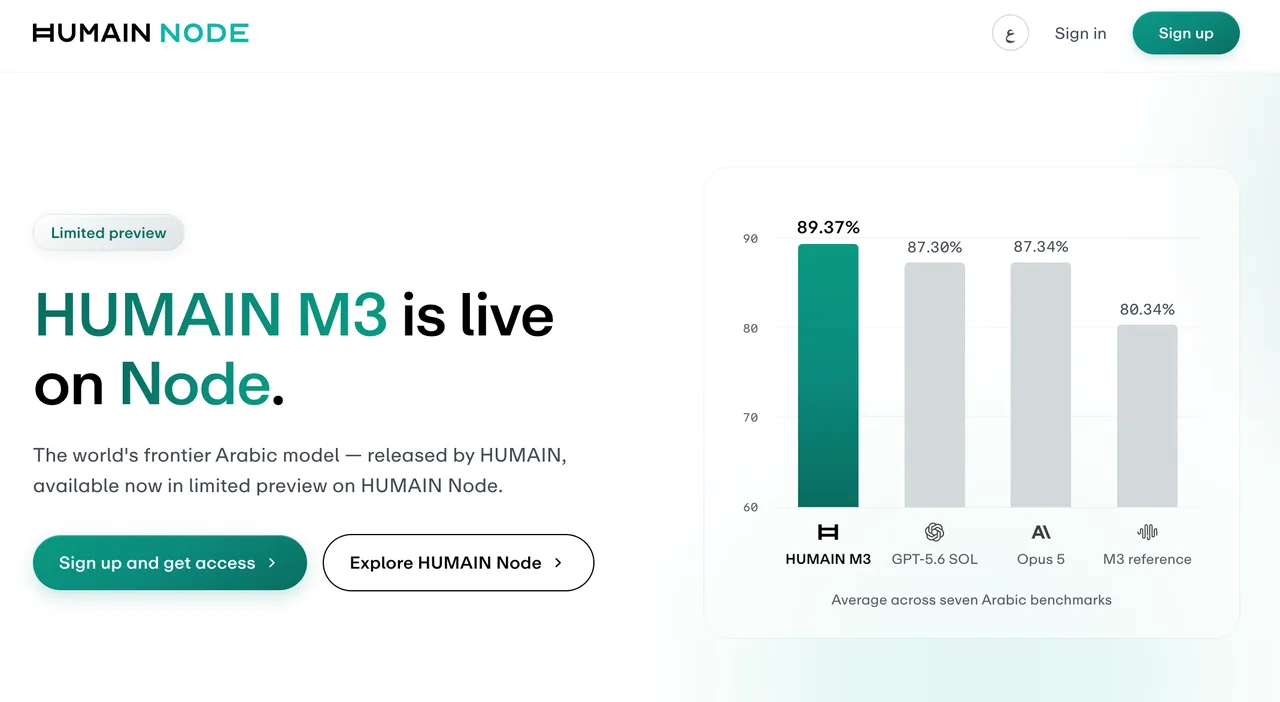
The HUMAIN Node page offers M3 through a limited-preview playground and API. Its open-weights section says HUMAIN plans to open the weights after collecting preview feedback. It gives no release date.
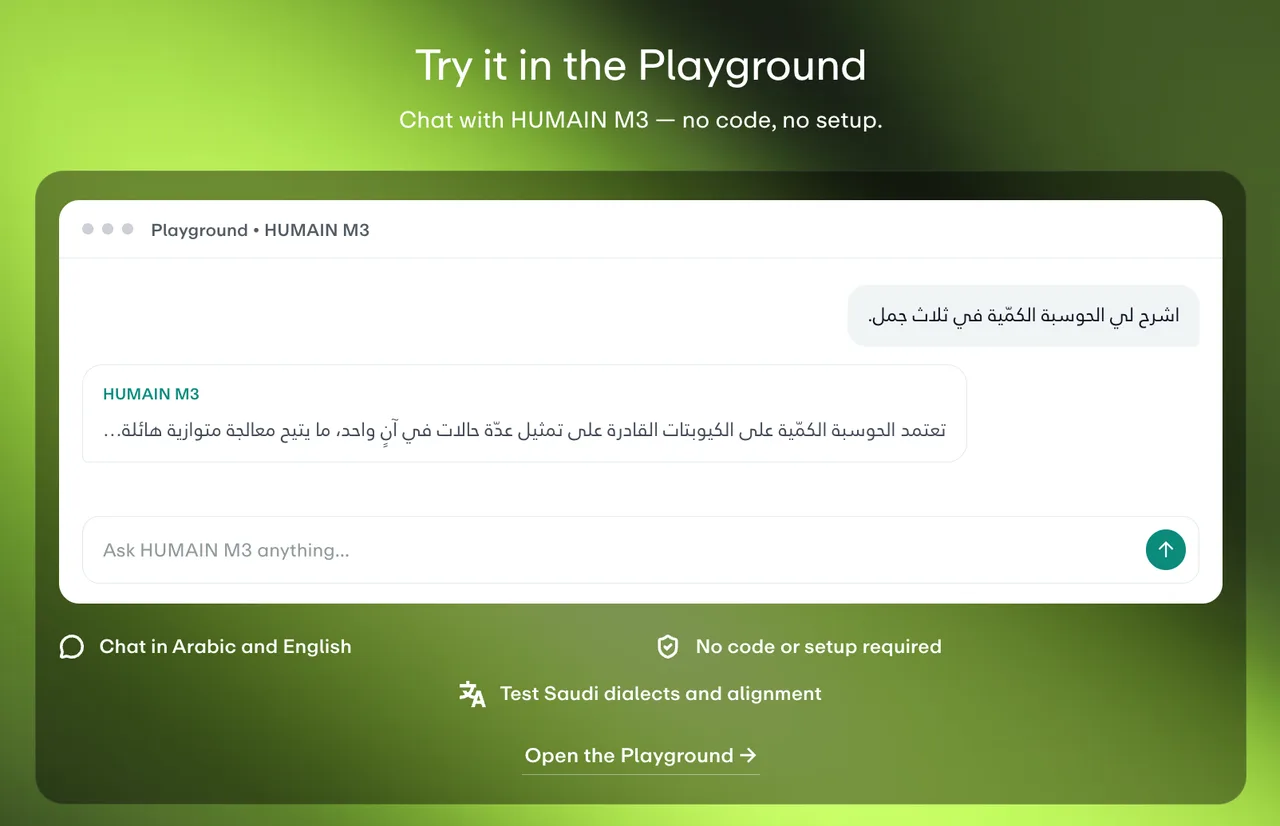
The legal boundary matters. HUMAIN’s Model Terms, effective August 31, 2026, say the preview supplies no weights, training data, system configuration, or source code. The terms also say HUMAIN does not commit to an open-weight or production release. “Coming soon” is stated intent, not a delivery guarantee.
What HUMAIN Has Confirmed
HUMAIN describes the previewed M3 as a 428-billion-parameter mixture-of-experts model with 23 billion active parameters per token. It also says the model handles text, images, and video.
Those facts help identify a future package, but they do not prove that local inference assets exist. At publication, the official HUMAIN Hugging Face organization lists no M3 model card or checkpoint. The Node page links no M3 GitHub repository.
Details Still Missing Before Release
License and Commercial Terms
No public M3 model license is available. Commercial use, redistribution, modification, fine-tuning, hosted-service rights, and derivative-model obligations remain unknown. The Node preview terms govern hosted access; they are not a license for open model weights.
Checkpoint, Tokenizer, and Runtime Files
HUMAIN has not published checkpoint shards, configuration files, tokenizer assets, multimodal processors, chat templates, checksums, or a versioned model card. Safetensors, GGUF, and other distribution formats are unconfirmed.
Compatibility with Transformers, vLLM, SGLang, TensorRT-LLM, llama.cpp, or another runtime is also undisclosed. Do not design around a guessed architecture. A missing processor or custom operator can stop the first load.
Hardware and Quantization Guidance
Minimum VRAM, supported precision, GPU topology, tensor-parallel settings, and expected memory use are not published. There are no official quantization recipes or measured quality changes for lower-bit builds.
The active-parameter count alone cannot size a deployment. Stored weights, expert routing, KV cache, context, and multimodal encoders all affect capacity.
Release-Day Verification Checklist
Before approving a HUMAIN M3 release for local use:
- Confirm the publisher account and immutable revision.
- Read the license and acceptable-use terms.
- Match architecture metadata to HUMAIN’s announcement.
- Obtain checkpoints, tokenizer, processor, config, and chat template.
- Verify checksums or signatures.
- Pin model, code, and runtime versions.
- Reproduce the official example on named hardware.
- Measure memory, latency, throughput, and task quality.
- Compare any quantization with the original checkpoint.
- Log missing assets or conflicting terms as blockers.
This step cannot be skipped. A package that cannot be reproduced from pinned artifacts is not ready for a shared local deployment.
FAQ
Will HUMAIN publish provenance records for M3 training data?
Not confirmed. HUMAIN reports more than one trillion Arabic training tokens, but that is not a source inventory. Look for dataset categories, exclusions, consent basis, and opt-out handling in the final model card.
Will M3 include a documented vulnerability disclosure process?
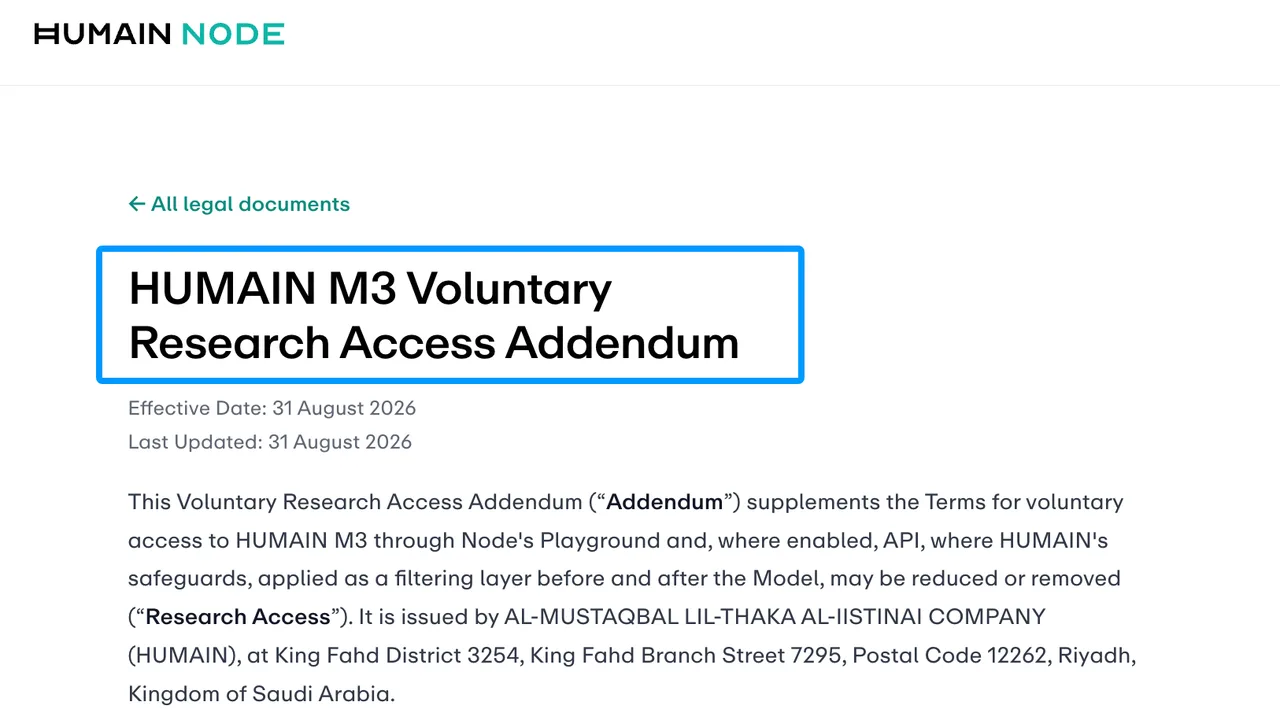
Not confirmed. The Research Access Addendum provides private reporting routes for preview incidents, not a public disclosure policy covering released weights.
Will HUMAIN maintain a public issue tracker for M3?
No tracker has been announced. Verify repository ownership, enabled issue channels, maintainer responsibility, and response expectations when artifacts appear.
Will official releases use immutable version tags?
HUMAIN has not published a versioning policy. Require a model revision, commit hash, checksums, and dated release notes before internal registration.
Will M3 contributors follow a published governance policy?
No M3 governance or contribution policy is public. Until roles, review rules, contribution terms, and decision authority are documented, external contribution remains unconfirmed.
Conclusion
The HUMAIN M3 open weights are planned, not released. Monitor the official Node page and HUMAIN model hub, but do not reserve production hardware or approve commercial use yet. Wait for the license, complete artifact set, fixed revision, and tested runtime instructions, then run the checklist.
Update note: This article reflects current public information about the unreleased HUMAIN M3 open weights. We will update it when HUMAIN publishes or changes the formal release details.
Previous posts:
/filters:quality(82)/media/images/660b4b48-6351-40cd-ba00-51322b7455f4.webp)
/filters:quality(82)/media/images/273bf240-30e3-4e6c-8ae4-e3346b487bc7.webp)
/filters:quality(82)/media/images/bb7ec772-f694-45f4-9a9a-c0e5fd2e7d60.webp)
/filters:quality(82)/media/images/444431ee-1387-4a40-81ad-866e095a7c75.webp)
/filters:quality(82)/media/images/81212eb5-4b43-4cc4-92f4-38a0c439d258.webp)
/filters:quality(82)/media/images/5f15570a-6a68-432e-a6f1-1dcbf799ba81.webp)