
mimik AI Review for Device-First Agent Infrastructure
This mimik AI review examines one device-first agent workload, including deployment roles, routing trade-offs, resilience, and stack fit.

Hello, guys. It’s Dora here! I scoped this mimik AI review around one annoying workload: an agent that has to run near the user, keep working when the network gets unreliable, and still call a stronger model when the local box is not enough. I checked mimik’s public materials in September, 2026. This is a documentation-based work note. No private deployment data. No invented benchmark.
mimik’s May 2026 mimOE Studio launch note frames the product as post-launch agent infrastructure, not a model provider. That distinction matters.
What mimik Changes in Agent Deployment
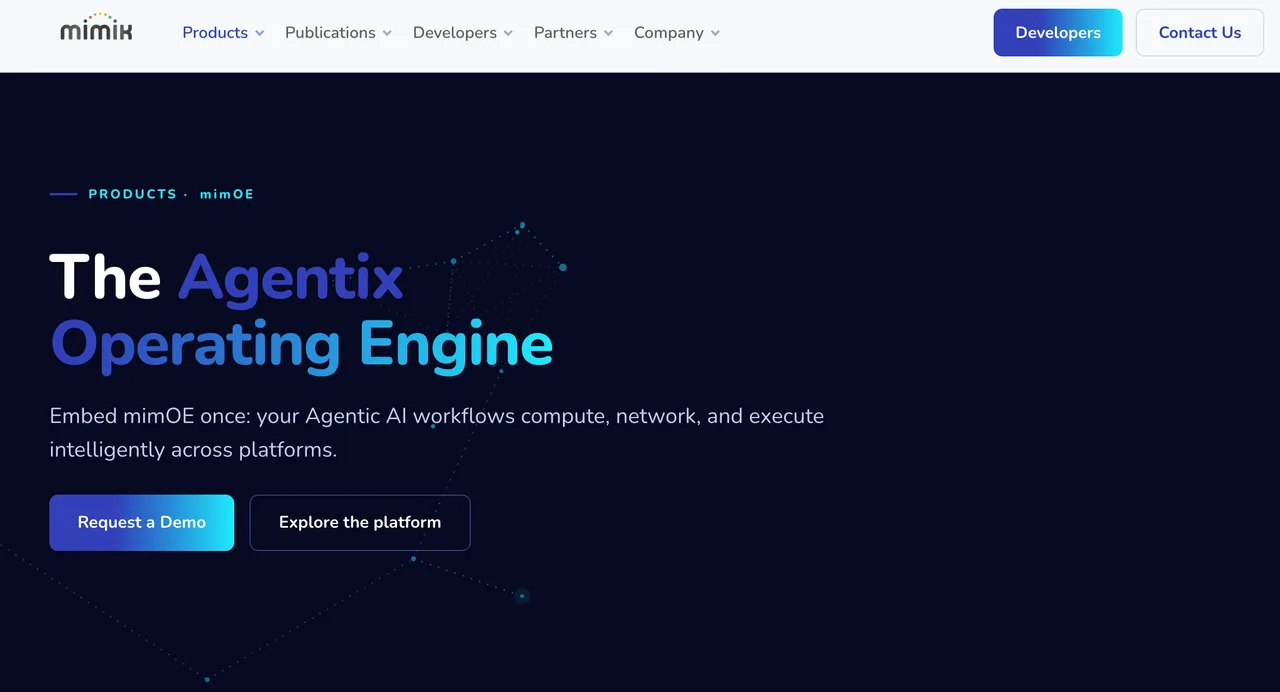
mimik is trying to move agent deployment away from “cloud first, device later.” The mimOE product page describes mimOE as an Agentix Operating Engine that runs across devices, gateways, servers, and cloud.
My read: the useful idea is not local inference alone. It is placement. The agent workload can start on device, use nearby edge capacity, and escalate when the workflow needs more compute.
That is mimik device-first AI in one sentence. Start where the data and action are. Leave the cloud as an option, not a reflex.
Device, Edge, and Cloud Roles
| Layer | What It Handles | What I Would Watch |
|---|---|---|
| Device | Local model calls, tool actions, low-latency context | RAM, battery, OS limits |
| Edge node | Shared inference, routing, local coordination | failure recovery, visibility |
| Cloud | heavier models, fleet ops, remote management | cost, data movement, policy |
The mimOE runtime sits across those layers. That is the architecture claim. The hard part is not drawing the layers. The hard part is proving that routing, policy, and observability survive real mixed hardware.
Where Models and Agent Workloads Run
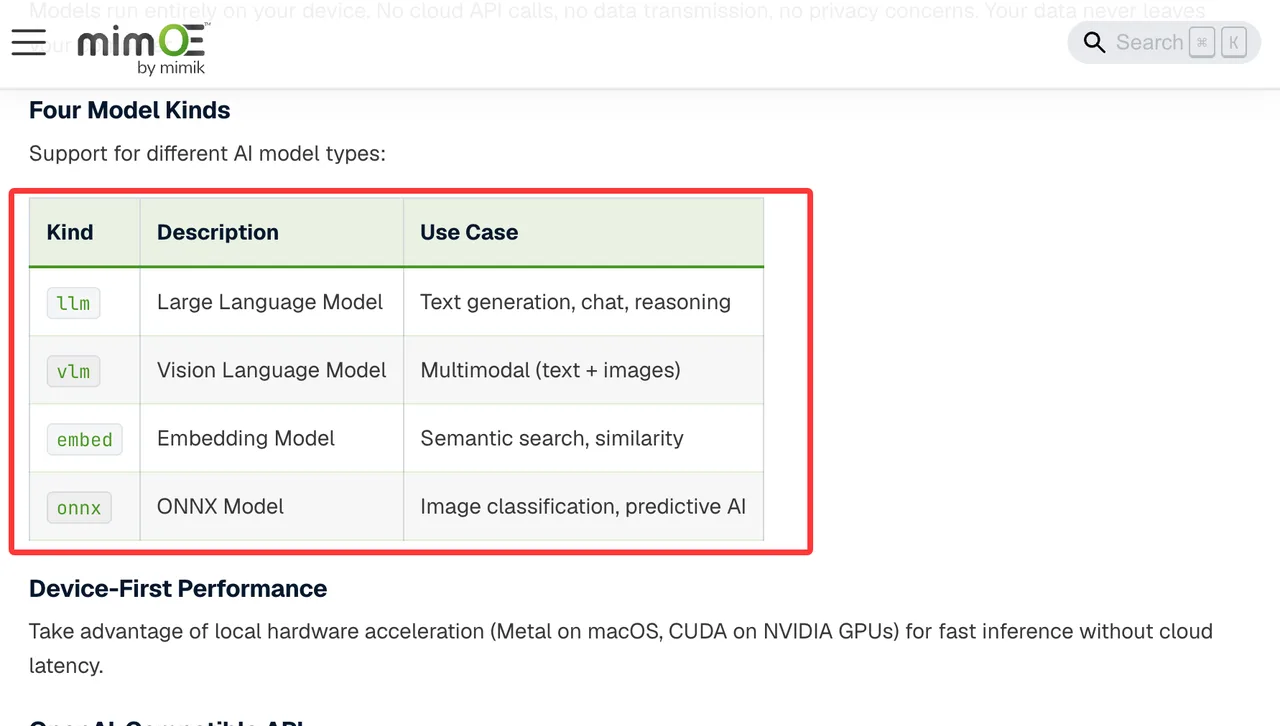
The AI Foundation docs list local model management for LLMs, VLMs, embeddings, and ONNX models, with an OpenAI-compatible inference API for generative chat/completions and embeddings; predictive AI/ONNX inference is marked coming soon in the current Inference API docs.
I paused here. That makes mimik useful for agent plumbing, but it does not make mimik a model marketplace in the way developers usually mean it. Teams still need to decide which model runs locally, which one runs elsewhere, and which outputs are allowed to leave the device.
Speed is not the goal. Not breaking flow is.
Review Scope: One Device-First Agent Workload
For this mimik AI review, I used one evaluation frame: a field-support agent for an industrial or healthcare setting. It reads local context, summarizes a case, checks a small policy model nearby, and escalates to a larger model only when needed.
That workload is boring. Good. Boring workloads show infrastructure problems faster than demos do.
Setup, Routing, and Failure Recovery
The public docs show a developer path through runtime install, model provisioning, and local API calls. The supported platform story is broad, but not identical across packages.
The current Supported Platforms page lists macOS on Apple Silicon, Linux on x86_64 and ARM64, Windows x64, iOS ARM64, Android ARM64, and QNX or custom builds through enterprise packages. AI Foundation’s system requirements narrow the basic development path to macOS 26+, Ubuntu 22.04+ on x86_64, and Windows 10+ on x86_64.
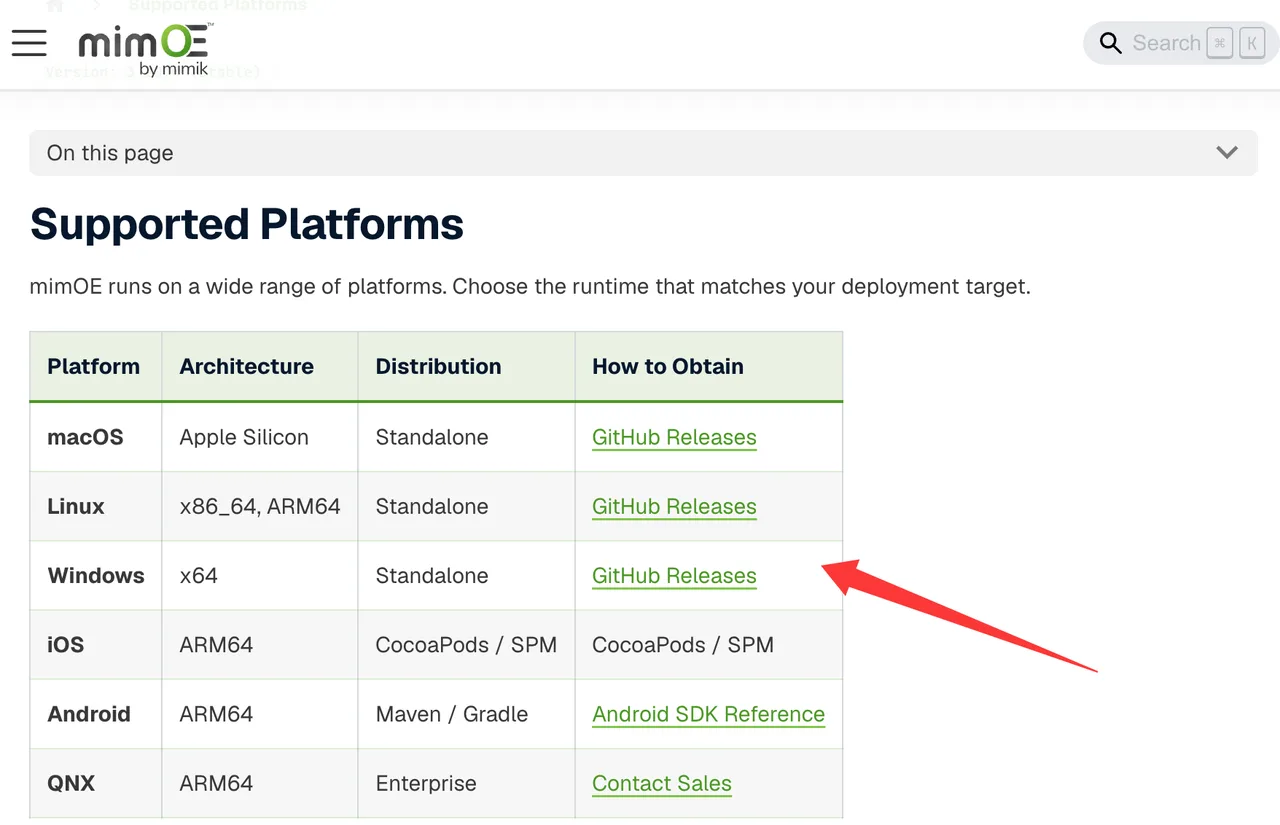
That means hardware sameness is not the premise. Hardware profiling is.
Failure recovery is the open work for buyers to verify. mimik describes mesh discovery, local execution, policy, and observability. I did not find enough public failure-drill detail to treat every recovery claim as already proven for my workload.
Latency, Privacy, and Operating Constraints
mimik’s strongest fit is latency-sensitive work where sending every task to a hosted model feels wrong. Edge AI agents often fail in the gaps: weak network, sensitive data, local action, and too much orchestration code.
Local execution helps. It does not remove model risk, device management, approval flow, or audit requirements.
Privacy claims also need precision. If the model and data stay on device, the risk profile changes. If the workflow uses cross-network discovery, remote management, or external inference, the boundary changes again. This is where teams need logs, not slogans.
When mimik Fits an AI Product Stack
mimik fits a hybrid agent infrastructure stack when the product has real device presence. Retail floor devices. Vehicles. Gateways. Workstations. Medical or legal review stations. Robotics-adjacent systems. Places where the endpoint is not just a UI.
It fits less well when the product is only a SaaS wrapper around cloud model calls. In that case, mimik may add a layer before there is a real placement problem.
Strong Fits and Practical Limits
Strong fits:
- agent workloads that need local-first execution
- mixed device fleets
- offline or intermittent-network operation
- regulated environments with strict data movement rules
- teams standardizing agent deployment beyond one framework
Practical limits:
- public docs do not replace a security review
- commercial licensing needs direct review
- device performance depends on the actual model and hardware
- air-gapped operations need deployment-specific proof
- migration from existing agent logs is not clearly documented publicly
Good enough as an infrastructure candidate. Not enough as a blind adoption decision.
Model Access Through an External Inference Layer
WaveSpeed belongs in a separate part of the stack. It can act as an independent model access and inference layer when a workflow needs hosted models, faster model switching, or managed inference outside the device.
That does not mean mimik and WaveSpeed have a native integration. I found no public claim for that. In a real product design, I would treat mimik as the device-first agent operations layer and WaveSpeed as a separate hosted inference option.
FAQ
Does mimik require identical hardware across every deployment node?
No. Public docs describe cross-platform deployment across different operating systems and device classes. The better question is whether each node class has enough RAM, accelerator support, storage, and policy coverage for the assigned workload.
Which operating systems currently support the mimOE runtime?
As of September 2, 2026, public docs list macOS, Linux, Windows, iOS, Android, and QNX, with some distributions tied to standalone downloads, mobile SDKs, or enterprise packages. AI Foundation development requirements are narrower.
Can teams migrate existing agent logs into mimik?
I did not find a public migration path for importing existing agent logs. mimik talks about observability and traces, but migration tooling is a separate claim.
How does mimik license commercial deployments at the edge?
The Software and Services Agreement says production use and distribution require a Commercial Distribution License under Schedule C. Model licenses remain separate. That is the part legal needs to read, not skim.
Does mimik support air-gapped approval workflows for deployments?
mimik publicly discusses offline and air-gapped operation. I did not find a specific public description of air-gapped approval workflows for deployment promotion. This is where my data ends.
My mimik AI review lands here: credible direction, useful architecture, still needs workload-level verification before it becomes part of a product stack.
Previous posts:
/filters:quality(82)/media/images/b73c2438-6bdd-4b80-a229-8d71d8f819cf.webp)
/filters:quality(82)/media/images/427fd9f2-347d-4f86-a2d5-aee110cda01d.webp)
/filters:quality(82)/media/images/1773962750383987480_n3hqzHRZ.webp)
/filters:quality(82)/media/images/43fa0e7f-a0db-48d7-9bab-921d1225db30.webp)
/filters:quality(82)/media/images/5799ff56-3a73-40ca-a666-e4965d878496.webp)
/filters:quality(82)/media/images/7a8850fc-caf6-482f-ac4d-5ddbe64ec47c.webp)