
MAI-Image-2.6 Review for Product Image Workflows
This MAI-Image-2.6 review focuses on product image workflows, current access, repeatable output checks, and the evidence still missing for production.
The product image queue is where image-model marketing gets boring quickly. A bottle has to stay the same bottle. The label has to read correctly. The white background cannot drift into a lifestyle shot unless the brief asks for it. This MAI-Image-2.6 review covers one narrow question for an image API team: is the current release evidence strong enough to justify a product-imagery pilot?
No hands-on result is claimed here. I did not run a fixed prompt and reference-image test in a controlled MAI account, so this is an official-evidence review, not a production test report.
Current Access and Review Scope
MAI Playground and Foundry Availability
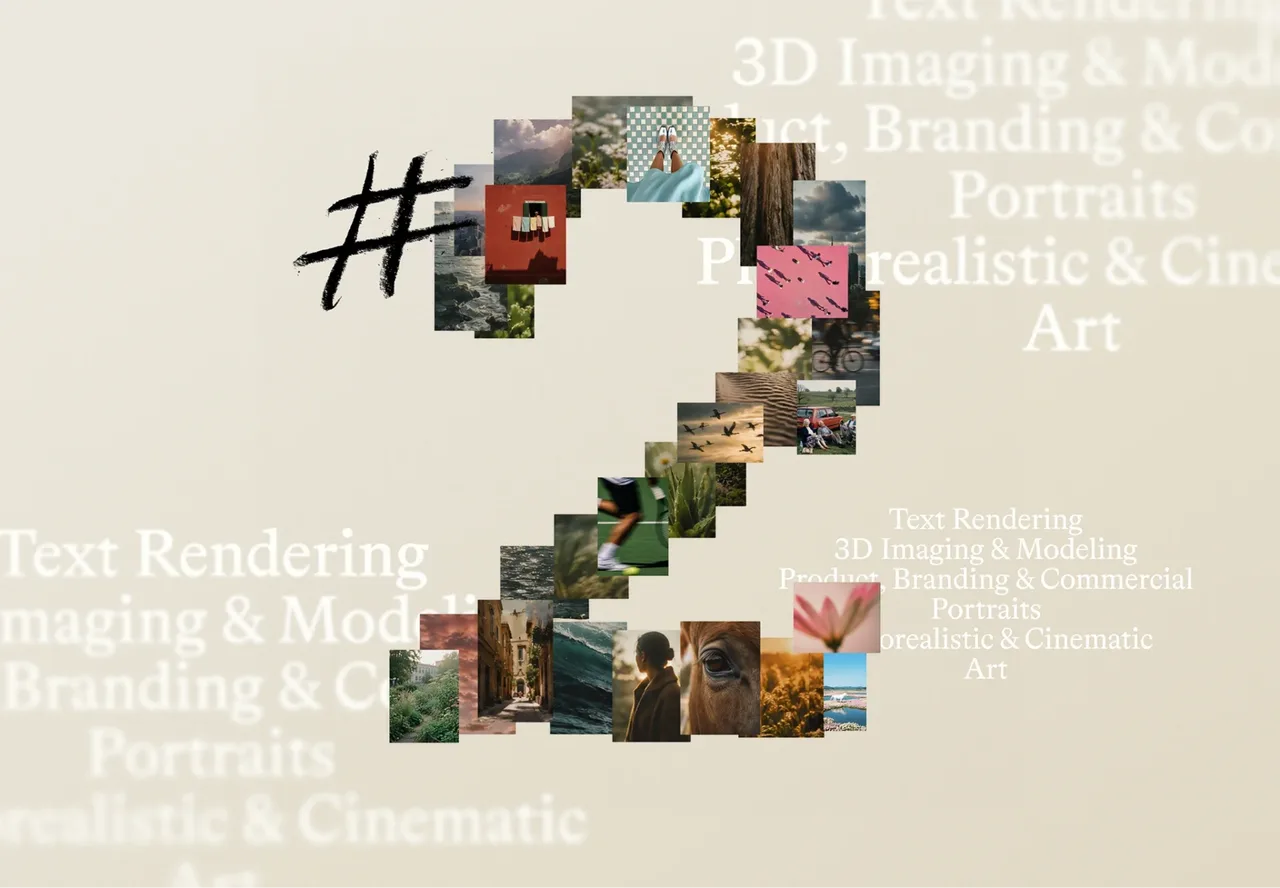
Microsoft’s MAI-Image-2.6 announcement was published on August 10, 2026 and updated on August 18. It says the Microsoft image model reached No. 2 on Arena’s text-to-image leaderboard and No. 3 on Arena’s image editing leaderboard. It also says MAI-Image-2.6 is available in MAI Playground and in Private Preview on Microsoft Foundry.
That last sentence is the line to underline. MAI Playground access is useful for visual exploration, but it is not the same as a production API route. A Microsoft Foundry image model is production-relevant only when your tenant, region, quota, contract, and deployment permissions make it callable.
Why Product Images Are the Only Test Scenario
Product images punish small mistakes. If the model changes a logo, invents a button, warps packaging text, or swaps material finish, the image may still look polished and still fail the job.
So the scope stays narrow: product image generation for ecommerce, catalog, marketplace, and paid creative workflows. No claims about portraits, cinematic art, social stickers, or general design. Demos show the ceiling. Production shows the floor.
Test Product Image Outputs
Prompt Adherence and Text Rendering
The current evidence supports testing text rendering. Microsoft’s post reports a +91 Elo improvement over MAI-Image-2.5 in the Arena text-rendering category, and the public Arena leaderboard listed mai-image-2.6-preview at rank 2 on August 25, 2026.
For product work, I would not start with a pretty prompt. I would start with a locked prompt:
Studio pack shot of a matte white 500 ml shampoo bottle, front-facing, exact label text “PURE MINT”, small green leaf icon under the word MINT, softbox lighting, white background, no extra text.
Pass or fail should be boring: correct product type, readable label, no invented claims, no extra brand marks, and no material change.
Reference Consistency and Editing Control
Reference consistency is where the pilot earns or loses time. Microsoft’s announcement says 2.6 has work coming around multiple references, richer grounding, and more control over reasoning, format, and resolution. That is promising language, but not enough for batch adoption.
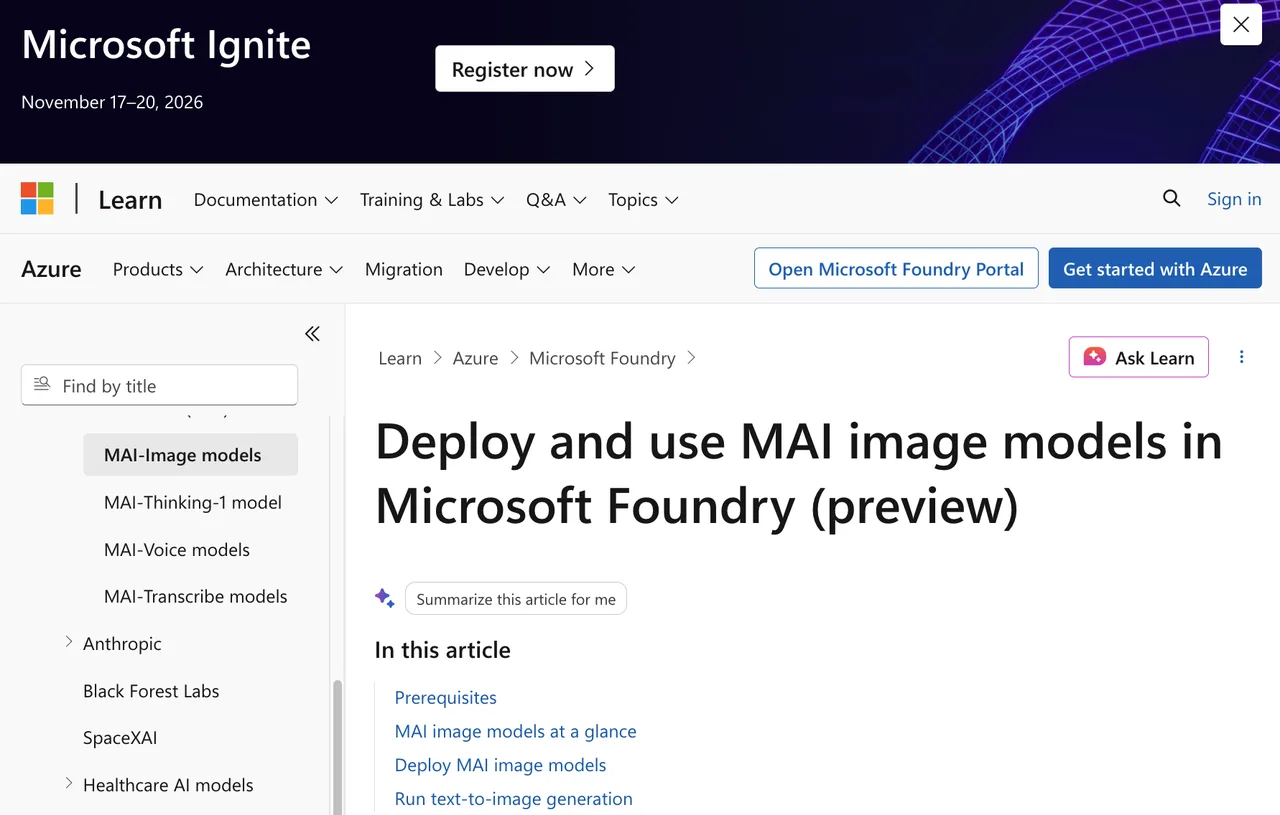
The public Foundry image docs describe MAI image generation and image-edit endpoints, with fields such as model, prompt, image, width, and height. They also list a 32,000-token prompt context, PNG output, minimum 768-pixel width and height, and a 1,048,576-pixel maximum output area. The public model table lists MAI-Image-2.5 variants, not a public 2.6 deployment row.
So the pilot should log model name, model version if exposed, deployment name, reference-image order, seed behavior if supported, and output hash.
Decide Whether to Pilot the Model
Evidence the Current Release Supports
The current release supports a pilot, not a workflow switch. The strongest signal is specific: text rendering and product, branding, and commercial design improved in the vendor-reported Arena categories. That maps directly to product imagery, where labels, packaging, and controlled commercial scenes matter.
A good pilot should run 30 to 50 assets across three groups: pack shots, lifestyle product scenes, and edit requests against approved reference images. Score usable rate, text accuracy, reference drift, rejection reason, and cleanup time.
API, Pricing, and Production Questions Still Open
The open questions are operational. Is 2.6 enabled in your Foundry project? Which region? Which quota tier? Does pricing match earlier MAI image pricing or a new card? Are edits and multi-reference inputs available through API, or only Playground?
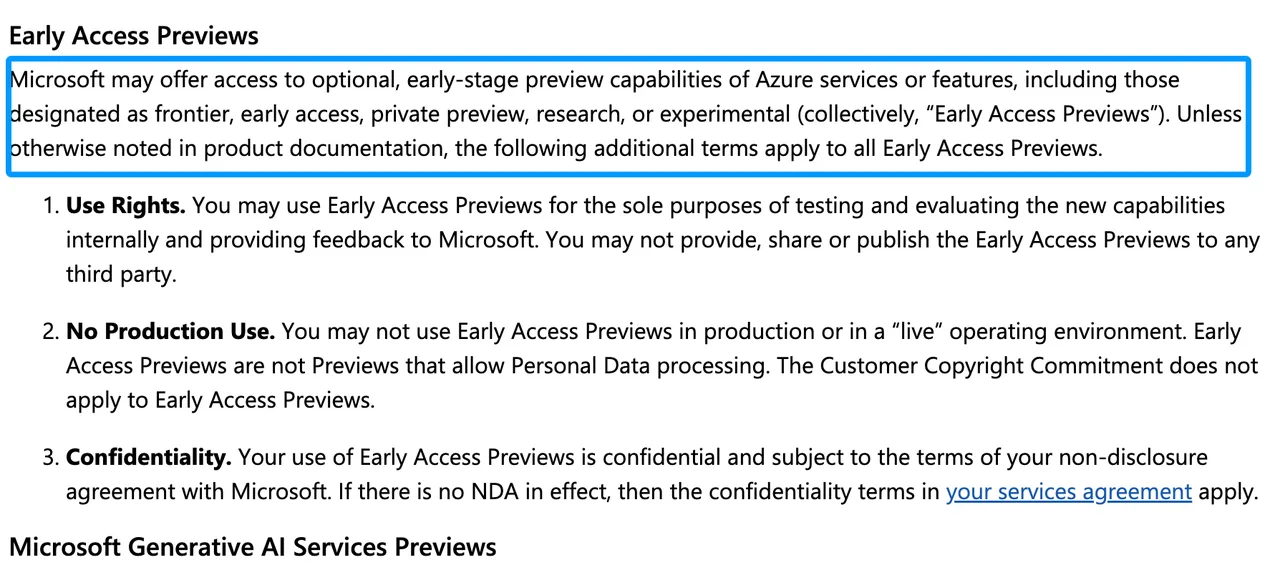
Azure preview status matters. Microsoft’s Azure preview terms say early access previews may be limited to internal testing and may not be allowed in production unless product documentation says otherwise. Do not push paid product imagery through a preview route until legal, procurement, and platform owners confirm it.
FAQ
Can MAI-Image-2.6 outputs be used in paid advertising?
Only if your access route and Microsoft terms allow it. Private preview output should not be treated as ad-ready by default.
Does Microsoft retain prompts or generated product images?
For Foundry Models sold by Azure, Microsoft’s data privacy page says prompts and outputs are not used to train foundation models without permission, but may be processed for service delivery and abuse monitoring. The same page warns that preview models or features may use different privacy practices, so confirm the MAI-Image-2.6 Private Preview terms for your tenant before relying on those defaults. MAI Playground may have different terms, so avoid confidential unreleased product images there.
Can MAI-Image-2.6 batch jobs preserve reference-image ordering reliably?
I found no public 2.6-specific batch guarantee for reference ordering. Test it with named files, upload-order logs, output hashes, and repeated reruns before trusting it.
Can brand references be shared across Foundry deployments?
Do not assume that. Keep brand references in controlled storage, then pass them into each approved deployment under your tenant and access policy.
How should teams disclose synthetic product images to customers?
Disclose when the image could affect a customer’s understanding of the product, material, size, result, or condition. Put the note near the image or ad unit, not hidden in an FAQ. This is general information, not legal advice.
Conclusion
The practical verdict in this MAI-Image-2.6 review is cautious but interested. The published evidence points at the right failure zones for product imagery: text, branding, commercial scenes, and editing. The next move is not migration. Run the fixed product-image pilot, lock the access route, and only then decide whether this workflow can stay.
Previous posts:
/filters:quality(82)/media/images/b73c2438-6bdd-4b80-a229-8d71d8f819cf.webp)
/filters:quality(82)/media/images/427fd9f2-347d-4f86-a2d5-aee110cda01d.webp)
/filters:quality(82)/media/images/1773962750383987480_n3hqzHRZ.webp)
/filters:quality(82)/media/images/43fa0e7f-a0db-48d7-9bab-921d1225db30.webp)
/filters:quality(82)/media/images/5799ff56-3a73-40ca-a666-e4965d878496.webp)
/filters:quality(82)/media/images/7a8850fc-caf6-482f-ac4d-5ddbe64ec47c.webp)