
GLM 5.3 Review: API, Pricing, Coding, and Agents
This GLM 5.3 review separates confirmed access and specifications from early claims about coding, agents, pricing, and production fit.
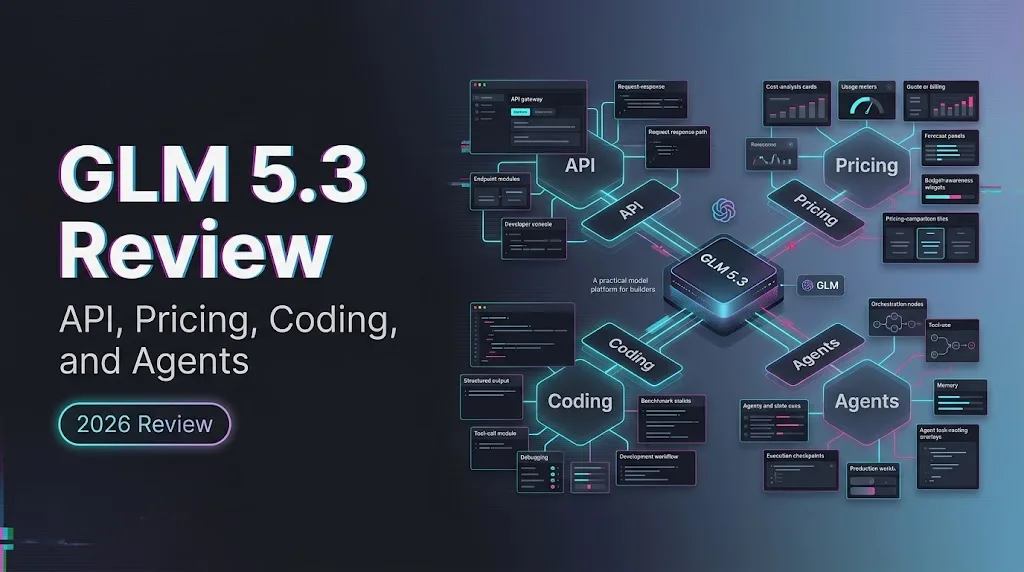
The first thing I checked was not the benchmark chart. It was the model ID. Launch posts can make a model feel available before an engineer can actually call it, price it, log it, or roll it back. GLM-5.3 has crossed part of that line. As of August 19, 2026, Z.ai documents the glm-5.3 API model, pricing, migration behavior, and access through GLM Coding Plan. Good. Now the harder question: does that evidence justify touching a production agent stack?
This GLM 5.3 review is not a victory lap and not a hands-on test. I did not run private tasks against the model. I’m treating the public material the way I’d treat a model-change ticket: what is confirmed, what is vendor-reported, what is still missing, and what has to be tested before a rollout. That is the useful part. The rest is launch noise.
GLM 5.3 Release Status and Access
Official Announcements, Model IDs, and Available Routes
Z.ai’s GLM-5.3 model page identifies GLM-5.3 as its latest flagship model for complex software engineering and agent tasks. The documented API model ID is glm-5.3.
The same page lists three protocol routes: OpenAI Chat Completion-compatible, OpenAI Response-compatible, and Anthropic Message-compatible endpoints. I paused here. The page also says some GLM Coding Plan users can currently access the model API only through the OpenAI Chat Completion-compatible protocol. So route support and account-level access are not the same thing.
Public API, Partner Access, and Open-Weight Status
The Chat Completion API reference now includes glm-5.3 as an available model and shows request fields such as thinking, reasoning_effort, tools, response_format, request_id, and user_id.
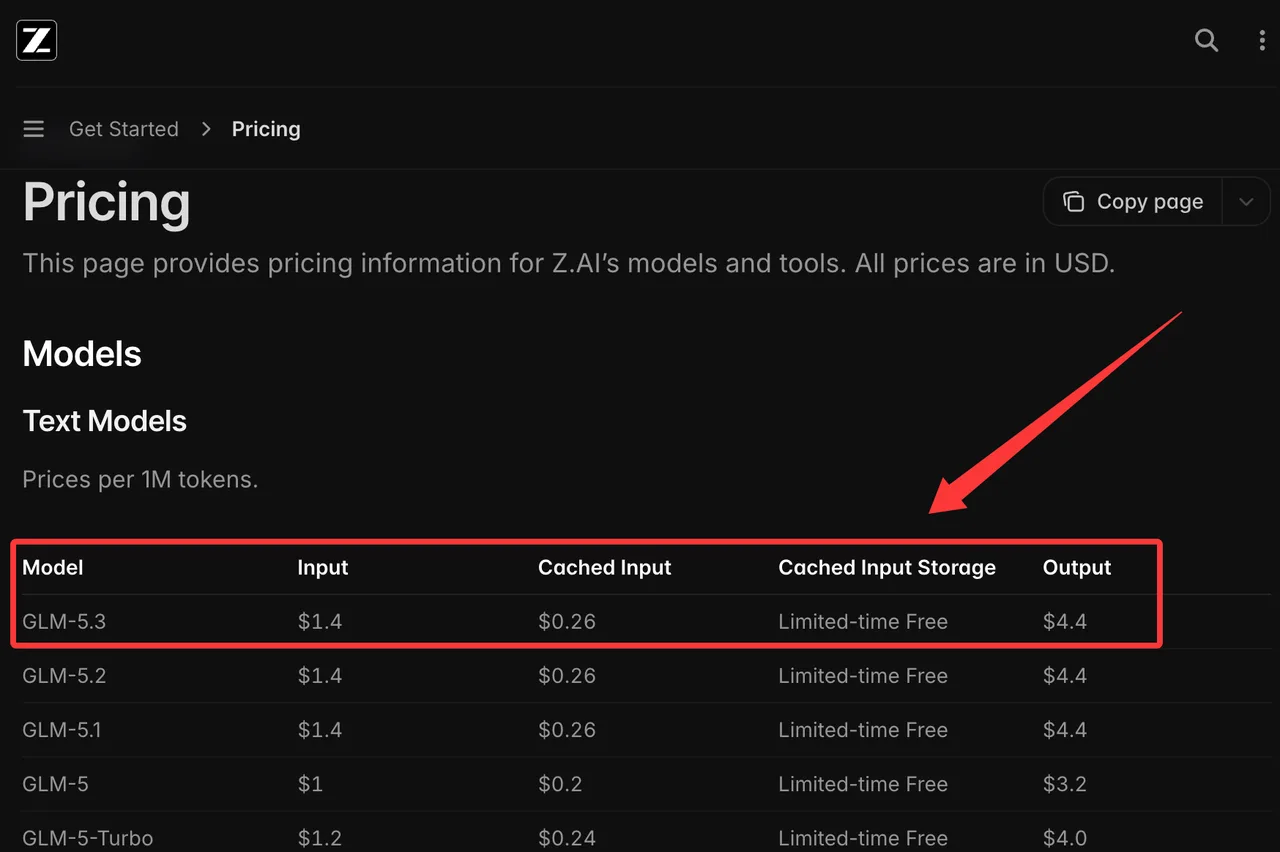
Pricing is also public. Z.ai’s pricing page lists GLM-5.3 at $1.40 per 1M input tokens, $0.26 per 1M cached input tokens, and $4.40 per 1M output tokens. Prices move. Recheck before procurement.
Open-weight status is different. I found the official zai-org GLM-5 GitHub repo and Z.ai’s Hugging Face organization, but I did not find a public GLM-5.3 weight repository in the checked sources. Treat open weights as unconfirmed until the exact artifact and license are public.
Review the Published Model Evidence
Coding, Tool Use, and Agent Workloads
Z.ai reports a 50% coding gain over GLM-5.2 on its internal Z.ai Code Bench. It also reports gains on Terminal-Bench 3.0, DeepSWE v1.1, Agents’ Last Exam, CyberGym, ExploitBench, and ExploitGym.
Those are vendor-reported numbers. Useful. Not final.
A GLM 5.3 benchmark table should record source, model ID, provider, date, prompt settings, tool harness, timeout, reasoning effort, and token budget. Missing any of those makes comparison mushy. I don’t know. Better than making something up.
Context, Reliability, and Safety Disclosures
The GLM-5.3 page says the model supports text-only input, a 1M-token context window, 128K maximum output, and reasoning always enabled. thinking.type: "disabled" is no longer supported. Apps migrating from GLM-5.2 that currently set thinking.type to disabled need to change it to enabled; GLM-5.3 supports reasoning_effort values of low, high, or max, with max as the default.
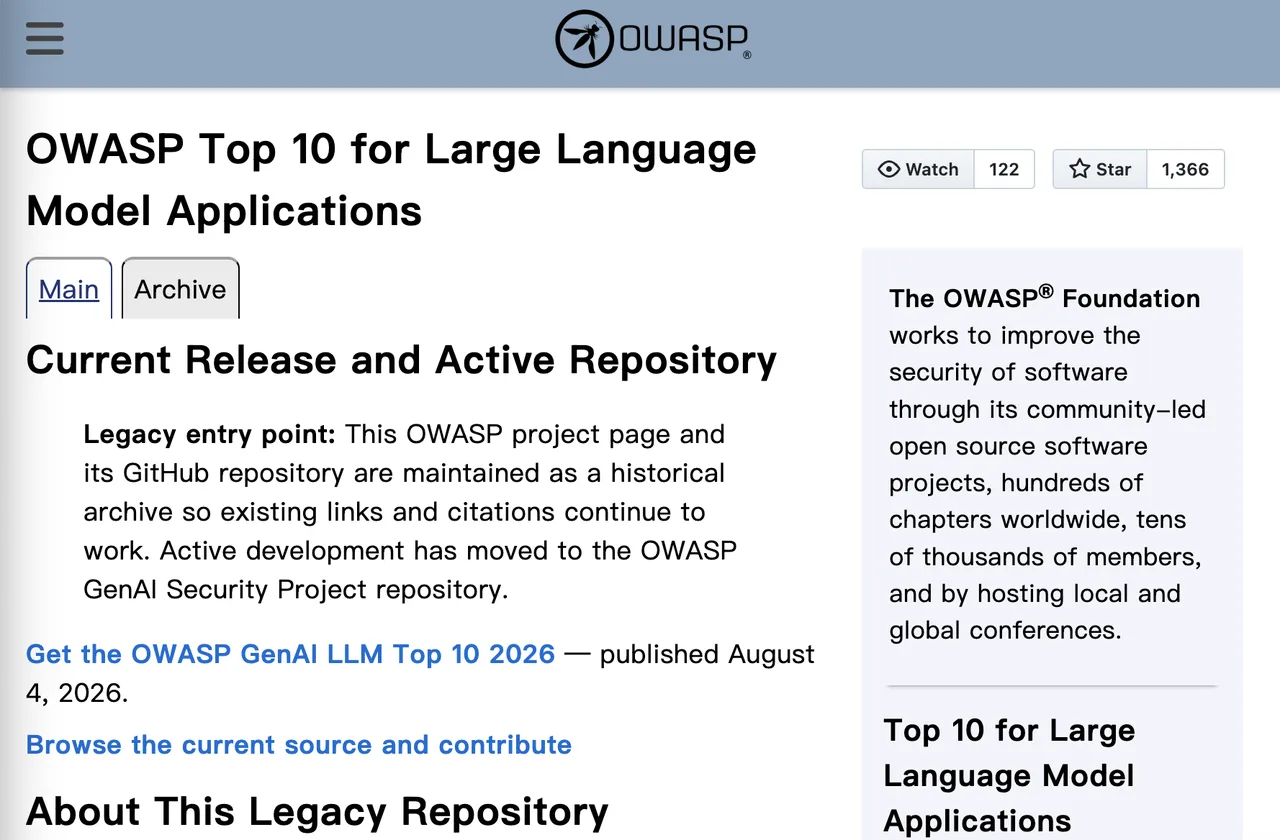
Safety needs a separate read. The cyber results are dual-use. For agent deployments, I would also map tests against the OWASP LLM application risks before giving tools write access.
Evaluate GLM 5.3 on Real Tasks
Repository Work, Tool Calls, and Recovery
Start with real repository tasks. Not toy prompts.
Use three buckets: bug fix with tests, feature implementation across files, and agent recovery after a failed command. Freeze the repo commit, harness, timeout, allowed tools, package install policy, and acceptance tests.
For GLM 5.3 coding evaluation, log every tool call. Record whether the model read the right files, changed the right files, ran tests, interpreted failures, and recovered without drifting.
Latency, Usage, and Failure Patterns
The GLM 5.3 API review should include latency and cost, not just pass/fail.
Track first-token latency, total runtime, output tokens, cached tokens, retries, finish reason, tool-call count, JSON validity, and human repair minutes. Long-horizon agents can look strong on final answer quality and still be too expensive or unstable for a product workflow.
Assess Production Fit
Workloads Worth Testing First
The first workloads I would test are coding agents, terminal workflows, code review, vulnerability triage under strict policy, large-repo navigation, and multi-step tool use.
GLM 5.3 agents may fit teams already using coding assistants and wanting another route with long context and tool calling. That is the plausible production angle. Not general chatbot replacement.
Reasons to Keep GLM 5.2 or Another Model
Keep GLM-5.2 or another model if your app depends on stable non-reasoning behavior, lower output cost, known latency, existing prompt tuning, or already-approved safety reviews.
Switching models is not free. Every prompt suite, tool schema, retry rule, and eval threshold needs a retest.
Limits and Trade-Offs
Early Access Evidence Can Change Quickly
The official docs now show access and pricing, but rollout terms can still shift. Model availability through plans, partners, or API routes may differ by account.
This conclusion has an expiration date. Models update fast.
Missing Official Details Limit Firm Conclusions
The biggest missing item is public, confirmed open weights for GLM-5.3. I would not write “open-weight production option” into a procurement note until the repository, checksum, license, and serving instructions are public.
FAQ
Can teams isolate GLM 5.3 tests from production traffic?
Yes. Use separate API keys, billing tags, logging, prompt versions, and traffic gates. Do not replay customer data unless policy allows it.
How should model aliases be recorded in evaluation logs?
Record both alias and resolved model ID. If glm-5.3 later points to a newer backend, old test logs still need the exact date and provider route.
Can one prompt suite cover coding and agent workloads?
No. Coding, tool use, recovery, and security tasks need separate acceptance rules. One suite will hide failures.
Can procurement require an exit clause for a preview model?
Yes. That is normal risk control. Include data export, fallback, notice period, and pricing-change language. Not legal advice.
Who should approve a GLM 5.3 production rollout?
Product, platform, security, and the engineering owner of the affected workflow. If customer data is involved, add privacy or legal review.
Conclusion
This GLM 5.3 review lands in a cautious place. Z.ai now documents the model ID, API path, price, context, reasoning behavior, and several reported benchmark gains. That is enough to justify evaluation.
It is not enough to skip your own tests. Freeze tasks, log settings, compare against GLM-5.2, and separate model quality from serving behavior. Run it yourself. That’ll tell you more than anything I say.
Previous posts:
/filters:quality(82)/media/images/5f15570a-6a68-432e-a6f1-1dcbf799ba81.webp)
/filters:quality(82)/media/images/b73c2438-6bdd-4b80-a229-8d71d8f819cf.webp)
/filters:quality(82)/media/images/427fd9f2-347d-4f86-a2d5-aee110cda01d.webp)
/filters:quality(82)/media/images/1773962750383987480_n3hqzHRZ.webp)
/filters:quality(82)/media/images/43fa0e7f-a0db-48d7-9bab-921d1225db30.webp)
/filters:quality(82)/media/images/5799ff56-3a73-40ca-a666-e4965d878496.webp)